
To winterize your pool properly, you’ll need to maintain five critical chemical parameters: pH (7.2-7.4), alkalinity (150-175 ppm), calcium hardness (200-400 ppm, up to 550 ppm in freezing climates), stabilizer levels (30-50 ppm), and chlorine (1-3 ppm). Test water weekly at 12-18 inches below the surface using liquid reagent kits, and shock the pool 1-2 weeks before closing. Proper chemical balance protects against corrosion, scaling, and equipment damage during winter months. Understanding the Langelier Saturation Index will provide ideal protection.
Understanding Winter Chemical Balance Essentials
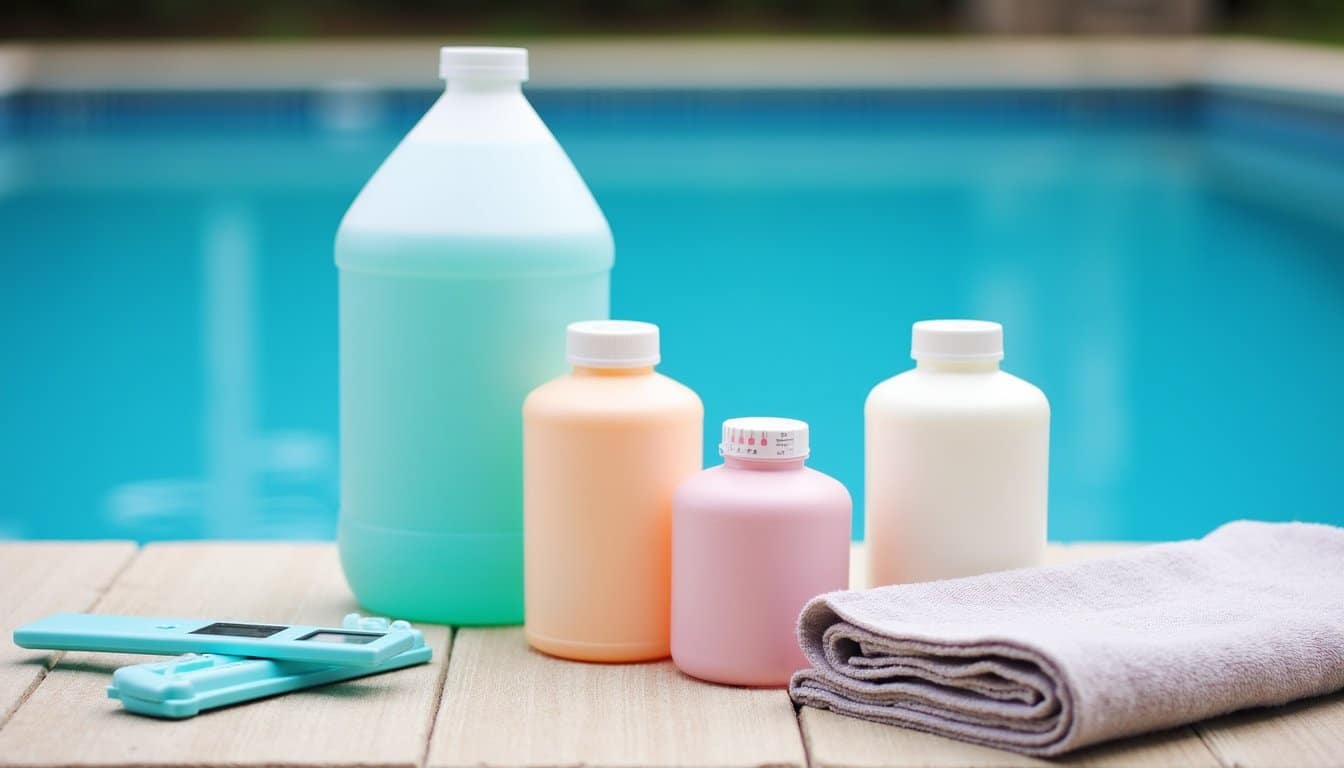
Five critical chemical parameters require careful balancing before winterizing your pool: alkalinity, calcium hardness, stabilizer levels, shock treatment, and stagnant water management.
Your pool’s water chemistry depends on maintaining alkalinity between 80-120 ppm to prevent corrosion, while calcium hardness should stay within 200-400 ppm to protect your plaster. You’ll need to monitor stabilizer (CYA) at 30-50 ppm to guarantee chlorine remains effective throughout winter. Before closing, implement a shock treatment that raises free chlorine to 30-50 ppm, allowing proper chemical reaction time before adding winter chemicals. Finally, manage stagnant water by lowering levels 6-8 inches below the skimmer and maintaining occasional circulation to prevent stratification. These balanced parameters work together to protect your pool’s surfaces and equipment during the cold months. Test your water 2-3 times during winter using pool test strips to verify chemical stability. Experts recommend increasing the pH level to 7.6 – 7.8 during winterization to maintain optimal protection. Regular monitoring throughout winter ensures these chemical levels remain stable and prevents costly damage to pool surfaces.
Maintaining Optimal Ph Levels During Cold Weather
Building upon proper chemical balance, maintaining ideal pH levels stands as a cornerstone of successful pool winterization. You’ll need to keep your pool’s pH between 7.2 and 7.4 during winter months, using regular pH testing with phenol red kits to monitor levels. Warmer temperatures help facilitate better chemical reactions, so consider treating your pool while the water is still warm. Yellow or red water coloring indicates pH imbalances that require immediate attention.
For pH adjustment, use muriatic acid to lower high pH or soda ash to raise low pH. After applying chemicals, wait 24 hours before retesting. Cold water affects chemical reactions differently, so you’ll need to adjust dosages accordingly. Following manufacturer instructions is crucial when calculating proper chemical quantities for winter maintenance. Monitor pH every 4-6 weeks throughout winter, especially after rainfall or when organic matter accumulates.
Before closing your pool, raise alkalinity to 150-175 ppm to prevent natural pH drops. Remember that covered pools can trap contaminants that affect pH, making proper pre-winter balancing essential for long-term stability.
The Role of Alkalinity in Winter Pool Care

While pH balance remains essential for winter pool care, proper alkalinity levels serve as the foundation for maintaining stable water chemistry during cold months. You’ll need to make alkalinity adjustments before closure, raising levels to 150-175 ppm to compensate for natural declines during stagnation. Clean skimmer baskets thoroughly before testing alkalinity levels to ensure accurate readings. Regular monitoring helps prevent unpredictable pH fluctuations and costly damage.
For effective winter protection, test your alkalinity one week before closing to guarantee adequate adjustment time. Proper levels shield your pool’s surfaces and equipment from damage, preventing liner deterioration and metal corrosion. Consulting pool care experts can help ensure precise chemical measurements and proper winterization procedures. You’ll want to maintain these heightened ranges to avoid both acidic conditions and calcium scaling.
Remember that alkalinity acts as your pool’s chemical buffer, slowing pH changes caused by rainfall or contaminants. Continue monitoring levels throughout winter to protect your investment and guarantee your pool remains chemically balanced until spring reopening.
Calcium Hardness: Protecting Against Freeze Damage
Proper calcium hardness serves as your pool’s primary defense against freeze damage during winter months. You’ll need to maintain levels between 200-400 ppm, though freezing climates may require up to 550 ppm. Using a calcium hardness increaser helps achieve optimal protection levels. Regular calcium testing before winter is essential, as your cover type greatly impacts required levels. Cold water can become aggressive and etching, potentially damaging cement pool surfaces if calcium levels are inadequate. Clean pool water enables more accurate calcium hardness testing results.
| Cover Type | Calcium Requirements |
|---|---|
| Mesh | Higher (compensates for dilution) |
| Solid | Standard (minimal dilution) |
| Auto | Standard (like solid covers) |
| None | Highest (maximum exposure) |
| Safety | Varies (based on permeability) |
For effective freeze prevention, test and adjust calcium levels 24-48 hours before covering your pool. If you’re using a mesh cover, you’ll need higher calcium concentrations to offset dilution from precipitation. Remember, insufficient calcium leads to equipment corrosion, while excess causes scaling balance is key. Additionally, before preparing your pool for winter, clean thoroughly and remove debris to preserve water quality. Secure all fittings to prevent leaks, and use a quality cover to protect against the elements and ease spring maintenance.
Strategic Chlorine Management for Winter Months
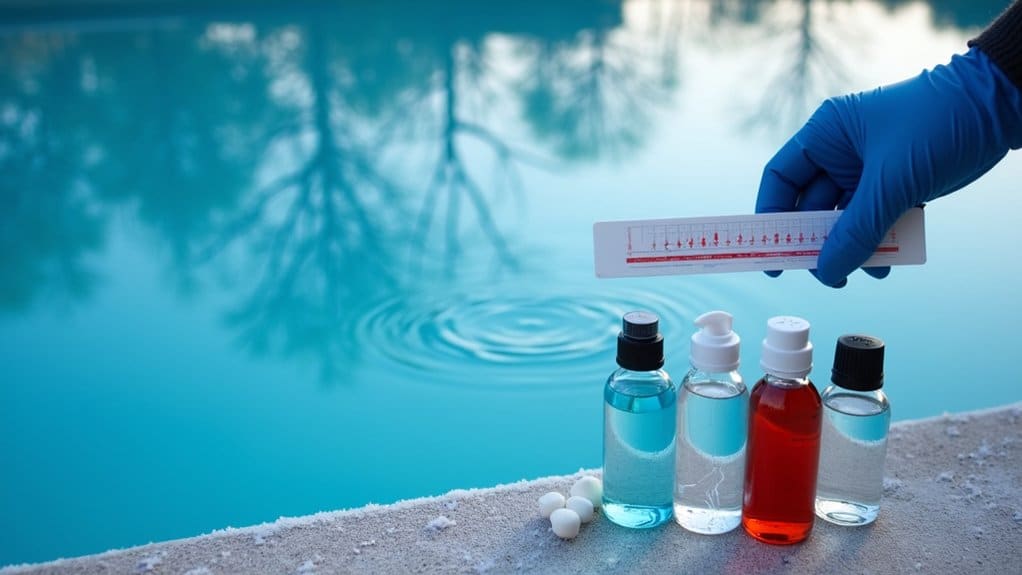
Effective chlorine management during winter months requires a distinct approach from summer maintenance due to cold water’s impact on chemical reactions. When adjusting your winter maintenance strategy, you’ll need to maintain 1-3 ppm free chlorine for non-swimming pools, while heated pools demand higher levels of 3-5 ppm. Since chemical reactions slow significantly in cold water, chlorine may need less frequent replenishment during winter months. If no winter bathing occurs, you can halt chlorine treatment entirely and switch to wintering products.
For proper winterization, apply chlorine shock 1-2 weeks before closure, ensuring thorough circulation. Your weekly testing should focus on pH and free chlorine levels, with particular attention to water balance parameters. Different chlorine types react differently in cold conditions, so consider using non-chlorine alternatives for pools with specialized sanitization systems.
Monitor your pool’s saturation index through automated systems if possible, and maintain detailed logs to track chemical trends. This data will prove invaluable for optimizing your spring reopening process.
Stabilizer Levels and UV Protection
Stabilizer levels and UV protection remain essential components of winter pool maintenance, even when temperatures drop. CYA importance can’t be overstated, as it shields your chlorine from UV degradation, even during winter sun exposure. Professional pool service can ensure optimal CYA balance throughout winter. Maintain CYA levels between 30-50 ppm to guarantee peak protection throughout the dormant season. Using a testing kit regularly helps monitor these critical chemical levels with precision.
Your UV strategies should include:
- Installing a winter pool cover to minimize sunlight exposure
- Lowering water levels to 18 inches below the tile line
- Applying UV stabilizers to enhance chlorine protection
Before closing your pool, raise the pH to 7.6-7.8 and perform a final chlorine shock. You’ll need to maintain chlorine levels at 1-3 ppm to combat residual UV effects. Remember to test CYA levels preseasonally, as they remain relatively stable and don’t require frequent monitoring during winter months.
Monitoring Chemical Ratios With LSI
To maintain balanced water chemistry during winter, you’ll need to understand the Langelier Saturation Index (LSI), which measures your pool water’s scaling or corrosive tendencies. Your pool’s dropping temperatures directly affect LSI values, requiring precise adjustments to calcium hardness, pH, and alkalinity levels to prevent surface damage. You can determine your ideal winter LSI range by using a calculator that factors in your specific water temperature, allowing you to make proactive chemical adjustments before severe temperature drops occur.
LSI Basics For Beginners
While many pool owners focus solely on individual chemical readings, understanding the Langelier Saturation Index (LSI) provides a thorough approach to water balance during winterization. To grasp LSI fundamentals, you’ll need to monitor five core parameters that determine your pool’s chemical stability.
Key factors affecting LSI calculations include:
- pH levels and calcium hardness (CH)
- Total alkalinity (TA), adjusted for cyanuric acid
- Temperature and total dissolved solids (TDS)
Common beginner misconceptions involve overlooking CYA’s impact on TA readings and using fixed chemical ranges rather than dynamic LSI values. You’ll need to maintain an LSI between -0.3 and +0.3 for ideal winter protection. Remember to use the formula: SI = pH + TF + CF + AF – TDSF, incorporating temperature-adjusted values and corrected alkalinity measurements for accurate results.
Temperature Impact On Balance
Understanding temperature’s influence on pool chemistry requires mastering the complex interplay between LSI variables and seasonal changes. As temperatures drop, you’ll need to monitor your pool’s chemical interactions more closely, particularly regarding pH and alkalinity levels.
Cold water naturally raises pH while reducing alkalinity, creating a challenging balance for winter maintenance. You’ll notice that your standard chemical ranges become less effective, requiring LSI-guided adjustments to prevent structural damage. During temperature fluctuations, increase your testing frequency to weekly, focusing on calcium levels and pH stability.
To maintain proper chemical distribution, adjust your pump runtime to 4-6 hours during winter months. Don’t rely on standard recommendations; instead, use LSI calculations to determine precise chemical targets, accounting for temperature’s impact on all water balance parameters.
Calculate Winter LSI Ranges
Calculating accurate winter LSI ranges requires a systematic approach to chemical monitoring and adjustment. Start by using winter-adjusted LSI calculation methods that account for colder temperatures, as traditional industry ranges won’t suffice. Your winter LSI targets should maintain higher calcium hardness levels, typically 400+ ppm, to offset water’s increased aggressiveness in cold conditions.
Key steps for proper LSI calculation:
- Input your pool’s volume and current chemical readings into an automated calculator
- Adjust parameters focusing on pH (7.2-7.6) and alkalinity (80-120 ppm)
- Test and verify results before finalizing winter closure
Monitor your LSI balance closely, keeping it between -0.3 and 0.3 to prevent both corrosion and scaling. You’ll need to reassess chemical levels after initial adjustments, ensuring complete dissolution before closing your pool for winter.
Best Practices for Winter Water Testing
Before closing your pool for winter, accurate water testing becomes essential for maintaining proper chemical balance and preventing structural damage during the cold months. Your testing frequency should start weekly during initial winter months, with samples taken 12-18″ below the surface to guarantee accurate readings. Additionally, balancing pH, alkalinity, and chlorine before closing helps protect your pool and makes spring pool maintenance tips easier to follow. Proper prep now means less work when reopening in warmer months.
| Test Parameter | Method | Winter Range |
|---|---|---|
| pH | Liquid reagent | 7.6-7.8 |
| Alkalinity | Test strip/reagent | Based on LSI |
| Calcium Hardness | Reagent kit | Region-specific |
| Free Chlorine | Digital/reagent | 1-3 ppm |
| LSI | Calculator | -0.3 to +0.3 |
Use liquid reagent kits for precise measurements of critical parameters, and rinse test vials with pool water before testing. Document your results systematically using pool management software or apps to track trends and anticipate necessary adjustments. For ideal accuracy, avoid sampling near returns or chemical feeders, and always check reagent expiration dates.
Chemical Storage and Safety During Winter
Proper chemical storage practices safeguard both your winter pool maintenance supplies and your family’s well-being. When storing chemicals during winter months, maintain temperatures below 95°F/35°C in a well-ventilated area away from direct sunlight and heat sources. Your chemical handling procedures should prioritize using original containers and avoiding any chemical transfers.
Essential storage safety measures include:
- Separating incompatible chemicals like chlorine and muriatic acid into dedicated zones
- Keeping containers off the floor and never stacking them
- Storing chemicals in locked cabinets or sheds to prevent unauthorized access
Ensure proper ventilation in your storage area and install emergency HVAC shutoff mechanisms if chemicals are stored in pump rooms. Remove any potential fire hazards, including rags and debris, from the storage space. Always verify chemical labels before storage and dispose of deteriorating products according to manufacturer guidelines.
Frequently Asked Questions
Can I Use Liquid Chlorine Instead of Tablets During Winter Months?
Yes, you can effectively use liquid chlorine during winter months. It offers several liquid chlorine benefits, including better control over your pool’s chemistry and reduced risk of plaster damage. You’ll need to store it above freezing temperatures and test water more frequently, but it’s safer for your pool’s surfaces than tablets. For ideal winter pool safety, you should maintain consistent testing schedules and apply measured doses during temperature fluctuations.
How Does Salt System Maintenance Differ for Winter Pool Care?
You’ll need to adjust your salt cell maintenance differently during winter months. First, reduce your salt levels slightly before closing to prevent corrosion issues. You should remove and store your salt cell after thoroughly cleaning it with a high-pressure hose. Don’t forget to test winter salt levels regularly with digital testers for accuracy in cold conditions. If you’re in a mild climate, you’ll need to monitor the cell’s output to prevent over-chlorination.
Should I Adjust Chemical Levels Differently for Indoor Versus Outdoor Pools?
Yes, you’ll need to adjust chemical levels differently for indoor versus outdoor pools. Indoor pools require higher chlorine levels (2-4 ppm) due to increased bather load and limited natural UV exposure. Outdoor pools need more frequent chemical adjustments due to environmental factors like rain, debris, and sun exposure. You’ll want to maintain tighter pH control (7.2-7.6) in indoor pools to manage air quality, while outdoor pools can tolerate slightly higher pH levels (7.4-7.8).
What Happens if My Pool Water Freezes With Unbalanced Chemistry?
When your pool water freezes with unbalanced chemistry, you’ll face serious consequences. The frozen damage extends beyond surface issues – unbalanced pH levels can accelerate corrosion of metal components and pool surfaces. You’ll likely encounter aggressive scaling once temperatures rise, and improper chemical levels create perfect conditions for extensive algae growth during thawing. The combination of freezing and poor chemistry can permanently damage your pool’s structure, plumbing, and equipment.
When Should I Add Algaecide During the Winterizing Process?
Water Chemistry Prerequisites
- Test and adjust pH to 7.2-7.6 range
- Balance alkalinity between 80-120 ppm
- Confirm calcium hardness is 200-400 ppm
- Verify chlorine levels are stable
- Complete water testing before proceeding
Post-Shock Treatment Timing
- Wait 24 hours after shocking
- Confirm chlorine levels have normalized
- Check water clarity is crystal clear
- Verify pump has circulated fully
- Test chemical levels again
Pre-Cover Application
- Add algaecide 24-48 hours before covering
- Confirm even distribution throughout pool
- Run filter system minimum 4 hours
- Verify chemical is fully circulated
- Document application time and amount
Seasonal Maintenance Schedule
- Apply monthly during winter season
- Follow manufacturer’s dosing guidelines
- Monitor through inspection ports
- Maintain consistent application schedule
- Document each treatment date