
For weekly pool maintenance, you’ll need three essential chemicals: chlorine, pH adjusters, and algaecide. Maintain chlorine levels at 1-3 ppm using trichlor tablets or shock treatments, adjust pH between 7.2-7.6 using muriatic acid or soda ash, and apply algaecide at 5ml per 1000L to prevent algae growth. Regular testing of these chemicals, along with total alkalinity (80-120 ppm), guarantees your pool’s safety and clarity. Understanding proper chemical balance will transform your maintenance routine.
The Essential Role of Chlorine in Pool Safety
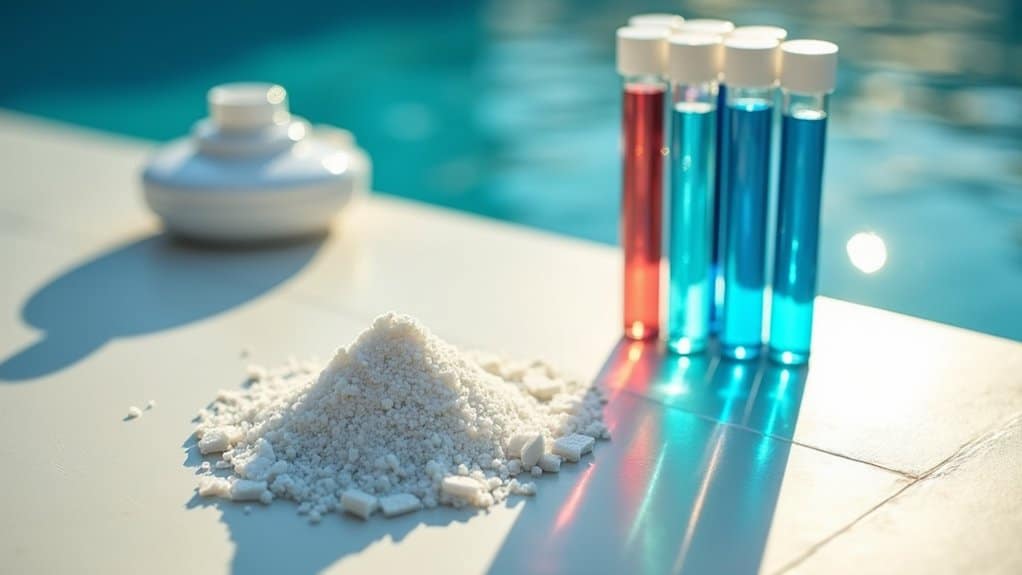
While swimming pool maintenance requires various chemical treatments, chlorine stands as the cornerstone of pool safety and sanitation. When you add chlorine to your pool, it forms hypochlorous acid, which actively destroys harmful pathogens and oxidizes organic contaminants. Though chlorine alternatives exist, none match chlorine’s extensive effectiveness at maintaining 1-3 ppm concentration levels needed for water safety. Regular pH balance monitoring between 7.2-7.6 ensures optimal chlorine effectiveness. Among chlorine options, trichlor tablets provide 90% available chlorine making them highly efficient for routine maintenance. The CDC reports that nearly half of pool chemical injuries affect children under 18 years old, emphasizing the importance of proper handling.
You’ll need to test your pool water weekly to prevent dangerous under- or over-chlorination, as proper levels are essential for swimmer protection. Safe storage of chlorine is critical, requiring appropriate PPE and chemical separation to prevent hazardous reactions. Through continuous oxidation, chlorine breaks down sweat, oils, and organic waste, ensuring your pool water remains clear while meeting vital disinfection standards that align with global water safety protocols.
Balancing Ph Levels for Optimal Performance
Testing your pool’s pH levels daily during peak swimming season guarantees you’ll catch imbalances before they damage equipment or irritate swimmers’ eyes and skin. You’ll need to add muriatic acid or sodium bisulfate when pH exceeds 7.8, while soda ash or baking soda becomes necessary when levels drop below 7.2. To maintain ideal pH between 7.3 and 7.6, you should distribute pH-adjusting chemicals in a circular motion at the deep end, then wait 20 minutes before retesting. Using muriatic acid requires extra caution as it is extremely corrosive and can cause serious harm if mishandled. Regular testing is especially important since tap water levels can vary between 6.5 and 8.5, affecting your pool’s overall pH balance. Maintaining proper pH levels ensures chlorine effectiveness in sanitizing your pool water and protecting swimmers from harmful bacteria.
Ph Testing Best Practices
Proper pH balance stands as the cornerstone of effective pool maintenance, directly impacting both swimmer comfort and sanitizer efficiency. You’ll need to test pH levels 2-3 times weekly during normal use, increasing frequency during heavy swimming periods or after rainfall. When collecting samples, submerge your testing vial 18 inches below the surface to avoid contamination. Maintaining pH between 7.2 and 7.8 is essential for preventing equipment damage and ensuring proper sanitation. Low pH levels can lead to skin irritation and equipment corrosion if left unchecked.
For accurate pH measurement, use dedicated testing vials and pre-rinse them with pool water. Liquid reagent kits offer greater precision than test strips, though you’ll need to avoid air bubbles when mixing. Pool test kits provide comprehensive testing coverage compared to other methods. Always perform sequential testing (alkalinity first, then pH) to guarantee accuracy. Monitor total alkalinity levels between 80-120 ppm to prevent pH fluctuations, and maintain detailed records to identify patterns in your pool’s chemical behavior.
Acid and Base Adjustments
After identifying your pool’s pH levels through testing, you’ll need to make precise chemical adjustments to maintain ideal water chemistry. When faced with acidic conditions below 7.2, apply soda ash (sodium carbonate) to raise pH levels. For basic solutions above 7.8, use sodium bisulfate or muriatic acid to lower pH.
Always adjust alkalinity before pH corrections, as this provides a stable foundation for lasting chemical balance. You’ll want to dilute pH adjusters before application and add them gradually to prevent overcorrection. Keep the target pH between 7.4-7.6 for maximum chlorine efficiency and swimmer comfort. HTH Pool Care products offer reliable solutions for maintaining proper pH balance. If you experience issues accessing online pool maintenance resources, you may encounter security blocks when attempting to view certain websites. Remember to avoid mixing pH adjusters with chlorine, as this can create dangerous chemical reactions. If your access to pool maintenance websites is restricted, you may need to provide a Ray ID number to resolve the issue. Monitor your adjustments weekly to maintain proper balance and protect your pool equipment’s longevity.
Understanding Total Alkalinity Management
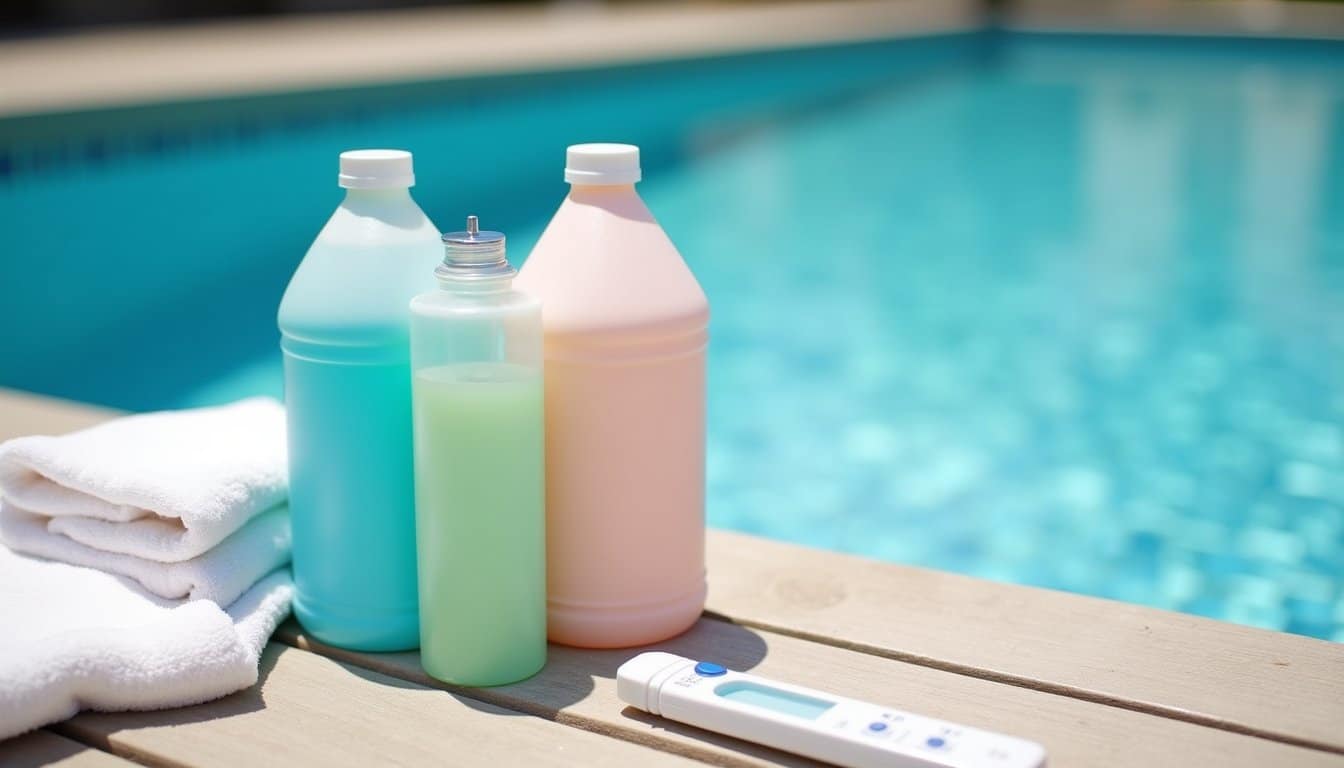
Total alkalinity (TA) serves as your pool’s primary defense against pH fluctuations, acting as an essential buffer that maintains water chemistry stability. You’ll need to maintain TA levels between 80-120 ppm to prevent alkalinity fluctuations and guarantee ideal buffer capacity. When TA drops below 60 ppm, you’ll experience pH bounce, making it difficult to maintain consistent readings. Conversely, levels above 180 ppm can cause pH lock, rendering your chemical adjustments ineffective. Regular monitoring of alkalinity helps protect pool equipment from corrosion and damage. The proper balance of alkalinity also ensures that chemical efficiency remains optimal for all pool treatments. Environmental factors like pool shock treatments can significantly impact your alkalinity levels.
To adjust low TA, add sodium bicarbonate (baking soda) at a rate of 1 pound per 10,000 gallons to raise it by 10 ppm. For high TA, carefully apply muriatic acid during circulation. Always test TA weekly using reliable DPD test kits, and make adjustments in small increments to avoid overcorrection.
Weekly Shock Treatment Protocols
Regular pool shock treatments form the cornerstone of effective sanitization and oxidation protocols, requiring weekly application to maintain pristine water quality. You’ll need to establish a consistent shock frequency, typically administering treatments at night when UV exposure won’t degrade the chemicals. For optimal safety, always use protective gear and goggles when handling shock chemicals.
Choose between two primary shock types: cal-hypo shock for raising both pH and chlorine levels, or non-chlorine shock (MPS) for oxidation without pH adjustment. Apply 1-2 pounds of cal-hypo shock per 10,000 gallons, adjusting based on your current chlorine readings. You’ll need to shock more frequently during heavy pool usage or after rainstorms. Always test your water 24 hours post-shock, ensuring Free Available Chlorine (FAC) reaches 1-3 ppm before allowing swimmers to return to the pool.
Preventive Algaecide Application Methods
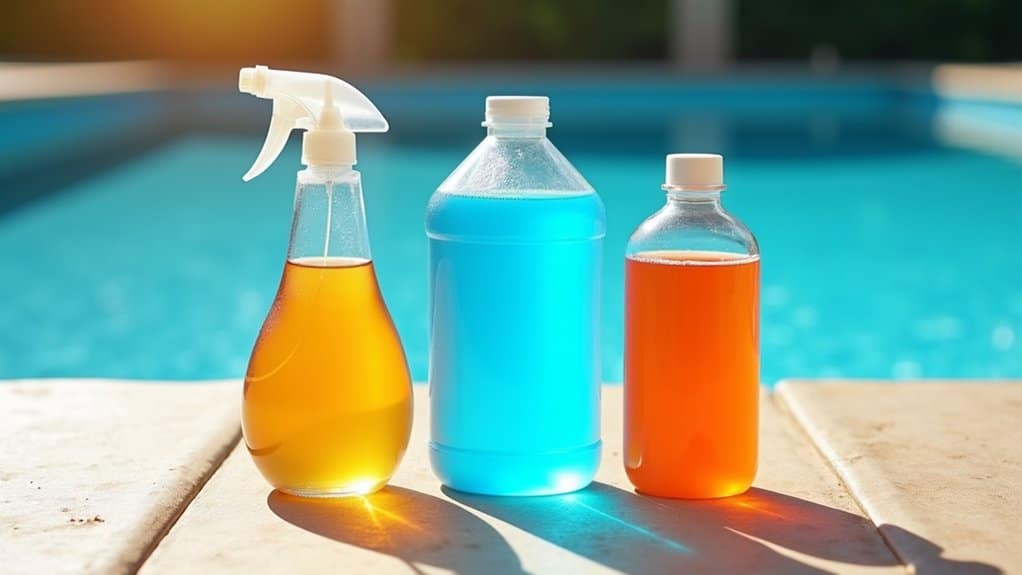
Implementing preventive algaecide treatments demands precise timing and application methods to maintain crystal-clear pool water. You’ll need to apply algaecide weekly around the pool’s perimeter, using proper dilution ratios (10ml per 1000L initially, 5ml per 1000L for maintenance). Before starting your preventive strategies, check that chlorine levels are at 1-3 ppm and pH ranges between 7.2-7.8.
To maximize effectiveness, rotate between different algaecide formulations to prevent resistance buildup. After application, brush the pool’s walls and floor, then run the pump for at least 24 hours to guarantee even distribution. During hot weather or high-use periods, you’ll need to increase application frequency. Remember to calculate your pool’s volume precisely to avoid overdosing, which can lead to foaming or skin irritation.
Testing Kit Requirements and Procedures
Your weekly pool testing kit must include DPD or FAS-DPD reagents for accurate chlorine measurements, pH test solutions with phenol red indicators, and specialized tests for total alkalinity and cyanuric acid levels. You’ll need to follow precise sampling procedures, collecting water from 12 inches below the surface and using exact reagent quantities specified in your test kit’s instructions. Testing all essential parameters shouldn’t take more than 15 minutes when you’re properly organized and familiar with your kit’s components.
Essential Testing Kit Components
Proper pool maintenance requires five essential testing kit components to accurately monitor water chemistry. You’ll need reliable reagents for testing chlorine, pH, alkalinity, hardness, and cyanuric acid levels. Test kit importance can’t be overstated, as each component plays a vital role in providing accurate readings.
Your kit must include precise dropper bottles for consistent reagent application, along with color comparison charts for visual result interpretation. Titrant solutions are necessary for measuring calcium hardness and alkalinity levels accurately. Finally, you’ll need a proper storage container to protect your testing materials from light and heat exposure. Proper reagent maintenance means storing these components in cool, dark environments and replacing them annually to guarantee reliable results in your weekly testing routine.
Accurate Testing Step-by-Step
Following precise testing procedures guarantees reliable water chemistry readings for your pool maintenance routine. Begin with proper sample collection, drawing water from 18+ inches below the surface to avoid contamination. You’ll want to stay clear of jets and filter returns while using your test kit’s integrated sampler.
For accurate vial preparation, fill each container precisely to the marked line and use dedicated vials for different chemical tests. Add your reagents immediately after filling, following exact drop counts or tablet specifications. Once you’ve added chemicals, cap the vials tightly and invert them 10-15 times to confirm thorough mixing. Wait 30-60 seconds before comparing results to your calibrated color charts, and always conduct readings in natural light for the most accurate measurements.
Weekly Testing Time Management
While maintaining a pool requires regular chemical testing, efficient time management and proper equipment selection streamline the weekly maintenance process. Your testing frequency depends on pool usage and weather conditions, but you’ll save significant time by implementing proven time-saving techniques and using the right tools.
- Select a thorough 6-parameter test kit with pre-measured reagents to eliminate guesswork and reduce testing time.
- Establish a dedicated testing station with all supplies organized in a cool, dark space for quick access during weekly checks.
- Batch your parameter testing in one session using separate containers to prevent cross-contamination and maintain accuracy.
- Consider investing in a digital tester for automated readings, especially if you’re managing multiple pools or require frequent testing.
These strategies guarantee consistent results while maximizing efficiency in your weekly maintenance routine.
Chemical Storage and Safety Guidelines
Safe storage of pool chemicals requires strict adherence to established safety protocols and safety measures. You’ll need to maintain proper chemical storage conditions by controlling temperature below 95°F, guaranteeing adequate ventilation, and protecting chemicals from moisture. Follow these essential guidelines to prevent hazardous reactions and maintain safety.
| Safety Aspect | Required Action | Key Protocol |
|---|---|---|
| Storage | Keep chemicals separated by type | Use original containers |
| Environment | Maintain below 95°F/35°C | Guarantee proper ventilation |
| Emergency | Install fire suppression | Keep spill kits ready |
Store chemicals in their original containers, and don’t mix incompatible substances like chlorine and acids, which can create dangerous reactions. You’ll need to maintain accurate inventory records, regularly inspect container integrity, and guarantee only trained staff handle chemicals. Remember to post clear safety signage and emergency procedures in your storage area.
Frequently Asked Questions
Can I Swim Immediately After Adding Pool Chemicals?
No, you shouldn’t swim immediately after adding pool chemicals, as this poses serious swimming safety risks. Different chemicals require specific wait times: chlorine shock needs 24+ hours, while muriatic acid requires 20-30 minutes for proper chemical reactions and dilution. You’ll need to wait for chlorine levels to return to 1-4 ppm and test the water before entering. Always follow product labels and verify water chemistry before swimming.
How Do Weather Conditions Affect Chemical Consumption in Pools?
Weather impacts greatly affect your pool’s chemical balance and consumption rates. You’ll notice that UV rays rapidly break down chlorine, requiring more frequent additions. High humidity accelerates chemical reactions and promotes algae growth, while temperature spikes reduce sanitizer efficiency and increase bacterial growth. During rainy periods, you’ll need to adjust chemicals more often as rainwater dilutes your pool’s chemistry and introduces contaminants that deplete sanitizer levels.
What Causes Chlorine to Suddenly Disappear From Pool Water?
Your pool’s sudden chlorine loss typically stems from multiple factors working together. UV radiation rapidly breaks down unstabilized chlorine, while high bather loads introduce contaminants that deplete sanitizer levels. Chemical imbalances, particularly incorrect pH or CYA levels, can accelerate this process. You’ll also find that algae blooms and organic debris create significant chlorine demand, while rainfall dilutes existing chemical concentrations. Regular testing helps identify these issues early.
Should I Adjust Chemicals Differently for Indoor Versus Outdoor Pools?
Yes, you’ll need to adjust your chemical approach considerably between indoor and outdoor pool chemicals. For outdoor pools, you must use stabilized chlorine and maintain CYA levels at 30-50 ppm to protect against UV degradation. Indoor pool chemicals don’t require stabilizer, and you can opt for unstabilized chlorine or bromine. You’ll also need more frequent chemical adjustments for outdoor pools (2x weekly) compared to indoor pools (1x weekly) due to environmental exposure.
Why Do Pool Chemicals Seem Less Effective During Peak Summer Months?
You’ll notice reduced chemical effectiveness during peak summer months due to several key factors. The intense summer heat accelerates chemical breakdown, particularly affecting chlorine’s stability when exposed to UV rays. Your pool’s increased bather load introduces more contaminants while higher temperatures speed up bacteria growth, overwhelming sanitizers. Additionally, warmer water temperatures destabilize chemical reactions, making it harder to maintain proper sanitizer levels and requiring more frequent chemical adjustments.