


Your pool skimmer removes debris by creating suction that draws surface water through an opening into a collection basket. The weir, a one-way flap, guides floating leaves, insects, and oils into the basket before they reach your pump or filter system. Surface tension keeps debris suspended at the water-air boundary, making it easier for the skimmer to capture contaminants. The equalizer line prevents air intake during low water levels, maintaining consistent suction. Understanding how each component works together reveals optimization strategies that improve your skimmer’s performance.
The Basic Function of a Pool Skimmer
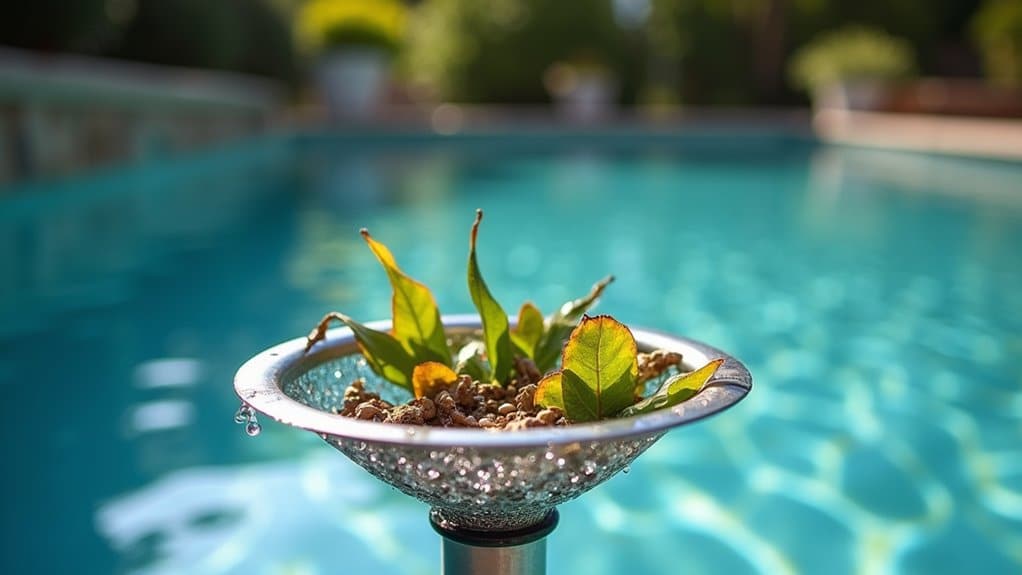
Because floating debris can quickly degrade water quality and damage filtration equipment, pool skimmers serve as your pool’s initial line of defense. These devices utilize suction flow to draw water and floating debris through an opening at your pool’s surface, where a collection basket traps large particulates before they reach your pump or filter system.
Your skimmer operates as the first stage in filtration, capturing leaves, insects, hair, and oils that would otherwise sink and contaminate your water. Proper skimmer placement considerations guarantee ideal surface coverage, while flow rate adjustments allow you to control suction intensity based on your pool’s size and debris volume. An equalizer line prevents the skimmer from drawing in air when water levels drop, protecting your pump from damage. Frequent basket emptying sustains effectiveness and prevents equipment blockages, protecting your filtration system’s longevity and performance. Many pool owners also use floating skimmers that automatically adjust to maintain optimal positioning as water levels fluctuate throughout the season. Skimmer weir doors help regulate water flow and trap debris when the pump is off, enhancing your skimmer’s overall debris collection capability.
Key Components That Enable Debris Removal
You’ll find that the weir and basket system work together to capture and contain floating debris before it enters your filtration lines. The weir’s hinged flap moves with your water level to create a surface skim effect, while the basket below collects leaves, insects, and solids in a fine mesh container. Your suction line then draws this debris-laden water through the skimmer into the pump, with the basket acting as the final barrier to protect your filter from clogs. The skimmer faceplate provides an additional protective layer by preventing larger debris from entering the skimmer body while still allowing water to pass through efficiently. This dual function of cleaning the surface while containing debris helps maintain the overall water quality of your pool. Regular skimming with this system prevents clogging of the pool’s filtration system and ensures your equipment operates efficiently throughout the season.
Weir and Basket System
At the heart of every pool skimmer’s debris removal capability lies the weir and basket system, two interconnected components that work together to trap floating debris before it can sink or recirculate. The weir, a one-way flap at the skimmer’s mouth, forces water and debris in the direction of the basket while preventing backflow. Recent weir design optimization boosts water velocity for more effective skimming. Behind the weir sits your basket, typically constructed from durable plastic using basket material innovation that improves durability and mesh efficiency. This sieve captures leaves, bugs, and surface debris, ensuring only filtered water reaches your pump. You’ll need to empty the basket regularly and inspect both components for damage. Proper alignment and maintenance of this system prevents leaks and optimizes your pool’s cleanliness. For vinyl pools, leaking skimmers are usually fixed by replacing the faceplate and gaskets to ensure the weir and basket system functions properly.
Suction Line Integration
While the weir and basket system captures floating debris, the suction line integration transforms your skimmer into an active removal mechanism. Your pool pump creates negative pressure that draws surface water through the suction line, pulling debris directly into the skimmer basket before it reaches your filtration system.
Understanding suction line flow dynamics is critical; optimal pressure guarantees efficient debris transport while preventing clogs that compromise performance. The equalizer line prevents air intake during low water levels, maintaining consistent pump priming. Multiple skimmer drains positioned strategically around your pool work together to prevent suction hazards while maintaining balanced water circulation.
Suction line maintenance impact cannot be overstated. Regular basket emptying and port inspections prevent blockages that reduce flow efficiency. When obstructions occur, diverter valve manipulation or drain flushers can restore normal operation. Monitoring suction efficiency helps you identify air leaks or reduced flow early, securing your skimmer operates at peak debris removal capacity.
How Surface Tension Guides Debris Collection

Surface tension acts as an invisible elastic film across your pool’s water surface, and it’s fundamental to how skimmers capture debris. This phenomenon keeps leaves, insects, and pollen suspended at the water-air boundary rather than allowing them to sink immediately.
Your skimmer opening creates a water draw that pulls this surface layer, where surface tension corrals debris, directly into the mechanism. As water moves in the direction of the skimmer, surface tension prevents debris from submerging, guiding it into capture. Automatic skimmers connect to the filtration system and enhance this process by maintaining consistent water flow that maximizes debris collection at the surface. The skimmer basket then catches larger debris while water continues through the pipe to the filter pump.
However, you must maintain surface tension maintenance through proper chemical balance and minimal agitation. Wind, splashing, and excessive turbulence disrupt this film, altering debris distribution patterns and reducing skimming efficiency. By keeping return jets angled for gentle circulation and avoiding unnecessary surface agitation, you preserve the tension that makes debris collection possible.
The Weir: Your Skimmer’s First Line of Defense
You’ll find that the weir maintains surface tension control by creating a waterfall effect that draws floating debris continuously into the skimmer basket rather than allowing it to disperse across the pool. This hinged flap seals when water flow stops, preventing debris you’ve already captured from escaping back into the water, a critical function that keeps your skimmer’s work from being undone. Without a functioning weir, you’d face constant debris recirculation, forcing you to skim manually and considerably reducing your system’s overall effectiveness. The weir also prevents air from entering the pump and filter system, which protects your equipment from damage and maintains optimal water circulation. The weir is typically composed of durable materials designed to withstand constant water exposure while maintaining its flexibility. Many jurisdictions require weir installation as part of code compliance requirements to ensure proper pool maintenance and safety standards.
Maintaining Surface Tension Control
How does your skimmer manage to capture floating debris before it sinks beyond reach? You’re relying on the weir’s ability to maintain surface tension control through continuous movement and proper positioning.
Your weir sustains ideal debris capture by:
- Floating freely with water level fluctuations, ensuring the weir consistently draws surface water containing debris into the skimmer mouth
- Responding to surface agitation influence, where the weir’s pivoting action amplifies the waterfall effect and increases debris removal rates
- Remaining unobstructed and properly fitted, preventing jams that would compromise surface tension effects and allow debris to bypass collection
You’ll maintain this control by inspecting your weir regularly for damage, ensuring correct basket compatibility, and monitoring water levels. A stuck or misaligned weir immediately reduces skimming efficiency, allowing organic matter to disperse into lower water layers before your filtration system can capture it effectively. Regular inspection of the weir movement weekly ensures it functions properly and maintains consistent water flow into the skimmer basket. Emptying the skimmer basket regularly prevents clogging that would restrict the weir’s ability to draw in surface water and debris effectively.
Preventing Debris Escape Back
The weir’s pivoting action maintains surface tension control, but its real value lies in what happens when the pump stops; it’s your skimmer’s one-way valve that prevents debris from escaping back into your pool. When suction ceases, the weir snaps shut, trapping captured leaves, insects, and contaminants inside the basket chamber. This mechanical barrier guarantees physical retention of debris until you manually remove it, eliminating reintroduction into your pool system.
This flow control optimization directly supports water quality improvement by preventing organic matter from recirculating. Trapped debris can’t decay in your water, reducing nutrient loads that fuel algae growth. By maintaining this one-way barrier, you’re protecting your pool’s chemical balance and minimizing sanitizer waste, preserving clearer, healthier water throughout your filtration cycle.
Understanding the Suction Mechanism
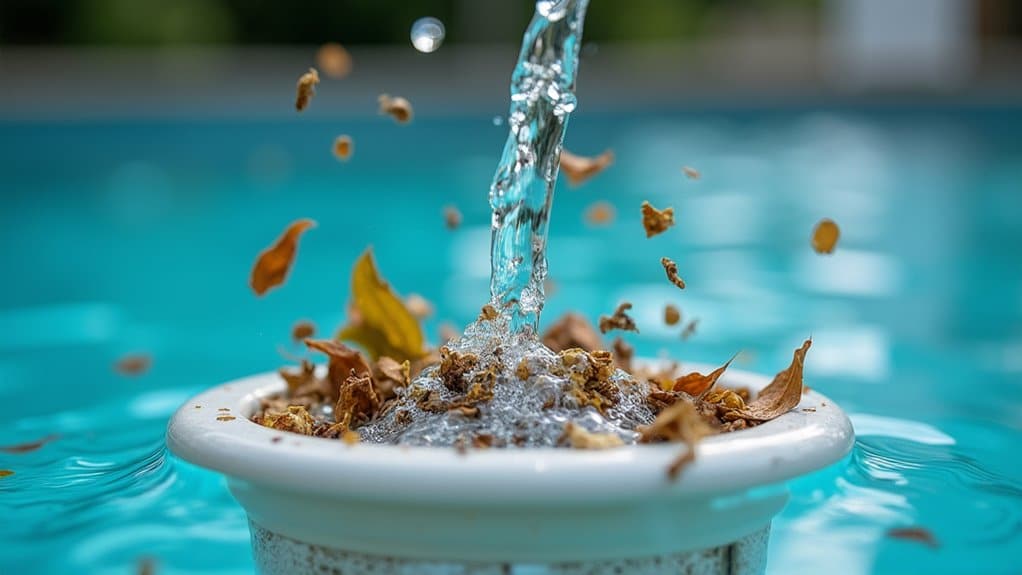
Your skimmer’s effectiveness depends on the pump generating negative pressure through the suction line, which pulls surface water and floating contaminants into the skimmer mouth. Suction consistency relies on several factors:
- Pump strength directly affects water circulation rates and comprehensive suction power
- Skimmer positioning guarantees ideal coverage and unobstructed flow paths for debris collection
- Flow regulators permit you to customize suction intensity based on your pool’s size and debris load
Proper maintenance of the suction circuit, including regular basket cleaning and equalizer line function, prevents air infiltration that would compromise pump operation. Understanding these mechanics helps you maximize your skimmer’s performance and maintain reliable debris removal throughout the pool season.
Why the Skimmer Basket Matters for Efficiency
While your skimmer’s suction mechanism pulls water in the direction of the filtration system, it’s the basket inside that determines how effectively you’ll remove debris before it reaches your pump and filter. The mesh design traps floating contaminants, leaves, insects, hair, and oils, while allowing water to pass through seamlessly. Larger baskets accommodate greater debris accumulation rates, directly reducing your filter maintenance frequency and labor demands. By capturing debris at the surface before it decomposes, you prevent organic matter from clogging downstream equipment and degrading water quality. Regular basket emptying, ideally weekly, maintains ideal skimming efficiency and protects your pump and filter from premature wear. This simple component extends your entire system’s lifespan while keeping chemical balance stable.
The Role of Water Circulation in Debris Capture
You’ll find that surface tension naturally guides floating debris in the direction of your skimmer’s inlet, where laminar flow mechanics create organized water movement patterns that prevent turbulence from scattering particles. Your return jet positioning directly impacts how effectively this circulation pattern channels debris to the surface, as properly angled jets create a gentle, directional current rather than chaotic water movement. By understanding these hydraulic principles, you can optimize your skimmer’s debris capture rate and reduce the burden on your filtration system.
Surface Tension Guides Debris
Because water molecules naturally cling together at the surface, they create an invisible barrier that keeps floating debris from sinking quickly, and that’s precisely what makes your skimmer so effective.
This surface tension directly influences debris behavior by maintaining leaves, oils, and insects at the water’s surface where your skimmer can capture them. You’ll notice that:
- Hydrophobic contaminants remain suspended rather than dispersing downward, extending their exposure to skimmer action
- Surface effects prevent rapid breakdown of oils and films, allowing absorbers like tennis balls to work alongside your skimmer
- The cohesive barrier prolongs debris accessibility, ensuring floating waste stays within reach of your system’s suction intake
Understanding these surface effects helps you recognize why consistent skimmer operation yields superior debris removal compared to relying solely on filtration systems that can’t access surface-level contaminants efficiently.
Laminar Flow Mechanics Explained
How does water actually move debris in the direction of your skimmer? Your pool’s circulation system creates laminar flow, smooth, parallel streamlines that transport debris dependably toward your skimmer inlet. This ordered movement depends on the geometry engineering of your skimmer’s intake, which aligns with water streamlines to maximize debris capture.
You’ll notice that lower velocities and higher viscosity maintain laminar conditions better than turbulent alternatives. Temperature impact plays a significant role here; cooler water exhibits greater viscosity, naturally preserving laminar flow patterns. Your pump’s flow rate, typically 15–55 GPM, must stay balanced to sustain this “glassy” surface appearance.
When you observe this smooth water movement, you’re witnessing ideal hydrodynamic conditions where debris travels along predictable paths directly into your skimmer basket rather than dispersing throughout your pool.
Return Jet Positioning Impact
Where water exits your pool’s return jets fundamentally determines whether debris reaches your skimmer or settles into dead zones. Proper jet alignment creates directional flow patterns that transport surface debris in the direction of your skimmer intake while improving circulation efficiency.
Strategic jet positioning delivers three critical advantages:
- Angled-downward jets circulate deeper water, lifting sunken organic particles toward your main drain and skimmer for removal
- Single-direction alignment generates circular flow that minimizes stagnant areas behind ladders, steps, and corners where debris accumulates
- Cross-pool jet orientation optimizes skimmer capture by pushing water consistently toward the intake, breaking surface tension for contaminant entry
Conversely, jets aimed directly at skimmers disrupt ideal circulation patterns, leaving deeper water inadequately filtered. Improper angles allow debris to bypass collection entirely. You’ll achieve superior performance by ensuring return jets push water across your pool in the direction of skimmer positioning.
Preventing Debris From Reaching Your Filter and Pump
Your pool’s skimmer acts as the initial line of defense, capturing surface debris before it can damage your filtration system. By trapping leaves, insects, and oils in its basket mechanism, you prevent large obstacles from clogging your pump impellers or filter grids.
This early interception reduces flow restriction and equipment damage considerably. You’ll need less frequent filter maintenance and pool pump inspection since the skimmer handles oversized debris upstream. Without effective skimming, accumulated materials risk causing pump overheating or blockages that compromise performance.
Maintaining your skimmer’s weir and basket guarantees fine particulates alone reach your filter stage. This approach extends your filtration equipment’s lifespan while keeping your circulation system unobstructed. Regular skimmer maintenance directly minimizes costly downstream interventions and protects your entire pool infrastructure.
Maintaining Your Skimmer for Optimal Performance
Regular maintenance keeps your skimmer functioning at peak efficiency, preventing the debris capture system from becoming a bottleneck in your pool’s circulation. You’ll need to implement proactive maintenance steps to guarantee consistent performance.
Empty your skimmer basket weekly, inspecting for cracks or wear that compromise filtration. Rinse thoroughly to remove stuck dirt and algae buildup. Monitor water level to maintain coverage across at least half the skimmer opening.
Your seasonal adjustment considerations should include:
- Intensifying cleaning routines during fall and spring when leaf and pollen influx increases
- Draining and covering the skimmer during winter to prevent freeze damage
- Adjusting schedules based on pool usage and nearby vegetation
Regularly inspect the weir mechanism for proper movement and check the housing for hairline cracks. Record maintenance dates in a log to track consistency and detect emerging issues early.
Common Issues That Reduce Skimmer Effectiveness
Even with diligent maintenance routines, skimmers can still underperform when specific problems develop. You’ll encounter common issues that compromise effectiveness: full baskets block debris collection, while improper water levels disrupt weir operation and surface draw. Clogged skimmer lines from leaves, algae buildup, or collapsed piping restrict water flow to your pump, creating suction loss. Structural integrity issues, including cracks, leaks, and misaligned installations, reduce operational efficiency and debris capture. Environmental wear impacts are significant; UV exposure degrades plastic components, warping lids and weir gates that no longer seal properly. In addition, air locks in pipes stop water circulation entirely, while pump speed settings mismatched to your skimmer design prevent ideal performance. Addressing these problems promptly restores your skimmer’s debris removal capability.
Frequently Asked Questions
How Many Skimmers Does My Pool Need Based on Size and Debris Load?
You’ll need one skimmer per 400 square feet of pool surface area. However, you should adjust your assessment based on debris load, trees and windy conditions demand additional skimmers or frequent maintenance. For ideal performance, you’ll position skimmers strategically around your pool’s perimeter to enhance circulation patterns. You can also fine-tune your skimmer flow rate adjustment to match your debris volume, ensuring you’re not overwhelming your filtration system while sustaining adequate surface coverage.
Can a Pool Skimmer Work With Above-Ground Pools, or Only In-Ground Pools?
You can absolutely use pool skimmers with above-ground pools. They’re designed specifically for above-ground pool integration, mounting externally on your pool’s walls using pre-cut holes or new openings. Your skimmer capacity requirements depend on your pool’s size; average pools need one unit, while larger installations require two skimmers for ideal debris removal efficiency. Most brands offer universal models compatible with standard pump and filter systems, making installation straightforward.
What’s the Difference Between Automatic and Manual Skimmers for Debris Removal?
You’ll find manual skimmers require your physical effort, you’re actively sweeping debris from the surface. Automatic skimmer types operate continuously without intervention, using your pool’s filtration system or dedicated motors. Regarding skimmer positioning, manual units let you target specific debris spots quickly, while automatic models maintain consistent, thorough surface cleaning throughout the day. For large pools with heavy debris, you’d benefit from automation’s efficiency; small pools favor manual skimmers’ cost-effectiveness and flexibility.
How Does a Skimmer Integrate With Chemical Dispensers for Pool Treatment?
You can integrate chemical dispensers directly into your skimmer basket for automated chemical treatment. The constant water circulation through your skimmer efficiently disperses sanitizer tablets, ensuring steady chemical distribution throughout your pool. However, you’ll want to monitor for localized chemical concentration and consult your equipment manufacturer’s guidelines. Consider upgrading to in-line feeders for precise control and reduced equipment wear if you’re concerned about plastic degradation.
What Happens to Pool Water Quality if the Equalizer Line Malfunctions?
If the equalizer line malfunctions, you’ll experience disrupted water circulation, causing uneven chemical distribution and potential stagnation. You’ll notice debris accumulation, reduced filtration efficiency, and compromised disinfection effectiveness. The pump risks drawing air, leading to cavitation and overheating. You’re left with dead zones where bacteria and algae proliferate, degrading water quality rapidly. Your skimmer loses suction below the water line, preventing surface contaminant removal and increasing your chlorine demand substantially.