


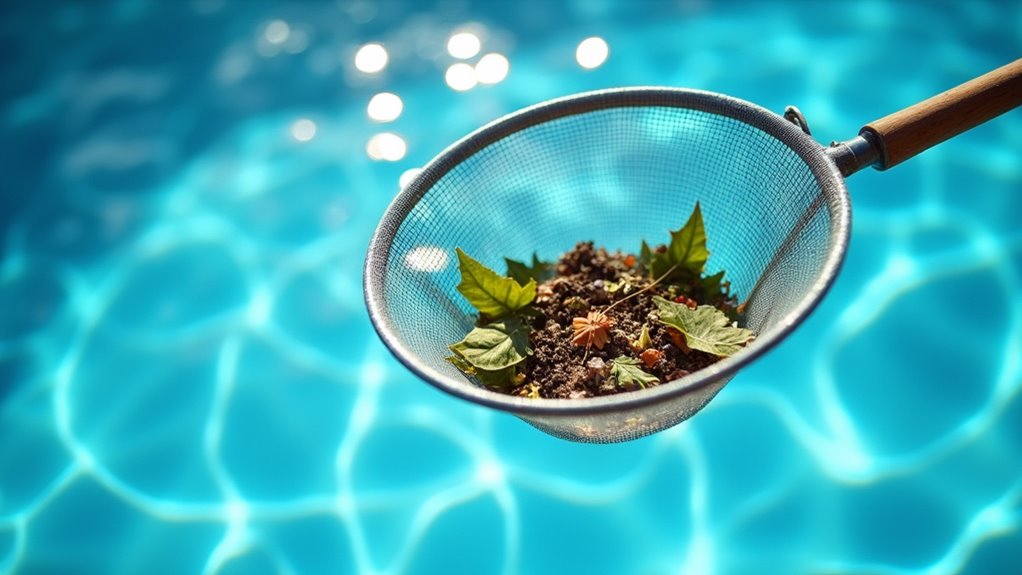

Pool maintenance debris means any unwanted material, leaves, insects, hair, sunscreen, dirt, that you’ll find accumulating in your pool. This debris overwhelms your filtration system, binds chlorine molecules, and reduces disinfectant effectiveness. It creates ideal conditions for bacteria and algae growth. You’ll also face water discoloration, reduced visibility, and health risks like respiratory infections and skin irritation. Understanding what constitutes debris helps you develop systematic cleaning strategies that protect your water quality and swimmer safety.
Understanding Pool Debris

Pool debris comes in five primary forms, each posing distinct maintenance challenges. Surface debris, leaves, twigs, insects, and pollen, floats temporarily before sinking. Settled debris consists of fine dirt, silt, and organic matter that accumulates on your pool floor, often beyond skimmer reach. Windborne debris enters from surrounding environments, particularly problematic near trees or construction sites. Human-introduced debris encompasses hair, body oils, cosmetics, and sunscreens from swimmers. Weather-related debris increases markedly after storms or high winds, demanding intensive cleanup efforts.
Understanding these debris types helps you anticipate physical pool impacts. Accumulated organic material promotes algae growth and bacterial contamination. Debris causes staining on plaster, vinyl, and tile surfaces. Physical blockage of filtration systems reduces cleaning efficiency and risks mechanical failure. A skimmer basket collects much of the floating and surface debris before it can settle or cause problems. Hiring a pool service company ensures consistent debris removal and prevents the algae and bacteria buildup that threatens your pool’s health. Recognizing these distinctions enables you to implement targeted removal strategies effectively. Weekly skimming and brushing are minimum requirements to prevent debris accumulation from compromising your pool’s water quality and structural integrity.
Common Types of Pool Contaminants
Understanding what contaminates your pool is essential for effective maintenance and swimmer safety. You’ll encounter three primary contaminant categories: physical, chemical, and biological.
Physical contaminants include dirt, leaves, hair, and insects that enter your pool through wind, rain, and swimmers. Chemical contaminants encompass chlorine by-products, cosmetics, and metals from corroded equipment. Biological contaminants consist of bacteria, protozoa, and viruses introduced by swimmers or contaminated source water.
You should recognize debris accumulation patterns, which vary based on pool location and usage. Seasonal contaminant fluctuations intensify during fall when leaves accumulate and summer when algae blooms occur. Dead wildlife such as frogs, lizards, or insects can also drown in pools and contribute to biological contamination. Understanding these patterns helps you anticipate maintenance needs. Organic matter from unshowered swimmers reacts with free disinfectant and reduces disinfectant effectiveness while forming respiratory irritants. Proper storage and handling of pool chemicals in locked cabinets prevents additional chemical contamination from accidental spills or leaks.
Disinfection by-products like trihalomethanes form when chlorine reacts with organic matter, potentially causing respiratory irritation. Regular filtration and shocking reduce harmful by-product concentrations. Addressing these contaminants systematically protects both water quality and swimmer health.
How Debris Affects Water Quality
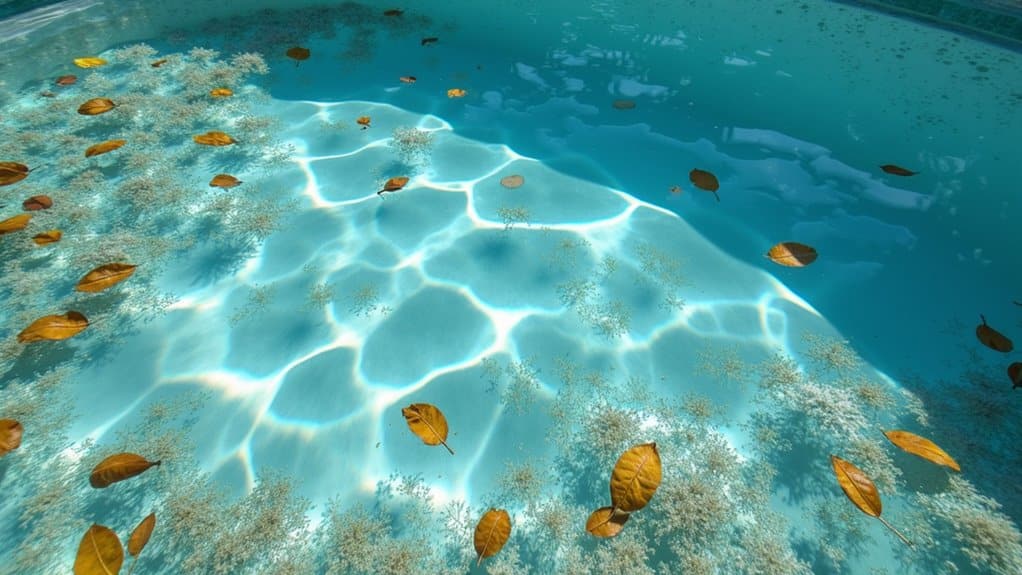
When organic debris accumulates in your pool, it doesn’t simply sit inert on the surface; it actively degrades water quality through multiple interconnected mechanisms. The chemical imbalance impact becomes immediately evident as decomposing organic matter binds with chlorine, reducing disinfectant potency and increasing waterborne illness risk. These debris accumulation consequences extend to your filtration system, which becomes rapidly overwhelmed by organic waste particles that compromise sand filter effectiveness. Simultaneously, tannins and humic acids leach into recirculated water, causing yellow or brownish discoloration. Stagnant conditions beneath poorly maintained covers accelerate algae proliferation while promoting bacterial growth. You’ll experience persistent water clarity deterioration, foul odors, and the need for frequent maintenance interventions including backwashing and chemical rebalancing. The cumulative effect destabilizes all sanitation parameters. Additionally, mosquitoes breeding in stagnant water on pool covers can transmit diseases such as West Nile virus and dengue fever, further compromising the health safety of your pool environment. When pool water is improperly discharged during maintenance or drainage, harmful pool chemicals including chlorine, algaecides, and other contaminants can pollute lakes, rivers, and wetlands, causing additional environmental damage beyond your immediate pool area. Debris also creates uneven chemical distribution throughout the pool, preventing sanitizers from reaching all areas effectively and leaving vulnerable zones susceptible to contamination.
Health and Safety Concerns
Neglected pool debris creates immediate physical and biological hazards that directly threaten swimmer safety. You’ll face contamination buildup from organic matter that breeds pathogens like E. coli, Giardia, and Cryptosporidium, causing severe gastrointestinal illnesses and skin infections. Sharp debris induces cuts and scratches, increasing infection risk when contaminated objects wound you.
You’re also exposed to exposure risks from inadequate chlorine levels, which reduce disinfectant effectiveness. Decomposing debris accumulates mold and bacteria, including Legionella, triggering respiratory infections. Unbalanced water chemistry from debris-chlorine binding causes eye irritation, skin burns, and breathing difficulties. Organic compounds like bird droppings can serve as additional breeding grounds for harmful bacteria and parasites that compromise water safety. Regular filter cleaning prevents debris from accumulating and maintains proper water circulation throughout your pool.
Additionally, algae infestations clog filters, further compromising water circulation and bacterial control. Murky water from algae blooms prevents clear visibility of the pool bottom, contributing to diving accidents and other serious injuries. You’ll require immediate medical attention for serious wounds or waterborne illnesses. Systematic debris removal prevents these interconnected health complications.
Essential Tools for Cleaning

You’ll need surface skimming equipment to remove floating debris before it sinks and complicates your cleaning routine. Pairing a leaf net or flat skimmer with a telescopic pole lets you capture leaves, bugs, and organic matter from the surface without entering the pool. For bottom debris removal, you’ll employ manual or automatic vacuums to extract settled particles and fine sediment from the pool floor, which preemptive skimming helps minimize. Types of automatic pool cleaners include pressure side, suction side, robotic, hybrid, and in-floor models, each offering different advantages for maintaining your pool’s cleanliness. A pool brush should also be used to clean pool walls, floors, steps, and ladders to free up additional debris before vacuuming. Using an algae brush with stainless steel bristles on concrete or gunite pool surfaces helps dislodge stubborn algae and debris that regular brushes cannot remove effectively.
Surface Skimming Equipment
Since surface debris is the initial line of contamination in any pool, skimming equipment forms the foundation of effective maintenance. You’ll find several options suited to your specific needs.
Inground skimmers feature weir flaps that prevent debris backflow, while above-ground and floating models accommodate non-permanent pools and irregular shapes. For hands-off maintenance, robotic skimmers offer energy-efficient operation with smart path planning, ensuring automated coverage of corners and edges without frequent intervention.
Manual hand skimmers remain invaluable for spot-cleaning tasks requiring immediate action. You should maintain proper water levels to optimize skimmer function and clean baskets regularly to prevent clogging.
Combining multiple skimming methods, robotic units for routine surface cleaning alongside manual nets for targeted debris removal maximizes your pool’s cleanliness while minimizing filtration strain and extending equipment life.
Bottom Debris Removal
While surface skimming captures floating contaminants, debris that settles on the pool floor requires comparable diligent attention to maintain water clarity and prevent equipment strain. You’ll find that focused vacuuming with manual vacuums provides precise control over spot cleaning and targeted debris removal in corners and steps. For extensive floor coverage, attach your vacuum to a telescoping pole and connect it to your pool’s filtration system.
When you need customized cleaning approaches, consider automatic suction-side or pressure-side cleaners that operate independently. Robotic cleaners excel at thorough maintenance while reducing manual labor by up to 30%. Pair your vacuuming efforts with regular brushing, at least weekly, using nylon bristles for vinyl pools or stainless steel for concrete surfaces. This systematic combination prevents algae formation and optimizes debris removal efficiency.
Choosing the Right Filter System
What determines the best filter system for your pool? You’ll need to evaluate filter system efficiency, equipment compatibility, and your pool’s specific demands.
Sand filters suit large, ground-installed pools with heavy debris loads, though they’re less precise at capturing fine particles. Cartridge filters offer compact design for above-ground pools, striking a balance between efficiency and water conservation. DE filters deliver superior micron ratings (1–3 microns), ideal for high-debris environments, but demand intensive maintenance and careful powder supplementation.
Consider your pool size, debris volume, and maintenance capacity. Sand filters require frequent backwashing; cartridge systems need periodic cleaning without water waste; DE filters need regular powder infusions. Match your equipment’s flow rate to your pool volume. Assess long-term costs: sand offers affordability, cartridge systems save water, and DE provides maximum clarity despite higher operational demands.
Consequences of Poor Maintenance
When you neglect regular pool maintenance, you’ll quickly experience water quality deterioration as chemical imbalances reduce sanitizer effectiveness and debris accumulates, creating conditions for bacterial and algal growth. Your pool equipment, pumps, filters, and heaters will face premature failure from corrosion and mineral buildup, with repairs often exceeding $500 to $1,200 per component. Poor maintenance also exposes you and your family to serious health risks, including gastrointestinal illnesses from parasites, skin infections from algae, and increased vulnerability for children and elderly swimmers with compromised immune systems.
Water Quality Deterioration Issues
Neglecting pool maintenance doesn’t just create an eyesore; it fundamentally compromises water quality in ways that escalate rapidly and become costly to reverse. When you allow debris accumulation, you trigger cascading chemical and biological failures:
- Chlorine depletion: Organic matter consumes sanitizer faster, rendering chlorine ineffective against pathogens
- pH destabilization: Imbalanced chemistry corrodes surfaces while reducing disinfection capacity
- Algal bloom prevention failures: Phosphates and nitrates from debris fuel rapid algae proliferation, clouding water and straining filters
- Pathogen proliferation: Bacteria, viruses, and parasites thrive in neglected conditions, elevating infection risks
Effective chemical balance management prevents these cascading failures. Without systematic debris removal and consistent testing, you’ll face escalating treatment costs, potential health department warnings, and eventual pool closure.
Equipment Damage and Repairs
The chemical and biological failures spawned by poor debris management don’t stop at water quality; they cascade directly into your equipment, triggering a destructive cycle of strain, malfunction, and costly repairs. Clogged filters force your pump to work harder, generating excessive heat that accelerates motor failure. You’ll face unexpected service callouts ranging from minor fixes ($150–$500) to major replacements ($2,000–$3,000). Salt-system corrosion and heater scale buildup compound these costs. Hidden repair expenses mount when you defer maintenance, small issues escalate into emergency closures and revenue loss. Neglecting routine backwashing and debris removal increases energy consumption by 10–20%, draining your budget further. Proactive inspection and standardized maintenance protocols prevent this cascade, extending equipment lifespan and controlling total spending effectively.
Health Risks for Swimmers
While equipment deterioration demands immediate financial attention, the health consequences of poor debris management pose far graver risks to your swimmers.
Neglected pool maintenance directly threatens swimmer safety through multiple pathways:
- Bacterial proliferation: E. coli, Pseudomonas, and Giardia multiply rapidly in inadequately chlorinated water, causing gastrointestinal illnesses and skin infections
- Chemical imbalance: Chloramine formation from organic debris creates respiratory distress and ocular irritation in exposed swimmers
- Visibility reduction: Algae growth and decomposing matter obscure underwater visibility, preventing detection of swimmers in distress
- Vulnerable populations: Children and elderly swimmers face heightened infection risks from waterborne contaminants
Accumulated debris introduces pathogens directly into pool water, overwhelming filtration systems. Chemical irritation compounds these dangers, particularly affecting respiratory health. You’re responsible for maintaining conditions that prevent these preventable illnesses and injuries.
Preventative Strategies for Pool Owners
By implementing systematic preventative measures, you’ll dramatically reduce debris accumulation and minimize maintenance demands on your pool system. Start by implementing regular cover usage; mesh or solid covers prevent leaves, bugs, and debris from entering your pool during off-season periods and after storms.
Next, focus on promoting water circulation by running your pump during peak debris times. This bolsters skimmer effectiveness and prevents debris from settling on the pool floor. Maintain adequate water levels to facilitate smooth skimming action.
Establish a daily routine: skim surfaces with flat nets for large debris and fine mesh skimmers for smaller particles. Empty skimmer baskets weekly, inspect vacuum hoses for leaks, and check debris canisters regularly. Clean filters periodically and inspect drains for blockages. These systematic practices directly prevent clogging and extend your equipment’s lifespan.
Creating a Regular Maintenance Schedule
Once you’ve established preventative strategies, you’ll need to build a customized maintenance schedule that fits your pool’s specific demands. Task prioritization guarantees you allocate resources efficiently across daily, weekly, monthly, and annual activities.
- Assess your pool’s unique characteristics, size, type, equipment maturity, and usage patterns to determine ideal intervals
- Implement seasonal adjustments that account for climate changes, precipitation, and weather-related debris accumulation
- Document all maintenance activities using checklists or digital tracking tools to maintain consistency
- Schedule routine equipment inspections alongside chemical balancing to prevent costly breakdowns
You’ll integrate daily debris removal with deeper cleaning cycles while monitoring pressure readings on filtration systems. This systematic approach prevents neglected tasks while adapting to environmental fluctuations. Establish reminders for task completion, review chemical inventory regularly, and adjust your schedule based on performance records. Professional inspections supplement your routine maintenance annually.
Frequently Asked Questions
How Often Should I Skim My Pool to Prevent Debris Buildup?
You should perform frequent surface skimming daily if your pool experiences heavy debris or sits near trees. For lighter conditions, skim every 2–3 days. After storms, increase frequency immediately. You’ll achieve thorough debris removal by skimming during pump operation and emptying skimmer baskets 1–2 times weekly. This systematic approach prevents debris from sinking, protects your filtration system, and maintains water clarity. Adjust your schedule based on seasonal changes and visible accumulation.
What Is the Cost Difference Between Manual and Robotic Pool Vacuums?
You’ll find manual vacuums cost $20–$200, while robotic models run $500–$1,500. Robotic systems justify their higher upfront cost through superior water circulation efficiency and reduced filter strain. You’ll experience lower long-term expenses because robotic vacuums minimize filter size demands and energy consumption. For smaller pools, manual vacuums offer affordability. For larger pools, robotic systems deliver better cost-effectiveness through automation, decreased maintenance, and amplified debris removal efficiency that preserves your filtration system’s longevity.
Can Pool Debris Cause Equipment Damage, and How Much Do Repairs Cost?
Yes, pool debris greatly damages your equipment and drains your wallet. You’ll face costly repairs when debris clogs filters, strains pumps, and damages heaters. Poor circulation from blockages causes leaks that force prime loss, warping pump baskets and melting seals. You’re looking at $116–$355 annually for routine maintenance expenses, but neglecting debris removal escalates costs substantially. Regular skimming, brushing, and vacuuming protect your equipment longevity and prevent expensive replacements of liners, filters, pumps, and heaters.
Which Filter Type Is Best for Pools With Heavy Tree Coverage?
Diatomaceous Earth (DE) filters are your best choice for heavy tree coverage. You’ll get the finest filtration available, capturing particles as small as 1–5 microns, which sand filter effectiveness and cartridge filter efficiency can’t match. While DE requires more maintenance and higher costs, you’ll maintain crystal-clear water despite constant leaf debris. For comparison, sand filters handle 20–50 microns, and cartridge filters capture 10–15 microns, making them less suitable for your debris-heavy environment.
How Does Pool Cover Usage Reduce Seasonal Debris Maintenance Requirements?
You’ll dramatically reduce seasonal debris maintenance by covering your pool, which blocks leaves and organic matter from accumulating. During off-season months, you’re preventing contamination spikes that’d otherwise require extensive start-up cleaning. You’ll minimize pool cover storage needs since you’re not managing excessive debris buildup. When considering pool cover replacement cycles, you’re investing in fewer seasonal balance adjustments and backwashing sessions, finally streamlining your entire maintenance schedule year-round.