



To maintain proper sanitization in your fiberglass pool, you’ll need to keep free chlorine levels between 1-3 ppm, with levels closer to 3 ppm during summer months. Calculate your pool’s volume (length × width × average depth × 7.5 for rectangular pools) to determine exact dosage requirements. Test chlorine levels 2-3 times weekly, adjusting for weather and usage. During peak season, increase dosage by 25-50% to combat UV exposure. Proper chemical management involves more essential factors that affect your pool’s health.
Understanding Pool Volume and Chlorine Requirements
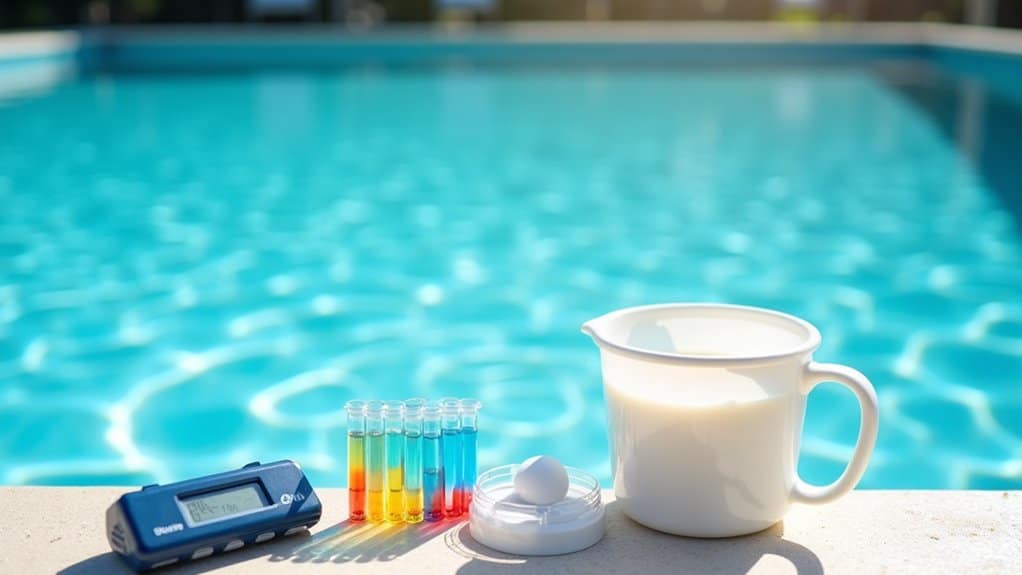
Before calculating the proper chlorine dosage for your fiberglass pool, you’ll need to determine its precise volume in gallons. For rectangular pools, multiply length by width by average depth, then multiply by 7.5. If your pool has varying depths, calculate the average by adding the shallow and deep end measurements and dividing by two. For circular pools, use 3.14 times radius squared to determine the surface area before calculating volume. Regular testing shows that chlorine tablets are the most reliable option for consistent sanitization.
Your pool type and usage patterns directly impact chlorine requirements. Using automated dosing systems helps maintain precise chlorine concentrations consistently. While traditional chlorine remains the standard, chlorine alternatives like saltwater systems may require different calculations. Consider factors such as bather load, local climate, and filtration system when determining dosage. For standard maintenance, target 1-3 ppm chlorine levels, using 1-2 teaspoons per 10,000 gallons. Test your water before adding any chemicals to prevent overchlorination, which can damage fiberglass surfaces over time.
Ideal Chlorine Levels for Fiberglass Pools
Maintaining proper chlorine levels in your fiberglass pool requires precise balance between sanitization and surface protection. You’ll need to keep chlorine concentrations between 1-3 ppm to effectively sanitize while preventing gelcoat damage. When selecting chlorine types, opt for liquid chlorine over calcium hypochlorite to avoid dangerous pH spikes. Using stain control products alongside proper chlorination helps prevent mineral deposits and discoloration on pool surfaces. Weekly vacuuming of the pool floor helps remove debris that can reduce chlorine effectiveness. Regular pH adjustments should only be made once per week to maintain stability.
For ideal maintenance, follow these critical parameters:
- Monitor chlorine levels weekly at minimum, increasing testing frequency during high temperatures or heavy pool use
- Use digital testing methods for precise measurements, and cross-verify with different test kits
- Keep pH between 7.2-7.4 to maximize chlorine effectiveness and protect your fiberglass surface
If levels exceed 5 ppm, you’ll risk permanent surface discoloration. Adjust your chlorine during seasonal changes, as UV exposure and swimmer load greatly impact chlorine demand.
Calculating the Right Chlorine Dosage
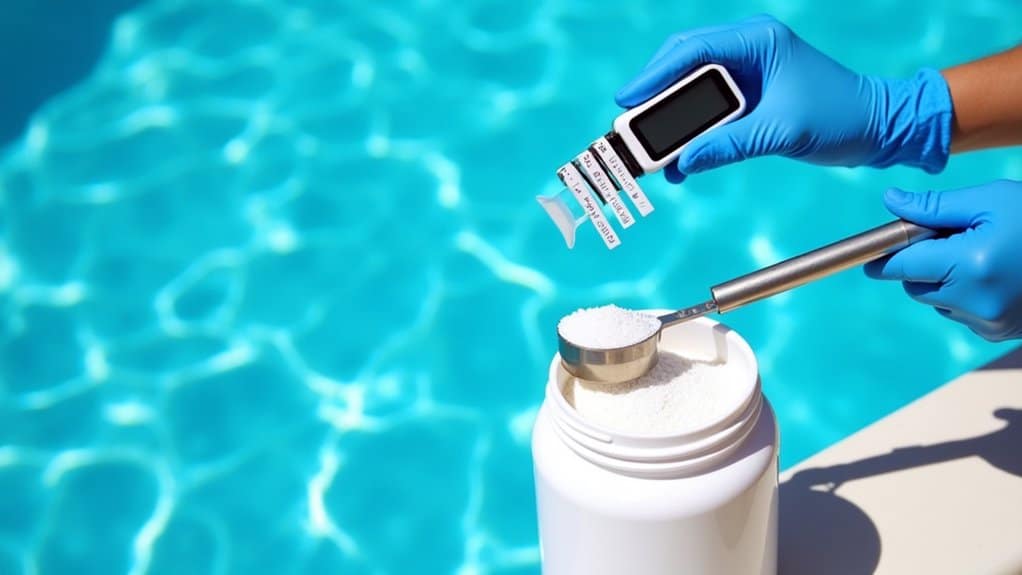
To calculate the correct chlorine dosage, you’ll first need to determine your pool’s volume using length × width × average depth × 7.5 for gallons. You’ll want to maintain free chlorine levels between 1-3 ppm during regular use, though you may need to adjust these targets based on your pool’s stabilizer (CYA) levels and seasonal factors like temperature and bather load. During summer months, you’ll typically need to increase your chlorine additions by 25-50% to combat increased UV exposure and higher swimming activity. Avoid letting undiluted chlorine come into direct contact with your pool surfaces, as this can damage the fiberglass. Using a reliable test kit like the Taylor K-2006 will help ensure accurate chlorine measurements for proper dosing.
Pool Volume Measurement Steps
Accurate pool volume measurement forms the foundation for proper chlorine dosing in fiberglass pools. Your pool shape determines which measurement techniques you’ll need to employ for precise calculations. For basic rectangular pools, use a laser measuring tool or tape to capture length, width, and depth measurements. Common estimation errors can lead to chemical imbalances of up to 10% in pools.
For more complex pool shapes, follow these essential steps:
- Divide irregular shapes like L-shaped or kidney pools into rectangular sections for separate measurements
- Calculate average depth by measuring multiple points, especially in areas with significant depth changes
- Convert all measurements to feet (multiply inches by 0.0833) before using the volume formula: length × width × average depth × 7.48
Remember to document your measurements for future reference, as pool volume impacts all chemical treatments, not just chlorine dosing. Using a testing kit for accuracy will help verify your volume calculations and ensure proper chlorine levels for safe swimming.
Ideal PPM Target Ranges
The three critical chlorine targets for fiberglass pools center on maintaining free chlorine between 1.0-3.0 ppm, total chlorine within 0.5 ppm of free chlorine levels, and CYA stabilizer at 30-50 ppm.
To optimize chlorine efficiency, you’ll need to monitor these levels 2-3 times weekly, adjusting for high-use periods and weather conditions. Keep your pH between 7.4-7.6, as levels outside this range can reduce your sanitizer balance by up to 90%. Total alkalinity levels between 80-120 ppm help maintain stable pH readings. During periods of intense UV exposure or increased bather load, you should increase your chlorine levels while staying under 3.0 ppm to prevent eye irritation. If chlorine levels drop to zero, you’ll need to shock the pool immediately to restore proper sanitization. If you encounter a security block, contact your pool service provider with the specific incident details and timing.
Remember that your CYA levels directly impact chlorine’s effectiveness. Don’t exceed 60 ppm, as this can diminish your sanitizer’s performance and may require partial draining of your pool.
Seasonal Dosage Adjustments
When maintaining your fiberglass pool throughout the year, you’ll need to adjust chlorine dosages based on seasonal demands and environmental factors. Different chlorine types respond uniquely to seasonal variations, requiring precise adjustments to maintain ideal sanitization. Using a low pH sanitizer helps protect your fiberglass surface from damage and discoloration.
Follow these essential seasonal modifications:
- Spring startup requires 2-3 ounces of chlorine granules per 5,000 gallons, with immediate testing of pH and stabilizer levels post-hibernation
- Summer demands a 10-15% increase in chlorine dosage during peak sunlight hours, plus weekly shock treatments to combat increased bather loads
- Winter maintenance calls for reducing free chlorine to 1 ppm minimum while ensuring stabilizer levels stay below 50 ppm to prevent scaling
Remember to test more frequently during high-usage periods and after significant weather events to maintain proper sanitization levels year-round.
Seasonal Adjustments for Chlorine Maintenance
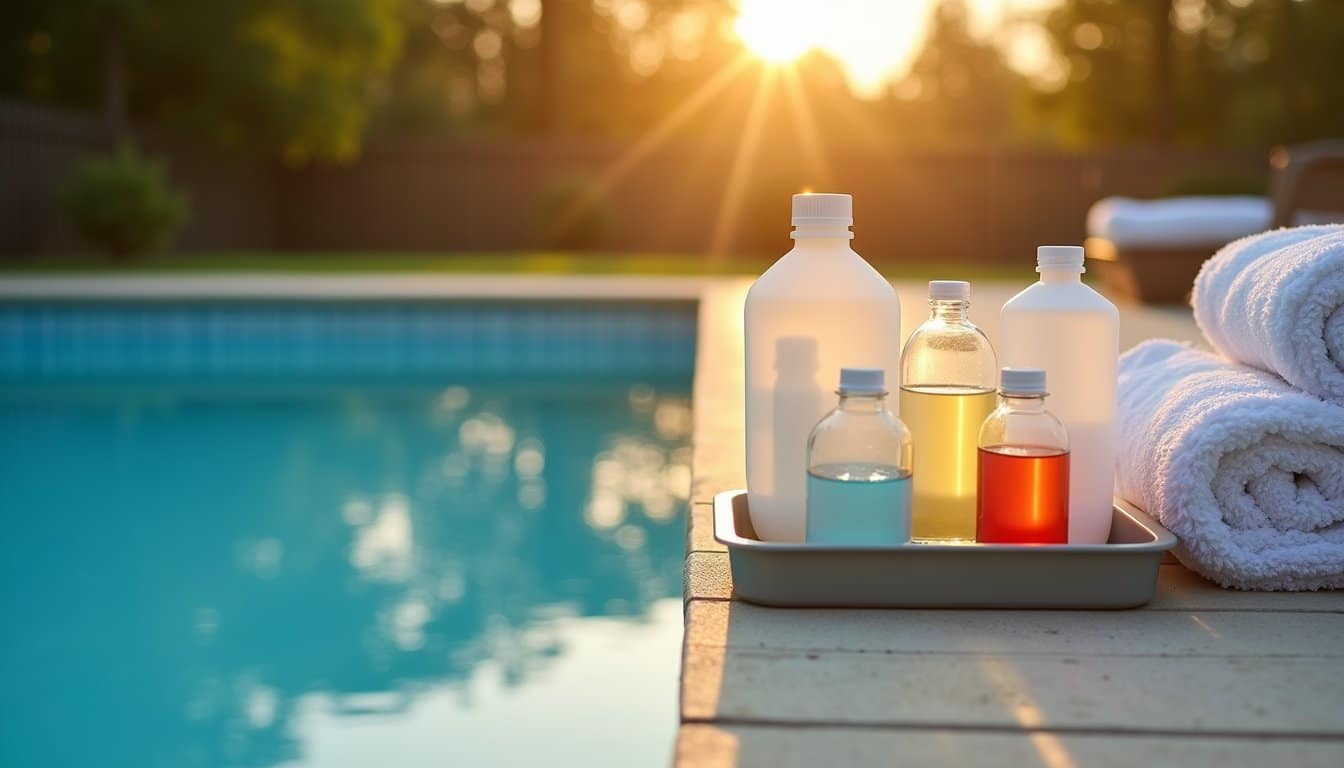
During summer months, you’ll need to increase your chlorine levels to compensate for heightened UV exposure, which can rapidly break down chlorine in your fiberglass pool. You should maintain chlorine levels closer to 3 ppm and test 2-3 times weekly during peak season to guarantee stability against intense sunlight and increased bather load. For optimal pool security, consider using site monitoring tools that track your testing schedules and chemical levels. In winter, you can reduce both your chlorine dosage and testing frequency as UV exposure and pool usage naturally decrease.
Summer UV Impact Factors
Maintaining proper chlorine levels in fiberglass pools becomes particularly challenging throughout summer months due to intense UV exposure. Without proper protection, UV rays can degrade up to 90% of your pool’s chlorine within just two hours, considerably impacting chlorine stability and sanitization effectiveness.
Regular shock treatments are essential for optimal water chemistry during hot weather. To combat UV exposure effects during peak summer months:
- Apply chlorine treatments during late afternoon or evening hours, allowing for ideal distribution overnight while running your pump
- Maintain cyanuric acid (CYA) levels between 30-50 ppm to extend chlorine’s lifespan up to eight times longer
- Increase shock treatment frequency to 1-2 times weekly when temperatures exceed 80°F, adjusting dosage to 10-15 ppm per 10,000 gallons of water
Regular testing and proper timing of chemical applications will help maintain consistent chlorine levels despite intense summer UV exposure.
Winter Dosage Reductions
As temperatures drop and pool usage decreases, your chlorine maintenance requirements shift markedly from summer’s intensive protocols. For effective winterization of your fiberglass pool, you’ll need to reduce chlorine levels to 1-3 ppm, considerably lower than summer demands.
Your winter chlorine management strategy should focus on using granular chlorine instead of tablets, as it’s easier to control dosing during low-usage periods. You’ll want to maintain pH between 7.2-7.6 and alkalinity at 80-150 ppm to prevent surface damage. Adding cyanuric acid stabilizer helps protect the reduced chlorine from degradation, even in colder months.
Remember to lower water levels just below the skimmers and protect your equipment before freezing temperatures arrive. This approach guarantees proper chemical balance while preventing structural and equipment damage during winter storage.
Shock Treatment Guidelines for Deep Cleaning
Proper shock treatment serves as the cornerstone of deep cleaning your fiberglass pool, with dosages typically starting at 1 pound per 10,000 gallons for standard maintenance. You’ll need to adjust your shock frequency based on usage and contamination levels, while carefully monitoring your pool’s FC levels to maintain 1-3 ppm for fiberglass safety.
For ideal treatment timing and effectiveness, follow these critical guidelines:
- Calculate your pool’s volume using the formula Length × Width × Depth × 7.5 for rectangular pools
- Increase shock dosage to 2-6 pounds per 10,000 gallons when dealing with severe algae infestations
- Apply shock gradually to prevent damage, especially when targeting higher FC levels for specific algae types (20 ppm for mustard, 30 ppm for black)
Remember to never exceed 30 ppm FC during treatment to protect your fiberglass surface.
Protecting Your Fiberglass Surface While Chlorinating
Three essential factors work together to protect your fiberglass pool surface during chlorination: precise chemical dosing, proper application methods, and consistent monitoring.
To safeguard your pool’s surface, maintain free chlorine between 1-3 ppm and never exceed this range. You’ll want to mix chemicals with water before adding them and broadcast them evenly to prevent concentrated hotspots. For ideal surface protection, avoid calcium-based chlorine alternatives and granular products that could abrade the gel coat.
Keep your pH between 7.2-7.4 and alkalinity at 80-120 ppm to maximize sanitizer efficiency while protecting the surface. Using an automatic feeder will help distribute chemicals gradually. Monitor your pool’s gel coat weekly for any signs of discoloration or damage, and address any issues immediately through proper water balance adjustments.
Essential Safety Measures When Adding Chemicals
Maintaining a fiberglass pool requires strict adherence to chemical safety protocols that protect both you and your pool’s surface. You’ll need to follow specific guidelines while handling pool chemicals to guarantee safe and effective treatment.
Essential chemical safety measures include:
- Always wear protective gear including chemical-resistant gloves and eye protection when handling pool chemicals, and store them in cool, dry places away from direct sunlight
- Never mix chemicals directly together, instead, dissolve each chemical separately in water before adding to your pool, and only add chemicals during low-usage periods
- Use non-metallic, chemical-resistant containers for transportation and storage, and verify you’re calculating dosages based on your pool’s specific volume
Follow manufacturer instructions precisely, and maintain detailed records of all chemical additions to track your pool’s treatment history.
Frequently Asked Questions
Can I Use Automatic Chlorinators With My Fiberglass Pool?
Yes, you can safely use automatic chlorinators with your fiberglass pool. They’re particularly well-suited for fiberglass pool maintenance due to the non-porous surface that resists chlorine corrosion. The automatic chlorinator benefits include maintaining steady chlorine levels between 1-3 ppm, eliminating manual dosing errors, and reducing overall maintenance time. For best results, consider systems like the Hayward CL220EF or saltwater chlorine generators, which are specifically recommended for fiberglass pools.
How Long Should I Wait to Vacuum After Adding Chlorine?
You’ll need to wait 30-60 minutes after adding chlorine before vacuuming your pool to guarantee proper chlorine distribution throughout the water. Run your pool’s filtration system during this time to help mix the chemicals evenly. Once the waiting period is over, test the chlorine levels before you start vacuuming. If levels are below 5 ppm, you can safely proceed with vacuuming. This timing guarantees efficient cleaning without disturbing the chemical balance.
Does Pool Cover Usage Affect My Chlorine Dosage Requirements?
Yes, using a pool cover markedly affects your chlorine dosage requirements. When you cover your pool, you’ll reduce chlorine evaporation by up to 95%, which means you’ll need less chlorine to maintain proper sanitization levels. Pool cover benefits include protecting your chlorine from UV degradation and minimizing debris that would otherwise consume chlorine. You’ll typically need only 35-60% of your normal chlorine dosage when consistently using a quality pool cover.
What Happens if Chlorine Granules Sink to the Pool Bottom?
When chlorine granules sink to the pool bottom, they’ll create concentrated “hot spots” that can damage your pool’s surface through etching and staining. You’ll need to act quickly with proper pool maintenance by brushing the settled granules to guarantee even chlorine distribution. If left untreated, these concentrated areas can deteriorate your pool’s finish, corrode equipment, and create chemical imbalances that reduce sanitizer effectiveness throughout your pool.
Should I Adjust Chlorine Levels Differently for Saltwater Fiberglass Pools?
Yes, you’ll need to adjust chlorine differently in saltwater fiberglass pools. Instead of manually adding chlorine, you’ll control chlorine levels through your salt chlorinator’s output settings. One of the key saltwater benefits is that the system handles chlorine generation automatically, maintaining more stable levels. You should aim for 1-3 ppm free chlorine, but you’ll achieve this by adjusting the chlorinator rather than adding granular chlorine directly.