


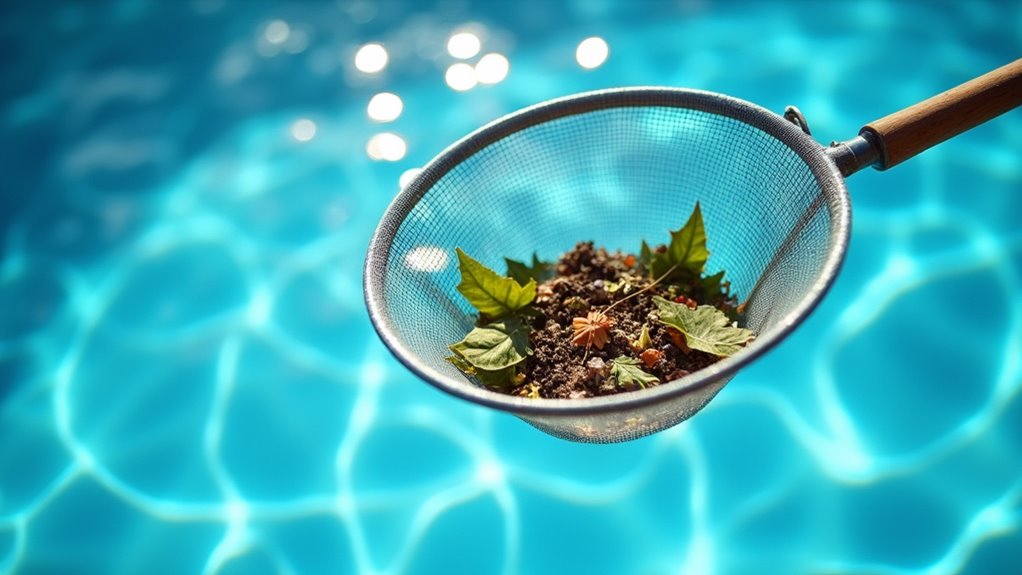

Common pool maintenance mistakes can derail your water quality quickly. You’ll want to test chemicals 2-3 times weekly, brush surfaces twice weekly, and vacuum at least once per week. Don’t skip weekly shock treatments or run your filter system less than 8 hours daily. Pay attention to equipment maintenance, including regular checks of pump baskets, O-rings, and gaskets. Master these fundamentals to reveal the mysteries of crystal-clear pool water.
Key Takeaways
- Neglecting regular water testing leads to chemical imbalances – test pH, chlorine, and alkalinity 2-3 times weekly during peak season.
- Running pool filters 24/7 wastes energy – instead, operate for 8-10 hours daily during daylight and after heavy usage.
- Adding multiple chemicals simultaneously can cause dangerous reactions – make adjustments gradually and allow time between changes.
- Skipping regular brushing and vacuuming allows algae growth – clean pool surfaces twice weekly and vacuum at least weekly.
- Ignoring equipment maintenance until problems arise – regularly check pump baskets, O-rings, and filters according to manufacturer schedules.
Improper Chemical Testing and Balance

When pool owners neglect regular chemical testing or misinterpret test results, they risk creating an unsafe swimming environment. You’ll need to test your pool water at least 2-3 times per week during peak swimming season, checking pH, chlorine, alkalinity, and stabilizer levels.
Don’t rely on visual cues alone clear water doesn’t necessarily mean safe water. You must use reliable testing kits and follow the instructions precisely. After chemical testing, make balance adjustments gradually, allowing time between changes to see the effects. Adding too many chemicals at once can create dangerous chemical reactions or overcompensate for the initial problem.
Keep detailed records of your test results and subsequent adjustments. This documentation helps you track patterns and maintain consistent water chemistry throughout the swimming season.
Neglecting Regular Brushing and Vacuuming
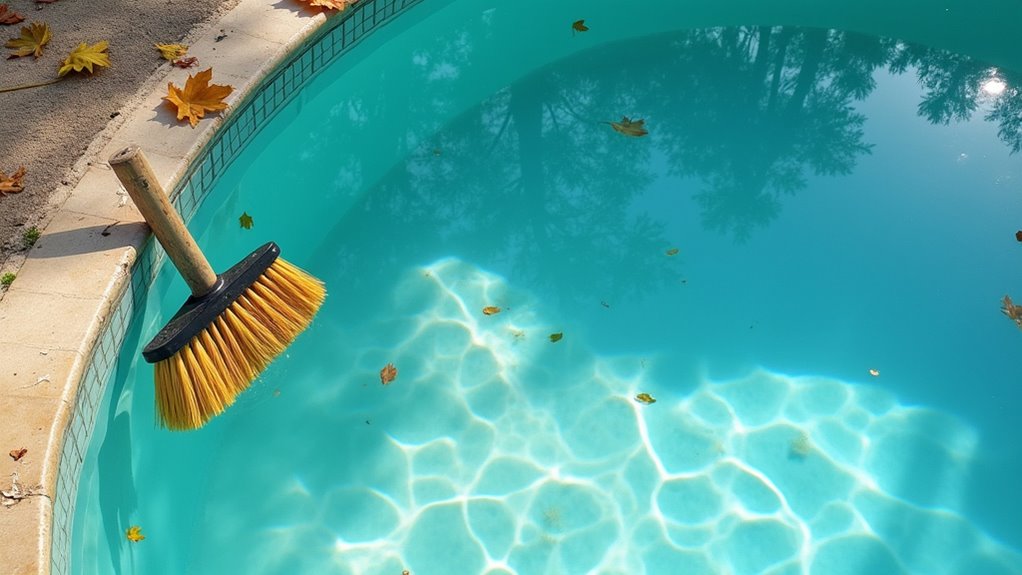
Beyond maintaining proper water chemistry, the physical cleanliness of your pool requires consistent attention. When you neglect regular brushing and vacuuming, you’ll face a buildup of algae, debris, and biofilm on your pool’s surfaces. These contaminants can quickly compromise water quality and damage your pool’s finish.
Implement proper brushing techniques by using a pool brush at least twice weekly, paying special attention to corners, steps, and tile lines where algae commonly develops. Your vacuuming frequency should be at least once per week, though you may need to increase this during heavy use or following storms. Don’t forget to adjust your vacuum head’s settings based on your pool’s surface type vinyl, concrete, or fiberglass to prevent damage while ensuring thorough cleaning.
Running the Filter System Incorrectly
Your pool’s filtration system serves as its circulatory system, yet many owners mistakenly run their filters for insufficient periods or at incorrect times. A proper filter schedule requires running your system for at least 8-10 hours daily during peak swimming season, ideally during off-peak electricity hours for maximum energy efficiency.
Don’t assume that running the filter for 24 hours will result in a cleaner pool. Instead, focus on maintaining consistent circulation during key periods when debris and contamination are most likely to occur. You’ll want to operate your filter during daylight hours when the sun’s UV rays are most active and after heavy pool usage. Furthermore, make sure you’re not running the system at too high or too low a pressure, as both can reduce its effectiveness and potentially damage the equipment.
Skipping Weekly Shock Treatments
Although many pool owners regularly test their water chemistry, failing to perform weekly shock treatments remains a critical oversight that can lead to harmful bacteria growth and cloudy water conditions. Shock treatment importance cannot be overstated, as it breaks down organic contaminants, eliminates chloramines, and prevents algae formation.
Following proper shock frequency guidelines, you’ll need to add shock treatment weekly during peak swimming season and biweekly during off-peak periods. For ideal results, add one pound of shock per 10,000 gallons of pool water after sunset when UV rays won’t interfere with the chemical reaction. You’ll want to wait until chlorine levels return to normal (1-3 ppm) before swimming, typically 24 hours after treatment. Remember to run your filter system continuously during the shock process.
Poor Water Level Management
While maintaining proper chemical balance is essential, keeping the correct water level in your pool is just as significant for system functionality. You’ll need to monitor levels regularly, as water evaporation can reduce pool depth by several inches per week, especially during hot weather.
If your water level drops below the skimmer opening, you’re risking damage to your pump system. When water can’t reach the skimmer, your pump may run dry and burn out. Conversely, overfilling your pool prevents effective pool skimming and can dilute your chemical balance. The ideal water level should be at the midpoint of your skimmer opening.
Check your water level twice weekly and adjust as needed. During periods of heavy rain or increased evaporation, you may need to monitor more frequently.
Overlooking Equipment Maintenance
Many pool owners focus solely on water chemistry while neglecting essential equipment maintenance tasks. If you don’t maintain your pool equipment properly, you’ll reduce its lifespan and potentially face costly repairs. Creating a maintenance schedule helps prevent system failures and guarantees prime performance.
- Check your pump’s strainer basket weekly, removing debris to prevent motor strain and maintain proper water flow
- Inspect O-rings and gaskets monthly for wear, replacing them before they fail to prevent equipment leaks
- Clean or backwash your filter according to manufacturer specifications to maintain proper pressure levels
- Test automation systems, timers, and safety features quarterly to verify they’re working correctly
Don’t wait for equipment to fail before addressing maintenance needs. Regular upkeep protects your investment and prevents unexpected breakdowns during peak swimming season.
Ignoring Minor Repairs and Cracks
If you spot small cracks or minor damage in your pool’s surface, addressing them immediately can prevent extensive structural problems later. Regular crack identification should focus on the pool’s walls, floor, and especially around fittings, lights, and skimmer boxes where stress points commonly develop.
Don’t wait for small issues to become major problems. When you notice hairline cracks, apply appropriate repair techniques based on the crack’s location and severity. For concrete pools, use epoxy fillers designed specifically for underwater applications. For fiberglass pools, employ gelcoat repair kits matched to your pool’s color. Vinyl liner tears require specialized patches that prevent water from seeping behind the liner. Keep in mind that proper surface preparation and following manufacturer instructions are vital for ensuring effective, long-lasting repairs.
Backwashing Mistakes and Timing
Since proper backwashing determines your pool’s filtration efficiency, knowing when and how to backwash is essential for maintaining water clarity. Your backwashing frequency should align with your pool’s usage and debris load, while proper backwashing technique guarantees peak filter performance.
- Don’t backwash too frequently – wait until your pressure gauge reads 8-10 PSI above the normal reading, as excessive backwashing wastes water and reduces filtration efficiency
- Never backwash for less than 2 minutes – you’ll need this minimum time to clear trapped debris from your filter media
- Don’t skip the rinse cycle after backwashing – this prevents residual dirt from returning to your pool
- Avoid backwashing during peak swimming hours when debris concentration is highest – early morning is ideal for this maintenance task
Inconsistent Skimmer and Pump Basket Cleaning
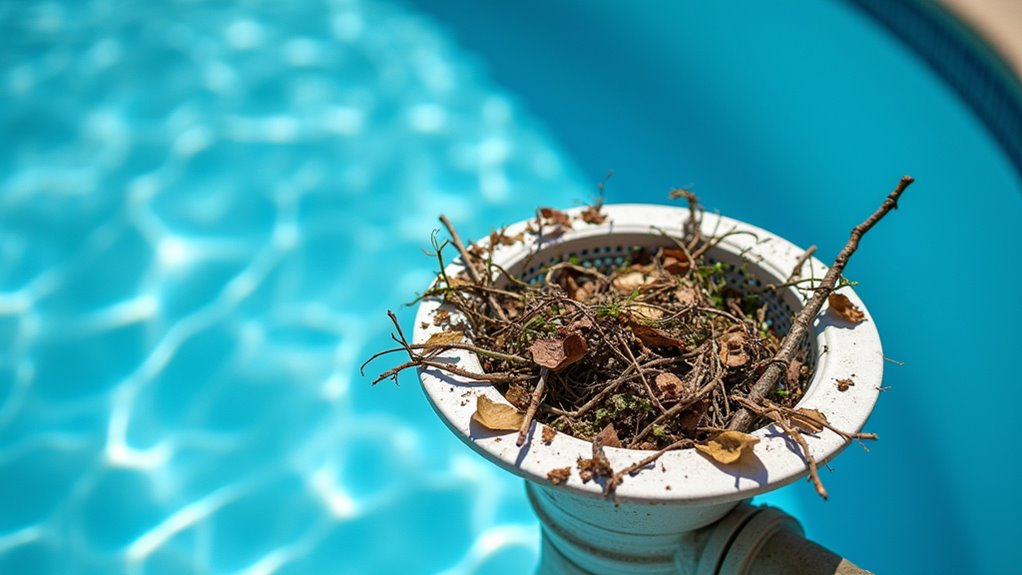
Regular cleaning of skimmer and pump baskets complements proper backwashing practices in maintaining ideal water flow through your pool’s filtration system. When you neglect skimmer maintenance, debris accumulates and restricts water flow, forcing your pump to work harder and reducing its efficiency.
You’ll need to empty these baskets at least twice weekly during peak swimming season, and more frequently if your pool collects substantial leaf debris or experiences heavy use. Check your pump basket whenever you notice decreased water flow or unusual pump sounds. Don’t wait until the baskets are completely full, as this creates unnecessary strain on your equipment and compromises pump efficiency. Remove leaves, insects, and other debris promptly to prevent decomposition that can lead to water quality issues and potential damage to your filtration system.
Frequently Asked Questions
How Long Should I Wait After Shocking Before Swimming in My Pool?
You’ll need to wait at least 24 hours after shocking your pool before resuming safe swimming activities. Test your chlorine levels using a reliable test kit to verify they’ve returned to normal range (1-3 ppm). If you’re following proper shocking frequency (weekly or bi-weekly), you shouldn’t need to wait longer than 24 hours. However, if chlorine levels remain high, continue waiting and testing until they’re safe for swimming.
What Type of Pool Surface Material Lasts the Longest and Requires Minimal Maintenance?
Fiberglass pools offer you the best longevity and lowest maintenance requirements among pool surface materials. You’ll typically get 25-30 years from a quality fiberglass installation, and it won’t need resurfacing like concrete surfaces do. The gel coat finish resists algae growth and chemical damage, making it easier to maintain. While concrete pools can last longer in general, they’ll require significant resurfacing every 10-15 years and need more chemical balancing.
Should I Drain My Pool Completely When Winterizing in Cold Climates?
Don’t completely drain your pool for winterization it can cause serious structural damage. Your pool’s walls and liner need water’s weight to maintain stability against groundwater pressure. Instead, lower the water level just below the skimmer line (about 4-6 inches). Follow proper winterization techniques like adding winterizing chemicals, installing a safety cover, and blowing out your plumbing lines. These steps protect your pool without risking costly pool drainage risks.
How Do I Remove Stubborn Algae Stains From Pool Tile and Grout?
For effective algae removal, you’ll need a pumice stone or tile-specific cleaning brush and a commercial pool tile cleaner. Initially, lower your pool’s water level slightly to access the stained area. Apply the cleaner and scrub the tiles in circular motions, focusing on stubborn spots. For persistent stains, use a mixture of baking soda and water to create a paste. Don’t forget to test the cleaning method on a small area initially.
What Causes My Pool Water to Turn Cloudy After Heavy Rainfall?
Rainwater effects can greatly disrupt your pool’s chemical balance, causing cloudiness through multiple mechanisms. When rain dilutes your pool water, it alters pH levels and reduces sanitizer effectiveness. Furthermore, rainwater carries contaminants like dirt, debris, and nitrogen compounds that promote algae growth. You’ll need to test your water immediately after rainfall and adjust chemicals accordingly. Focus on balancing sanitizer levels, pH, and alkalinity to restore clarity.