



You’ll need six essential categories to maintain your chlorine pool effectively. Begin with water testing equipment like test strips or digital testers for accurate chemistry readings. Install proper circulation and filtration systems with flow meters to monitor performance. Add chlorine feeders for consistent sanitizer delivery, cleaning tools for debris removal, and chemistry control chemicals like pH adjusters. Don’t forget safety supplies including initial aid kits and PPE. Understanding how these components work together will transform your maintenance routine.
Water Testing and Analysis Equipment
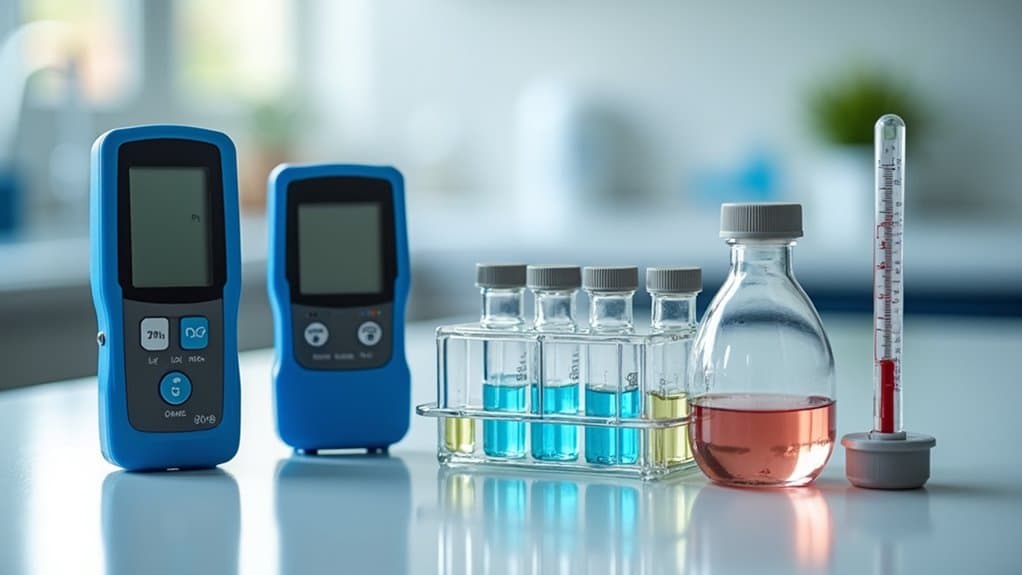
Because maintaining proper chlorine levels and water chemistry is essential to pool safety and longevity, you’ll need reliable testing equipment to monitor your pool’s condition. You can choose from several options: test strips for quick weekly evaluations, liquid kits with reagents for precise measurements, or digital testers that minimize user error. For accurate results, you’ll employ proper sample collection methods by drawing water from mid-depth away from returns. The Taylor K-2006 FAS-DPD titration kit delivers the most exact free chlorine readings, fundamental for troubleshooting. Establish record keeping best practices by documenting test results, chemical doses, and dates. This tracking system helps you identify trends, prevent costly repairs, and maintain consistent water balance throughout the season. Pool water clarity does not guarantee chemical balance, so consistent testing remains the foundation of proper pool maintenance. Testing more frequently during periods of heavy pool use or after rainfall ensures you catch chemical imbalances before they cause damage to equipment.
Circulation and Filtration Systems
You’ll need to select a pump and filter type that matches your pool’s size and usage demands, as each option, sand, cartridge, or DE, offers different performance levels and maintenance requirements. Your circulation system must achieve a complete water turnover every 10–12 hours daily, which depends on proper pump sizing and flow rates that you should verify against your equipment’s specifications. Understanding how turnover and flow rates work together helps you prevent dead zones where algae and bacteria can proliferate. Backwashing the filter regularly removes accumulated contaminants that reduce system efficiency. Proper circulation ensures that chemicals are evenly distributed throughout your pool, maintaining balanced water chemistry and preventing stagnant conditions. Regular maintenance and balanced water chemistry are crucial for ensuring your filtration system operates efficiently and maintains water quality throughout the swimming season.
Pump and Filter Types
How effectively your pool maintains water clarity and quality depends largely on selecting the right pump and filter combination. You’ll choose between single-speed pumps, which operate affordably but with lower pump operation efficiency, and variable-speed pumps that reduce operating costs through adjustable flow rates.
For filtration, sand filters offer durability and affordability, though they require backwashing requirements every few weeks. Cartridge filters provide superior clarity by capturing particles as small as 5-10 microns without backwashing needs. DE filters deliver the finest filtration at 2-3 microns but demand higher maintenance and cost. Sand should be replaced every 5 years depending on usage and water conditions. Unlike chlorine systems, ozone pool systems are highly effective sanitizers that eliminate odors and leave no harmful byproducts, though they require regular maintenance and carry higher setup costs. Regular monitoring of pump and filter pressure helps identify maintenance issues before they affect water quality and circulation.
Your pool’s size determines pump capacity; larger or commercial pools require high-performance models for adequate circulation. Match your filter choice to your maintenance tolerance and water quality standards to optimize system performance.
Turnover and Flow Rates
The effectiveness of your circulation and filtration system hinges on understanding turnover rate, the time it takes for your pool’s entire water volume to pass through the filtration system once. You’ll calculate this by dividing pool volume by flow rate. Install flow meters to monitor system performance and guarantee consistent flow delivery throughout daily operations. Different pool types require specific turnover rates, such as 2.5-3 hours for 25m general use pools and 6 minutes for commercial spas. Higher flow rates result in faster turnover rates, which is essential for maintaining proper water circulation and filtration effectiveness. Maintaining appropriate turnover rates also prevents the accumulation of dissolved gases and chemical components that can compromise water quality and reduce overall system efficiency.
| Turnovers | Contaminant Removal | Health Impact |
|---|---|---|
| 1 | ~37% | Unsafe |
| 2 | ~86% | Marginal |
| 4 | ~98% | Favorable |
| 6 | ~99.9% | Excellent |
| 8+ | ~99.99% | Superior |
Aim for minimum 4 turnovers in 24 hours for commercial pools. Regular flow meter calibration and daily logging assure regulatory compliance. Unobstructed skimmers, drains, and returns optimize circulation efficiency while reducing chemical demands.
Chlorine Feeders and Dispensing Methods
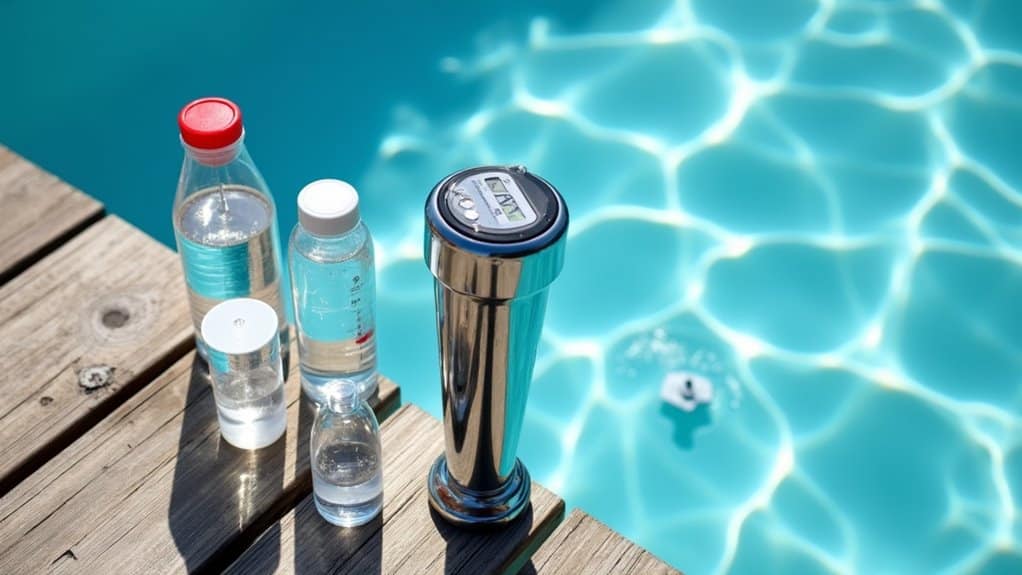
Since maintaining proper chlorine levels requires consistent chemical delivery, selecting the appropriate feeder system is critical to your pool’s sanitation.
You’ll choose between floating, inline, offline, or liquid feeders based on your pool’s volume and plumbing configuration. Tablet feed systems offer precise, controlled release using 1″ or 3″ pucks, while liquid feeders inject sodium hypochlorite at adjustable rates for larger pools. Adjustable vents and dial controls let you regulate output to match your pool’s turnover and bather load. Most chlorinators have a typical lifespan of 3 to 7 years and should be replaced if they show signs of wear or inefficiency.
During feeder installation considerations, ensure compatibility with your existing filtration system. Never mix different chlorine products in one feeder, this prevents hazardous chemical reactions. For pools seeking reduced chemical dependency, mineral purifiers can decrease chlorine demand by up to 50%. Popular options include Pentair automatic chlorine feeders and Hayward systems designed for residential and commercial applications. Routine inspection for leaks, proper sizing, and periodic cleaning maintain consistent dosing. Wearing gloves and eye protection during refills protects you while handling these chemicals safely.
Cleaning and Debris Removal Tools
Once you’ve established proper chlorine delivery through your feeder system, you’ll need reliable tools to remove the debris that constantly accumulates in your pool.
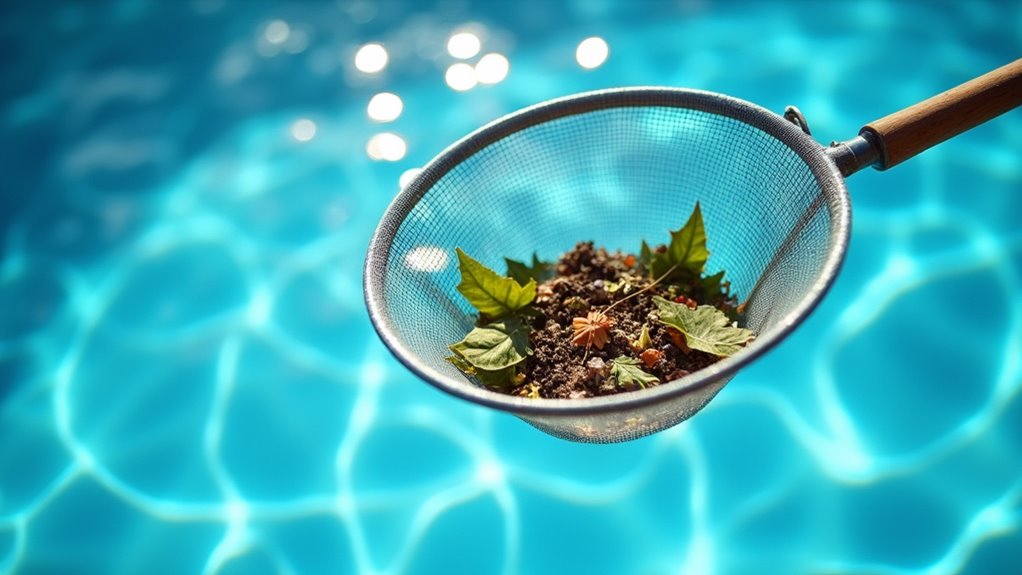
Telescopic pole versatility forms your cleaning foundation, enabling attachment of skimmers, brushes, and vacuum heads without manual pool entry. Select stainless-steel brushes for plaster surfaces and nylon brushes for vinyl liners to prevent damage during surface scrubbing mitigation of waterline scum.
| Tool Type | Application | Surface Compatibility |
|---|---|---|
| Skimmer nets | Surface debris removal | All pool types |
| Vacuum heads | Floor and wall cleaning | All pool types |
| Stainless-steel brushes | Stubborn grime removal | Plaster/concrete |
| Nylon brushes | Gentle cleaning | Vinyl liners |
| Pumice stones | Waterline stain removal | Plaster surfaces |
Vacuum systems, suction-side, pressure-side, or robotic models, provide thorough debris extraction. Leaf traps protect your filtration system during operations. Weekly brushing schedules maintain ideal pool conditions.
Water Chemistry Control Chemicals
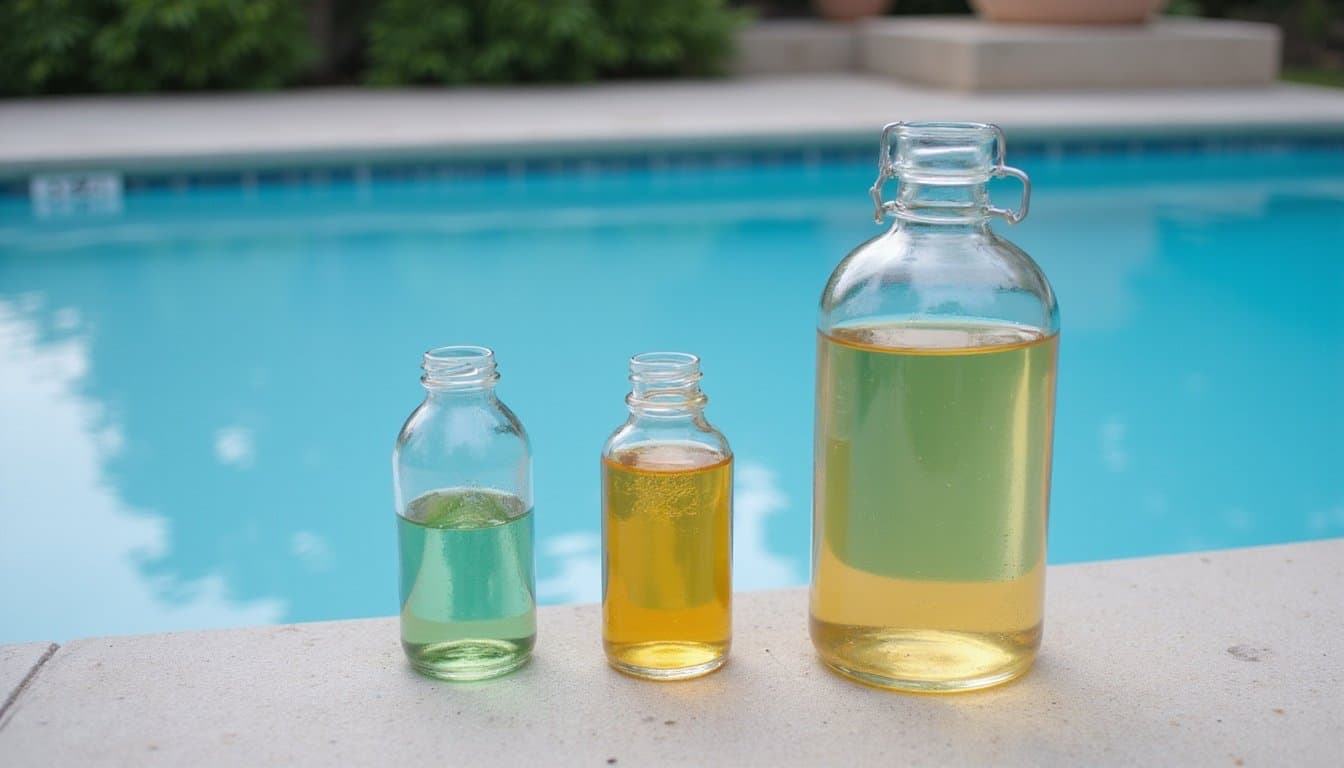
How effectively you maintain your pool depends entirely on balancing five key chemical parameters that work together to keep water safe, clear, and comfortable.
Balancing five key chemical parameters is essential to maintaining safe, clear, and comfortable pool water.
You’ll need chlorine sanitizers for algae control treatments and bacteria elimination. Maintain 1–3 ppm concentration using liquid, granular, or tablet forms. pH control chemicals keep levels between 7.4–7.6, optimizing chlorine efficacy and water clarity management. Use sodium carbonate to raise pH or muriatic acid to lower it.
Additional essential chemicals include:
- Alkalinity adjusters (sodium bicarbonate) at 80–120 ppm
- Calcium hardness increaser (calcium chloride) at 200–400 ppm
- Cyanuric acid stabilizer at 30–50 ppm for UV protection
- Test kits for accurate chemical monitoring
Regular testing prevents overuse or underuse, avoiding disease transmission risks and equipment damage while maintaining crystal-clear water.
Safety and Maintenance Supplies
While chemical balance keeps your pool water safe to swim in, you’ll also need thorough safety and maintenance supplies to protect swimmers, prevent accidents, and guarantee you’re handling chemicals responsibly. Stock an initial aid kit, rescue equipment, and life jackets within immediate reach. Keep an audible signaling device and emergency contact list accessible poolside. Establish chemical storage procedures using clearly labeled, sealed containers in a designated, ventilated area with secondary containment. Implement PPE maintenance schedules to routinely inspect and replace chemical-resistant gloves, protective aprons, eye protection, and respirators. Maintain Safety Data Sheets for each chemical in your storage and work areas. Use dedicated measuring cups and scales for accurate dosing. Keep your deck clean, slip-resistant, and obstacle-free with accessible storage hooks for rescue tools.
Frequently Asked Questions
How Often Should I Replace or Upgrade Pool Maintenance Equipment?
You should replace pool equipment based on its lifespan expectations and your seasonal maintenance schedule. Pumps typically last 8-12 years, filters 5-10 years, and heaters 10-20 years with proper care. You’ll want to schedule professional inspections annually and plan replacements during off-season months. Monitor for reduced efficiency, corrosion, and increased energy consumption. You’ll extend equipment life substantially through consistent water chemistry management and regular maintenance, though geographic climate conditions and usage frequency may accelerate replacement timelines.
What Is the Cost Difference Between Manual and Automated Pool Maintenance Systems?
You’ll find manual chlorine dosing systems cost $200–$800 upfront, while automated systems run $1,500–$10,000+. Your cost comparison hinges on pool size, debris levels, and time availability. Though automation demands higher initial investment, factors influencing cost effectiveness include reduced labor hours, lower chemical waste, and extended equipment lifespan. For larger pools with significant debris, automation delivers substantial long-term savings despite steeper upfront expenses.
Can I Use Household Cleaners Instead of Pool-Specific Chemicals Safely?
You shouldn’t use household cleaners instead of pool-specific chemicals. Even when using household cleaners carefully, you’re risking algae blooms, skin irritation, and equipment damage. Understanding chemical compatibility is critical; mixing bleach with acid creates toxic gases. Household products lack stabilizers, contain incorrect chlorine concentrations, and don’t meet health standards. You’ll face inconsistent sanitation, corrosion, and potential pathogen growth. Pool-specific chemicals guarantee proper pH balance, effective disinfection, and regulatory compliance that household products can’t provide.
How Do I Troubleshoot Equipment Malfunctions Without Calling a Professional Technician?
You can troubleshoot equipment malfunctions by systematically checking key areas. Start by identifying electrical issues using a digital multimeter to test voltage at terminals against equipment specs. For troubleshooting pump malfunctions, inspect baskets for debris, examine the impeller, and listen for unusual noises indicating wear. Verify water flow through lines, check control panels for burned components, and inspect all connections. Replace blown fuses and damaged wiring. Most issues stem from blockages or loose connections you’ll resolve independently.
What Certifications or Training Do Pool Operators Need for Legal Compliance?
You’ll need CPO (Certified Pool Operator) certification, which your state’s health department mandates for commercial and public pools in most U.S. states. You’re required to complete an accredited training course covering water chemistry, disinfection, mechanical systems, and safety protocols. You’ll pass a thorough exam to earn your five-year certification. Your local health department enforces these requirements through inspections. You’ll maintain detailed chemical logs and operational records for compliance verification and audit purposes.