



You’ll need chlorine as your primary sanitizer, supplemented by weekly shock treatment for rapid bacterial elimination. Add cyanuric acid stabilizer to protect chlorine from UV degradation, maintaining levels between 30-50 ppm. Use pH adjusters to balance water chemistry and algaecide to prevent algae blooms. Water clarifiers bind suspended particles for filtration. Regular testing kits identify chemical imbalances early, while proper safety equipment safeguards you during handling. Understanding how these components work together guarantees year-round water safety and clarity.
Chlorine – Primary Sanitizer

Because chlorine directly contacts pathogens in your pool water, it’s the most widely used sanitizer for controlling bacteria, viruses, and other microorganisms. You’ll maintain free chlorine levels between 1–3 ppm, depending on whether you’re treating a pool or spa.
Chlorine oxidizes organic contaminants and prevents algae growth, keeping your water clear and safe. You can choose from multiple product forms, tablets, granules, or liquid solutions, to match your maintenance preferences and pool requirements. According to health experts, chlorine and pH work together as the first line of defense against disease-causing germs in swimming pools.
Effective dosage maximization requires you to monitor pH levels between 7.2–7.8, as chlorine performs ideally within this range. Your application techniques should account for sunlight exposure and temperature, which accelerate chlorine decay. When chlorine interacts with water, it forms hypochlorous acid and hypochlorite ion, both of which serve as effective disinfectants against pathogens. Incorporating alkalinity increasers into your maintenance routine helps stabilize pH and prevents chlorine effectiveness from fluctuating. You’ll need frequent testing to maintain prime sanitizing levels and adjust dosing accordingly, especially during heavy swimmer loads or contamination events.
Shock Treatment – Heavy-Duty Oxidizer
While chlorine provides ongoing sanitization, shock treatment delivers the heavy-duty oxidation you’ll need to eliminate stubborn contaminants that regular chlorination can’t fully address. You’ll choose between chlorinated shock for rapid bacterial elimination and non-chlorine shock for maintenance oxidation without raising chlorine levels.
For effective application methods, broadcast shock evenly across your pool surface; no pre-dissolving required. Your ongoing treatment needs depend on pool usage:
- Weekly maintenance: 1 lb per 10,000 gallons
- Breakthrough oxidation: 2 lbs per 10,000 gallons
- Severe contamination: 3–6x standard dosage
- Non-chlorine shock allows swimming within 15 minutes
Non-chlorine formulations maintain neutral pH (~7.4), preventing chemistry disruption while preventing chloramine formation. You’ll notice improved water clarity, reduced equipment strain, and extended filter lifespan through consistent shock treatments. Chlorine shock is particularly effective for tackling severe algae growth and ensuring complete pathogen destruction in heavily contaminated pools. Shocking your pool at least once weekly ensures proper disinfection and maintains safe swimming conditions.
Cyanuric Acid Stabilizer – UV Protection
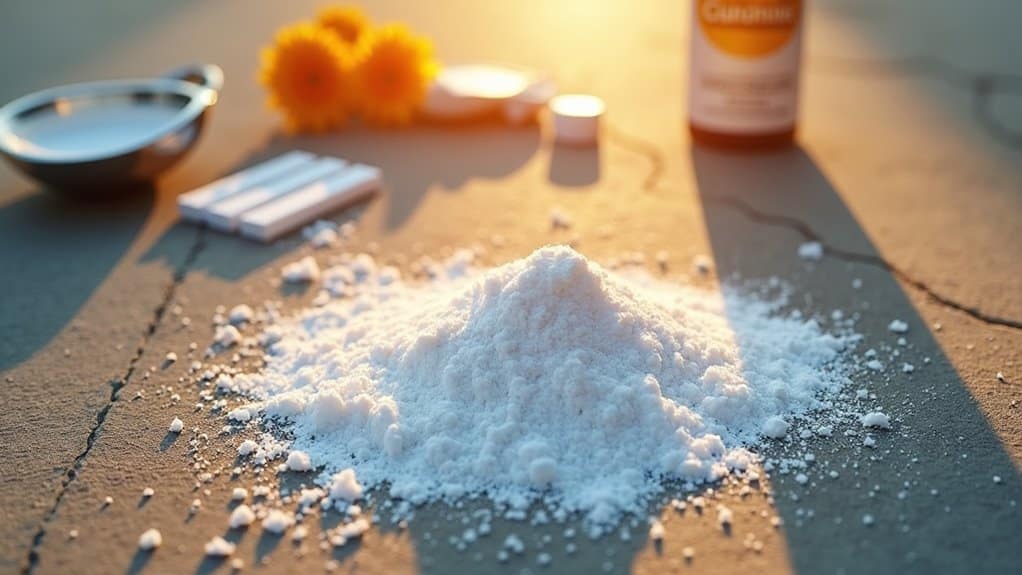
Just as shock treatment eliminates stubborn contaminants, cyanuric acid protects your chlorine from rapid UV degradation, a critical function for outdoor pools where unshielded chlorine can lose up to 90% of its effectiveness in just two hours under direct sunlight. This triazine compound functions as a chlorine stabilizer by forming temporary, weak bonds with free chlorine molecules, shielding them from photolysis while permitting sanitization when needed. You’ll maintain ideal chlorine stabilizing effects by keeping cyanuric acid levels between 30–50 ppm. However, concentrations exceeding 100 ppm cause “chlorine lock,” impairing disinfection capacity. Since cyanuric acid doesn’t deplete during normal pool operation, it accumulates gradually over time. The effectiveness of chlorine release depends significantly on pH levels, which influence how readily cyanuric acid releases chlorine molecules to maintain sanitization. To prevent excessive buildup, stop using stabilized chlorine products like trichlor or dichlor, which continuously introduce additional cyanuric acid into your pool. For optimal results, test your stabilizer levels at least monthly to ensure you’re maintaining effective UV protection without overdosing. Regular testing guarantees you maintain effective UV degradation prevention without compromising water quality or sanitizer efficiency.
Ph Adjusters – Water Balance
Stabilizing your chlorine against UV degradation represents only half the sanitization equation; maintaining proper pH levels directly determines whether that protected chlorine can actually disinfect your pool. pH adjusters, compounds that raise or lower water acidity, form the backbone of water balance because chlorine’s sanitizing power fluctuates dramatically outside the ideal 7.4–7.6 range.
You’ll select adjusters based on your specific needs:
- Sodium carbonate (soda ash) rapidly raises pH when water becomes too acidic
- Sodium bisulfate and muriatic acid quickly lower pH during alkalinity adjustment
- CO₂ feeders provide automated, consistent pH reduction for large installations
- Total alkalinity adjustment precedes pH balancing to guarantee sustainable results
Test daily during peak season. Add adjusters gradually, allowing full dissolution before retesting. Regular testing of pH at least twice a week ensures sustained water balance and prevents chemical imbalances. This methodical pH balancing prevents corrosion, scaling, swimmer discomfort, and unnecessary chemical waste while maintaining crystal-clear water throughout the season. CO₂ feeders offer minimal impact on total alkalinity while providing safe and efficient pH control. The ideal pH range of 7.4 to 7.6 matches human tears, ensuring optimal swimmer comfort and safety while extending equipment lifespan.
Algaecide – Algae Control
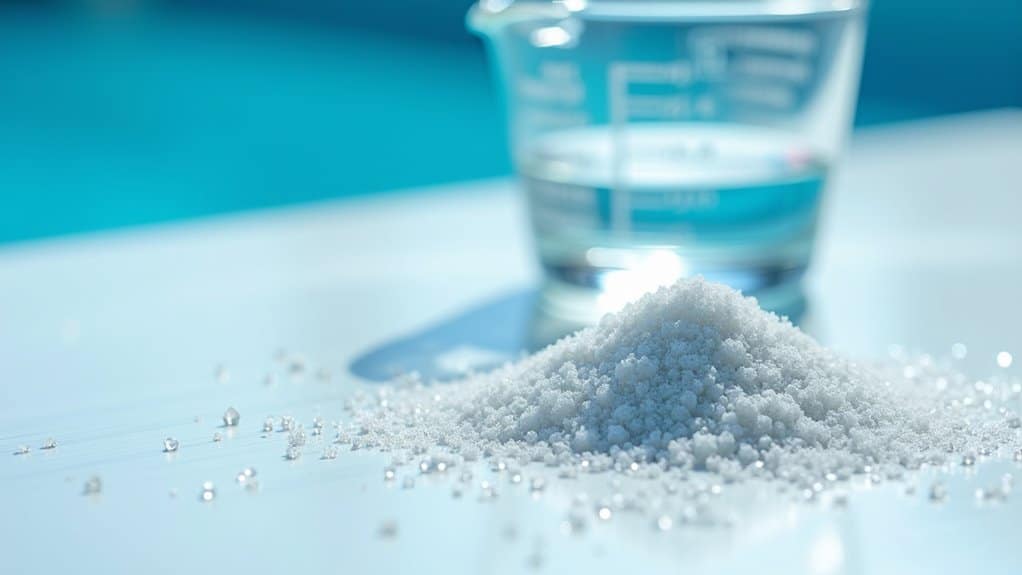
Because algae spores continuously enter your pool through wind, rain, debris, and contaminated equipment, you’ll need algaecide as a critical supplementary defense against the aesthetic and health hazards that blooms create, including slippery surfaces, water clarity loss, and potential swimmer discomfort.
You’ll find three primary algaecide types: quaternary ammonium compounds (effective preventatives but prone to foaming), polymeric variants (non-foaming, higher concentration), and metallic formulations (copper or silver-based for stubborn strains, though they risk surface staining). Doheny’s offers several algaecide formulations including Doheny’s Super Algaecide Plus, which comes in bulk quantities with free product included.
For integrated algae control, apply algaecide weekly after balancing your water chemistry. Always run your pump for 24 hours post-application to guarantee proper distribution. To maximize effectiveness, do not add shock and algaecide at the same time, as this combination reduces their individual potency. Chelated copper and silver compounds are particularly effective at killing stubborn strains of black algae when other treatments prove insufficient. Your ongoing algaecide monitoring succeeds only when combined with adequate sanitation, filtration, and brushing; remember that algaecide supplements rather than replaces primary sanitizers like chlorine.
Water Clarifier – Debris Removal
You’ll use water clarifiers to bind suspended particles into larger flocs that your pool filters can effectively capture and remove. This coagulation process dramatically improves your filter’s efficiency by trapping microscopic contaminants, debris, dirt, and pollen, that would otherwise recirculate and cloud your water. By implementing clarifiers regularly, you’ll achieve superior clarity while reducing the frequency of filter backwashing and maintenance demands.
Particle Collection and Clumping
Water clarifiers employ positively charged polymer molecules that chemically attract and bind negatively charged suspended particles, including dirt, oils, and organic debris, causing them to coagulate into larger aggregates that your filtration system can efficiently capture.
This process operates through chemical reaction rather than physical filtration, enhancing your filter’s particulate-capture capacity. You’ll target micron-sized particles invisible to the naked eye:
- Silt, cosmetic residues, sunscreen, and skin cells
- Microscopic debris typically less than 2 microns in diameter
- Organic contaminants contributing to water cloudiness
- Suspended algae fragments affecting water clarity
However, effectiveness limitations exist. Clarifiers won’t address large debris like leaves or insects requiring manual removal. Residual impacts from overdosing include filter clogging and foaming. Moreover, clarifiers prove ineffective against color issues from metal ions or water chemistry imbalances. Uphold proper circulation for 8–24 hours post-application to optimize results.
Filter Efficiency and Clarity
The coagulation process that clarifiers initiate only delivers results when your filtration system can efficiently capture the enlarged particle aggregates. Your filter type directly impacts visual clarity, DE and cartridge filters excel at removing microscopic particles, while sand filters offer adequate but inferior performance for fine debris.
Polymer types in clarifiers work ideally when your pump operates at approximately 75% capacity, maximizing particle contact with filter media. Maintain consistent circulation and strategic jet positioning to distribute clarifiers evenly throughout your pool.
Routine filter cleaning prevents clogged media from trapping coagulated particles, which causes repeated cloudiness. Monitor pressure indicators closely; spikes signal debris accumulation from clarifier use. Staggered dosing over several days produces superior results compared to single applications, particularly for persistent water discoloration.
Testing Kits – Monitor Water Chemistry
Regular testing kits form the backbone of effective pool maintenance, enabling you to monitor chemical levels and catch imbalances before they escalate into costly problems. You’ll want to establish a routine sampling technique by collecting water 12–18 inches below the surface at least 2–3 times weekly.
Consider these testing options:
- Test strips – convenient rapid results for chlorine, pH, and alkalinity
- Liquid drop kits – superior accuracy using reagent-based color comparison methods
- Digital testers – electronic measurement minimizing interpretation errors
- FAS-DPD kits – high-precision free and combined chlorine analysis for troubleshooting
Supplement your routine testing with professional test oversight at a local pool store quarterly. This thorough approach identifies chemical imbalances early, prevents overdosing, guides precise adjustments, and protects your pool infrastructure through informed, compliant maintenance practices.
Safety Equipment – Handling Pool Chemicals
You’ll need proper protective gear, chemical-resistant gloves, safety goggles, and a respirator, whenever you handle pool chemicals to prevent skin contact and inhalation of hazardous fumes. Your storage area must feature lockable access, secondary containment trays, adequate lighting, and mechanical ventilation to contain spills and control chemical volatility. Furthermore, you should install safety showers and eye wash stations near your chemical handling zones and maintain quick-reference Safety Data Sheets for rapid emergency response.
Protective Gear Essentials
Since pool chemicals pose serious risks to skin, eyes, and respiratory systems, proper protective equipment isn’t optional; it’s fundamental to safe chemical handling. You’ll need to assemble a thorough PPE kit that addresses multiple exposure pathways:
- Chemical-resistant gloves rated for your specific chemicals to prevent skin burns
- Safety goggles or face shields protecting against splashes and corrosive fumes
- Long-sleeved clothing and protective aprons made from non-absorbent materials
- Respiratory protection when handling volatile substances like chlorine or muriatic acid
You must store PPE in dry, ventilated areas separate from chemical storage to prevent PPE contamination risks that compromise protection. Regularly inspect all gear for damage, residue, or wear. Replace contaminated or degraded equipment immediately. Proper maintenance and strategic storage guarantee your protective equipment remains functional and ready for safe chemical handling operations.
Safe Storage Practices
Improper storage conditions can transform pool chemicals into hazardous liabilities that threaten both property and personnel safety. You must store chemicals in cool, dry, well-ventilated areas below 95°F with low humidity and away from direct sunlight. Install secondary containment systems to prevent spills from spreading or mixing incompatibly. Keep containers raised off floors in original manufacturer-labeled packaging with sealed, undamaged lids.
Segregate incompatible chemicals, store liquids below dry substances, and keep oxidizers separated from acids and organics. Secure your storage area with locks to restrict unauthorized access. Conduct routine inspections for water intrusion, leaks, and label deterioration. Post clear signage detailing chemical hazards and emergency procedures. Review Safety Data Sheets before handling, ensuring you’re prepared for potential incidents and compliance requirements.
Seasonal Maintenance Schedule – Keeping Your Pool Year-Round Ready
A well-maintained pool doesn’t happen by accident; it requires a strategic approach that shifts with the seasons to address changing environmental conditions and usage patterns.
You’ll implement distinct chemical protocols throughout the year:
- Winter – Maintain reduced circulation while adding antifreeze to vulnerable lines; equipment winterization prevents freeze damage
- Spring – Conduct thorough water testing for pH, alkalinity, and calcium hardness before applying shock treatments to eliminate bacterial buildup
- Summer – Check chlorine and pH levels 2–3 times weekly; perform seasonal water balancing to maintain safe sanitation
- Fall – Apply long-lasting shock and algaecide treatments, then optimize alkalinity, pH, calcium, and stabilizer levels before closing
This cyclical approach guarantees you’re stocking appropriate chemicals for each phase. You’ll minimize equipment strain, prevent algae proliferation, and maintain water safety year-round. Consistent seasonal adjustments protect your investment while maximizing pool usability across all conditions.
Frequently Asked Questions
How Do I Safely Store Pool Chemicals to Prevent Accidents or Degradation?
You’ll safely store pool chemicals by maintaining proper ventilation in your storage area and keeping chemical storage containers in original, manufacturer-labeled packaging with tightly secured caps. Store them below 95°F in cool, dry conditions away from moisture and direct sunlight. Separate incompatible chemicals on individual shelves; never stack different types vertically. Use secondary containment to prevent spills, install sloped floors for drainage, and conduct regular inspections for water infiltration or leaks.
What’s the Proper Order for Adding Chemicals to Pool Water?
You’ll follow this precise sequence: start with alkalinity increaser to stabilize pH changes, then add pH adjusters based on test results. Next, introduce calcium hardness increaser once pH and alkalinity balance. Apply stabilizer to reach 30-50 ppm, protecting chlorine from UV breakdown. In the end, add sanitizer last. Proper timing of chemical additions and correct chemical balancing techniques prevent cloudiness, scaling, and pH swings that damage pool surfaces.
Can I Mix Different Pool Chemicals Together Before Application?
You shouldn’t pre-mix any pool chemicals before application. Chemical compatibility issues make simultaneous mixing dangerous, you’ll risk toxic gas release, fires, or explosions. Different chemicals create unpredictable chemical interactions, especially chlorine with acids or different chlorine types. Always add chemicals separately to pool water, following individual product directions and manufacturer-specified waiting periods. Never combine them beforehand, regardless of whether they’re the same type or newly purchased.
How Often Should I Test My Pool Water During Peak Season?
You should test your pool water 2–3 times weekly during peak season to maintain ideal water chemistry. This consistent water testing schedule prevents chlorine and pH drift, especially with heavy swimmer loads and intense sunlight exposure. You’ll want to perform weekly water testing at minimum, but increase frequency if temperatures spike or usage peaks. Test immediately after heavy use or weather events. Evening testing after circulation gives you the most accurate results for proper chemical management.
What Should I Do if I Accidentally Overdose a Chemical?
If you’ve accidentally overdosed a chemical, you’ll need to act quickly. Initially, relocate everyone from the pool area to fresh air. Flush any affected skin or eyes with water for 15 minutes. Remove contaminated clothing immediately. Then call emergency services and contact poison control for guidance. Close your pool until you’ve tested the water and confirmed safe chemical levels. Don’t attempt neutralizing without professional direction.