




Your 2025 fiberglass pool investment will fluctuate between $75,000-$500,000+ based on six quantifiable metrics: shell dimensions (14′-15’+ incur higher costs), material grade (premium vs. standard shell longevity of 25+ vs. 20-25 years), equipment specs (including $2,000-$3,000 saltwater systems), geographic labor rates ($92/hour in Northeast regions), site conditions, and regulatory requirements. These cost variables interlink through 35+ technical parameters that’ll shape your final investment decision. Additionally, consider ongoing upkeep when calculating fiberglass pool cost, as maintenance and repairs affect the total over time. Factoring these in helps you choose a pool that fits your budget and stays in top condition.
Pool Dimensions and Design Complexity
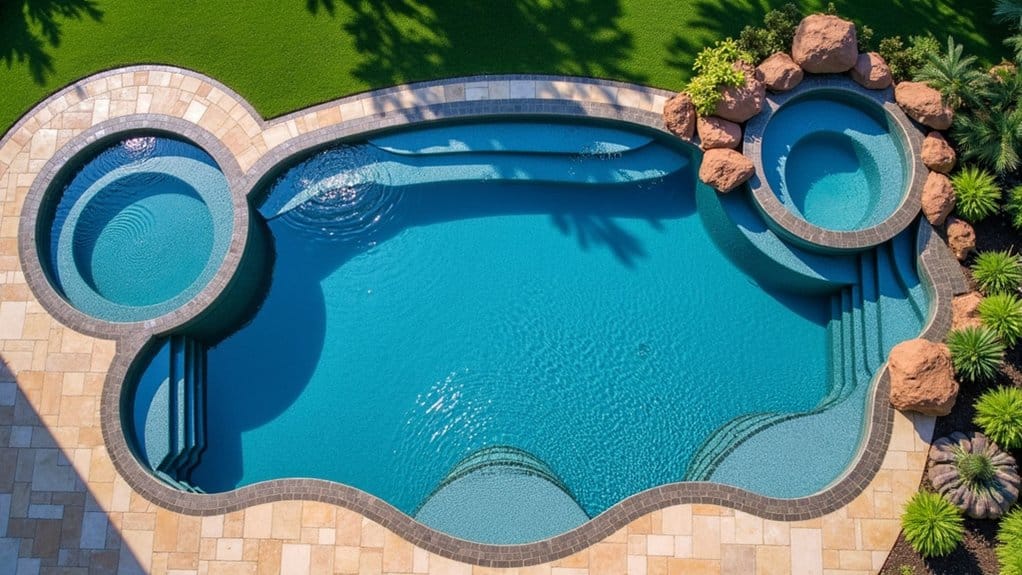
While fiberglass pool costs fluctuate based on numerous variables, dimensions and design complexity serve as primary cost determinants in 2025’s market. You’ll find that pools exceeding 14′-15′ in length trigger heightened transportation fees, while increased pool depth necessitates sophisticated excavation equipment and enhanced structural support systems. Standard fiberglass pools offer more budget-friendly options compared to custom designs. Basic rectangular designs are typically the most economical choice for homeowners seeking to minimize costs.
Shape variations considerably impact your investment, as curved or asymmetrical designs require custom molds and precise installation techniques. Local contractors often recommend quality equipment packages to ensure optimal performance and longevity. Design features like tanning ledges, built-in spas, and multi-level configurations add structural complexity, demanding specialized engineering solutions. When you’re considering advanced elements such as sun shelves or baja steps, you’ll encounter additional shell customization requirements. Premium design elements, including negative edges or patterned finishes, further escalate production costs through increased material usage and specialized surface treatments.
Material Quality and Equipment Selection
Your fiberglass pool’s material quality directly correlates to its longevity, with premium shells featuring enhanced composite materials and UV-resistant gel coats lasting 25+ years compared to standard 15-year shells. You’ll need to weigh equipment package options carefully, as high-end features like saltwater chlorination systems ($2,000-$3,000) and automatic covers ($12,000-$22,000) greatly impact your total investment. When comparing standard versus premium shells, factor in advanced gel coat formulations with ceramic particulates and antimicrobial additives that reduce long-term maintenance requirements while improving structural integrity. Modern fiberglass pools offer pre-manufactured shells that enable rapid installation within days rather than weeks. The investment in quality materials pays off, as fiberglass pools require 75% less maintenance than concrete alternatives over a ten-year period. Entry-level fiberglass pools start at $75,000 and provide excellent value despite their higher upfront costs compared to vinyl liner options.
Premium vs. Standard Shells
When selecting a fiberglass pool shell, the distinction between premium and standard options manifests in material composition, manufacturing processes, and long-term performance metrics. Premium features include high-end finishes with metallic flecks and advanced anti-algae coatings, while standard options utilize basic gel-coat surfaces with limited UV protection. For detailed information about premium shell options and pricing, many homeowners face access restrictions when researching on specialized pool websites due to security measures. When budgeting, factor in the cost of fiberglass pool shells, as premium models offer superior durability and lower long-term maintenance. Weigh these benefits against the initial price to match your long-term goals.
| Specification | Premium Shells | Standard Shells |
|---|---|---|
| Cost Range | $30,000-$500,000+ | $4,500-$30,000 |
| Lifespan | 25+ years | 20-25 years |
| Warranty | Lifetime structural | 5-10 years |
| Finish Options | Custom textures, LED integration | Basic gel-coat |
| Customization | Flexible dimensions, hybrid designs | Predefined sizes |
The investment differential between premium and standard shells correlates directly with durability metrics. Premium shells offer enhanced structural integrity with lifetime warranties, while standard options require more frequent maintenance interventions. Your selection should align with project specifications, considering the 25+ year lifecycle of premium units versus the 20-25 year standard shell duration.
Equipment Package Options
Building upon shell selection, equipment packages represent a significant cost factor in fiberglass pool installations, with material quality and component selection directly impacting both initial investment and operational expenses.
Schedule 40 PVC plumbing provides essential durability and reliability for long-term pool system performance. You’ll need to evaluate advanced filtration options, including variable-speed pumps that boost equipment efficiency while reducing long-term energy costs. Saltwater chlorine generators ($2,000-$5,000) require specialized pH-balancing systems, while UV sterilizers demand additional piping infrastructure. Smart automation packages ($3,000-$7,000) integrate smartphone controls and sensors for streamlined operation. Your heating system choice, whether gas, electric, or solar, significantly affects both installation costs and ongoing operational expenses. Premium sanitization equipment paired with automated chemical controllers guarantees superior water quality while minimizing maintenance requirements. Each component’s quality tier directly correlates to system longevity and performance reliability.
Geographic Location and Labor Market
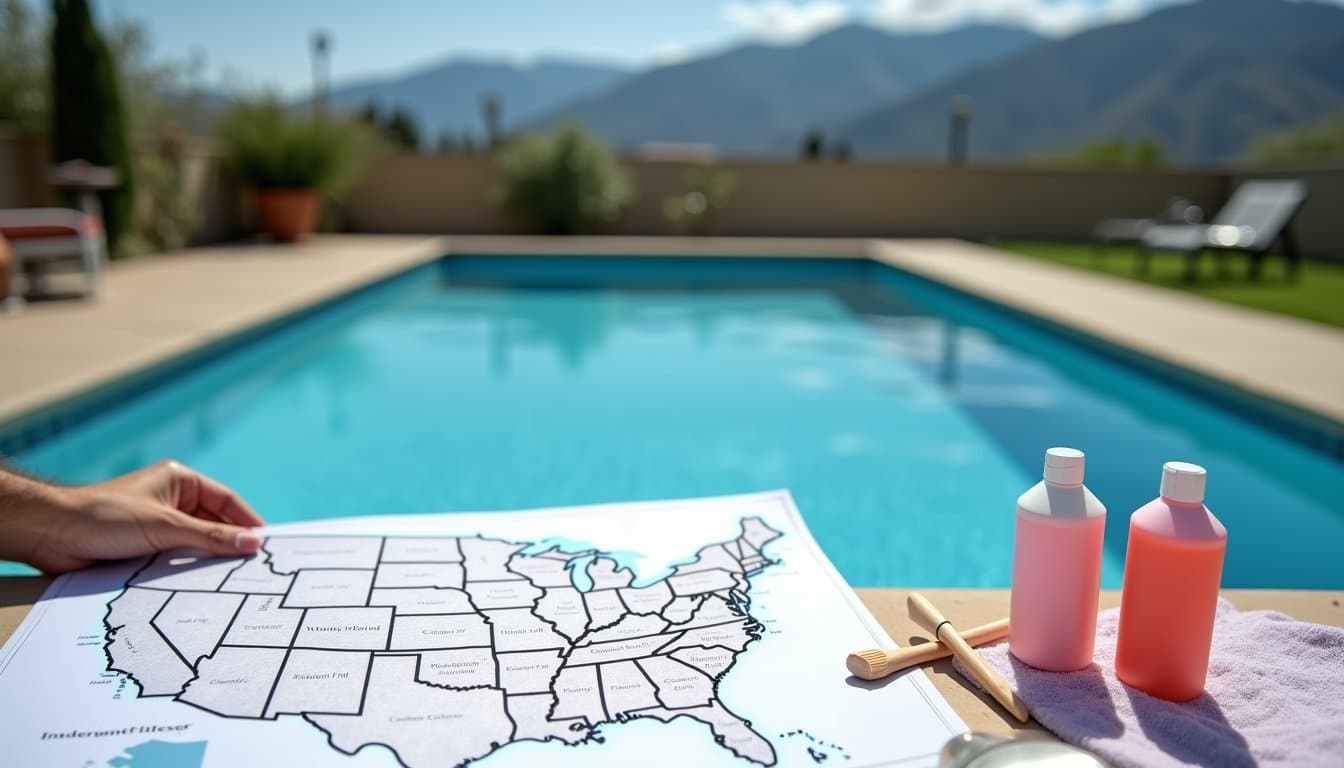
Your fiberglass pool installation costs will vary by up to 35% between high-wage regions like the Northeast ($92/hour) versus lower-wage areas like the South ($64/hour). Travel distance from manufacturing facilities impacts your total project cost, with every 100 miles potentially adding $0.85-$1.25 per square foot in transportation fees. Market saturation directly affects your bottom line, as metropolitan areas with 8+ certified installers typically offer 12-18% lower labor rates compared to regions with limited contractor availability. With expected labor market pressures continuing into 2025, installation costs are projected to increase particularly in regions with skilled worker shortages.
Regional Labor Rate Differences
Labor rates for fiberglass pool installations fluctuate dramatically across different U.S. regions, with variances of 15-35% between markets. Your project’s labor costs will directly correlate with regional contractor availability and market competition. In high-demand areas with limited labor availability, you’ll encounter premium pricing structures. North America’s 40% market share demonstrates the robust demand driving installation costs across regions.
| Region | Labor Rate Factors | Cost Impact |
|---|---|---|
| South | Year-round installation | -15% to -20% |
| Northeast | Limited contractor pool | +25% to +35% |
| Midwest | Seasonal limitations | +10% to +15% |
| Southwest | High competition | -10% to -15% |
| West Coast | Strict regulations | +15% to +25% |
You’ll find ideal regional pricing in southern markets where year-round installations maintain steady contractor workloads. Due to access restrictions, some online pool cost calculators may be temporarily unavailable when researching regional pricing trends. Conversely, northeastern regions command higher rates due to seasonal constraints and stringent building codes, while midwest markets fluctuate based on seasonal demand patterns.
Travel Distance Impact
Beyond regional labor variations, travel distance creates significant cost multipliers for fiberglass pool installations. You’ll face increased shipping costs proportional to your distance from the manufacturer, with transportation surcharges often ranging $1-3 per mile beyond standard delivery zones. Installation crews’ travel time and overnight accommodations can add $500-1,500 to your project costs when sites exceed 100 miles from their base. The site preparation requirements often become more complex and costly for remote locations due to limited access to specialized equipment and materials.
Shipping efficiency impacts your bottom line through load optimization – pools transported individually versus stacked shipments can double your freight costs. You’ll need to factor in supplementary material transportation expenses, particularly for sites requiring specialized backfill or gravel. Remote locations might incur premium delivery fees of 15-25% above standard rates, while limited access areas could require specialized equipment rentals for final positioning.
Market Competition Effects
Market dynamics within specific geographic regions greatly influence fiberglass pool pricing through complex supply-demand mechanics. You’ll find that market saturation levels directly impact your costs, with high-competition areas typically offering more competitive pricing due to aggressive dealer discounting. In North America and Europe, where multiple established manufacturers operate, competitor pricing tends to be more balanced. The increasing trend toward luxury outdoor spaces has strengthened pricing power in residential markets. The market is projected to achieve a 5% annual growth through 2025, indicating steady demand and pricing stability.
Labor market conditions in your region greatly affect installation costs. Areas with limited qualified contractors often command 15-25% higher rates, while regions with robust trade programs maintain more stable pricing. You’ll notice particularly steep premiums in emerging markets where certified installers are scarce. Additionally, markets with established supply chains and local material sourcing typically reduce your overall costs by 10-20% compared to regions relying on long-distance transportation.
Outdoor Living Space Enhancements
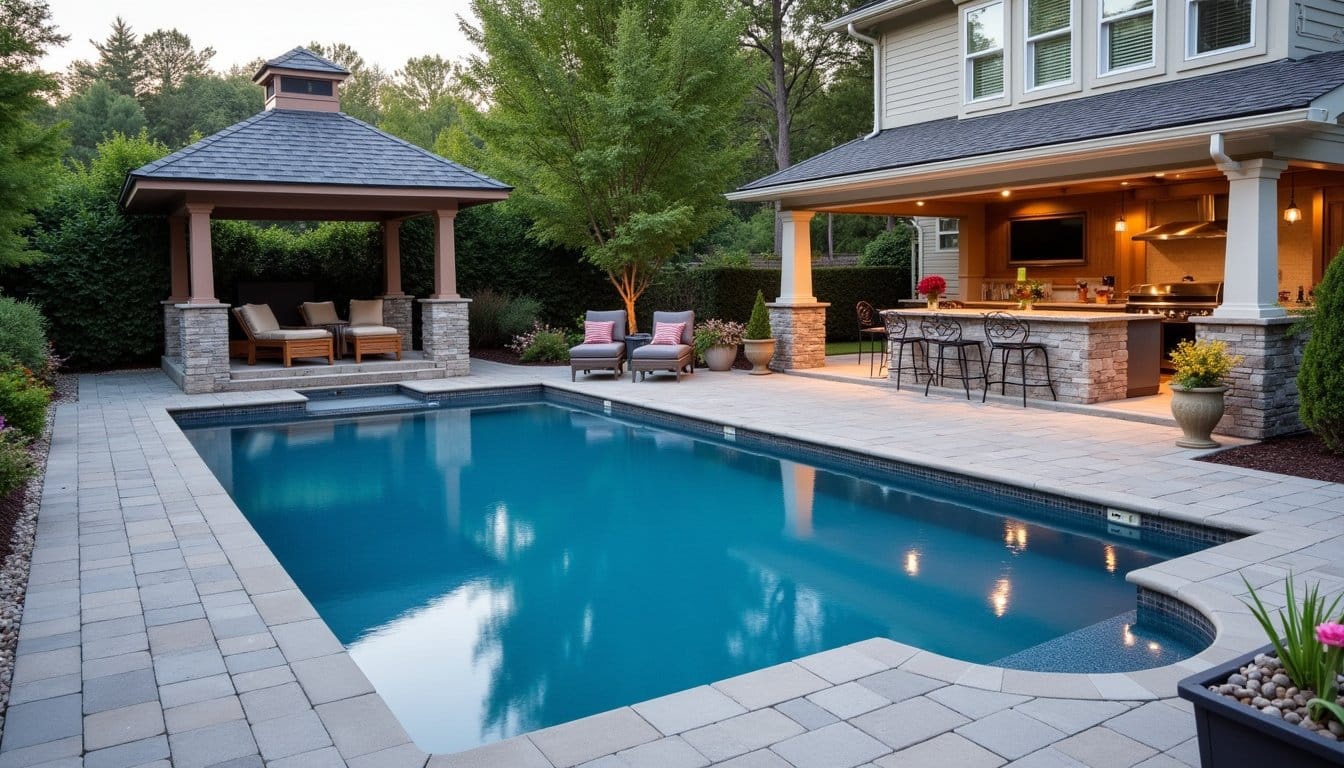
When planning your fiberglass pool installation, integrating extensive outdoor living features can transform the 400-600 sq. ft. surrounding pool area into a multi-functional entertainment zone. You’ll need to factor in seamless deck-to-pool connections, which require precision engineering for multi-level configurations and proper drainage specifications. A shaded gazebo space creates a perfect retreat for guests to escape the sun while maintaining pool visibility. The pool’s non-porous surface makes cleaning and maintenance significantly easier around outdoor living areas.
Installing outdoor kitchens within 15-20 feet of your pool’s perimeter optimizes traffic flow while maintaining safety zones. LED landscape lighting systems, typically requiring 12-24V transformers, illuminate walking paths and enhance aesthetic appeal. Integration costs increase with automated pool covers (spanning 12-20 linear feet), perimeter fencing (minimum 4-foot height per code), and custom lounging areas. Consider incorporating 6-8 foot wide tanning ledges with built-in seating, which can accommodate in-pool furniture while maintaining ADA-compliant entry points.
Property Conditions and Site Preparation
Since ground conditions greatly impact installation complexity, your property’s soil composition and terrain characteristics will determine site preparation costs ranging from $400-$3,200. Soil stability assessments and terrain accessibility evaluations must precede any excavation work, with rocky or water-saturated ground requiring additional engineering solutions.
- Backfill stabilization requires 1-3 cubic feet of gravel per square foot of surface area, factoring in soil density and groundwater tables
- Sloped terrain exceeding 15° grade necessitates professional leveling and reinforcement measures
- Tree root systems within 10 feet of the installation zone require complete removal to prevent future structural complications
Your site’s groundwater management may require supplementary drainage systems, while climate conditions will influence material specifications and installation timing. Properties with limited machine access or extensive vegetation will incur additional preparation costs.
Local Regulations and Compliance Requirements
Complying with local pool regulations requires adherence to strict dimensional specifications for safety barriers, including a minimum 48″ fence height, 2-4″ ground clearance tolerances, and 20″ setbacks from the water’s edge. You’ll need to maintain a 3′ clearance zone between barriers and climbable structures while ensuring no gaps exceed 4″ in diameter.
Compliance costs vary greatly by municipality, with coastal and seismic zones commanding premium rates. You’re required to secure multiple permits for electrical, plumbing, and structural components per International Swimming Pool and Spa Code standards. Non-compliance penalties include substantial fines, mandatory reconstructions, and potential insurance premium hikes. Your barrier surfaces must remain smooth, with automatic locks on adjacent doors and windows. Remember, deviations from approved plans can trigger costly delays and project suspensions until you achieve full code compliance.
Frequently Asked Questions
How Long Does a Fiberglass Pool Installation Typically Take From Start to Finish?
Your fiberglass pool installation timeline typically spans 2-6 weeks, with project management coordinating multiple phases. You’ll experience a systematic progression: 1-3 days for excavation, 1-2 days for shell placement, 2-4 days for plumbing/backfilling, and several days for finishing work. Weather conditions, site accessibility, and permit processing can impact your completion schedule. Complex features like waterfalls or specialized lighting systems may extend the installation duration.
Can Fiberglass Pools Be Removed or Relocated After Installation?
You can remove your fiberglass pool, but relocation is technically challenging. Full removal requires excavating the entire 8-12′ deep shell ($9,000-$15,000), as partial removal isn’t viable due to structural integrity concerns. The installation challenges during extraction include maintaining shell stability and preventing fragmentation. You’ll need heavy machinery for the 2-3 day process, and the shell must be removed intact to minimize labor costs and guarantee proper disposal.
What Is the Typical Lifespan of a Fiberglass Pool?
Your fiberglass pool’s typical lifespan ranges from 25-50 years, contingent upon multiple performance-critical factors. Key lifespan factors include installation precision, structural integrity maintenance, and environmental exposure metrics. You’ll maximize longevity through strategic maintenance tips: maintaining pH levels between 7.2-7.6, implementing weekly chemical testing protocols, and conducting bi-annual structural inspections. The gel coat’s durability greatly depends on your adherence to manufacturer-specified cleaning procedures and chemical balance parameters.
Do Fiberglass Pools Affect Home Insurance Rates?
Yes, your fiberglass pool will impact your insurance premiums, typically increasing annual rates by $200-$500 above standard coverage. You’ll need to maintain specific pool safety features to meet insurer requirements, including 4-foot fencing with self-latching gates. Major carriers like State Farm ($1,302) and USAA ($1,286) consistently adjust rates upward for pool ownership. You’ll also need higher liability coverage limits, often $300,000-$500,000, to protect against potential accidents.
How Much Does Annual Maintenance Cost for a Fiberglass Pool?
You’ll spend approximately $350-$400 annually for basic fiberglass pool upkeep, with $200 allocated to electricity consumption for pump/filter operations and $175 for essential chemical treatments. Your maintenance tips should focus on consistent chemical balancing, requiring pH adjusters, chlorine, and stabilizers. This total’s considerably lower than vinyl ($700/year) or concrete ($1,150/year) alternatives. Additional costs may apply if you opt for automated cleaning systems or specialized maintenance equipment.