




To winterize your fiberglass pool for harsh conditions, you’ll need to lower the water level 1-2 inches below the skimmer line while maintaining volume above the main drain. Install a reinforced winter cover with proper anchoring systems and ice equalizer pillows to manage frost pressure. Thoroughly winterize all plumbing components using antifreeze, drain plugs, and compressed air to eliminate moisture. Apply specialized surface coatings after cleaning, and implement thermal protection for equipment. The following extensive protocol guarantees ideal protection against freeze damage.
Material Benefits of Fiberglass in Extreme Cold
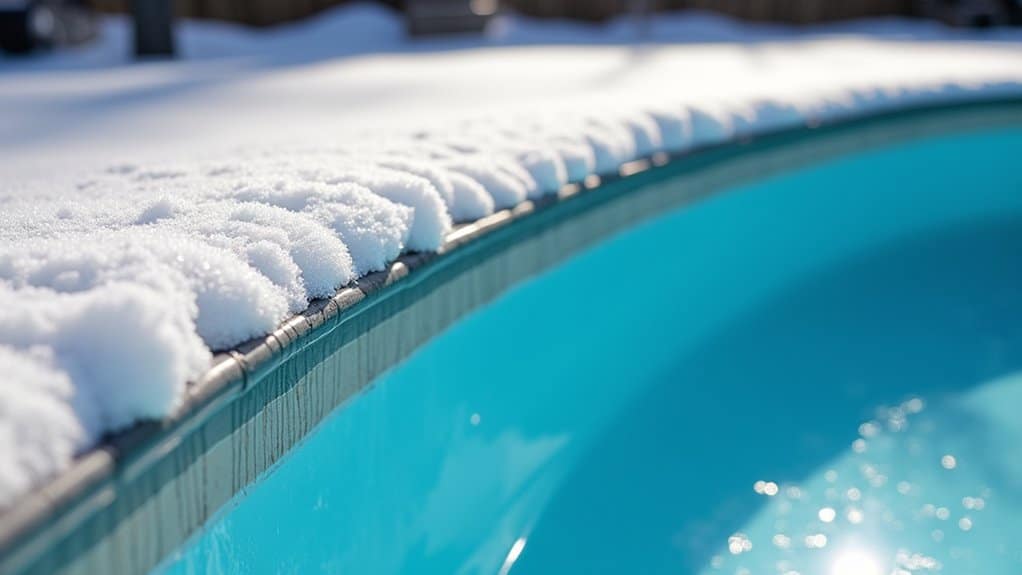
When considering pool materials for cold climates, fiberglass stands out due to its exceptional structural properties and adaptability to extreme temperatures. You’ll find its winter resilience stems from a unique combination of flexibility and strength, allowing seamless expansion and contraction during temperature fluctuations. Field tests in Canada have consistently proven fiberglass pools can endure the harshest winter conditions without compromise. Viking Pools has demonstrated this durability with over three decades of successful installations in cold regions.
The material’s fiberglass advantages include a high strength-to-weight ratio and chemical inertness, making it resistant to both structural damage and chemical degradation. You’re getting superior durability through its reinforced gel coat layer, which protects against UV exposure and harsh sanitizers. The non-porous surface prevents water absorption, while the smooth finish reduces maintenance demands and minimizes algae growth.
In extreme cold, you’ll benefit from fiberglass’s natural insulating properties, which help maintain stable water temperatures and reduce heating costs. The material’s demonstrated ability to withstand soil movement and freeze-thaw cycles makes it ideal for harsh winter conditions.
Essential Winter Preparation Steps
Protecting your fiberglass pool for winter requires three critical steps that you’ll need to execute with precision. You must lower the water level below the skimmer line while maintaining adequate volume above the main drain, install a reinforced winter cover with proper anchoring systems, and thoroughly winterize all plumbing components using antifreeze and drain plugs. Your systematic approach to these core preparations will safeguard your pool’s structural integrity and prevent costly freeze damage to essential components. The addition of winterizing chemicals during preparation helps maintain optimal water chemistry and prevents algae growth throughout the cold season. The pool’s non-porous surface characteristics make it particularly resistant to winter damage when properly maintained. Testing and adjusting the pool water chemicals before winterization ensures proper chemical balance throughout the entire winter season.
Lower Water Levels Properly
Proper water level management stands as a critical first step in winterizing your fiberglass pool. You’ll need to execute water level reduction precisely, lowering it to 1 inch below the skimmer opening to guarantee ideal freeze damage prevention while maintaining structural integrity. Proper water balance helps protect your fiberglass surface during the winter months. Maintaining the appropriate water chemistry with balanced pH levels is crucial for preventing corrosion and scale buildup during the winter season.
Before initiating the level drop, you must balance your pool’s chemistry and clear all skimmer baskets. Using a submersible pump, carefully reduce the water level while ensuring you don’t exceed the 1.5-inch threshold below the skimmer, which could risk structural damage. Clean pool debris should be removed completely before starting the draining process to prevent plumbing clogs. Once you’ve achieved the proper level, immediately purge all plumbing lines using compressed air or a shop vac to eliminate residual moisture. Install freeze plugs in return lines and verify complete water removal from all equipment to prevent ice-related complications during winter months.
Secure Winter Cover Installation
A secure winter cover installation serves as your pool’s primary defense against harsh winter conditions and potential structural damage. When performing winter preparations, you’ll need to focus on precise measurements and strategic placement to guarantee maximum protection. Start by sizing your cover with a 2-foot overhang on all sides, then establish proper anchor points 16 inches from the edge. Self-locking gates and secure fencing must be maintained even during winter months to prevent unauthorized access. Using a concrete drill bit and hammer drill is essential for creating properly sized anchor holes in deck surfaces. Fiberglass pools allow for easier winterization steps compared to concrete or vinyl alternatives, saving both time and effort during the preparation process.
- Install ice equalizer pillows beneath the cover to manage frost pressure
- Mark chalk lines for anchor placement and secure with dedicated springs
- Lace cables through all grommets, guaranteeing even tension throughout
- Deploy water tubes on full decks while using clip combinations for partial ones
- Test cable tension by tugging gently – proper installation should show no movement
Regular monitoring during winter guarantees your cover maintains its protective capability, preventing structural compromise and water contamination.
Plumbing System Protection Protocol
Beyond securing your winter cover, the plumbing system demands meticulous preparation to prevent costly freeze damage during winter months. Your plumbing winterization checklist should prioritize completely draining all water from pumps, filters, and lines. You’ll need to remove drain plugs and use an air compressor to blow out remaining water, working systematically from the farthest return line. Long-term savings of up to 30% on maintenance costs make proper winterization worth the effort.
Essential plumbing maintenance tips include wrapping exposed pipes with foam insulation, applying heat tape in extreme climates, and using pool-specific antifreeze in skimmer and return lines. Regular routine system checks throughout winter help identify potential issues before they become major problems. Don’t forget to install winter plugs and seal skimmer portals with threaded plugs. Lower your pool water level to 12-18 inches below the skimmer to prevent ice damage. Keep your system documentation and emergency supplies readily accessible for periodic winter inspections.
Advanced Surface Protection Techniques
When preparing fiberglass pools for winter, implementing advanced surface protection requires a systematic approach to shield the pool’s structural integrity. You’ll need to apply specialized surface coatings and protective sealants after thorough cleaning to guarantee maximum defense against winter damage. A properly leveled foundation helps prevent uneven stress on the surface during freeze-thaw cycles. Shock treatment application before winterizing eliminates harmful bacteria that could damage surfaces over time.
- Vacuum and brush all surfaces meticulously to remove debris and biological growth
- Apply manufacturer-approved cleaning agents specifically designed for fiberglass surfaces
- Treat visible stains immediately with targeted solutions before they become permanent
- Use specialized surface coatings to create a protective barrier against winter elements
- Install thermal blankets beneath safety covers for additional surface protection
Your systematic approach should combine thorough cleaning with protective treatments. Remember to maintain proper chemical balance, with pH levels between 7.2-7.6, to prevent surface deterioration during the winter months. This all-encompassing protection strategy will help preserve your pool’s structural integrity throughout the cold season.
Climate-Specific Winterization Protocols
The effectiveness of fiberglass pool winterization depends heavily on your specific climate zone and regional weather patterns. You’ll need to address unique winterization challenges through tailored protocols that match your local climate variations.
| Climate Type | Primary Actions | Equipment Handling |
|---|---|---|
| Cold | Lower water 2ft, drain equipment | Full winterization kit |
| Moderate | Lower water 12-18in, balance chemicals | Partial equipment drain |
| Mild | Light cleaning, minimal adjustments | Keep operational |
| Northern | Enhanced frost protection | Canadian-engineered systems |
| Transitional | Monitor freeze-thaw cycles | Composite materials |
For cold regions, you’ll need thorough winterization with complete equipment drainage and heavy-duty covers. Moderate climates require partial winterization with biweekly monitoring. In mild areas, focus on basic maintenance and lightweight protective measures. Remember to document your climate-specific protocols for consistent year-over-year improvements in your winterization strategy.
Safeguarding Pool Equipment Systems
Properly safeguarding your pool’s equipment systems requires a systematic approach to prevent winter damage and extend component lifespans. Your winter safety protocol should focus on thorough equipment maintenance, combining thorough drainage with strategic protection measures.
- Drain and inspect all pumps, filters, and heaters using an air compressor to remove residual water
- Install freeze sensors and apply targeted heat sources to vulnerable components
- Protect equipment with thermal covers and insulate exposed pipes with foam sleeves
- Apply corrosion inhibitors to metal surfaces and lubricate moving parts
- Seal all system openings with appropriate plugs or Gizzmos to prevent debris infiltration
For complex systems, particularly those with automated features or saltwater generators, you’ll want to consult manufacturer guidelines and consider professional winterization services to guarantee ideal protection during harsh winter conditions.
Smart Spring Reopening Strategies
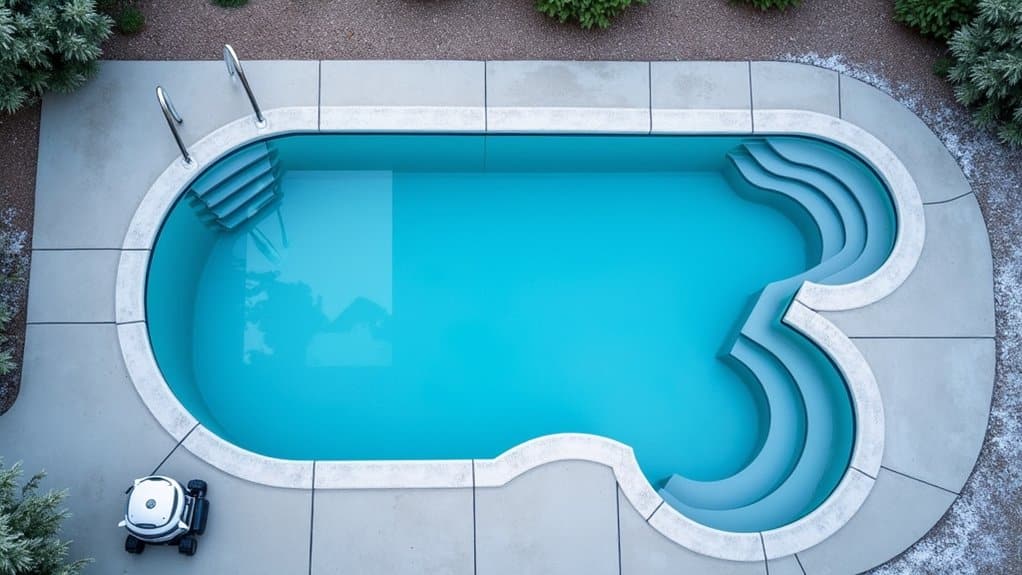
You’ll need to begin your pool reopening with extensive water testing for pH, alkalinity, and chlorine levels to establish a proper chemical foundation before any system activation. The methodical restart of pumps, filters, and heating equipment requires careful inspection of all connections, followed by a systematic power-up sequence to prevent mechanical stress. After equipment verification, thoroughly examine the pool’s surface for winter damage and remove any debris through detailed brushing and vacuuming to guarantee ideal operating conditions.
Early Chemical Balance Testing
While preparing for spring pool reopening, initiating chemical balance testing several weeks before closure proves critical for establishing baseline parameters that will guide your winter maintenance strategy. Early testing enables you to make strategic chemical adjustments before winter challenges emerge.
Key testing priorities include:
- Monitor pH levels between 7.2-7.6 to protect your fiberglass surfaces
- Test alkalinity to maintain 80-120 ppm for pH stabilization
- Check calcium hardness, targeting 200-400 ppm to prevent scaling
- Measure chlorine levels, reducing to 1-3 ppm before winterization
- Verify metal content and add chelating agents as needed
Using automated test kits guarantees accurate readings for precise chemical balance. Document all measurements and adjustments, creating a detailed record that’ll inform your spring maintenance decisions. This methodical approach prevents costly damage and simplifies your reopening process.
Equipment System Restart Process
Following your winter chemical preparations, the equipment system restart process demands a systematic approach to guarantee your fiberglass pool‘s mechanical components return to peak operation. Begin by removing winterizing plugs and managing antifreeze in your skimmer lines, either pushing pool-grade solutions back or vacuuming them out through appropriate filtration pathways.
Your maintenance checklist should prioritize pump priming and equipment troubleshooting. Reconnect all components, ensuring tight seals at unions and pipe joints. Test for air leaks by submerging suction valves in water and monitoring for bubbles. Once you’ve verified connections, activate your filtration system and run it continuously for 12-24 hours. Monitor pressure readings and circulation patterns, adjusting valve settings as needed. Document all readings to establish baseline performance metrics for future reference.
Surface Inspection and Cleaning
Before undertaking any major pool reopening tasks, a detailed surface inspection and cleaning protocol guarantees your fiberglass pool’s longevity and ideal condition. You’ll need to assess surface integrity through methodical examination, focusing on identifying potential structural compromises while implementing proper cleaning techniques.
- Probe the surface gently to detect any cracks, blisters, or areas of delamination
- Check for chemical imbalance indicators like discoloration or staining
- Apply pH-neutral cleaners with soft microfiber cloths in small sections
- Remove debris systematically using a fiberglass-specific brush
- Test water chemistry before initiating extensive cleaning
When cleaning, avoid abrasive materials that could damage the gel coat. Instead, use non-abrasive cleaners specifically designed for fiberglass surfaces. You’ll want to maintain consistent pressure during cleaning while ensuring thorough rinsing to remove all cleaner residues. This systematic approach helps preserve your pool’s protective coating.
Frequently Asked Questions
Can I Use My Fiberglass Pool as an Ice Skating Rink?
Yes, you can convert your fiberglass pool into an ice skating rink, but you must follow strict safety protocols. You’ll need to verify ice thickness of at least 4 inches uniformly across the pool basin before allowing any skating activity. Fiberglass safety features, including its non-porous surface and flexibility during freeze-thaw cycles, make it suitable for winter conversion. You’ll need to monitor temperatures consistently and conduct professional assessments before first use.
How Does Snow Weight Affect Warranty Coverage for Fiberglass Pools?
Your fiberglass pool’s warranty coverage typically won’t protect against snow load damage, as it’s classified under “acts of God” exclusions. You’ll find that structural warranties focus on manufacturing defects rather than environmental stressors. Warranty limitations specifically exclude damage from extreme weather conditions, including accumulated snow weight. If you haven’t followed required winterization procedures, you’ll further compromise your coverage. Check your warranty’s maintenance clauses to guarantee compliance during winter months.
What Happens if Power Fails During Winter With Pool Equipment Running?
When you experience a power failure during winter, your running pool equipment faces immediate risk of equipment damage from freezing water. You’ll need to act quickly by removing all drain plugs from your pump, filter, heater, and chlorinator. It’s vital that you open air bleeders to accelerate drainage and wrap your outdoor equipment with insulation. Don’t forget to protect exposed PVC pipes with heating cables to prevent catastrophic freeze damage.
Should Pool Lights Remain Installed During Winter in Extreme Cold Climates?
You shouldn’t keep pool lighting installed during extreme cold winters, particularly in temperatures below -20°F. Your winter maintenance should include removing underwater lights to prevent damage from ice formation and thermal stress on electrical components. If you must keep lights installed, you’ll need to guarantee proper insulation of wiring, apply weatherproof sealants, and monitor for ice buildup regularly. Consider documenting light positions for accurate spring reinstallation.
Can Indoor Heating Systems Interfere With Proper Pool Winterization Processes?
Based on the provided background information, there’s no documented evidence that indoor heating systems interfere with pool winterization processes. You’ll want to focus on core winter maintenance tasks like proper chemical balancing, equipment drainage, and cover installation regardless of nearby indoor heating. The critical factors for successful winterization remain tied to outdoor temperatures, water chemistry, and physical protection measures rather than indoor climate control systems.