
Your choice between fiberglass and concrete pools depends on your priorities. Fiberglass offers faster installation (2-6 weeks) and lower maintenance costs ($3,000-$10,000 over 10 years), with a smooth, algae-resistant surface that’s gentle on feet. Concrete provides unlimited design options and longer lifespan (50+ years) but requires more maintenance and time to install (3-6 months). The right choice balances your budget, timeline, and desired customization level. Exploring each option’s specific features will help clarify your ideal match.
Understanding Pool Installation Timelines and Methods
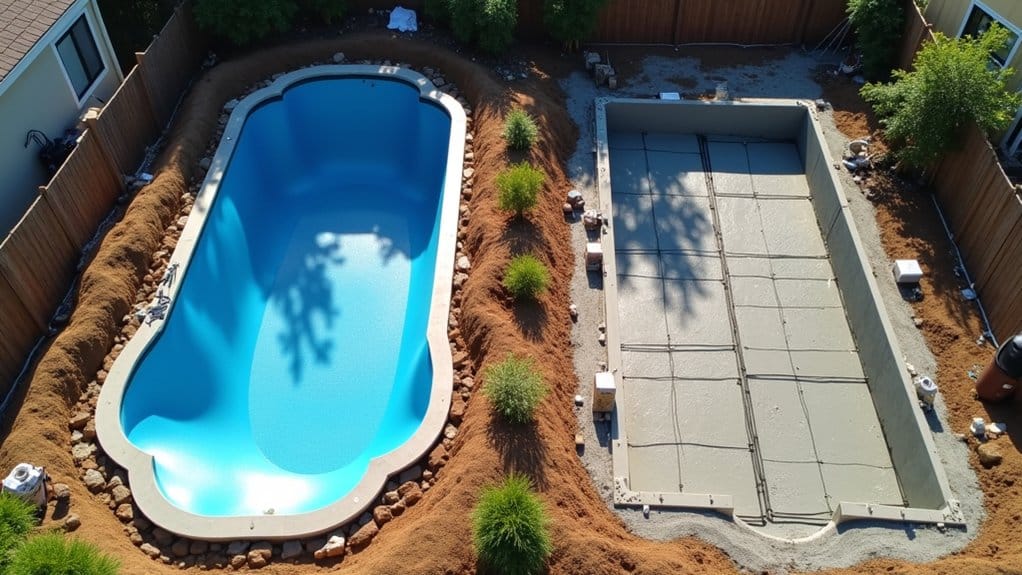
When considering a pool installation, understanding the distinct timelines between fiberglass and concrete options proves essential for project planning. You’ll find that fiberglass pools offer notably faster installation processes, typically completing in 2-6 weeks, while concrete pools require 3-6 months due to extensive curing periods. Their pre-formed shells arrive ready for installation, making the process highly efficient. Professional installers recommend scheduling your project during spring and early summer for optimal ground conditions and timely completion.
The project timelines for fiberglass installations follow a streamlined approach: after permit acquisition, your contractor will complete site preparation, shell delivery, and plumbing connections within days. Early planning stages involve obtaining necessary permits from local authorities to ensure smooth project progression. In contrast, concrete pools demand multiple phases, including excavation, steel reinforcement, gunite application, and extended curing times. You’ll need to factor in variables like weather conditions, contractor availability, and local permits, which can impact both installation types. For quick completion, fiberglass presents clear advantages, while concrete suits those prioritizing customization over speed.
Maintenance Requirements and Long-Term Care
You’ll find distinct differences in daily maintenance between fiberglass and concrete pools, with fiberglass requiring considerably less hands-on cleaning due to its non-porous, algae-resistant gel coat surface. While concrete pools need frequent brushing, fiberglass surfaces provide smooth, comfortable walking. When examining long-term expenses, concrete pools demand more frequent chemical treatments and eventual resurfacing costs of approximately $6,500 per 1,000 square feet every 10-15 years. If you need detailed maintenance guidance, you may encounter a security block when accessing certain pool service websites. This improved maintenance efficiency translates to lower lifetime costs compared to concrete alternatives. In contrast, fiberglass pools maintain stable water chemistry with minimal chemical input and typically need only basic maintenance for 25-30 years before considering shell replacement.
Daily Care Comparison
The maintenance requirements between fiberglass and concrete pools differ markedly in both daily care and long-term upkeep.
When it comes to cleaning frequency, you’ll find that fiberglass pools require notably less work due to their non-porous, gel-coated surfaces. While concrete pools demand weekly scrubbing to combat algae growth, fiberglass surfaces resist algae naturally and need minimal brushing. For algae prevention, you’ll use fewer chemicals in a fiberglass pool since its smooth surface doesn’t provide hiding spots for bacteria and algae to thrive. Installation time can impact early maintenance needs, with concrete pools taking 3-5 months before proper care routines can begin. Fiberglass pools offer stable chemistry throughout their lifetime due to their non-reactive gel coating surface.
You’ll also notice that concrete’s porous texture becomes increasingly rough over time, requiring more aggressive cleaning methods that can damage the surface. In contrast, fiberglass maintains its smooth finish, making daily maintenance more straightforward and less time-consuming while preserving the pool’s aesthetic appeal. An additional consideration is that concrete pools need acid washing periodically to remove stubborn stains and mineral deposits.
Long-Term Cost Analysis
Although both pool types require financial investment, understanding their long-term cost implications reveals significant differences in ownership expenses. When analyzing the cost breakdown, fiberglass pools typically demand $3,000-$10,000 in maintenance over a decade, while concrete pools can exceed $25,000 for the same period. DIY installation of fiberglass pools can save homeowners up to $18,000 in construction costs.
Your expense forecasting should account for concrete’s higher chemical consumption, more frequent pH adjustments, and necessary replastering every 10-15 years. The non-porous surface of fiberglass significantly reduces algae growth compared to concrete options. In contrast, fiberglass pools’ non-porous surfaces reduce chemical needs and maintenance requirements. While concrete pools offer 25-50 years of service with proper care, they’ll require consistent upkeep to prevent deterioration. Fiberglass pools, lasting 15-25 years, present lower ongoing costs due to their energy-efficient design and reduced maintenance demands, despite potentially needing shell replacement later.
The Role of Durability in Pool Selection
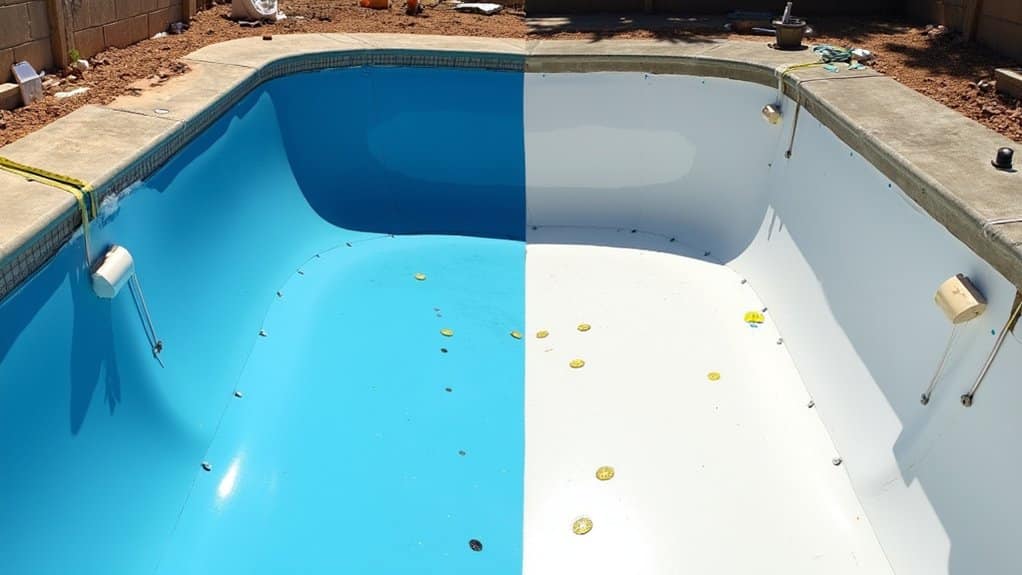
When selecting between fiberglass and concrete pools, durability becomes a critical factor that greatly impacts long-term ownership costs and satisfaction.
In the durability comparison, you’ll find that concrete pools offer superior longevity, lasting 50+ years with proper maintenance, while fiberglass pools typically serve 25-30 years. However, lifespan expectations aren’t solely about years – they’re about structural integrity and maintenance requirements. Concrete’s rigid structure makes it prone to cracking from ground shifts and requires resurfacing every 10-15 years. In contrast, fiberglass pools feature flexible shells that better absorb ground movement and rarely need resurfacing, though their gel coats may need attention after 20-30 years. You’ll also benefit from fiberglass’s non-porous surface, which resists chemical degradation and requires less maintenance than concrete’s more vulnerable finish. The streamlined installation process of fiberglass pools offers a significant advantage, with completion possible in just 3-5 weeks compared to concrete’s lengthy construction timeline. Over a 10-year period, fiberglass pools demonstrate remarkable cost efficiency with minimal maintenance expenses under $5,000.
Design Options and Visual Appeal
When you’re weighing your pool options, you’ll find that concrete pools offer unlimited customization potential for unique shapes and specialized features like infinity edges, while fiberglass pools come in pre-manufactured designs with modern amenities built into the mold. You’ll notice concrete’s versatility in finish choices, from colored plaster to intricate tile work, whereas fiberglass provides a smooth, non-porous gel-coat surface in various contemporary colors. Each material serves distinct aesthetic preferences: concrete excels in creating one-of-a-kind luxury designs, while fiberglass delivers sleek, standardized aesthetics with consistently polished results.
Custom Features Vs Prefab
Since design flexibility plays an essential role in pool selection, the differences between fiberglass and concrete pools‘ customization options are significant. While fiberglass pools come from pre-designed molds with standardized shapes and features, concrete pools offer unlimited design possibilities.
You’ll find that concrete pools enable complete feature integration, allowing you to incorporate infinity edges, custom seating, and specialized water features directly into the design. The ability to shape concrete pools to your exact specifications means you can accommodate challenging terrains or create complex geometries that perfectly match your vision. In contrast, fiberglass pools limit you to factory-manufactured designs with predetermined layouts and features. While they offer some customization through color options and basic add-ons, you won’t have the same level of design flexibility that concrete construction provides.
Finish and Surface Options
Although both pool types offer distinct aesthetic qualities, fiberglass and concrete pools diverge considerably in their surface options and finish characteristics. With concrete pools, you’ll find extensive texture options, from smooth plaster to intricate tile mosaics and aggregate pebble finishes. These surfaces require resurfacing every 10-15 years but allow for complete customization of your pool’s aesthetic appeal.
Fiberglass pools feature a non-abrasive gel-coat surface that maintains consistent surface aesthetics throughout its 25-year lifespan without requiring resurfacing. While you won’t get the same level of customization as concrete, the smooth, durable finish resists algae growth and minimizes maintenance needs. The surface texture remains gentle on swimmers’ feet, making it particularly suitable for families with children who spend extended time in the pool.
Initial Investment and Operating Expenses
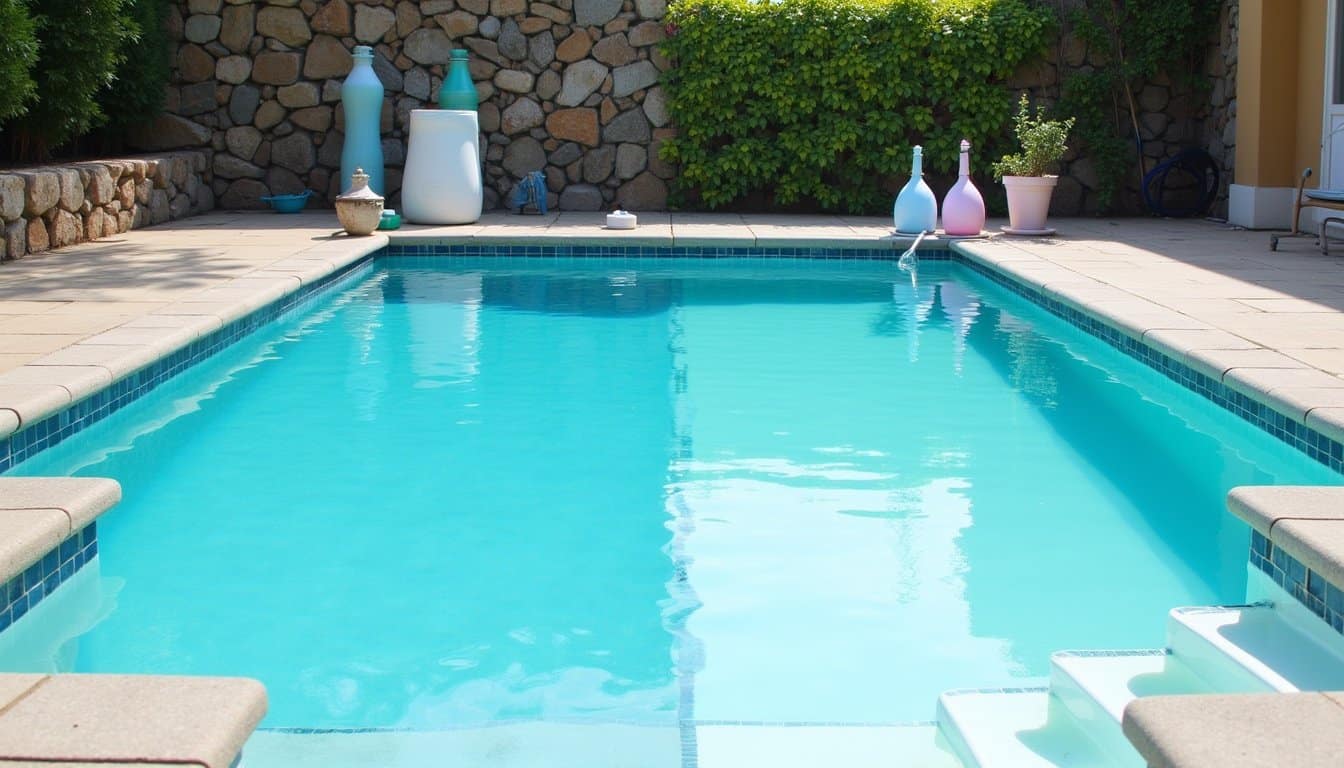
The investment landscape between fiberglass and concrete pools reveals distinct cost patterns in both initial outlays and long-term expenses. Your cost comparison shows fiberglass pools starting at $55,000, while concrete begins at $65,000. When conducting an investment analysis, you’ll need to factor in both upfront and ongoing costs.
| Category | Fiberglass | Concrete |
|---|---|---|
| Initial Cost | $55,000+ | $65,000+ |
| 10-Year Maintenance | Under $5,000 | Over $10,000 |
| Installation Time | 1-2 weeks | 2-3 months |
| Chemical Usage | Lower | Higher |
You’ll find fiberglass pools offer significant savings in maintenance, requiring under $5,000 over a decade compared to concrete’s $10,000+. The gel-coat surface of fiberglass reduces chemical needs and cleaning frequency, while concrete demands regular acid washing and resurfacing every 10-15 years, impacting your long-term operating costs. The porous material of concrete pools requires more frequent brushing and maintenance to prevent algae growth.
Energy Consumption and Efficiency Factors
When comparing energy efficiency between pool types, fiberglass pools demonstrate superior performance across multiple factors. You’ll benefit from reduced energy consumption due to their superior heat retention properties and smoother surfaces, which minimize heat loss during circulation and reduce pump workload. Manufacturing fiberglass pools in controlled factory settings creates a lower carbon footprint.
The non-porous nature of fiberglass greatly decreases chemical usage and maintenance-related energy costs. Unlike concrete pools, which require frequent cleaning and chemical treatments due to algae growth on their porous surfaces, fiberglass pools maintain cleaner water with less filtration. Their factory-controlled manufacturing process also contributes to overall energy efficiency, eliminating the energy-intensive on-site construction required for concrete pools. Modern fiberglass pools often include variable-speed pumps that optimize energy consumption.
Additionally, fiberglass pools’ lower evaporation rates mean you’ll spend less energy heating replacement water, resulting in substantial long-term energy savings.
Environmental Impact and Sustainability
Considering environmental sustainability metrics, fiberglass pools demonstrate notably lower carbon footprints compared to their concrete counterparts. The sustainability benefits stem from factory-controlled production, minimizing onsite waste and emissions. Concrete pools require extensive cement production, contributing roughly 8% to global CO2 emissions, while fiberglass manufacturing processes generate considerably less environmental impact.
- Pre-formed fiberglass shells reduce transportation emissions and resource extraction compared to concrete’s heavy materials and onsite construction
- Non-porous fiberglass surfaces require fewer chemicals for maintenance, decreasing harmful substances entering ecosystems
- Longer lifespan without major repairs eliminates waste from frequent resurfacing and liner replacements
These environmental considerations make fiberglass pools the more eco-conscious choice, offering reduced chemical leaching risks and minimal groundwater impact throughout their service life. In addition, Fiberglass and vinyl pools both offer sustainability benefits, but fiberglass stands out for durability and algae resistance, reducing chemical use and providing a lower-maintenance, eco-friendly swimming experience.
Making the Right Choice for Your Property
Selecting between fiberglass and concrete pools requires careful evaluation of your property’s specific characteristics, budget constraints, and lifestyle preferences. If you’re seeking quick installation and pool safety features like built-in non-slip surfaces, fiberglass offers ready-to-use solutions within 3-5 weeks. For custom designs that match unique architectural elements, concrete’s unlimited customization might justify its 6-10 week timeline.
Consider your long-term financial commitment: fiberglass demands $25,100-$49,000 upfront but minimizes future expenses, while concrete’s $35,000-$65,000 initial cost includes recurring maintenance. Family preferences often favor fiberglass for its smooth surfaces and lower chemical requirements. However, if you’re developing a luxury property where design flexibility is paramount, concrete’s ability to incorporate complex features may outweigh its higher maintenance demands.
Frequently Asked Questions
Can You Convert a Concrete Pool to Fiberglass Later?
Yes, you can convert your concrete pool to fiberglass through a specialized overlay process. The conversion involves thoroughly preparing the existing surface, applying vinyl ester primer, and installing resin-coated fiberglass matting. This upgrade enhances material durability and reduces maintenance needs. While the pool conversion requires a 10-14 day process and significant investment, it’s more cost-effective than complete pool replacement and provides 15-20 years of service.
Do Fiberglass Pools Affect Home Resale Value Differently Than Concrete?
Both pool types can positively impact your home’s value, but they affect resale trends differently. Fiberglass pools typically offer broader market appeal due to their lower maintenance costs and modern aesthetic, particularly attracting young families and first-time buyers. In luxury markets, you’ll find concrete pools often command higher premiums due to their customization potential. Your local real estate dynamics and target buyer demographics will ultimately determine which option maximizes your property’s resale value.
Which Type of Pool Is Safer for Diving?
For safe diving, you’ll need to contemplate both diving depth and safety standards carefully. Concrete pools offer superior diving safety due to their customizable depths (up to 9 feet) and ability to incorporate specialized diving zones. While fiberglass pools feature smoother surfaces that reduce scrapes, their limited depth options and pre-set designs don’t optimize diving safety. You’ll want a minimum 8-foot depth for basic diving, which is more achievable with concrete construction.
How Do Saltwater Systems Perform in Fiberglass Versus Concrete Pools?
You’ll find that saltwater compatibility is remarkably better with fiberglass pools due to their non-porous gel coat surface. They’re naturally resistant to salt corrosion and require minimal chemical adjustments. In contrast, concrete pools demand higher maintenance requirements, including regular surface coating and increased chemical monitoring to prevent salt-induced deterioration. Your saltwater system will operate more efficiently in a fiberglass pool, while you’ll need to invest more time and resources protecting concrete surfaces.
Can Existing Concrete Pools Be Enlarged, Unlike Fiberglass Ones?
Yes, you can enlarge your existing concrete pool through strategic pool expansion methods. Unlike rigid fiberglass shells, concrete pools offer flexible renovation options through partial demolition and structural modifications. You’ll need to cut existing walls, extend rebar, and integrate new sections with proper formwork. The process requires careful plumbing reconfiguration and soil preparation. While it’s a complex undertaking, concrete’s adaptable nature makes size modifications entirely feasible with professional expertise.