
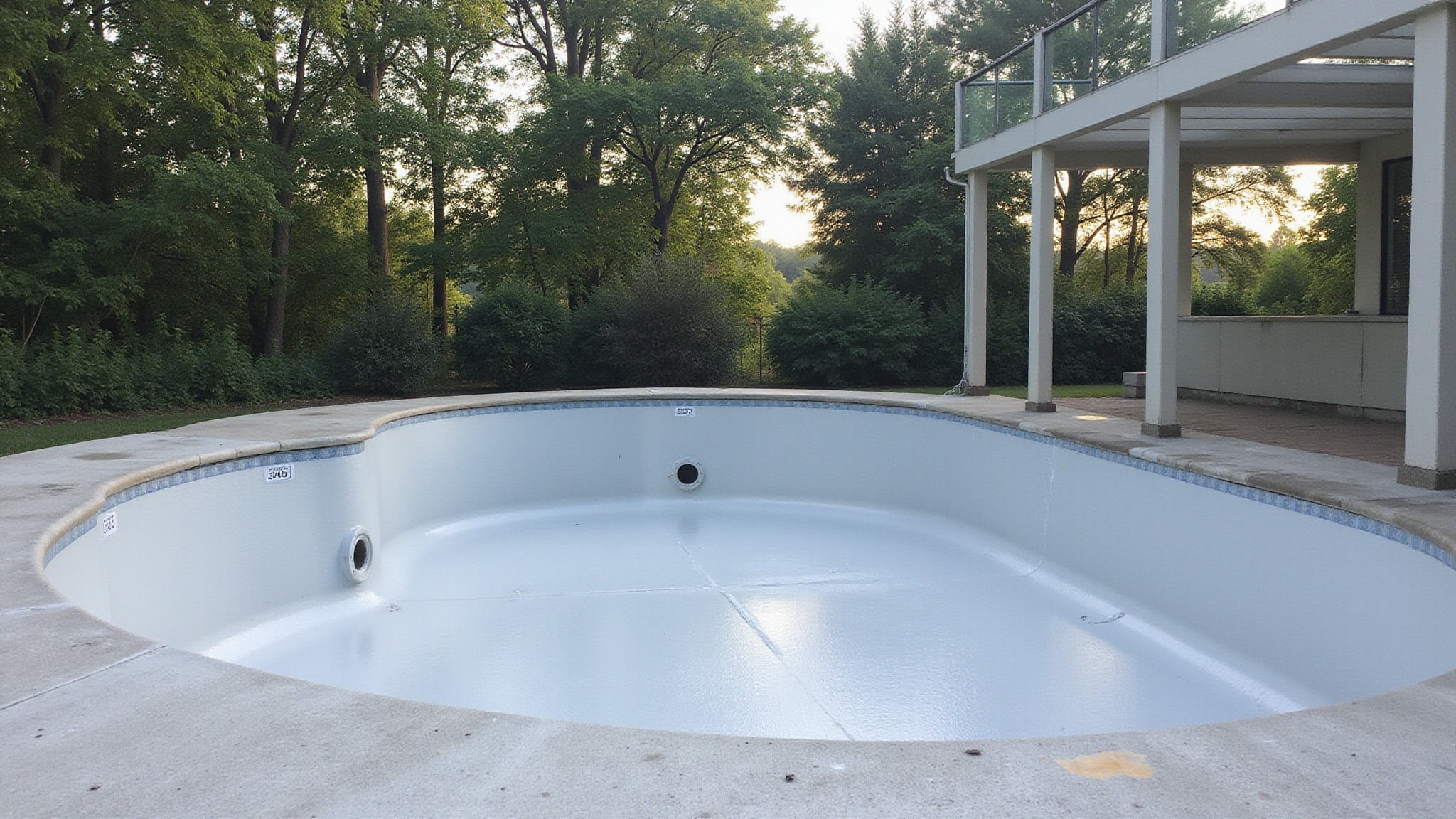
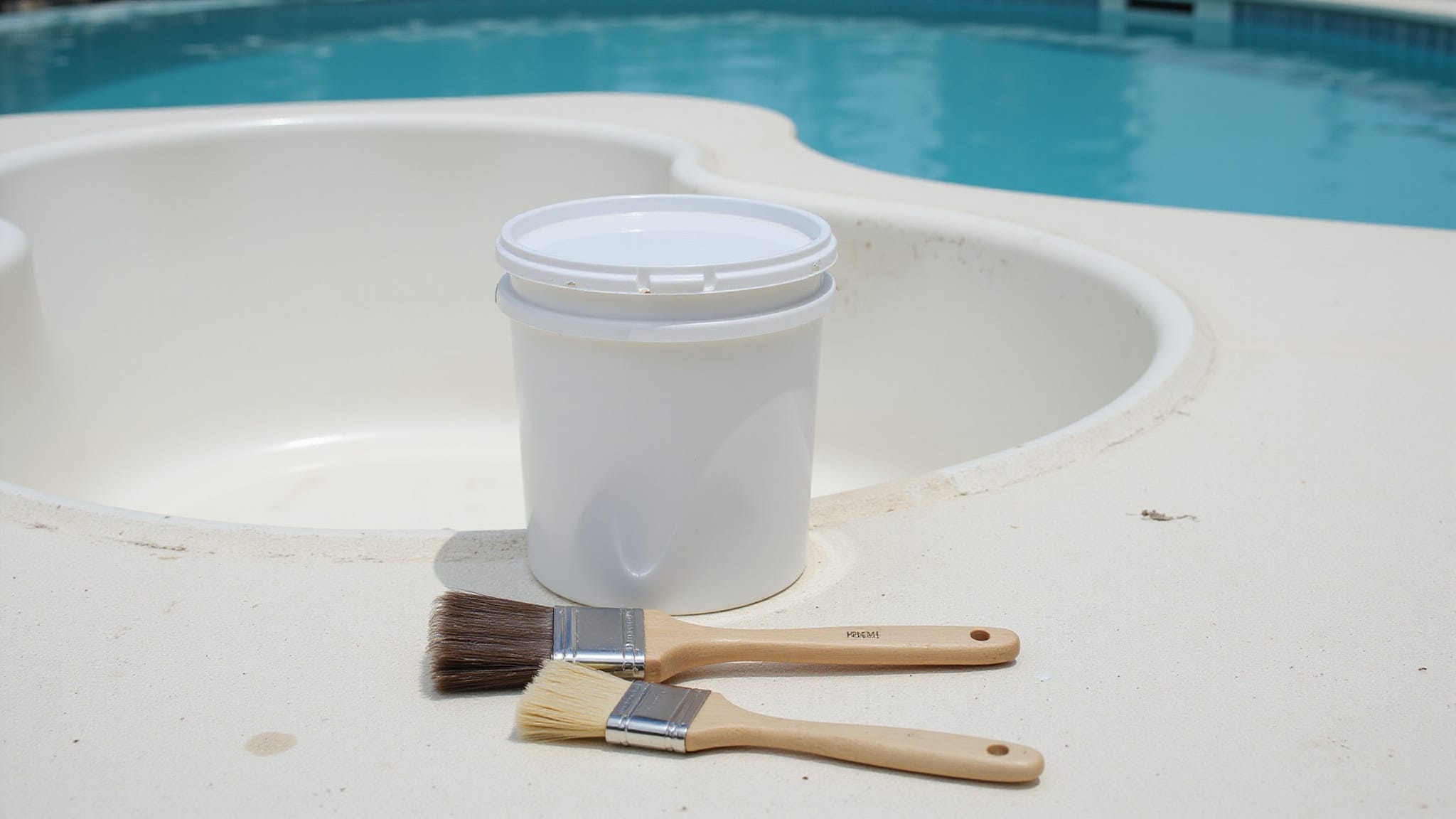
To restore your faded fiberglass pool’s shine, start by draining the pool and sanding the surface with 200-grit sandpaper. Apply marine-grade epoxy to repair any cracks, then add 3-4 layers of catalyzed gel coat using proper overlap techniques. Progress through finer sandpaper grits (220-600) before compound buffing. Finish with a UV-resistant sealant and maintain proper chemical balance (pH 7.2-7.4). Proper technique and material selection will determine your restoration’s long-term success.
Understanding the Signs of Fiberglass Pool Fading
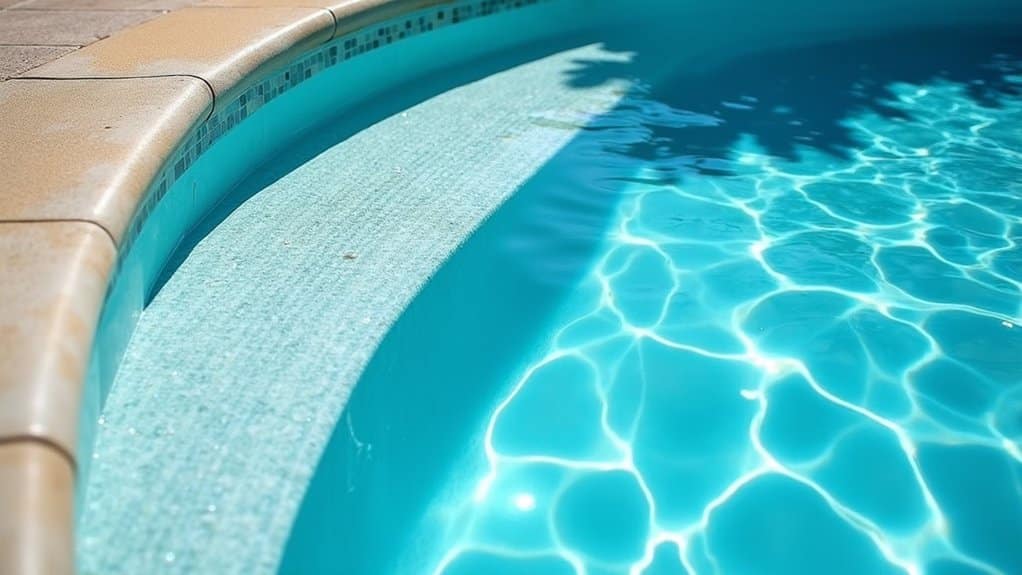
Fiberglass pool owners need to recognize the early warning signs of surface deterioration to prevent costly repairs. The most common indicators of pool fading include spider web-like cracks in the gel coat, shift from glossy to rough textures, and the appearance of chalky white deposits. Professional resurfacing can provide a 7-13 year lifespan for your pool.
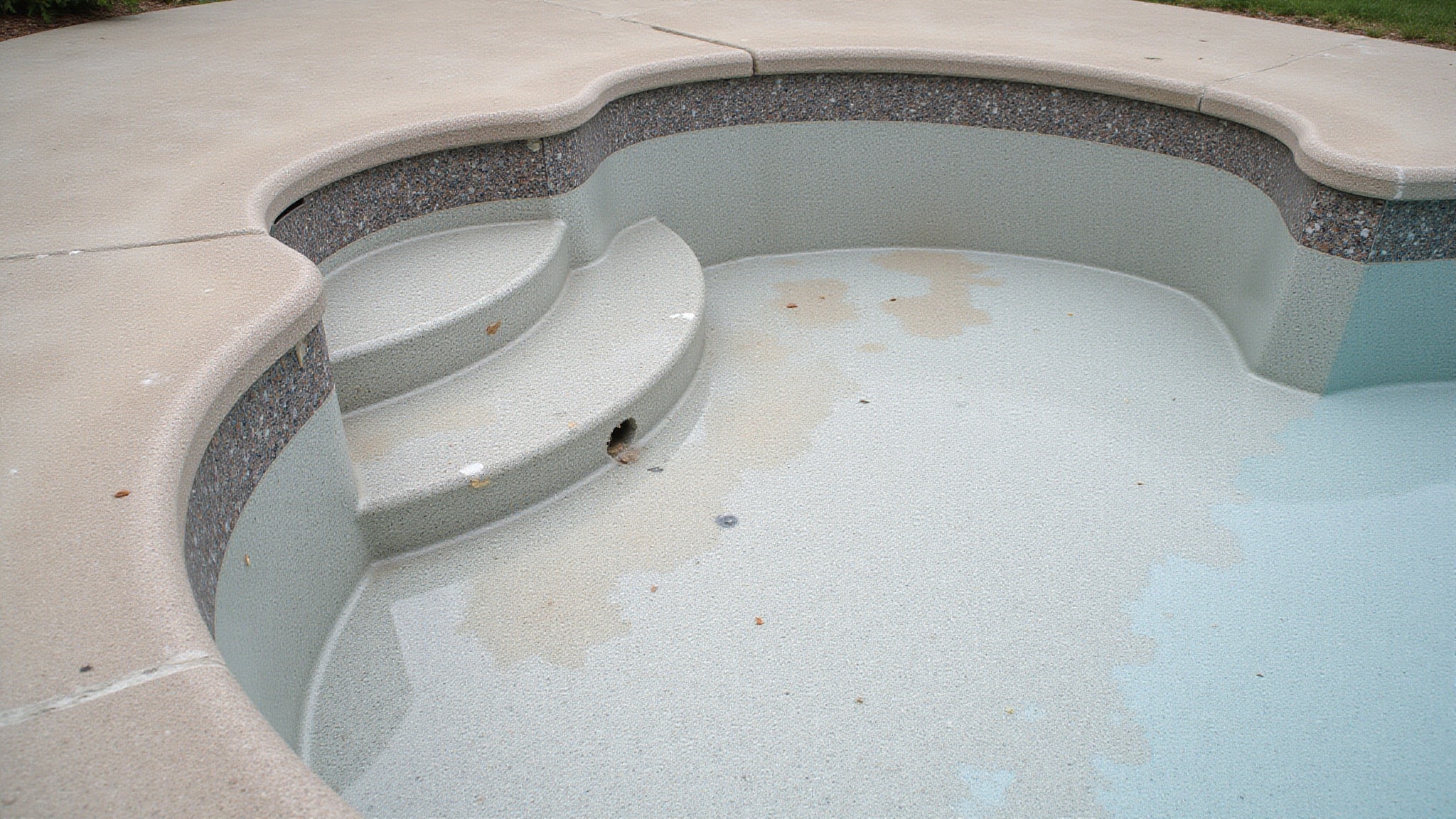
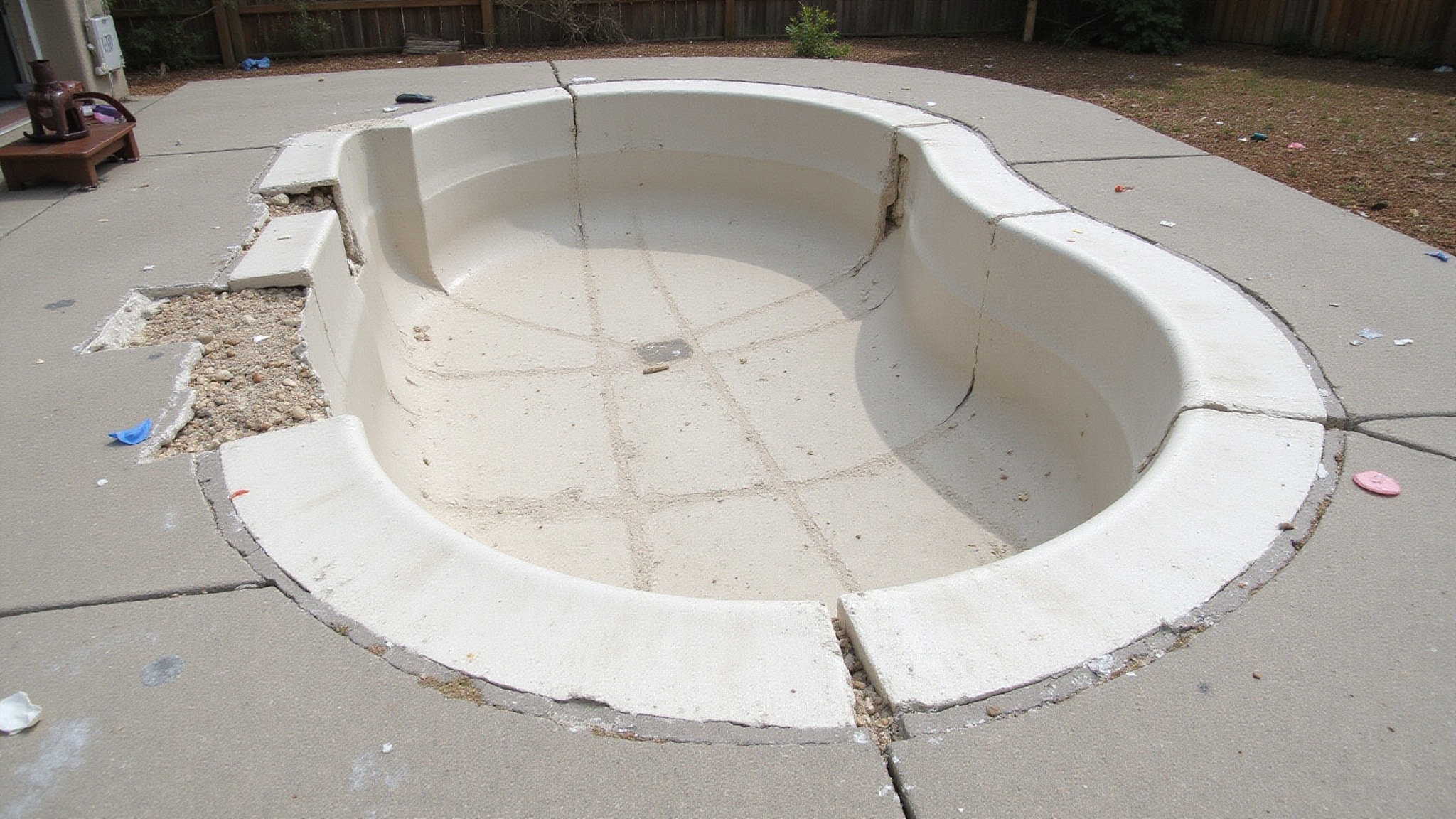
You’ll notice the deterioration typically starts with color changes, where your pool’s vibrant finish becomes patchy with yellow, green, or white discoloration. Surface deterioration often manifests through black pinhead spots and dark lines, particularly in areas with high sun exposure. Extended UV exposure contributes significantly to this deterioration process. Watch for flaking topcoat that releases white particles into the water and creates a granulated texture. The presence of osmotic blisters on the surface is a critical warning sign that moisture has penetrated beneath the gel coat.
Be alert to structural warning signs like wall flexing or persistent water level drops, as these indicate the fading has progressed beyond cosmetic issues.
Common Causes Behind Loss of Pool Surface Shine
While maintaining a pristine pool surface requires vigilance, several key factors contribute to the loss of your fiberglass pool’s signature shine. Contrary to common misconceptions, fading isn’t solely due to poor pool maintenance but rather a combination of environmental and chemical factors.
Your pool’s surface deterioration typically stems from:
- Chemical imbalances, particularly improper pH levels and excessive chlorine, which weaken the gelcoat’s protective properties
- Prolonged UV exposure and heat intensification that accelerate surface degradation
- Physical wear from inadequate brushing routines and friction against pool equipment
- Structural issues like pressure imbalances and settling substrates that create uneven surfaces
Understanding these core causes helps you develop targeted solutions to restore and maintain your pool’s lustrous finish, ensuring proper protection against future deterioration. Extended periods of low alkalinity levels can damage the gelcoat surface, making it more susceptible to oxidation and discoloration. Using harsh cleaning products on fiberglass surfaces can strip away protective coatings and accelerate surface deterioration. Regular professional inspections can identify early signs of gelcoat breakdown before major surface damage occurs.
Professional Assessment and Restoration Options
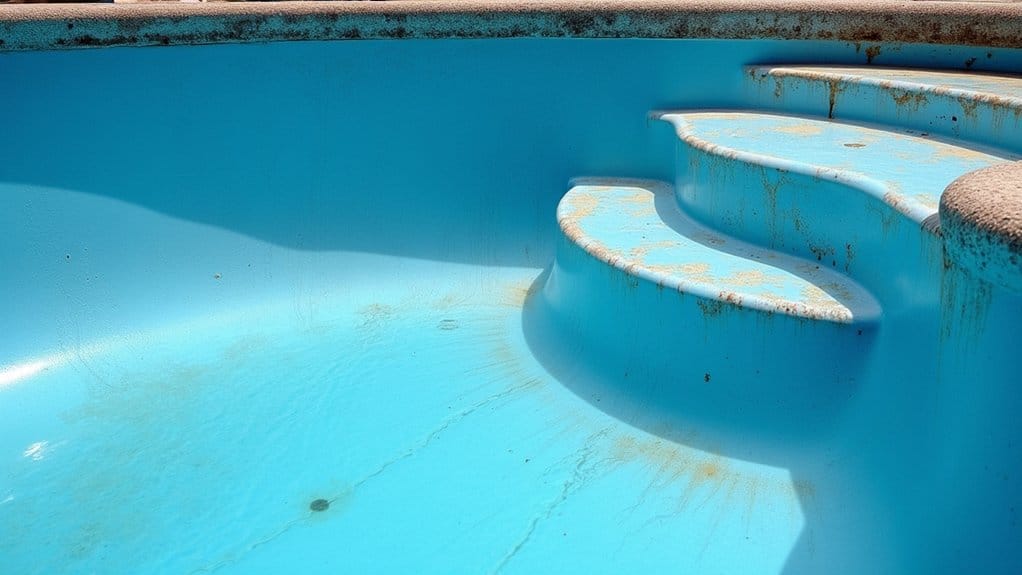
Once you’ve identified potential causes of fading, seeking professional assessment guarantees accurate diagnosis and proper restoration planning. Experts follow specific assessment criteria, including visual inspections for cracks and blisters, water chemistry testing, and structural integrity evaluations. A thorough inspection can help detect early surface degradation before it leads to more serious issues. Regular checking of pool chemistry can help prevent metal-based staining from affecting the finish. Pool experts advise that timely resurfacing action can prevent escalating repair costs down the line.
Based on these findings, professionals can recommend appropriate restoration techniques ranging from simple polishing to complete resurfacing. They’ll determine if your pool needs hydro-blasting to remove old gelcoat, specialized bond coating application, or treatment for osmosis-related blisters. The assessment will also reveal whether you’ll benefit from solid surface finishes, multi-layered gelcoat applications, or UV-protective coatings to prevent future fading.
Your restoration plan will include detailed material options, cost projections, and specific maintenance recommendations to protect your pool’s renewed finish and prevent recurring issues.
Step-by-Step DIY Restoration Process
Restoring a faded fiberglass pool requires five essential phases of work: inspection, preparation, structural repair, gel coat application, and final finishing. Before exploring alternative repair methods, you’ll need to assess and address any structural issues while following proper DIY techniques for best results. After repairs, prep the surface for gel coat by cleaning and sanding for proper bonding. Learn how to clean a fiberglass pool regularly to maintain shine and prevent fading.
Proper fiberglass pool restoration follows a systematic five-phase approach, focusing first on structural integrity before addressing cosmetic repairs.
Your restoration process should include:
- Thoroughly inspect surfaces for damage, drain the pool, and sand with 200-grit paper
- Fill cracks with marine-grade epoxy and reinforce with fiberglass cloth
- Apply 3-4 layers of catalyzed gel coat using proper overlap techniques
- Progress through sanding grits (220-600) and finish with compound buffing
After completing these steps, protect your work with a UV-resistant sealant and allow proper curing time before refilling. Chemical balance must be carefully monitored after refilling to protect your newly restored surface. Using a clean mixing bucket is essential when preparing the fiberglass gel to ensure proper adhesion. Regular maintenance and annual topcoat applications will help preserve your restored finish.
Essential Tools and Materials for Surface Repair
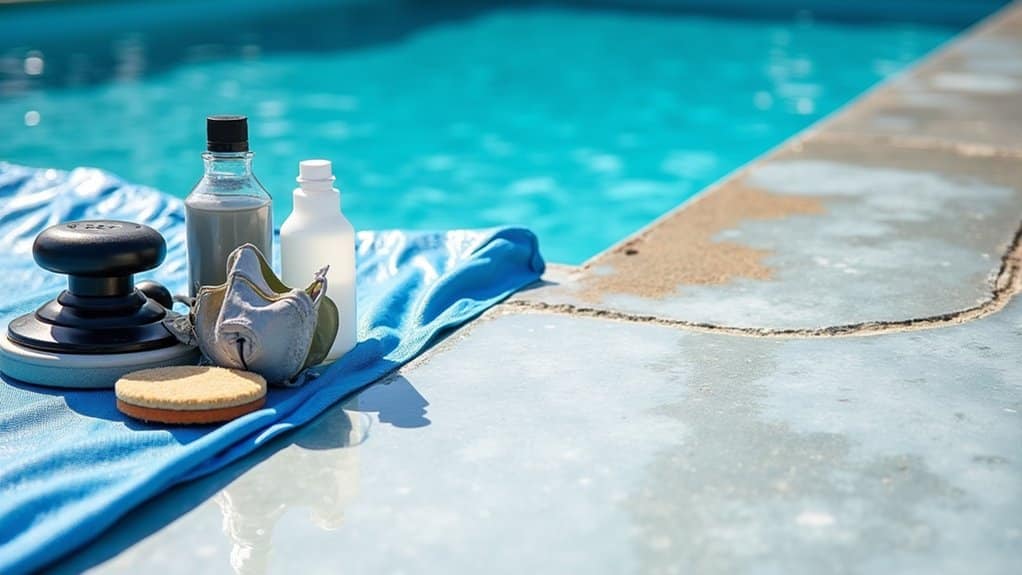
A successful fiberglass pool repair starts with assembling the right tools and materials for the job. Your tools overview should include essential surface preparation equipment like sandpaper ranging from coarse to fine grits, scrapers for removing damaged gel coat, and pressure washers for thorough cleaning. Consider using Flex Seal Mini Pool products that have proven highly reliable with over 600 positive customer reviews. Using acetone cleaner is essential for properly preparing the surface before repairs.
Material selection is critical for lasting repairs. You’ll need expanding polyurethane foam for deep cracks, surface seal paste for preliminary crack treatment, and marine-grade epoxy resins for filling. Don’t forget the application tools: caulking guns, static mixers, and injection ports for precise compound delivery. Safety equipment is non-negotiable stock up on chemical-resistant gloves, ventilation gear, and protective eyewear. For the finishing touches, make sure you’ve got proper gel coat materials, colorants matching your pool’s hue, and UV protectants to extend the repair’s lifespan. Using an AquaFlex Underwater Sealant can be particularly effective for addressing thin cracks in the fiberglass surface while the pool remains filled.
Chemical Treatments and Coating Applications
Restoring your pool’s chemical balance requires careful monitoring of pH (7.2-7.4), calcium hardness (below 120 ppm), and chlorine levels (1-3 ppm) to prevent further surface deterioration. Weekly stain and scale control products are essential for preventing discoloration and surface damage. You’ll need to apply specialized chelating agents and corrosion inhibitors to neutralize metals and protect the gelcoat from ongoing damage. Surface sanding helps create an ideal foundation for new coatings to adhere properly. For lasting results, you’ll want to follow up with high-quality, UV-resistant marine coatings after proper surface preparation and priming, allowing sufficient cure time before refilling your pool.
Chemical Balance Restoration Steps
When your fiberglass pool shows signs of fading, proper chemical balance restoration becomes critical to prevent further deterioration and prepare the surface for treatment. You’ll need to establish strict maintenance routines that address key chemical parameters to stabilize the pool’s condition.
- Test and adjust pH levels to 7.2-7.4, using muriatic acid or soda ash while maintaining total alkalinity between 80-120 ppm
- Reduce calcium hardness below 120 ppm and implement chelating agents to prevent scaling and protect against metal staining
- Keep chlorine levels at 1-3 ppm with CYA at 30-50 ppm to avoid over-sanitization while protecting against UV damage
- Monitor LSI values between -0.30 and +0.30, targeting the negative range to prevent scale formation and surface deterioration
These adjustments create ideal conditions for subsequent restorative treatments and help maintain your pool’s appearance.
Advanced Coating Application Methods
Professional coating application requires three primary methods to restore faded fiberglass pool surfaces effectively: gelcoat spraying, FRP lining systems, and advanced polymer treatments like ecoFINISH.
For gelcoat application, you’ll need certified technicians to employ spray techniques using clean compressed air, targeting a 25-30 mil thickness through a three-pass process. This guarantees ideal coating durability and prevents blistering. FRP lining systems work best for irregular pool shapes, as they conform to existing structures while providing excellent chemical resistance.
If you’re considering ecoFINISH, you’ll benefit from its quick application and UV resistance properties. Whichever method you choose, proper surface preparation is essential, including thorough cleaning, crack repair, and bond coating application. Always maintain temperature-controlled conditions during curing to achieve maximum hardness and longevity.
Long-Term Maintenance Strategies
To maintain your fiberglass pool’s appearance for decades, implementing a thorough maintenance strategy is essential. Regular routine checkups and proactive care will greatly extend your pool’s surface longevity while preventing costly repairs.
- Test water chemistry weekly, maintaining pH between 7.2-7.6, alkalinity at 80-120 ppm, and calcium hardness at 175-225 ppm to prevent surface deterioration
- Brush pool walls and floors bi-weekly with non-abrasive tools, removing debris every 2-3 days to prevent staining and reduce filter strain
- Run filtration systems at least 6 hours daily during peak season, increasing runtime after heavy use or storms
- Apply UV-resistant coatings to exposed areas and use solar covers during downtime to protect against sun damage and fading
These practices will help preserve your pool’s finish and maintain its pristine appearance.
Cost Comparison of Different Repair Methods
When comparing repair methods for your faded fiberglass pool, you’ll find professional services ranging from $300 for basic gel coat repairs to $6,500 per 1,000 square feet for complete resurfacing. Your location greatly impacts costs, with urban areas typically charging 20-30% more than rural regions for the same services. While DIY gel coat applications can save you money initially, professional treatments offer warranties and longer-lasting results that often prove more cost-effective over time.
Professional Vs DIY Costs
Deciding between professional and DIY fiberglass pool repairs greatly impacts your budget and long-term results. A DIY vs Professional cost analysis reveals considerable price differences, with DIY solutions ranging from $100-600 total investment compared to professional services starting at $300 and reaching up to $15,000 for complete resurfacing.
- DIY repairs require $50-500 for materials plus $50-100 for tools, making them cost-effective for minor issues but lasting only 1-3 years
- Professional gel coat applications cost $300-400, offering precise repairs for scratches and small cracks
- Full professional resurfacing with thermoplastic polymers ($6,500-15,000) provides factory-grade finishes that last considerably longer
- Bundled professional services offer better value when addressing multiple issues simultaneously, with package deals starting at $800 for paint overlays and basic repairs
Long-Term Investment Analysis
Understanding the long-term cost implications of different fiberglass pool repair methods helps you make financially sound decisions for your investment. While touch-up repairs might seem cost-effective initially, they’ll require more frequent maintenance and can lead to higher cumulative expenses over time.
Full resurfacing, though requiring a larger upfront investment, delivers superior investment benefits by lasting 10-15 years with proper care. You’ll minimize maintenance costs through high-quality UV-resistant coatings and proper bonding techniques. Consider that delaying necessary repairs often results in structural issues, which can multiply your expenses dramatically. By implementing preventative measures like regular water testing and seasonal protection, you’ll extend the life of your pool’s finish. Remember, quality materials and timely repairs consistently outperform budget solutions in long-term cost analysis.
Regional Price Variations
The cost of fiberglass pool repairs varies considerably across different regions and repair methods, with major metropolitan areas typically commanding 10-20% higher prices than rural locations. Regional pricing fluctuates based on local regulations, material availability, and seasonal demand patterns.
When planning your pool restoration, consider these location-specific cost factors:
- Basic gel coat resurfacing ranges from $5,000-$8,000, with coastal areas often paying premium rates due to higher transport costs
- Professional epoxy coating installations cost $7,000-$12,000, varying by local labor rates and disposal requirements
- Full fiberglass replacements run $12,000-$20,000, with prices higher in areas with strict permit requirements
- Structural repairs average $1,000-$5,000, though costs can increase in regions with specialized waste disposal regulations
Understanding these regional variations helps you budget effectively and choose the most cost-efficient repair method for your location.
Prevention Tips for Future Surface Protection
While maintaining a pristine fiberglass pool surface requires consistent effort, implementing preventive measures can greatly extend its lifespan and appearance. Your pool maintenance strategy should focus on thorough surface protection through UV-resistant coatings, proper chemical balance, and mechanical safeguards.
| Protection Type | Key Actions | Frequency |
|---|---|---|
| UV Defense | Apply UV-resistant coatings | Every 2-3 years |
| Chemical | Balance pH (7.2-7.6) | Weekly testing |
| Mechanical | Use pool covers | Daily when inactive |
To maximize protection, you’ll need to conduct regular inspections of your pool’s surface and promptly address any signs of wear. Install an automatic cleaner to reduce manual scrubbing, and avoid harsh chemicals that can damage the gel coat. Remember to reapply protective coatings periodically and maintain proper water chemistry to prevent premature fading and deterioration.
Frequently Asked Questions
Can I Restore My Fiberglass Pool Finish During Winter Months?
Yes, you can effectively restore your fiberglass pool during winter months, especially in regions with mild temperatures. Winter maintenance actually offers several advantages: reduced pool usage allows proper curing time, you’ll often find better pricing from contractors, and the cooler weather creates ideal conditions for restoration techniques. You’ll need to properly winterize your pool first, including chemical balancing and thorough cleaning, before beginning any resurfacing work.
Will Chlorine-Based Cleaners Affect My Newly Restored Pool Surface?
Yes, chlorine-based cleaners will damage your newly restored pool surface. These harsh cleaners can immediately start degrading your fresh gel coat, leading to premature fading and surface deterioration. You’ll want to stick with pH-neutral, fiberglass-specific cleaners designed for gentle maintenance. Wait at least 30 days after restoration before using any chlorine-based products, and always maintain your pool’s chlorine levels between 1-3 ppm to protect your investment.
How Long Should I Wait Before Swimming After Applying Restoration Products?
You’ll need to wait 24-72 hours minimum before swimming to guarantee product effectiveness and swimming safety. However, check your specific product’s guidelines, as some may require up to 7 days for full cure. Monitor temperature and humidity levels, as they’ll affect curing time. Don’t rush the process perform a touch test to confirm surface hardness before entering. Swimming too soon can compromise the restoration and potentially damage the newly applied finish.
Are There Eco-Friendly Alternatives for Fiberglass Pool Surface Restoration?
Yes, you’ll find several eco-friendly options for fiberglass pool restoration. Consider urethane-based coatings like ecoFINISH that offer low-VOC formulas and sustainable materials. You can pair these with biodegradable cleaners for surface preparation. These environmentally conscious solutions provide excellent durability while reducing chemical exposure and environmental impact. They’re particularly effective because they combine thermo-polymer technology with weather resistance, offering a long-lasting, sustainable alternative to traditional restoration methods.
Can Pool Heating Systems Impact the Longevity of Restored Surfaces?
Yes, your pool heating system can considerably affect your restored surfaces’ longevity. You’ll want to maintain consistent water temperatures between 78-82°F to prevent thermal stress on the finish. Here are key maintenance tips: avoid rapid temperature fluctuations, use energy-efficient heaters to minimize operational hours, and monitor the thermal expansion of repair materials. Remember, fiberglass’s low thermal conductivity helps, but you’ll still need to manage heating cycles carefully to protect your investment.