


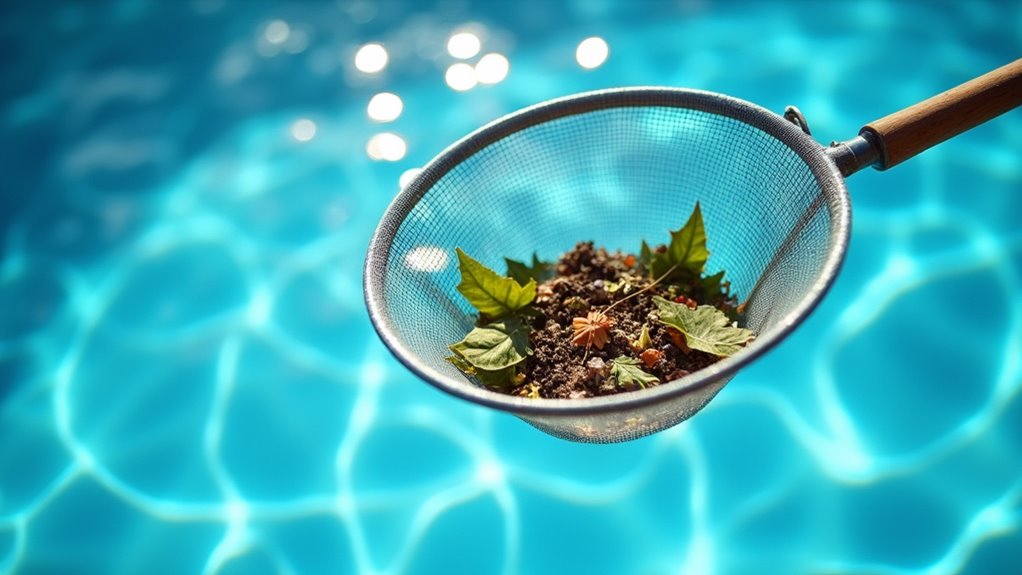

Pool covers create a direct physical barrier that stops debris before it enters your water. Solid covers provide total blockage, while mesh covers filter larger particles. By keeping leaves, branches, and organic matter out, you’re eliminating phosphate and nitrogen inputs that trigger algae blooms. You’ll also reduce skimming, vacuuming, and filter maintenance considerably. The right cover type depends on your climate and debris condition, and there’s more to explore about maximizing your pool’s protection.
The Physical Shield: How Covers Block Debris Entry
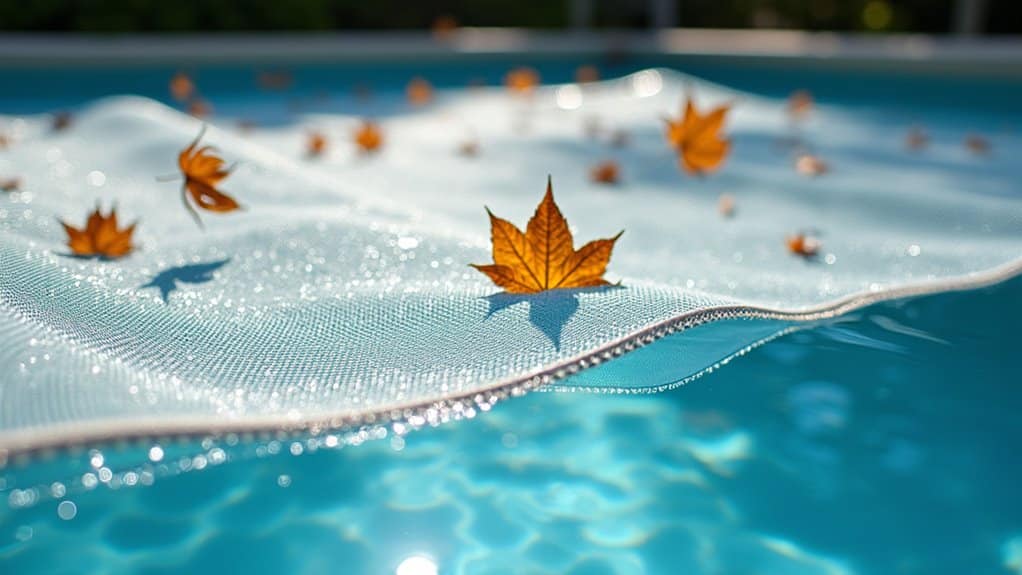
Because pool covers create a direct barrier between your water and the environment, they’re your most effective initial line of defense against debris accumulation. When you deploy a cover, you’re blocking leaves, dust, pollen, and organic matter at the point of entry, before they reach your pool.
The effectiveness depends on your cover type and installation quality. Solid covers provide total blockage, while mesh covers filter larger debris while allowing rainwater drainage. High strength materials like reinforced vinyl and polycarbonate resist tearing from fallen branches and sharp objects. A tight fit design, secured with track or anchor systems, minimizes gaps where debris can penetrate. Motorized systems with tracks and guides ensure consistent cover deployment that maintains complete coverage and prevents debris from finding their way underneath. By maintaining consistent protection throughout the off-season, covers simplify pool opening in spring by eliminating accumulated debris that would otherwise require extensive cleaning. This combination of material durability and secure installation guarantees windblown materials can’t settle on your water’s surface, maintaining cleaner conditions year-round. Additionally, reduced debris accumulation decreases chemical usage by minimizing the organic matter that would otherwise require additional treatment to maintain water balance.
Reducing Manual Labor and Maintenance Frequency
While pool covers excel at blocking debris before it enters your water, their benefits extend well beyond that initial defense, they fundamentally reshape how much time you’ll spend maintaining your pool. By minimizing debris entry, you’ll dramatically reduce skimming, vacuuming, and manual cleaning tasks. You can accomplish streamlining daily upkeep by extending maintenance intervals enormously, shifting weekly deep cleaning to monthly schedules and reducing filter backwashing frequency.
Your filtration systems experience decreased strain, requiring fewer repairs and less frequent operation. Seasonal openings and closings demand substantially less labor since covers prevent large-scale debris accumulation. Chemical testing becomes less frequent when water chemistry remains balanced for a prolonged period. With fewer chemicals needed overall, you’ll notice 70% less chemical use compared to pools without covers. A pool cover can reduce water evaporation by up to 95%, which further decreases the frequency of water level adjustments and chemical rebalancing. Solid covers provide a complete seal against debris while effectively preventing evaporation. These cumulative reductions mean you’ll reclaim up to 50% of your maintenance time while simultaneously extending equipment lifespan and deferring costly replacements.
Stopping Algae Growth Before It Starts
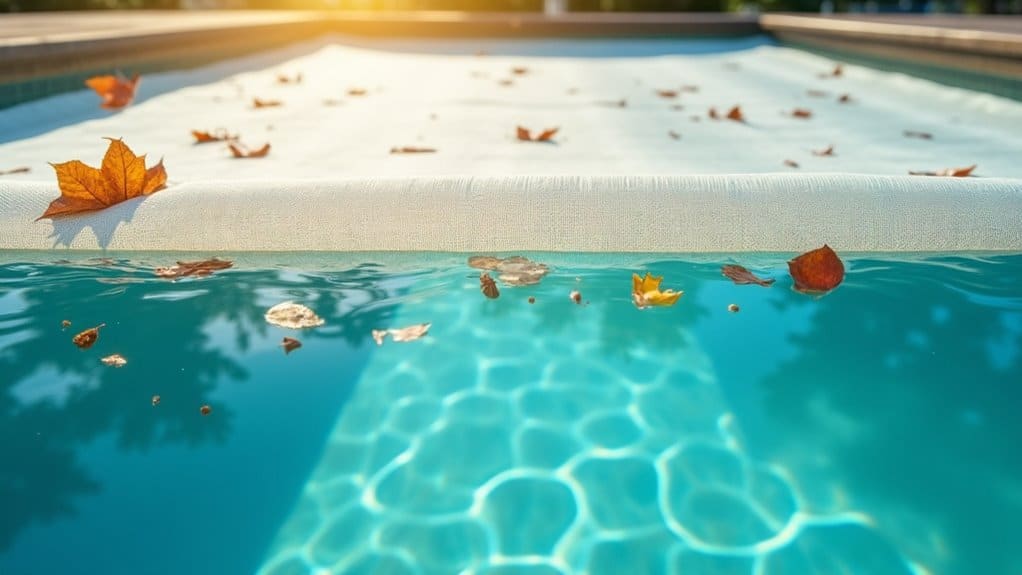
When you deploy a pool cover, you’re implementing a multi-layered defense system that interrupts the three essential conditions algae require to proliferate: sunlight for photosynthesis, organic nutrients for fuel, and chemical imbalance that favors their colonization. Solid covers block up to 100% of UV penetration, while quality mesh options restrict 98%, halting light-dependent algal reproduction. By excluding debris, leaves, pollen, and fertilizer dust, you eliminate phosphate and nitrogen inputs that trigger outbreaks. This debris prevention directly supports stabilizing chemical balance, allowing chlorine and sanitizers to remain effective longer. With reduced organic load and nutrient accumulation, you’re inhibiting algae blooms before they develop. Temperature fluctuations from uncovered pools can stress the ecosystem and trigger algae growth, making thermal stability crucial for long-term prevention. Regular filter operation removes any remaining particles that could feed residual algae growth. For winter protection, solid covers combined with winterizing chemicals offer the best defense against algae colonization during dormant months. Your cover synergizes with standard sanitization routines, maximizing chemical efficiency and minimizing the need for emergency algaecide treatments throughout spring and summer months.
Conserving Water and Pool Chemicals
As you’ve strategically blocked sunlight and excluded debris with your pool cover, you’re simultaneously triggering a cascade of conservation benefits that extend far beyond algae prevention. Your cover dramatically reduces water loss, preventing up to 95% of evaporation and saving 12,000 to 35,000 gallons annually. This translates to substantial cost analysis advantages through lower water bills. In addition, you’ll minimize chemical consumption immensely. Fewer contaminants entering your covered pool means reduced algae growth and less chemical treatment required for maintenance. You’ll achieve 50 to 70 percent energy efficiency improvements while cutting chemical costs considerably. Research conducted at Cal Poly demonstrated that foam covers achieved 95.9% efficiency in reducing water loss compared to other cover types. Additionally, mesh safety covers allow water drainage while still blocking most large debris, providing an effective low-maintenance option for debris prevention. The combined effect: your maintenance budget shrinks while resource preservation increases. Automatic pool covers offer convenient energy savings by maintaining consistent water temperatures and reducing the need for frequent chemical adjustments. For pool owners prioritizing both fiscal responsibility and environmental stewardship, covers represent an economical solution delivering measurable returns.
Choosing the Right Cover Type for Your Needs
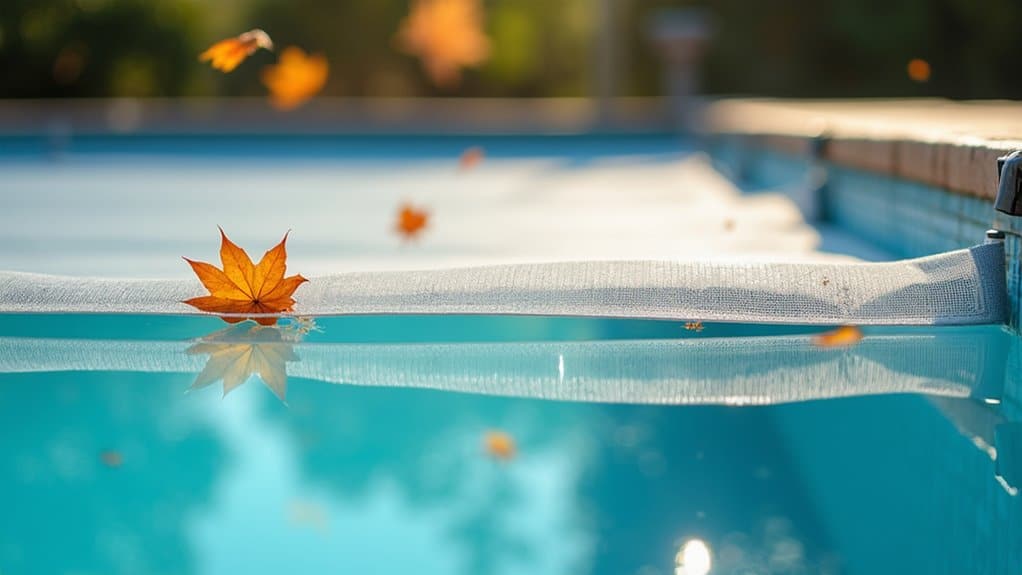
You’ll need to weigh solid covers‘ superior debris and contaminant blocking against mesh covers‘ easier handling and lower cost, as your climate, debris load, and maintenance tolerance determine which option best suits your pool. Your long-term investment depends on matching the cover type to your specific conditions, solid covers excel in harsh climates with heavy debris, while mesh variants work well in moderate regions where you prioritize convenience and affordability. Durability conclusively hinishes on proper installation, material quality, and regular maintenance, so you should factor ongoing upkeep demands and initial expenses into your decision to optimize protection and value. Proper installation and maintenance are essential for ensuring your cover functions effectively and lasts through multiple seasons. Solid covers require consistent winter maintenance such as removing standing water and checking for clogged filters to prevent damage and ensure effective debris prevention throughout the season.
Solid vs. Mesh Options
Selecting the right pool cover hinges on balancing your priorities around debris prevention, maintenance demands, and long-term value. Solid covers create a complete barrier, blocking all debris and sunlight while minimizing algae growth. However, they necessitate regular pump operation to manage water accumulation on the surface. Mesh covers offer lighter-weight alternatives that allow water drainage, eliminating pump requirements and reducing offseason maintenance. The trade-off involves barrier penetration, fine particles, pollen, and dust reach your water, potentially increasing chemical demands. Mesh covers cost $200–$600 less initially, last 10–15 years versus 7–11 years for solid options, and require minimal installation assistance. Solid covers demand professional installation and higher maintenance but deliver cleaner spring openings with reduced chemical adjustments. Your choice depends on whether you prioritize convenience or exhaustive debris protection.
Matching Cover Type Needs
Now that you’ve weighed solid versus mesh options, the next step involves matching a cover type to your specific circumstances. Your cover selection factors hinge on pool usage patterns and environmental conditions.
If you swim frequently, automatic covers deliver quick access and convenience. Seasonal users benefit from winter safety covers that prevent off-season debris accumulation. Households with children or pets require safety-rated covers meeting ASTM standards for increased protection.
Your location matters greatly. Areas experiencing heavy rainfall demand solid covers for superior water exclusion. Snow-prone regions favor mesh covers that drain while supporting seasonal loads. High-evaporation climates benefit from covers reducing water loss by up to 98%.
Consider maintenance capacity too. Lightweight mesh covers simplify solo handling, while solid covers may require drainage pumps. Balance your lifestyle, climate, and budget when finalizing your selection.
Durability and Long-Term Value
How much will your pool cover actually cost you over time? You’ll face critical upfront investment tradeoffs when selecting a cover type. Mesh safety covers ($1,000–$3,000) last 10–15 years, while tarp covers ($100–$500) require replacement every 4–7 years, inflating lifetime expenses despite lower initial costs. Warranty considerations matter greatly; premium mesh covers often include 15-year limited warranties with 3-year full coverage, protecting against unexpected replacement costs. Standard mesh covers typically offer 5–7 year warranties, whereas tarps provide minimal coverage. Professional installation requirements for high-end covers activate warranty terms but add upfront expenses. Though solid vinyl covers ($6–10 years) demand pump maintenance, their durability and warranty support deliver superior long-term value compared to budget alternatives requiring frequent repairs and replacements.
Protecting Your Pool Equipment From Damage
Pool covers break down debris intrusion while simultaneously shielding expensive equipment from environmental stressors that compromise performance and longevity. You’ll markedly reduce pump strain, filter blockages, and overheating by preventing organic matter accumulation. UV radiation, thermal cycling, and freeze-thaw damage diminish when you protect components year-round. Stable water chemistry eliminates corrosion, scaling, and seal degradation that accelerate equipment failure.
| Threat | Impact | Mitigation |
|---|---|---|
| Debris Buildup | Pump clogs, overheating | Physical barrier blocking particles |
| UV Exposure | Plastic/rubber degradation | Weather shield protection |
| Chemical Imbalances | Corrosion, seal wear | Stabilized pH and chlorine levels |
You’ll extend equipment lifespan considerably by minimizing mechanical stress and environmental exposure. Fewer emergency repairs and unexpected shutdowns support consistent year-round operation, delivering measurable equipment longevity and reducing replacement costs.
Long-Term Savings Through Preventive Coverage
You’ll drastically reduce equipment replacement costs by preventing debris accumulation that accelerates wear on pumps, filters, and circulation systems. Consistent pool cover use minimizes chemical degradation from UV exposure and evaporation, lowering your annual chemical expenses by 30-60%. These preventive measures compound over time, cutting your total annual maintenance investment considerably and enabling your cover to pay for itself within 1-2 seasons.
Reduced Equipment Replacement Costs
While most pool owners focus on immediate maintenance costs, the equipment replacement expenses lurking years down the road represent far more significant financial exposure. Pool covers directly extend your equipment lifecycle extension by shielding pumps, filters, and heaters from debris-induced wear. You’ll achieve 20–30% pump operation reductions when keeping your pool cleaner, translating to measurable ongoing operational savings.
You’re protecting expensive mechanical components from corrosion, fouling, and scale formation. Since automatic cover fabric costs $200–$400 to replace every 4–6 years, far less than a $1,500+ pump or $2,000+ heater replacement, your investment protects substantially pricier assets. You’ll delay recurring high-cost equipment turnover while maintaining consistent protection year-round, particularly during debris-heavy seasons and storms.
Minimized Chemical Expenses Over Time
Chemical expenses represent one of the most controllable long-term costs in pool ownership, and proper coverage directly minimizes them through multiple mechanisms. You’ll reduce total chemical consumption by 35-60% with consistent pool cover use, generating $100-300 in annual savings. Chlorine preservation alone accounts for $75-200 yearly, as UV protection prevents degradation and reduces atmospheric loss through evaporation.
Your chemical purchasing patterns shift dramatically with coverage. You’ll buy fewer pH adjusters, algaecides, and clarifiers because debris exclusion prevents organic contamination that typically demands remediation. This altered purchasing directly simplifies storage management requirements in your equipment area.
Extended chemical efficacy means you’re maximizing each treatment application. Balanced water chemistry requires less frequent testing and additional additions, compounding savings across multiple seasons and establishing sustainable long-term financial benefits.
Lower Annual Maintenance Investment
Protective pool covering directly reduces your annual maintenance investment by preventing equipment deterioration and extending operational lifecycles across multiple systems. You’ll experience enormously reduced labor costs since skimming, vacuuming, and debris removal demands decrease dramatically. This efficiency allows you to redirect maintenance hours toward actual pool enjoyment rather than routine cleaning.
Professional maintenance service requirements decline considerably, lowering your recurring annual expenses. Extended service intervals become possible because your pump, filter, and heating systems operate under less strain when debris stays outside the water. By preserving equipment integrity and delaying major replacements, you protect substantial investments typically totaling thousands of dollars. The cumulative financial benefit compounds year after year as you avoid premature component failure, expensive repairs, and complete system replacements that uncovered pools frequently require.
Maintaining Water Quality During Off-Season Periods
How can you keep your pool’s water chemistry stable when it’s not in use? A quality cover preserves your water’s balance by limiting external contaminants that disrupt pH and sanitizer levels. You’ll maintain consistent chlorine retention since covers minimize sunlight exposure, which typically degrades chemicals quickly.
During the winterizing process efficiency phase, you’re preventing organic debris accumulation that would otherwise consume your chemicals and compromise water clarity. Regular cover maintenance, removing surface debris and ensuring secure fastening, prevents mold growth and water contamination.
Frequently Asked Questions
How Often Should I Clean Debris off My Pool Cover Surface?
You should clean your pool cover weekly to remove leaves and twigs, then conduct monthly routine inspections combined with light cleaning. During peak swimming season, you’ll need to increase cleaning frequency due to higher debris exposure. Don’t skip seasonal maintenance before storage or reinstallation, perform deep cleaning of the cover surface and tracks. After storms, you must immediately remove standing water and debris. This consistent schedule prevents material degradation, mold growth, and mechanical issues with your cover’s mechanisms.
Can Pool Covers Prevent All Types of Contaminants From Entering Water?
No, pool covers can’t prevent all contaminants. While they’ll reduce algae growth by blocking sunlight and restrict pollen access effectively, you’ll still face challenges. Dissolved contaminants from rainwater and groundwater intrusion slip through. Chemical pollutants, airborne gases, and microscopic particles bypass even solid covers. You can’t eliminate biological contamination from swimmers or equipment. Proper cover maintenance prevents secondary mold risks, but you’ll still need consistent water chemistry management and regular cleaning routines.
What Is the Installation Cost Difference Between Cover Types?
You’ll find substantial cost differences across cover types. Automatic covers run $8,000–$20,000 installed, while manual safety covers cost $1,500–$3,600. Solar and winter options start at just $75–$1,000. Installation complexity and cover material pricing drive these gaps; automation requires extensive labor and customization, whereas basic covers demand minimal installation. Your budget constraints and convenience priorities should determine which option suits your needs.
Do Pool Covers Work Effectively in Areas With Heavy Rainfall?
Yes, pool covers work effectively in heavy rainfall when you choose the right type. Mesh covers excel in rainfall impact scenarios since water passes through, preventing dangerous pooling. Solid covers offer complete protection but require you to manually remove accumulated water. You’ll optimize cover effectiveness by securing reinforced edges, installing inflatable supports, and conducting regular inspections. Selecting weather-resistant materials suited to your local climate guarantees your cover withstands intense storms without sagging or tearing.
How Do I Safely Remove and Store My Pool Cover?
You’ll safely remove your pool cover by initial cleaning off debris with a garden hose, then systematically removing springs and anchors using installation rods. Fold the cover accordion-style while carefully lifting it away from the pool deck. For proper cover storage preparation, spread it on clean lawn, scrub stubborn dirt with mild detergent, rinse thoroughly, and allow complete drying. These proper cover storage techniques prevent mold growth and maintain structural integrity during off-season storage.