



Latham’s fiberglass pools are manufactured through a precise five-layer process that starts with a UV-resistant gelcoat application. You’ll find that each pool shell incorporates chopped fiberglass with vinyl ester resin, followed by woven roving layers for structural strength. Quality control includes ultrasonic thickness measurements, visual inspections, and non-destructive testing at multiple checkpoints. This rigorous manufacturing approach guarantees your pool’s durability, with detailed specifications awaiting your exploration.
Key Takeaways
- Multiple layers of fiberglass, resin, and protective gelcoat are applied in a controlled environment to create a durable pool shell.
- Advanced gelcoat technology incorporates UV-resistant polymers and antimicrobial additives to prevent fading and reduce maintenance requirements.
- Structural reinforcement includes chopped fiberglass, vinyl ester resin, and woven roving layers for maximum strength and durability.
- Quality control includes ultrasonic thickness measurements, visual inspections, and non-destructive testing methods throughout manufacturing.
- Certified technicians perform final inspections at designated stations, documenting results for certification and quality assurance.
The Multi-Layer Construction Process
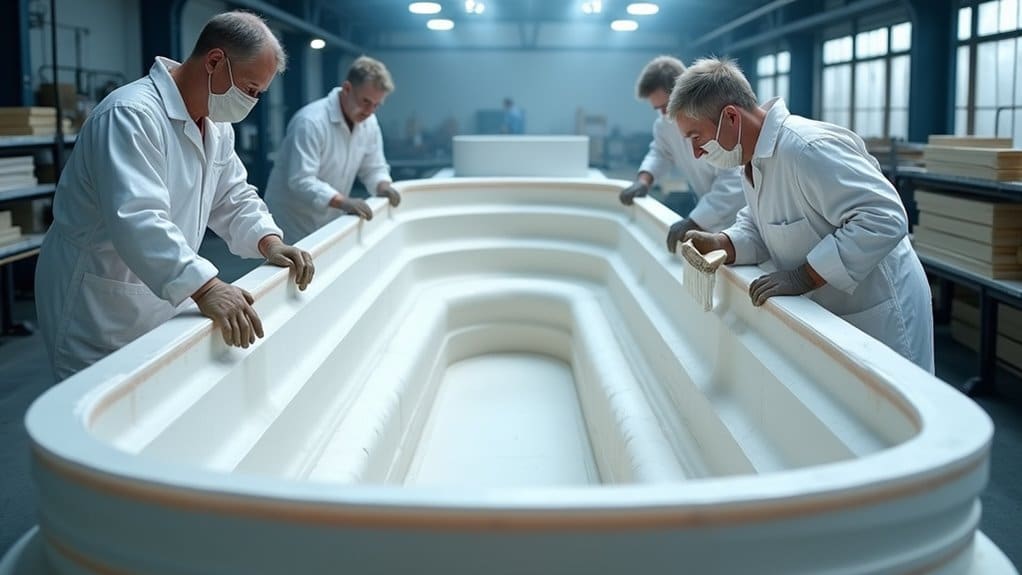
Fiberglass pools begin their expedition through a careful layering process that guarantees structural integrity and longevity. You’ll find each layer contributes distinct multi layer benefits, starting with a protective gel coat that creates a smooth, non-porous surface. The structural layer follows, incorporating chopped fiberglass and vinyl ester resin for exceptional strength.
Manufacturing innovations have improved the next phase, where supplementary layers of fiberglass and resin are strategically applied. You’ll notice the deliberate placement of reinforcement in high-stress areas like steps and benches. The final layer includes specialized chemicals that prevent osmosis and water absorption. Each layer undergoes precise temperature and humidity control during curing, ensuring ideal bonding between materials. This systematic approach results in a pool shell that’s both durable and chemical-resistant. The latest fiberglass pool advancements improve performance and durability through precision technology, delivering high-quality, long-lasting pools that meet modern design and environmental standards.
Quality Control and Testing Standards
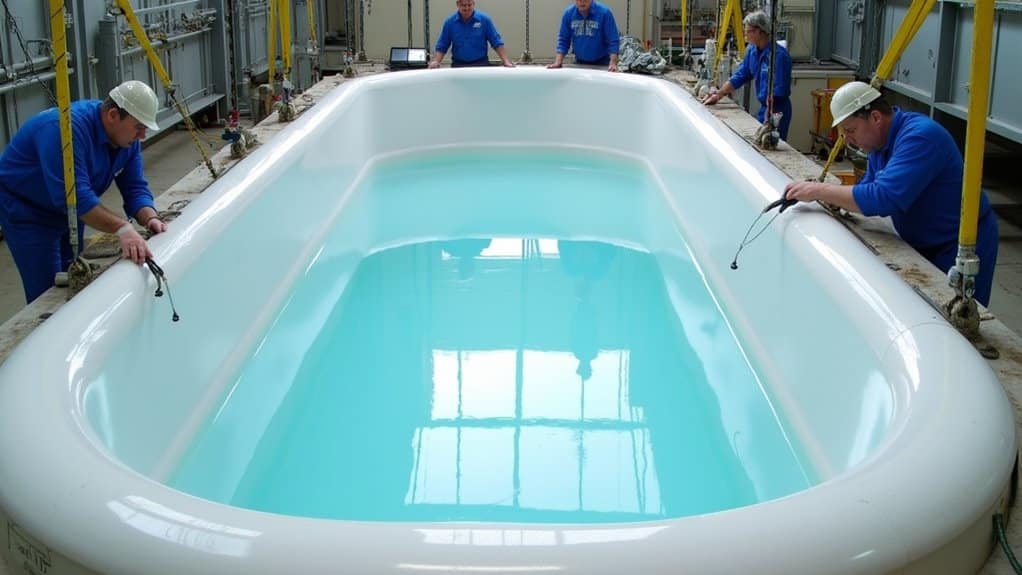
Rigorous testing protocols guarantee every Latham fiberglass pool meets strict industry standards. You’ll find thorough quality assurance checkpoints integrated throughout the manufacturing processes, from raw material inspection to final product evaluation.
Each pool shell undergoes thickness verification using ultrasonic measurement tools, while gel coat consistency tests confirm proper curing and durability. Quality control technicians perform detailed visual inspections to identify any surface imperfections or structural anomalies. They’ll verify proper lamination between layers using specialized equipment.
Before shipping, your pool must pass a final multi-point inspection that includes dimensional accuracy measurements, structural integrity tests, and cosmetic evaluations. Documentation of all test results provides complete traceability, allowing you to review the specific quality metrics of your pool’s construction. This systematic approach guarantees consistent product excellence across all Latham facilities.
Advanced Gelcoat Technology
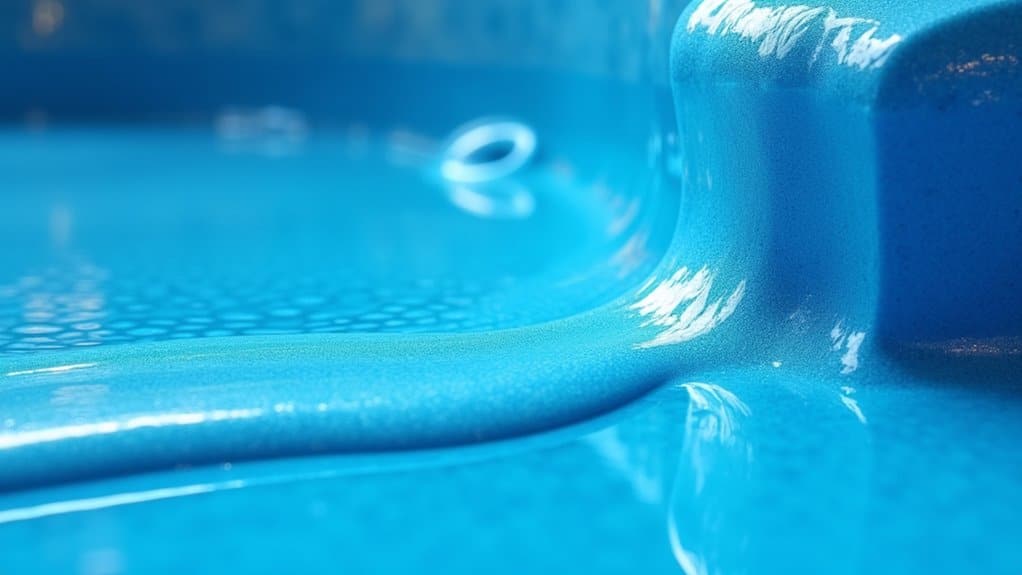
While traditional pool finishes have limitations, Latham’s advanced gelcoat technology provides superior durability and aesthetic appeal through a proprietary blend of NPG isophthalic resins and UV-resistant polymers.
You’ll find that this specialized gelcoat formulation offers multiple benefits, including resistance to fading, blistering, and chemical degradation. The surface durability comes from a carefully controlled application process where the gelcoat is sprayed to a precise thickness of 25-30 mils. This creates a non-porous barrier that prevents water absorption and maintains the pool’s structural integrity.
The UV-resistant properties guarantee your pool’s color won’t fade or chalk, even after years of sun exposure. Latham’s gelcoat technology also incorporates antimicrobial additives that inhibit algae growth and make cleaning easier, reducing your long-term maintenance requirements.
Structural Reinforcement Techniques
Beyond the protective gelcoat layer, Latham’s structural reinforcement system employs a sophisticated multi-layer construction methodology. You’ll find that each layer serves a specific purpose in maintaining the pool’s structural integrity through the strategic placement of reinforcement materials.
- The initial reinforcement layer combines chopped fiberglass with vinyl ester resin, creating a dense matrix that prevents water penetration and strengthens the shell’s core
- A woven roving layer adds bidirectional strength, helping your pool resist ground pressure and seasonal movements
- The final structural layer incorporates specialized strengthening ribs and supplementary glass fiber materials strategically positioned in high-stress areas
This engineered approach guarantees your pool can withstand diverse environmental conditions while maintaining its shape and durability for decades to come.
Factory Inspection and Certification
To guarantee compliance with industry standards, each Latham fiberglass pool undergoes thorough testing and certification protocols at designated inspection stations throughout the manufacturing process.
During the inspection, you’ll find certified technicians conducting rigorous quality checks using standardized factory standards. They’ll verify gel coat thickness, examine structural laminate integrity, and measure pool dimensions for precision. Each inspection station focuses on specific components, from surface finish to reinforcement layers.
These inspection protocols include non-destructive testing methods, where technicians use specialized equipment to detect any potential defects or inconsistencies. You’ll see them documenting every inspection point in digital logs, which become part of each pool’s certification record. Only after passing all quality checkpoints will your pool receive final certification for shipment.
Frequently Asked Questions
What Is the Average Lifespan of a Latham Fiberglass Pool?
Your Latham fiberglass pool can last 25-50 years when properly maintained. The longevity factors include water chemistry balance, structural maintenance, and environmental conditions. Fiberglass durability makes these pools exceptionally resilient, as they won’t tear, crack, or deteriorate like vinyl or concrete options. You’ll need to maintain proper pH levels, inspect the gelcoat annually, and guarantee proper backfilling to optimize your pool’s lifespan.
How Long Does It Take to Install a Latham Pool?
You can expect your Latham fiberglass pool installation timeline to take between 2-4 weeks from start to finish. The process begins with pool preparation, including excavation and creating a level foundation, which typically takes 2-3 days. The actual pool installation requires 1-2 days, followed by deck construction and landscaping that can span 1-2 weeks. Weather conditions, permits, and site accessibility may extend these timeframes.
Can Latham Fiberglass Pools Be Heated Effectively in Cold Climates?
Yes, you can effectively heat your Latham fiberglass pool in cold climates. The pool’s structure provides excellent thermal insulation, helping to maintain water temperature efficiently. You’ll want to pair your pool with a properly sized heater and a quality pool cover to minimize heat loss during winter heating. Gas, electric, or heat pump systems all work well with fiberglass pools, and you can improve efficiency by using a solar cover when the pool isn’t in use.
Are Latham Pools Compatible With Salt Water Systems?
Yes, your Latham fiberglass pool is fully compatible with saltwater systems. The pool’s gelcoat surface is specifically engineered to withstand saltwater chemistry without deterioration. You’ll find that saltwater compatibility is one of Latham’s key features, as their fiberglass construction resists corrosion and chemical damage. When maintaining your pool chemistry, you can safely operate chlorine levels between 2,500-3,500 ppm of salt, which is typical for residential saltwater pools.
What Are the Maintenance Costs Compared to Concrete Pools?
You’ll find that fiberglass pools typically offer significant maintenance advantages over concrete pools. Your annual maintenance costs will be about 75% lower since you won’t need acid washing, replastering, or frequent chemical treatments. Concrete pools require $27,000-$40,000 in resurfacing every 10-15 years, while fiberglass pools maintain their smooth, non-porous surface. You’ll also save on chemicals because fiberglass doesn’t affect pH levels like concrete does, reducing ongoing expenses.