

When choosing between Latham’s pool options, you’ll find fiberglass pools cost $45,000-$85,000 with faster 2-3 week installation and lower maintenance, while vinyl liner pools run $35,000-$65,000 with 4-6 week installation and require liner replacement every 7-10 years. Fiberglass offers pre-designed shapes with integrated features, whereas vinyl provides extensive customization options. Your ideal choice depends on balancing initial costs against long-term value, and considering essential factors like design flexibility and durability can guide your decision.
Key Takeaways
- Latham offers both fiberglass pools with 2-3 week installation and vinyl liner pools with 4-6 week installation timelines.
- Fiberglass pools cost $45,000-$85,000 with lower maintenance, while vinyl liners cost $35,000-$65,000 plus periodic replacement expenses.
- Vinyl liner pools provide greater design flexibility and customization options, whereas fiberglass pools come in pre-designed shapes.
- Fiberglass pools feature algae-resistant surfaces and require less maintenance, making them more cost-effective over time.
- Latham’s fiberglass pools last 25-35 years, while vinyl liners need replacement every 7-10 years at $4,000-$5,000.
Initial Cost Comparison: Fiberglass Vs Vinyl Liner
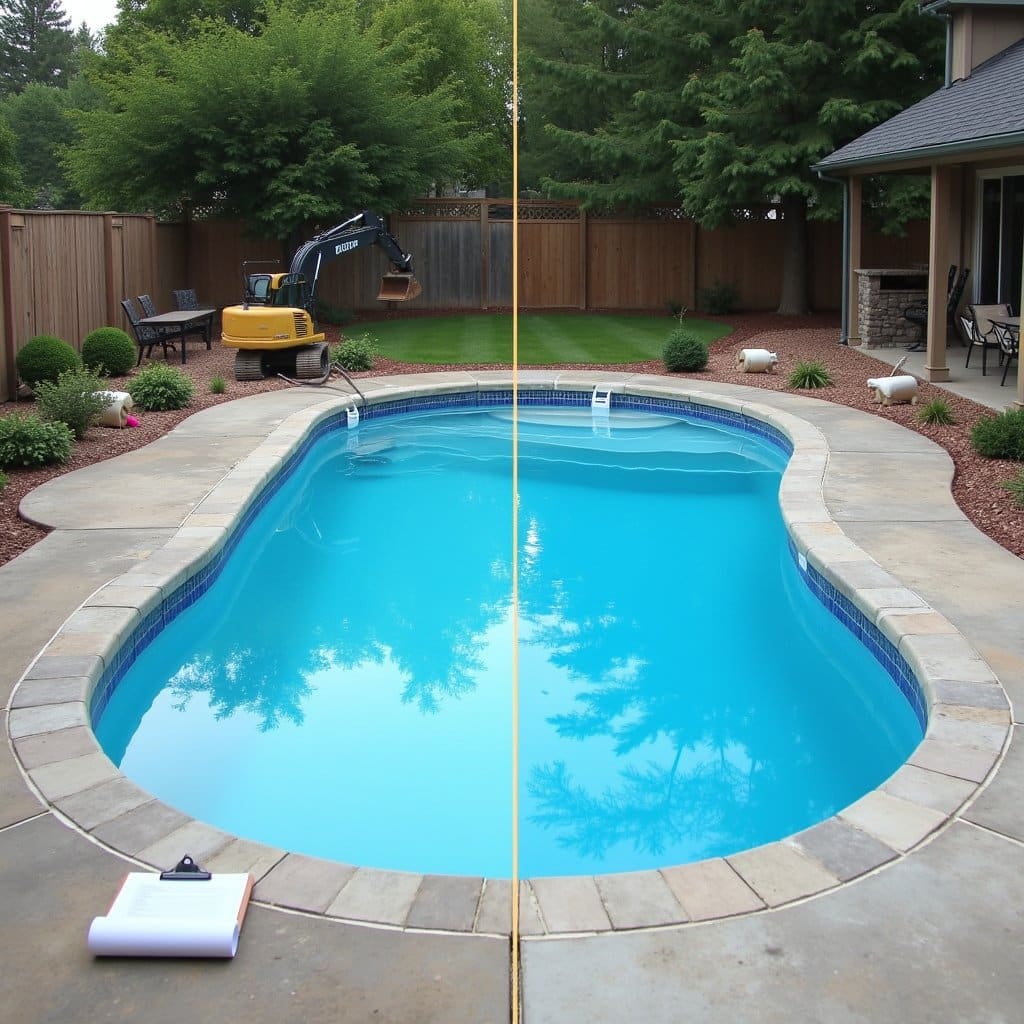
When evaluating Latham Pool’s product lines, fiberglass pools typically command a higher initial investment of $45,000 to $85,000, while vinyl liner pools range from $35,000 to $65,000. You’ll find several cost factors influence these price ranges, including excavation requirements, site preparation, and installation complexity.
While fiberglass pools require a larger upfront expenditure, they often translate to long term savings through reduced maintenance needs and improved durability. You won’t need to replace a fiberglass shell, whereas vinyl liners typically require replacement every 7-10 years at $4,000-$5,000 per instance. The installation process for fiberglass is also faster, potentially reducing labor costs. When calculating your total investment, consider these ongoing maintenance differences as they’ll considerably impact your pool’s lifetime cost structure.
Installation Process and Timeline
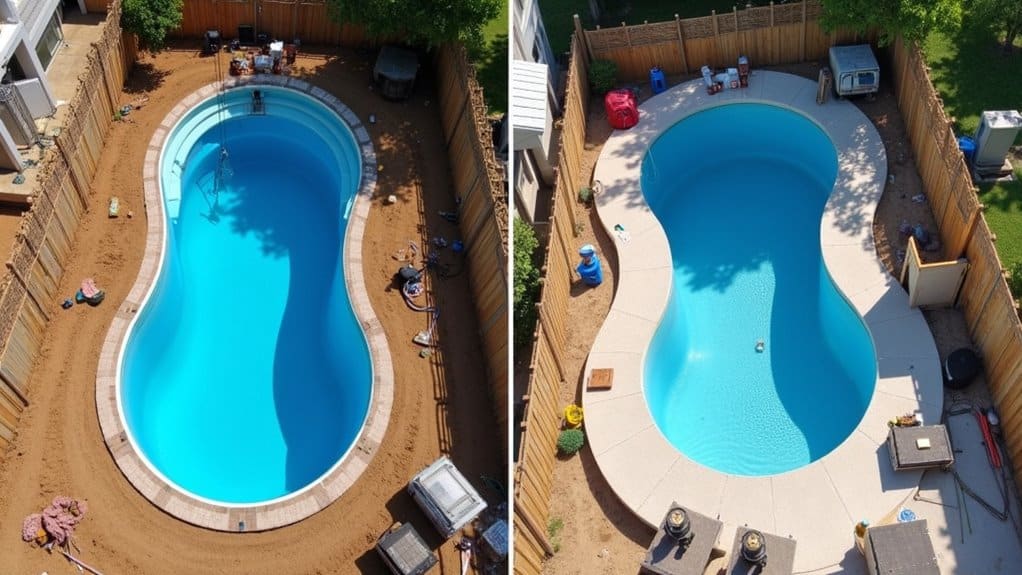
The installation process stands apart as a key differentiator between Latham’s fiberglass and vinyl liner pools. When you choose a fiberglass pool, you’ll benefit from streamlined installation techniques that typically take 2-3 weeks. The pre-manufactured shell arrives ready to place, requiring primarily excavation, positioning, and plumbing connections. Vinyl liner pools often require more time due to custom work. A complete guide to pool installation offers step-by-step insights, helping homeowners choose the best option for their needs and schedule.
In contrast, vinyl liner installation involves a more complex project timeline spanning 4-6 weeks. Your contractor will need to construct the pool framework, install wall panels, pour concrete, and carefully fit the custom liner. While both options follow Latham’s precise engineering specifications, the vinyl liner’s supplementary construction phases naturally extend the timeline. You’ll need to factor these timeline differences into your planning, especially if you’re working with seasonal constraints or specific completion deadlines.
Design Options and Aesthetic Flexibility
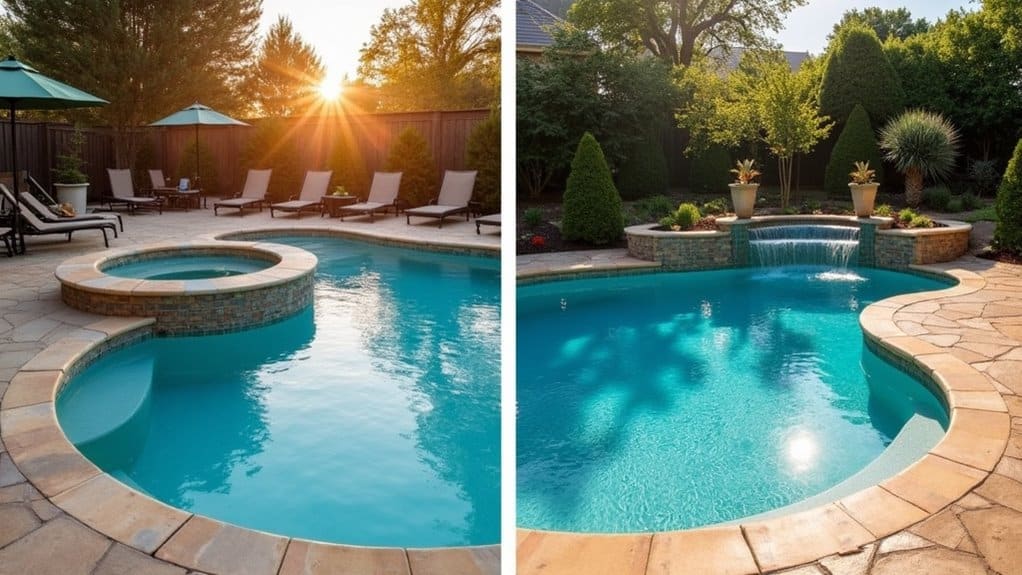
Both fiberglass and vinyl liner pools from Latham offer distinct design advantages that cater to different aesthetic preferences. With fiberglass pools, you’ll find pre-designed shapes and color choices that feature integrated steps, benches, and tanning ledges. While these options are limited to existing molds, they come with stunning gelcoat finishes that maintain their appearance for years.
Vinyl liner pools provide greater design customization flexibility. You can select from numerous liner patterns and create virtually any pool shape you desire. Latham’s vinyl options include solid colors, intricate tile patterns, and mosaic designs that can transform your pool’s appearance. You’ll also have the freedom to incorporate custom depths, angles, and specialty features like beach entries or complex curves that might not be available in fiberglass models.
Maintenance Requirements and Ongoing Care
Maintaining your Latham pool requires different approaches depending on whether you’ve chosen fiberglass or vinyl liner construction. Fiberglass pools demand less routine upkeep, as their gelcoat surface resists algae growth and requires minimal chemical balancing. You’ll need to brush the walls weekly and maintain proper water chemistry.
Vinyl liner pools require more frequent attention to prevent liner damage and extend its lifespan. You’ll need to maintain strict cleaning frequency, checking for tears or wrinkles that could compromise the liner’s integrity. The cleaning process must be gentle, using vinyl-approved brushes and chemicals to avoid scratching or degrading the material. Furthermore, you’ll need to inspect the liner annually for potential separation at the seams and monitor water chemistry more closely to prevent premature aging of the vinyl material.
Durability and Expected Lifespan
When comparing long-term investment value, Latham fiberglass pools typically outlast their vinyl liner counterparts by a significant margin. The material resilience of fiberglass provides superior durability against environmental factors and chemical exposure.
| Feature | Fiberglass | Vinyl Liner |
|---|---|---|
| Average Lifespan | 25-35 years | 7-12 years |
| UV Resistance | High | Moderate |
| Chemical Resistance | Excellent | Good |
| Surface Integrity | Non-porous | Replaceable |
| Impact Protection | Strong | Limited |
You’ll find that longevity factors heavily favor fiberglass construction, with minimal structural concerns over time. While vinyl liners require replacement every decade or so, your fiberglass shell maintains its integrity for generations. The gelcoat surface of fiberglass pools resists fading, scratching, and deterioration, making it a more sustainable choice for long-term pool ownership.
Resale Value and Return on Investment
Property valuations typically reflect the considerable difference between fiberglass and vinyl liner pool installations. Fiberglass pools can increase your home’s value by 5-10% more than vinyl liner options, according to recent resale trends. This higher return stems from their durability and lower maintenance requirements, making them more attractive to potential buyers.
When evaluating investment returns, you’ll find that fiberglass pools command better resale prices despite their higher initial costs. Your vinyl liner pool, while less expensive upfront, may need explaining to buyers about future liner replacement expenses, potentially affecting negotiations. Market data shows that homes with fiberglass pools typically sell faster and closer to asking price compared to those with vinyl liner installations. This difference becomes particularly notable in upscale neighborhoods where pool quality notably influences property values.
Climate Considerations and Weather Impact
Since weather patterns greatly affect pool materials, you’ll need to take into account your local climate when choosing between Latham’s fiberglass and vinyl liner options.
Fiberglass pools demonstrate superior weather resilience in regions with extreme temperature fluctuations. Their one-piece construction prevents warping and cracking during freeze-thaw cycles, while their gelcoat surface maintains structural integrity in intense UV exposure. You’ll find them particularly suitable for areas experiencing frequent temperature swings.
Vinyl liner pools require more climate-specific considerations. While they handle moderate weather conditions well, extreme heat can cause liner expansion and cold temperatures may lead to brittleness. If you’re in an area prone to severe weather, you’ll need to monitor liner condition more frequently. The advantage is that vinyl liners can be replaced when weather damage occurs, unlike fiberglass’s permanent structure.
Structural Features and Material Properties
Both Latham fiberglass and vinyl liner pools feature distinct structural compositions that directly impact their performance and longevity. When you choose a fiberglass pool, you’ll get a one-piece shell reinforced with multiple layers of composite materials, creating a sturdy, non-porous surface. The shell’s gelcoat finish provides superior insulation properties and resistance to chemical damage.
In contrast, vinyl liner pools utilize a modular structure with steel or polymer walls supported by concrete or vermiculite bottom. You’ll find that these pools employ specialized reinforcement techniques at stress points to prevent wall buckling. The vinyl liner itself acts as a waterproof barrier while offering some insulation properties, though not as effective as fiberglass. The liner’s flexibility allows for customizable shapes, but it’s more susceptible to punctures and requires periodic replacement.
Frequently Asked Questions
Can Latham Pools Be Installed in Areas With High Water Tables?
Yes, you can install Latham pools in areas with high water tables, but you’ll need specific engineering solutions to manage installation challenges. You’ll require a hydrostatic relief valve system and proper drainage solutions to prevent pool floating. It’s crucial to work with certified installers who’ll implement dewatering techniques during installation and guarantee appropriate anchoring systems are in place. Furthermore, waterproofing measures might be necessary to protect your investment long-term.
What Financing Options Does Latham Offer for Their Pool Installations?
You’ll find several financing options through Latham’s network of authorized dealers. They typically partner with lending institutions to offer payment plans customized to your budget. You can investigate fixed-rate loans, home equity lines of credit, or specialized pool financing programs. Your local Latham dealer will guide you through available financing options and help you select a plan that matches your financial needs. Contact them directly for specific rates and terms.
Does Latham Provide Warranties for Both Fiberglass and Vinyl Liner Pools?
Yes, you’ll receive extensive warranty coverage for both pool types from Latham. Their fiberglass pools come with a lifetime structural warranty and a 15-year surface warranty. For vinyl liner pools, you’ll get a limited lifetime warranty on the structure and a prorated warranty on the liner itself. These warranties protect your pool’s longevity and structural integrity, though specific terms vary by model and installation type. Remember to register your warranty promptly after installation.
Can Existing Pool Designs Be Converted to Latham Pool Systems?
You can convert your existing pool to a Latham system through their pool conversion solutions. While the process depends on your current pool’s structure, Latham offers design flexibility to adapt their vinyl liner systems to most existing pool shells. You’ll need a professional evaluation to determine compatibility, but Latham’s conversion options can modernize your pool while potentially saving on complete reconstruction costs. Their systems can work with different shapes and configurations.
Are Latham Pools Compatible With Salt Water Chlorination Systems?
Yes, you’ll find that Latham pools are fully compatible with salt water chlorination systems. Their fiberglass pools offer excellent saltwater compatibility and superior chlorine resistance thanks to their advanced gel coat technology. For vinyl liner pools, you’ll need to choose Latham’s specially designed salt-resistant liners that are engineered to withstand the corrosive nature of saltwater. Either option will work well with your salt chlorinator system, providing years of reliable performance.