



You’ll need to monitor water chemistry more frequently with a vinyl liner pool compared to fiberglass, maintaining pH between 7.2-7.6 to prevent damage. While fiberglass pools require minimal chemical maintenance and last 25+ years, vinyl liners need replacement every 7-10 years at $4,000-$6,000 per installation. Use soft-bristled tools for vinyl cleaning to prevent tears, whereas fiberglass surfaces tolerate firmer brushes. Understanding these key differences will help you make informed maintenance decisions.
Key Takeaways
- Vinyl liners need more frequent chemical monitoring and stricter pH control (7.2-7.6) compared to fiberglass pools’ more stable chemistry requirements.
- Fiberglass pools require less annual maintenance costs, saving approximately $500 compared to vinyl liner maintenance expenses.
- Vinyl liners must be cleaned with soft-bristled tools to prevent tears, while fiberglass surfaces tolerate firmer brushing techniques.
- Fiberglass pools last 25-30 years before major repairs, whereas vinyl liners need replacement every 7-10 years at $4,000-$6,000.
- Winter maintenance differs significantly, with vinyl liners requiring precise water levels and extra cover support compared to fiberglass.
Daily Water Chemistry Requirements: Vinyl Liner Vs Fiberglass
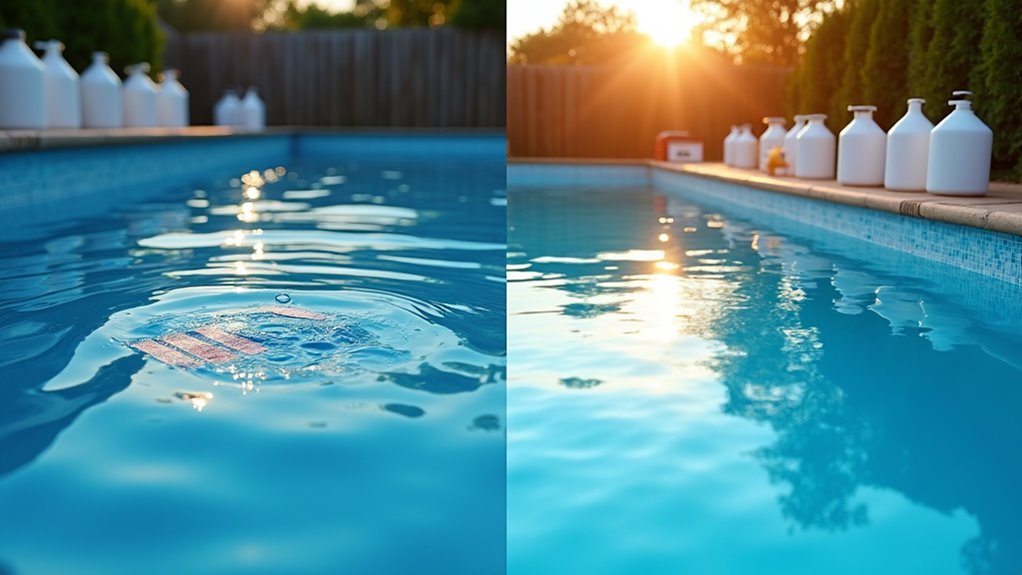
While both vinyl liner and fiberglass pools require regular chemical maintenance, they differ in their tolerance levels and chemical absorption rates. When maintaining a vinyl liner pool, you’ll need to monitor water balance more frequently, as these pools are more sensitive to chemical fluctuations. Keep your pH between 7.2 and 7.6 to protect the liner from premature aging and wrinkling.
Fiberglass pools offer better chemical stability due to their non-porous surface, which doesn’t absorb chemicals like vinyl liners can. You’ll typically use fewer chemicals in a fiberglass pool to maintain proper levels. However, you must still check chlorine, alkalinity, and pH daily to prevent algae growth and guarantee safe swimming conditions. With either pool type, invest in reliable testing equipment and maintain detailed chemical logs.
Surface Care and Cleaning Protocols
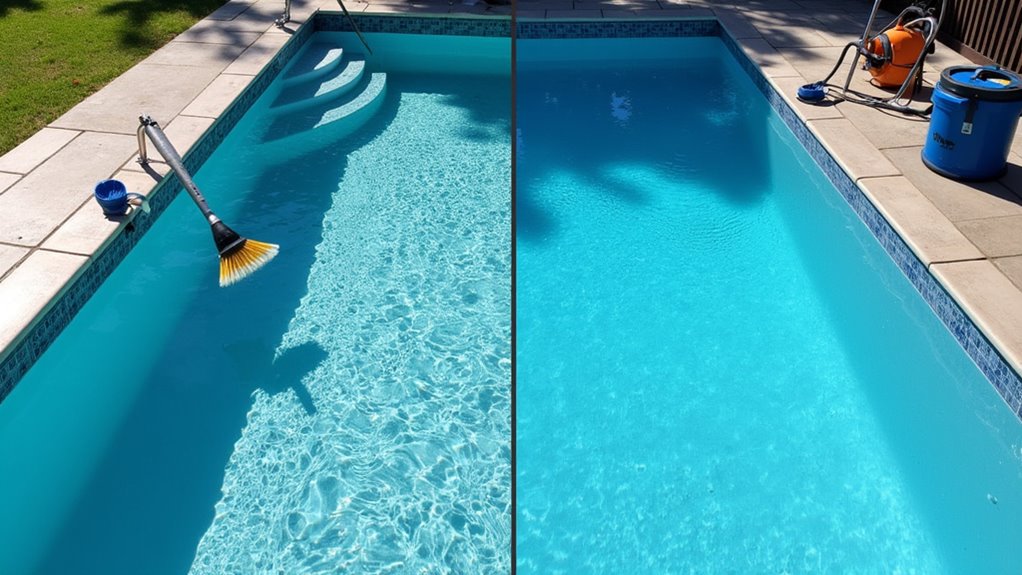
Because vinyl liner and fiberglass pools have distinct surface characteristics, their cleaning protocols differ markedly. For vinyl liners, you’ll need soft-bristled cleaning tools to prevent tears and punctures. Avoid abrasive brushes, and never use sharp objects that could damage the liner. Focus on gentle, circular motions when removing debris or algae.
With fiberglass pools, you can use slightly firmer brushes, but still exercise caution to prevent surface scratches on the gel coat. Clean your fiberglass pool’s waterline regularly to prevent staining and mineral buildup. For both pool types, invest in specialized cleaning tools designed for their specific surfaces. Always test cleaning products in a small area initially, and don’t use household cleaners that could damage either surface. Remember to maintain consistent cleaning schedules to prevent stubborn deposits from forming.
Common Repair Costs and Maintenance Schedules
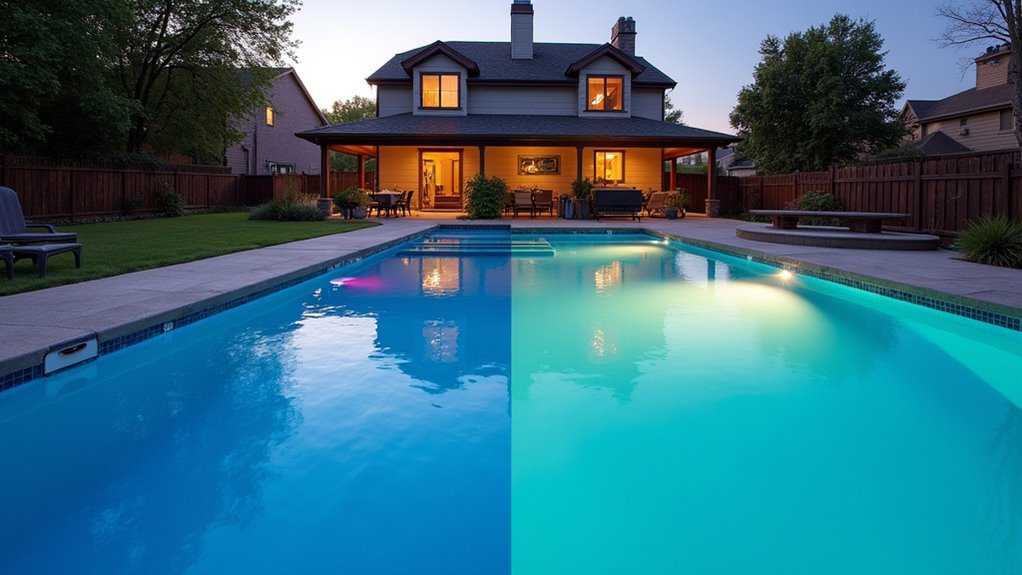
Although both pool types require regular maintenance, their repair costs and schedules differ markedly. You’ll find fiberglass pools typically need less frequent repairs, while vinyl liner pools require more regular attention due to their susceptible surface material.
- Vinyl liners need replacement every 7-10 years, costing $4,000-$6,000 per installation
- Fiberglass surfaces can last 25+ years with proper maintenance and minimal repairs
- Your vinyl liner repair frequency increases if you experience harsh weather or heavy pool usage
- Small vinyl patches might cost $200-$500, while fiberglass repairs range from $300-$800
- Annual maintenance costs average $500 less for fiberglass pools compared to vinyl liner pools
Monitor your pool’s condition regularly and address issues promptly to prevent escalating repair costs. With proper care, both pool types can provide years of reliable service, though fiberglass offers lower long-term maintenance expenses. Additionally, Gathering customer insights on Latham pools offers helpful perspectives on performance and durability, guiding buyers toward choices that match their long-term needs and expectations.
Long-Term Durability and Material Lifespan
Since both pool types face different environmental stresses over time, understanding their durability factors helps you make informed maintenance decisions. When evaluating material strength, you’ll find that fiberglass pools typically last 25-30 years before needing significant repairs, while vinyl liners require replacement every 5-9 years depending on usage and water chemistry.
You’ll notice fiberglass pools maintain their structural integrity better, resisting warping and cracking due to their one-piece gelcoat construction. In a lifespan comparison, vinyl liners are more susceptible to tears, punctures, and UV damage. However, you can extend your vinyl liner’s durability by maintaining proper water chemistry and promptly addressing any damages. If you’re considering long-term costs, factor in that you’ll likely replace a vinyl liner 3-4 times during a fiberglass pool’s lifetime.
Winter Preparation and Seasonal Maintenance Differences
When winter approaches, fiberglass and vinyl liner pools require distinct winterization procedures to prevent damage during freezing temperatures. Your winterization techniques will differ based on your pool type, impacting both the process and materials needed.
- Vinyl liner pools need careful water level management – maintain it just below the skimmer to prevent liner shrinkage
- Fiberglass pools can handle more water volume during winter, helping prevent structural shifts
- Vinyl liners require special attention to prevent tears when installing the seasonal cover
- Fiberglass pools need proper chemical balance to protect their gelcoat surface
- Both pool types must have covers securely anchored, but vinyl pools often need supplementary water bags for cover support
You’ll find that fiberglass pools generally require less intensive winter prep, while vinyl liners need more protective measures to survive the cold season intact. Additionally, fiberglass pools offer natural insulation, while vinyl liners may need winter prep. Many homeowners choose premium Latham pool colors to keep their backyard looking vibrant year-round.
Frequently Asked Questions
Can I Convert My Existing Vinyl Liner Pool to Fiberglass?
Converting your vinyl liner pool to fiberglass isn’t typically recommended or practical. The vinyl liner conversion to fiberglass would require extensive demolition and reconstruction, as fiberglass installation needs specific dimensions and shapes that your existing pool may not match. You’d likely spend more money attempting a conversion than building a new fiberglass pool. For safety and structural integrity, it’s best to either maintain your vinyl liner or invest in a new fiberglass installation.
Do Vinyl Liner and Fiberglass Pools Affect Property Resale Value Differently?
You’ll find that both pool types can enhance your property value, but they impact resale differently. Fiberglass pools typically offer better resale trends due to their lower maintenance costs and durability, which attracts potential buyers. Current buyer preferences lean in the direction of fiberglass as it’s seen as a more modern, hassle-free option. However, a well-maintained vinyl liner pool can still add value, especially if you’ve kept up with liner replacements and repairs.
Which Type of Pool Is Better for Areas With High Groundwater?
If you’re in an area with high groundwater, you’ll find fiberglass pools are typically the better choice. They’re more resistant to groundwater pressure and won’t float or deform as easily as vinyl liner pools. While both types face installation challenges in high water table areas, fiberglass pools’ one-piece shell construction provides superior structural integrity. You’ll need proper drainage systems and expert installation for either choice, but fiberglass offers better long-term protection against hydrostatic pressure.
Are There Restrictions on Pool Shapes Between Vinyl Liner and Fiberglass?
You’ll find significant differences in pool design flexibility between these two options. Vinyl liner pools offer nearly unlimited shape flexibility since they’re custom-built on-site. You can create virtually any design you want, from classic rectangles to freeform shapes with curves and angles. In contrast, fiberglass pools come as pre-manufactured shells with limited shape options you’ll need to choose from existing molds the manufacturer offers in their catalog.
How Does Water Temperature Retention Compare Between Vinyl Liner and Fiberglass?
You’ll find that fiberglass pools offer superior water heat retention compared to vinyl liner pools due to their better insulation properties. The solid fiberglass shell, combined with its gelcoat surface, helps maintain water temperature more effectively. In contrast, vinyl liners are thinner and provide less insulation, which means you’ll likely spend more on heating costs. If you’re in a colder climate or want to extend your swimming season, this difference in heat retention becomes particularly significant.