



To maintain your San Juan fiberglass pool’s durability, you’ll need to follow strict water chemistry guidelines, keeping pH between 7.2-7.6 and chlorine at 1-3 ppm. Test water chemistry twice weekly and skim the pool three times per week. Schedule professional inspections in spring, summer, and fall to evaluate the shell structure and systems. Run your pump 8-12 hours daily during swim season and winterize properly. Proper maintenance protocols will enhance your pool’s longevity and performance.
Key Takeaways
- Test and maintain proper water chemistry twice weekly, keeping pH between 7.2-7.6 and chlorine at 1-3 ppm for optimal pool health.
- Perform regular skimming and cleaning three times weekly using fiberglass-safe tools to protect the gelcoat finish.
- Schedule professional inspections in spring, mid-summer, and fall to evaluate pool structure and identify necessary repairs early.
- Run circulation pump 8-12 hours daily during swimming season, maintaining water level at mid-skimmer height for effective filtration.
- Complete thorough winterization by balancing chemicals, lowering water level, and protecting plumbing from freeze damage.
Essential Water Chemistry Guidelines

Maintaining proper water chemistry is essential for protecting your San Juan fiberglass pool’s gelcoat surface and ensuring safe swimming conditions. You’ll need to perform regular water testing to monitor and adjust critical chemical levels.
Keep your pool’s pH between 7.2 and 7.6, alkalinity at 80-120 ppm, and chlorine at 1-3 ppm. Test these levels at least twice weekly during swimming season and adjust as needed. The chemical balance directly impacts your pool’s longevity and swimmer comfort.
Pay special attention to calcium hardness, maintaining it between 175-225 ppm. This range prevents both scaling and etching of your fiberglass surface. If you’re unsure about your measurements or adjustments, consult your San Juan dealer for guidance on proper chemical dosing and maintenance procedures.
Weekly Cleaning and Skimming Routines

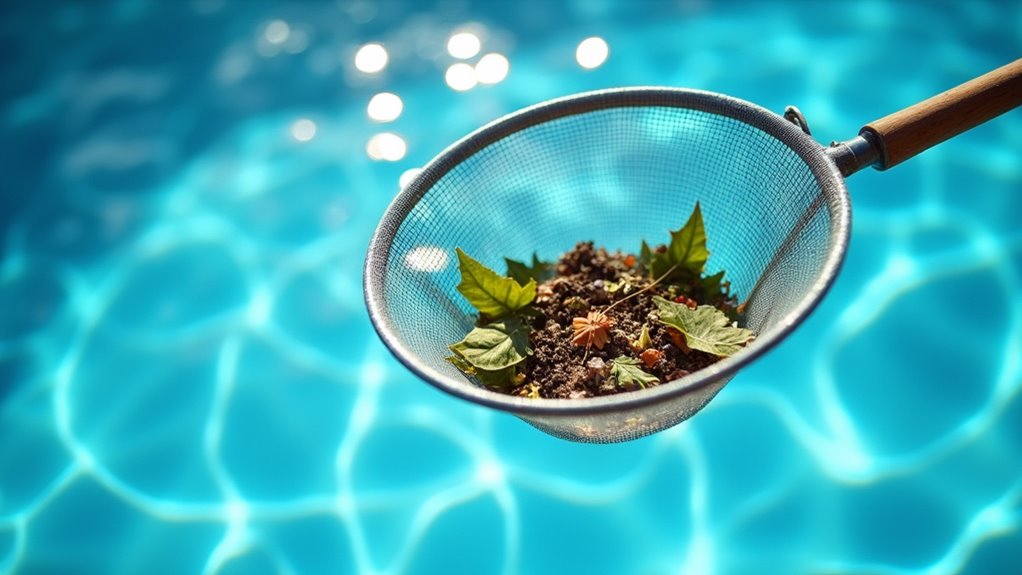
To preserve your San Juan fiberglass pool’s pristine condition, you’ll need to establish a consistent weekly cleaning schedule. Start by implementing a structured pool skimming routine to remove floating debris, leaves, and insects at least three times per week. This prevents these materials from sinking and staining the pool’s surface.
Create a weekly checklist that includes brushing the pool walls and floor to prevent algae buildup, emptying skimmer baskets, and vacuuming the entire pool surface. Pay special attention to corners and steps where debris tends to accumulate. Don’t forget to clean the waterline where oils and sunscreen residue can form a stubborn ring. Using proper pool cleaning tools designed for fiberglass surfaces will protect your pool’s gel coat while ensuring thorough maintenance.
Professional Inspection Schedule

Three professional inspections per year will safeguard your San Juan fiberglass pool’s structural integrity and performance. Schedule these inspections during key seasonal changes: spring opening, mid-summer peak usage, and fall winterization.
Your inspection frequency should align with professional services that include thorough evaluation of the shell structure, plumbing systems, and mechanical components. During each visit, technicians will assess your pool’s gelcoat finish, check for potential stress points, and verify proper chemical balance to prevent long-term damage.
Don’t skip your fall inspection, as it’s essential for identifying any repairs needed before winter sets in. You’ll also receive documentation of each inspection’s findings, helping you track your pool’s condition and maintain its warranty requirements throughout the year.
Managing Water Levels and Circulation
Proper water levels and circulation patterns work together to protect your San Juan fiberglass pool’s structural integrity. Maintain your water level at mid-skimmer height to guarantee ideal filtration and prevent strain on your pool’s structure. Lower levels can lead to inadequate circulation, while higher levels may overwhelm the skimmer’s effectiveness.
For circulation maintenance, run your pump 8-12 hours daily during peak swimming season. You’ll need to adjust this duration based on usage, weather conditions, and water quality readings. Monitor your return jets’ positioning to create a gentle circular flow pattern that prevents dead spots where debris and algae can accumulate. If you notice areas with poor circulation, adjust the direction of your return jets or consider installing supplementary circulation devices to improve water movement throughout your pool.
Winterizing Your Fiberglass Pool
When winter approaches, protecting your San Juan fiberglass pool becomes essential to prevent structural damage and maintain its longevity. Your winter prep checklist should focus on three critical areas: water chemistry, equipment protection, and safety measures.
| Task | Timing | Purpose |
|---|---|---|
| Balance chemicals | 1 week before | Prevent staining |
| Lower water level | 2-3″ below skimmer | Avoid freeze damage |
| Clean thoroughly | Day of winterizing | Remove debris |
| Install pool covers | After cleaning | Secure protection |
Don’t drain your fiberglass pool completely, as this can cause structural issues. Instead, maintain water levels slightly below the skimmer line. Install a quality winter cover to keep out debris and prevent accidents. Remember to blow out your plumbing lines and add pool antifreeze to prevent pipe damage during freezing temperatures.
Preventing Surface Stains and Discoloration
To maintain your fiberglass pool’s pristine appearance, regular monitoring of chemical levels and swift stain removal are essential. Surface protection begins with proper chemical balance, which prevents mineral deposits and organic stains from adhering to your pool’s gelcoat finish. When you spot discoloration, address it immediately using appropriate cleaning products designed for fiberglass surfaces.
- Test pH levels daily and adjust to maintain 7.2-7.6 range for ideal stain prevention
- Remove leaves and debris promptly to prevent organic matter from staining
- Install an automatic pool cover to protect surface from UV damage and debris
- Use non-abrasive cleaning tools to avoid scratching the gelcoat
- Apply surface protection treatments annually to strengthen stain resistance
Following these preventive measures will help preserve your San Juan pool’s appearance and extend its lifespan considerably.
Maintaining Proper Equipment Operation
Regular monitoring of your pool’s mechanical systems serves as the foundation for excellent equipment performance. Check your pump’s operation daily, listening for unusual noises that might indicate bearing wear or impeller problems. Schedule pump maintenance every six months to guarantee maximum water circulation and prevent system strain.
Your filtration system requires consistent attention to maintain proper water clarity. Track pressure gauge readings and perform filter replacement when pressure rises 8-10 PSI above normal operating levels. Clean or backwash filters according to manufacturer specifications, typically every 2-4 weeks during peak season.
Inspect valves, seals, and O-rings monthly for signs of wear or leakage. Lubricate O-rings as needed and replace deteriorated components promptly to prevent system inefficiency or failure. Keep detailed maintenance records to anticipate routine service intervals and track equipment performance trends.
Addressing Minor Repairs Early
Proactive identification of minor issues prevents costly damage to your San Juan fiberglass pool. Regular inspections allow you to detect and address surface chip maintenance and minor crack repairs before they escalate into major structural problems. Don’t ignore small imperfections, as they can compromise your pool’s integrity over time.
- Examine the pool’s surface weekly for hairline cracks or chips, especially around fittings and steps
- Document any changes in surface texture or discoloration that might indicate developing issues
- Apply manufacturer-approved repair compounds to address minor surface damage promptly
- Check for water loss that could signal developing structural concerns
- Inspect the waterline area carefully, as it’s prone to wear and may need early intervention
Contact your San Juan dealer immediately if you’re unsure about the severity of any identified imperfections. Early intervention helps maintain your pool’s structural integrity and appearance.
Frequently Asked Questions
How Long Can I Expect My San Juan Fiberglass Pool to Last?
Your San Juan fiberglass pool’s lifespan typically extends 25-35 years when properly maintained, though many last even longer. You’ll enhance your pool’s durability by maintaining proper water chemistry, promptly addressing any surface repairs, and keeping the filtration system running efficiently. Essential maintenance tips include regular cleaning, checking pH levels weekly, and protecting the gelcoat finish from harsh chemicals. With proper care, you’re investing in decades of reliable pool enjoyment.
Can I Change the Color of My Fiberglass Pool After Installation?
Yes, you can change your fiberglass pool’s color after installation using specialized fiberglass pool coatings. The process involves thoroughly cleaning the surface, repairing any damage, and applying a new gelcoat or epoxy-based coating. You’ll find a range of pool color options available, from classic blues to modern grays. However, this isn’t a DIY project you’ll need to hire certified professionals to guarantee proper application and lasting results.
Is It Safe to Use Salt Water in a San Juan Fiberglass Pool?
Yes, you can safely use saltwater in your San Juan fiberglass pool. In fact, saltwater systems offer several benefits, including gentler water chemistry and reduced eye irritation. The inert, non-reactive nature of fiberglass makes it particularly well-suited for saltwater systems. You’ll find that pool maintenance is often easier with saltwater, as you won’t need to handle harsh chemicals regularly. Just maintain proper salt levels and guarantee your chlorine generator is working correctly.
What Happens if Tree Roots Grow Under My Fiberglass Pool?
Tree root invasion can seriously compromise your fiberglass pool’s structural integrity. As roots grow and expand, they’ll exert pressure on your pool’s shell and foundation, potentially causing cracks, shifting, or displacement. You’ll notice signs like uneven water levels, visible shell deformation, or deck cracks. Pool foundation damage from roots can lead to costly repairs or even pool failure. It’s essential to address any nearby tree concerns during initial pool placement and maintain regular inspections.
How Much Does It Cost to Refinish a San Juan Fiberglass Pool?
You’ll typically spend between $6,500 and $10,000 to refinish a San Juan fiberglass pool, depending on its size and condition. Pool refinishing costs vary based on your chosen resurfacing options, which include gel coat application or complete surface restoration. If you’re dealing with minor repairs, spot treatments might cost $1,000-$2,000. Labor rates in your area and the complexity of repairs will greatly impact the final price.