
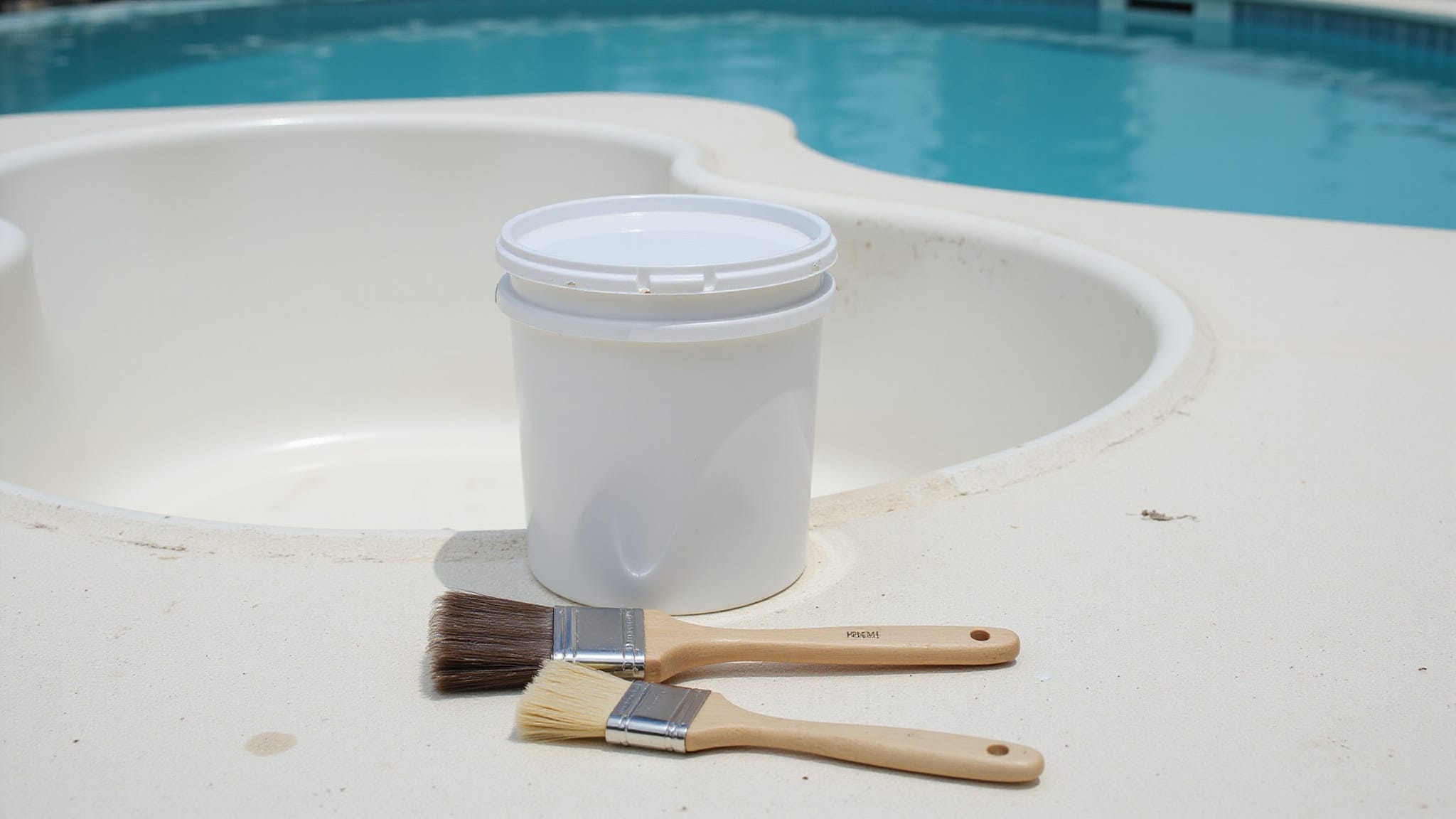
Safe chemicals for fiberglass pools include properly dosed chlorine sanitizers, pH adjusters, alkalinity increasers, stabilizer, and scale-control products that are approved for fiberglass surfaces. For proper water balance, aim for 1–3 ppm free chlorine, pH 7.2–7.6, total alkalinity 80–120 ppm, calcium hardness 250–350 ppm, and CYA 40–60 ppm. Always follow the pool manufacturer and chemical label instructions, since concentrated chemicals or improper dosing can stain or damage the gelcoat surface.
Essential Sanitizers and Their Impact on Fiberglass Surfaces

When maintaining a fiberglass pool, choosing the right sanitizers and understanding their impact on surfaces is essential for long-term durability. You’ll need to maintain chlorine levels between 1-3 ppm for effective sanitization while protecting your pool’s surface. Regular testing with reliable test kits ensures proper chemical balance and prevents damage to pool surfaces. Since fiberglass pools are chemically inert, they require less chemical interaction than other pool types. Avoid stabilized chlorines like cal-hypo, dichlor, and trichlor, as they can degrade fiberglass. Copper ionisation systems provide effective treatment while minimizing skin and eye irritation.
Consider chlorine alternatives like saltwater systems, which generate chlorine through electrolysis while maintaining lower residual levels. These systems are gentler on fiberglass surfaces and can extend your pool’s lifespan. You can also combine sanitizers with UV sterilization or mineral systems to reduce chemical dependency. When shocking your pool, opt for non-chlorine oxidizers to minimize chemical residue and protect your fiberglass finish.
Maintaining Proper Ph and Alkalinity Balance
Because fiberglass pools require precise chemical balance, maintaining proper pH and alkalinity levels is critical for surface longevity. Regular testing ensures swimmer comfort and safety. You’ll need to master pH testing techniques and alkalinity adjustment methods to safeguard your investment. Keep your pool’s pH between 7.2-7.8, with total alkalinity at 80-120 ppm. Adding baking soda is a safe and effective way to boost alkalinity levels.
Maintaining precise pH and alkalinity levels protects your fiberglass pool’s surface and ensures its long-term durability.
- Test pH twice weekly, increasing frequency after rainfall or heavy use
- Measure total alkalinity before pH adjustments to guarantee proper buffering
- Use sodium carbonate to raise pH when below 7.2
- Apply sodium bisulfate or muriatic acid to lower pH above 7.8
- Make gradual chemical adjustments to avoid overcorrection
Always monitor both values closely, as they work together to prevent surface damage. Proper maintenance reduces chemical waste and protects your pool’s fiberglass shell from etching or discoloration, ultimately extending its lifespan. Following a strict weekly schedule for chemical adjustments helps maintain optimal water chemistry for your fiberglass pool.
Smart Chemical Choices for Preventing Scale and Stains

Managing scale and stains in fiberglass pools requires strategic chemical choices beyond basic pH and alkalinity control. You’ll need effective chelating agents to bind metal ions and prevent staining, while maintaining calcium levels below 120 ppm. Smart dosage strategies include using liquid chlorine instead of tablets to avoid cyanuric acid buildup that contributes to scaling. Copper-based products are particularly effective at preventing algae growth while being gentle on fiberglass surfaces. The early application of preventative solutions helps maintain the pool’s smooth blue finish over time.
For thorough protection, combine chelating agents with stain inhibitors, particularly when calcium levels rise. You’ll want to test monthly and apply preventative treatments every 1-3 months in high-hardness areas. When selecting cleaning products, opt for specialized non-bleach formulas designed for fiberglass surfaces. If calcium levels persist above target range, consider partial water replacement with softer water. Regular water testing and monitoring chemical balance helps prevent scale buildup and surface deterioration. Remember to maintain free chlorine between 1-3 ppm for ideal sanitation without risking surface damage.
Safe Algae Prevention and Water Clarity Solutions
While algae prevention in fiberglass pools demands vigilance, you’ll need a multi-faceted approach combining proper chemical treatments with consistent maintenance routines. Weekly algaecide application coupled with proper water circulation forms your first line of defense against algae growth. The smooth, non-porous surface of fiberglass pools naturally helps resist algae attachment compared to other pool types. Daily skimming of leaves and organic material helps prevent algae by removing potential nutrient sources. Since algae thrives in poorly maintained pools, proper sanitation levels must be consistently monitored.
Regular maintenance and proper chemical balance, combined with consistent circulation, create the strongest defense against pool algae formation.
Your prevention strategy should include:
- Maintain chlorine levels at 1-3 ppm and shock weekly
- Apply copper-based algaecides following manufacturer guidelines
- Run filtration 8-12 hours daily for peak circulation
- Test pH (7.2-7.6) and alkalinity (80-120 ppm) regularly
- Use clarifiers sparingly when cloudiness appears
For persistent clarity issues, integrate flocculants to bind suspended particles, making them easier to filter. Remember to monitor cyanuric acid levels (30-50 ppm) in outdoor pools to protect chlorine effectiveness and maintain consistent sanitization.
UV Protection and Stabilizer Guidelines

UV protection and stabilizer management work together to safeguard your fiberglass pool’s longevity and chemical efficiency. You’ll need to maintain cyanuric acid (CYA) levels between 30-60 ppm, while ensuring UV protectants are regularly applied to your pool’s gelcoat surface. Test stabilizer compatibility before application to prevent any adverse reactions with your fiberglass shell. Since CYA does not evaporate from your pool water, careful monitoring is essential to prevent buildup over time. Pool supply stores can provide accurate testing services for stabilizer levels. Regular application helps prevent gelcoat degradation and maintains your pool’s smooth, glossy finish.
| Component | Ideal Range | Maintenance Frequency |
|---|---|---|
| CYA Level | 30-60 ppm | Monthly testing |
| UV Protectants | Applied coating | Quarterly application |
| Free Chlorine | 7.5% of CYA | Weekly testing |
| Gelcoat Check | Surface integrity | Semi-annual inspection |
Monitor fiberglass pool chemical levels more frequently during heavy rain or high-UV periods, especially CYA and sanitizer levels. When adding stabilizer, follow the product directions to avoid clouding. UV-resistant gelcoats provide added protection, but regular water testing and proper chemical balance are still essential for protecting the fiberglass surface.
Frequently Asked Questions
Can I Use a Robotic Pool Cleaner With My Fiberglass Pool Chemicals?
You can safely use a robotic pool cleaner with your fiberglass pool chemicals, as most cleaners are designed for chemical compatibility. However, you’ll need to maintain proper chemical levels (pH 7.2-7.4, chlorine 1-3 ppm) during operation. Remove your robotic cleaner after 1-2 hours to prevent chemical concentration effects, and always rinse it after use. Check your manufacturer’s guidelines for specific chemical interaction recommendations.
How Long Should I Wait to Swim After Adding Chemicals?
For basic swimming safety, you’ll need to wait 20-30 minutes after adding routine chemicals like liquid chlorine or pH adjusters. However, if you’ve added shock treatment, you must wait at least 8 hours before entering the pool. Always test the water before swimming to verify proper chemical timing and balance. For specialty treatments like metal control agents or flocculants, follow the manufacturer’s specific wait time guidelines.
Do I Need Different Chemical Storage Methods for Fiberglass Pool Products?
You don’t need special chemical storage methods specifically for fiberglass pool products, but you must follow standard safety precautions for all pool chemicals. Store them in their original containers, keep them in a cool, dry, well-ventilated area below 95°F, and separate incompatible chemicals. Always maintain proper labeling and guarantee containers aren’t damaged. You’ll need to prevent exposure to direct sunlight and moisture, regardless of pool type.
What Chemicals Should I Use During Pool Winterization?
When winterizing your pool, you’ll need to maintain proper chemical balance with several key products. Start with chlorine to sanitize, then adjust alkalinity to 80-120 ppm and pH to 7.2-7.8. Add calcium hardness increaser to reach 200-400 ppm, and include a stabilizer at 30-50 ppm. Don’t forget to add an algaecide to prevent growth during winter months. Test all levels before finalizing your winterizing process.
Can Pool Chemicals Affect My Fiberglass Pool’s Warranty Coverage?
Yes, your chemical choices can directly impact your warranty coverage. You’ll void your warranty if you use unauthorized chemicals or fail to maintain proper chemical levels. Most manufacturers have strict warranty limitations regarding chemical compatibility and maintenance protocols. You must follow their specified chemical ranges, avoid metal-based products, and maintain documentation of proper chemical maintenance. Using harsh or abrasive chemicals will typically invalidate your warranty protection.
Fiberglass Pool Chemical Levels Change After Heavy Rainfall?
Yes. Heavy rain can dilute sanitizer levels and shift pH, alkalinity, and stabilizer concentration. After significant rainfall, retest the water and restore free chlorine to about 1 to 3 ppm and pH to roughly 7.2 to 7.8 before making further adjustments.
Fiberglass Pool Chemicals Safe to Use With Pool Heaters?
Yes, when the chemicals are approved for pool use and the water remains properly balanced. Keep pH around 7.2 to 7.8 and avoid sending concentrated chlorine or acid directly through the heater, since highly acidic or chlorinated water can damage metal heat exchangers.
Fiberglass Pool Cleaning Chemicals Leave Residue on Gelcoat Surfaces?
They can if they are overdosed, allowed to dry on the surface, or not rinsed according to the product instructions. Use cleaners specifically labeled for fiberglass or gelcoat and rinse the treated area thoroughly after the manufacturer’s stated contact time.
Fiberglass Chemical Compatibility Change With Saltwater Systems?
Yes, slightly. Most standard balancing chemicals remain compatible, but saltwater pools can experience faster pH rise and increased risk of scale or metal corrosion. Maintain pH around 7.2 to 7.8 and follow the salt level specified by the chlorine generator manufacturer rather than using one universal salt target.