
To maintain your pool year-round, you’ll need a structured schedule combining daily, weekly, and monthly tasks. Start with daily water chemistry testing, debris removal, and equipment checks. Perform weekly wall brushing, vacuuming, and thorough chemical balancing. Schedule monthly inspections of structural elements, safety features, and filtration systems. Adjust your maintenance intensity seasonally, focusing on prevention during peak usage months. A systematic approach to pool care will reveal the secrets to crystal-clear water and equipment longevity.
Daily Pool Care Essentials

While maintaining a swimming pool requires various tasks, daily care forms the foundation of proper pool maintenance. Your primary focus should be on water level management and surface debris removal to guarantee maximum equipment function and water quality. A digital checklist app helps ensure no critical maintenance steps are missed during daily inspections.
Begin by checking water levels, maintaining them 1-2 inches below the skimmer opening to prevent operational issues. You’ll need to promptly remove floating debris using a skimmer net, paying special attention to shaded areas where leaves and particles tend to collect. Don’t forget to empty the skimmer basket daily to maintain proper circulation. Testing and adjusting pH and chlorine levels each day helps prevent water chemistry problems. Ensure your automatic pool cleaner is functioning properly to maintain consistent water flow.
Follow up with thorough wall brushing, focusing on areas with limited circulation like steps and corners. Monitor your pump and filter operations, listening for unusual noises and checking pressure readings to catch potential problems early.
Weekly Maintenance Priorities
Successful pool maintenance requires establishing a consistent weekly routine that builds upon daily care tasks. Your weekly priorities should focus on thorough surface debris management and water chemistry testing. Proper skimming techniques involve methodically working across the pool’s surface, while brushing frequency should target walls and steps at least once per week to prevent algae buildup. Visual inspection of pipes and equipment should be conducted weekly to identify potential issues early. High chemicals can cause irritation to swimmers’ skin and eyes if not properly balanced. Consistent upkeep of your pool ensures optimal longevity and prevents costly repairs down the line.
Test and adjust water chemistry parameters, including chlorine (1-3 ppm), pH (7.2-7.8), and alkalinity (80-120 ppm). Check filter pressure gauges to verify readings stay between 8-15 psi, and perform backwashing when needed. Empty skimmer and pump baskets to maintain ideal circulation. Don’t forget to vacuum the pool floor thoroughly after brushing to remove all loosened debris and contaminants.
Monthly Inspection Checklist

Five key areas require thorough monthly inspection to maintain your pool’s safety, functionality, and longevity. Your monthly tasks should focus on structural integrity, water chemistry, equipment operation, safety compliance, and landscape maintenance. These detailed inspections help prevent costly repairs and guarantee a safe swimming environment. Regular photo documentation of any identified issues helps track maintenance needs and ensures proper follow-up.
Running your filtration system daily ensures proper water circulation and maintains optimal cleanliness throughout your pool.
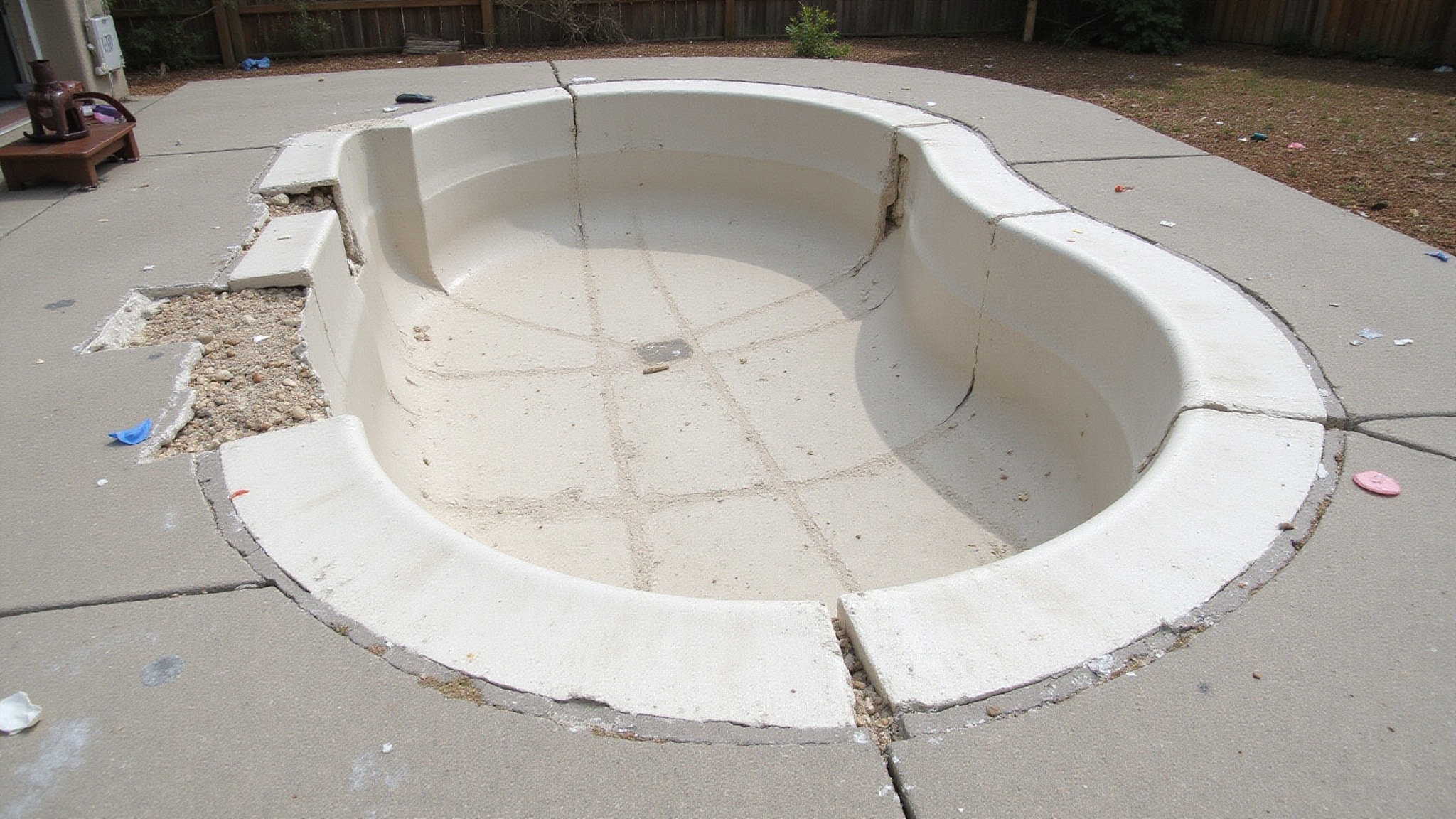
- Check your pool’s structural elements, including walls, floor, and deck surfaces for cracks or damage, while testing the stability of all fixtures and examining the vinyl liner’s condition.
- Test and adjust water chemistry levels, including pH, sanitizer, alkalinity, and calcium hardness, ensuring they’re within recommended ranges.
- Verify all safety equipment’s functionality, inspect fence integrity, test emergency systems, and ensure proper drainage around the pool area.
Our trained staff members are available to provide expert guidance on maintaining proper chemical levels and equipment operation.
Maintaining this inspection frequency will help you identify potential issues before they become major problems, protecting your investment and swimmers’ safety.
Seasonal Care Requirements
Beyond monthly inspections, proper pool maintenance demands specific care routines that align with changing seasons. Your spring preparations should focus on thoroughly cleaning the pool after winter dormancy, including debris removal, equipment inspection, and initial shock treatment. During peak summer months, you’ll need to maintain consistent water chemistry and perform regular surface cleaning. Testing and balancing your water chemistry requires checking levels 2-3 times weekly. Professional experts recommend daily skimming during summer to maintain optimal water clarity. The rising temperatures in summer create ideal conditions for algae proliferation, making regular maintenance essential.
| Season | Primary Tasks | Equipment Needs |
|---|---|---|
| Spring | Remove cover, shock treatment | Vacuum, test kit |
| Summer | Daily skimming, weekly brushing | Skimmer, brush |
| Fall/Winter | Winterization techniques, equipment storage | Pool cover, antifreeze |
As temperatures drop, you’ll shift to winterization techniques that protect your pool’s infrastructure. This includes properly balancing chemicals, lowering water levels, and ensuring all equipment is protected from freezing conditions. Don’t forget to maintain proper chemical levels even during off-season months to prevent algae growth.
Managing Chemical Balance Year-Round

Maintaining proper chemical balance stands as the cornerstone of effective pool maintenance throughout the year. Your chemical stability strategies should focus on daily monitoring of free chlorine, pH, and cyanuric acid levels, while implementing seasonal adjustment techniques based on usage patterns and weather conditions. During periods of high summer usage, more frequent chemical testing becomes essential to maintain water safety. Monthly shock treatments help prevent bacteria and algae buildup while maintaining water clarity. Low alkalinity levels can result in significant damage to pool heaters and surface staining.
- Test water chemistry daily during peak seasons, adjusting chlorine levels between 1-3 ppm, and maintain total alkalinity at 80-120 ppm for ideal chemical stability
- Implement proactive measures like using pool covers to minimize chemical loss through evaporation, and rinse swimmers before entry to reduce contaminant load
- Monitor calcium hardness (200-400 ppm) and balance cyanuric acid (30-50 ppm) regularly, adjusting with appropriate chemicals to maintain year-round stability
Remember to shock your pool periodically and replace 10-15% of water monthly to prevent chemical buildup and maintain consistent water quality.
Equipment Maintenance and Upgrades
To extend your pump’s lifespan, you’ll need to maintain consistent 8-12 hour daily runtimes while monitoring noise levels and cleaning pump baskets weekly to optimize suction flow. Regular equipment checks ensure your skimmer catches debris effectively before it reaches the pump system. When upgrading your filtration system, you should evaluate whether shifting from cartridge filters to modern robotic systems aligns with your pool’s specific requirements and usage patterns. Your equipment upgrades should prioritize energy efficiency through options like variable-speed pumps or saltwater systems, which can greatly reduce long-term operational costs.
Pump Life Extension Tips
Professional pool pump maintenance encompasses five critical strategies that greatly extend equipment lifespan. By enhancing run time and implementing variable-speed technology, you’ll achieve significant efficiency improvements while reducing wear on components. Regular performance monitoring and proper sizing guarantee your pump operates within ideal parameters, preventing strain and premature failure.
- Install a variable-speed pump to cut energy usage by up to 70% while allowing customized flow rates for different pool activities
- Schedule operation during off-peak hours and limit daily runtime to 8-12 hours to prevent overworking the motor
- Monitor pressure readings, unusual sounds, and power consumption to catch potential issues before they cause major damage
These pump maintenance techniques, combined with consistent tuning and energy monitoring, will maximize your equipment’s service life while maintaining peak performance. Regular assessment of operating parameters helps identify efficiency improvements before problems escalate.
Filter Upgrade Best Practices
While proper pump maintenance forms the foundation of pool operations, strategic filter upgrades represent the next key step in enhancing your system’s performance. You’ll need to monitor key upgrade triggers, including visibly clogged elements, damaged pleats in cartridge filters, or persistently high PSI readings in DE systems.
When implementing filter upgrades, prioritize filter efficiency by positioning new units on stable surfaces within 6 feet of your pool. You’ll maximize upgrade considerations by following manufacturer guidelines for installation and conducting thorough leak checks. After upgrading, maintain your investment through monthly cartridge cleanings and annual DE media replacements. Consider modern filtration options like saltwater chlorinators or variable-speed pumps to enhance system performance. Don’t forget to track maintenance tasks and equipment metrics in detailed logs, ensuring peak functionality year-round.
Safety Protocols and Compliance Standards
You’ll need to inspect your safety equipment monthly, including testing pool alarms, checking gate latches, and verifying that life rings and reaching poles remain easily accessible and in good condition. Store your pool chemicals in a locked, well-ventilated space away from direct sunlight, with acid and chlorine products separated to prevent dangerous gas formation if accidental mixing occurs. For ideal compliance, maintain a safety checklist that documents your regular equipment inspections, chemical storage conditions, and any maintenance performed on barriers or alarm systems.
Essential Safety Equipment Checks
Regular safety equipment checks form the cornerstone of responsible pool management, encompassing five critical areas: perimeter security, emergency response gear, structural integrity, automated systems, and compliance documentation. You’ll need to verify that your rescue equipment meets specific standards, including properly maintained rescue tubes, reaching poles, and spine boards for Level II pools. Emergency response preparedness requires checking first aid kits and confirming U.S. Coast Guard-approved ring buoys are readily accessible.
- Inspect self-closing gates, childproof latches, and perimeter fencing monthly to maintain a secure pool environment
- Test automated safety systems, including water level sensors and motion detectors, to verify proper functionality
- Verify that all emergency response equipment is properly positioned and meets local regulatory requirements
Monitor these essential safety components systematically, documenting each inspection in your maintenance logs to maintain compliance and guarantee ideal safety conditions.
Chemical Storage Guidelines
Proper chemical storage serves as a critical foundation for pool safety and regulatory compliance, requiring strict adherence to established protocols and environmental controls. You’ll need to maintain storage temperatures below 95°F (35°C) in cool, dry environments while keeping chemicals away from heat sources and potential water exposure.
Implement strict chemical labeling practices by storing products only in their original containers with intact manufacturer labels. You must separate incompatible chemicals and establish dedicated storage zones for different chemical types. Keep dry and liquid pool chemicals in distinct areas, and guarantee proper container elevation off floors.
Store spill response materials separately from chemicals, and train your staff in emergency procedures. You’ll need to document all disposal actions and regularly inspect storage conditions to maintain safety standards.
Frequently Asked Questions
How Long Should I Wait After Shocking Before Swimming?
After applying shock treatment, you’ll need to wait 8-24 hours before swimming if you’re using chlorine-based shock, or 2-4 hours for non-chlorine alternatives. For ideal swimming safety, make sure your free chlorine levels drop to 1-3 ppm and pH levels fall between 7.2-7.8 before entering the pool. Remember, you’ll need to wait approximately one hour per pound of shock product used, and always test the water before resuming pool activities.
What Causes Cloudy Pool Water Despite Proper Chemical Levels?
Even with balanced chemicals, your pool’s cloudy water causes can stem from multiple factors. You’ll often find inadequate filtration or circulation is the primary culprit, especially if your pump isn’t running 8-12 hours daily. Poor water clarity solutions start with checking for clogged filters, insufficient pump operation, and environmental contaminants. Don’t overlook the possibility of microscopic debris, calcium scaling, or persistent algae that’s resistant to standard chlorination.
Can I Use Household Bleach Instead of Pool Chlorine?
While you can use household bleach as one of your chlorine safety options, it’s not the most efficient bleach alternative. You’ll need more frequent applications since bleach lacks stabilizers and is only 5-6% strength compared to pool chlorine’s 65%. Though it’s cheaper and chemically similar to pool chlorine, you’ll face challenges with precise measurements and faster UV degradation. Many pool pros do use bleach, but you’ll need to monitor levels more carefully.
Why Does My Pool Lose Water Even Without Visible Leaks?
Your pool’s water loss is likely due to natural evaporation, which can be substantial even without visible leaks. You’ll lose 1-3 inches overnight when there’s a significant temperature difference between the pool water and air. Wind exposure and water features accelerate this process. To confirm it’s evaporation rather than a leak, perform a bucket test during your pool maintenance routine by comparing water level drops between a bucket and your pool.
How Often Should Pool Filter Cartridges Be Completely Replaced?
You’ll need to replace your pool filter cartridges every 6-24 months, depending on your pool’s usage patterns and environmental conditions. For ideal filter maintenance, replace cartridges in high-use pools every 6-12 months, moderate-use pools every 9-12 months, and low-use pools every 18-24 months. Watch for signs of deterioration like fiber breakdown after 12-15 cleanings, visible tears, or persistent cloudy water. These indicators signal the end of your cartridge’s lifespan.