



To safely clean your fiberglass pool surface, use non-abrasive cleaners specifically designed for gelcoat surfaces. Combine mild dish soap with warm water for gentle waterline scrubbing, and apply enzyme-based cleaners for organic stains. Stick to soft-bristled brushes and microfiber cloths to prevent scratching, and maintain pH levels between 7.2-7.4. For stubborn deposits, choose acid-free formulas and natural solutions like white vinegar. Understanding the full range of specialized cleaning options will guarantee your pool’s long-term protection.
Understanding Fiberglass Pool Surfaces and Their Care Requirements
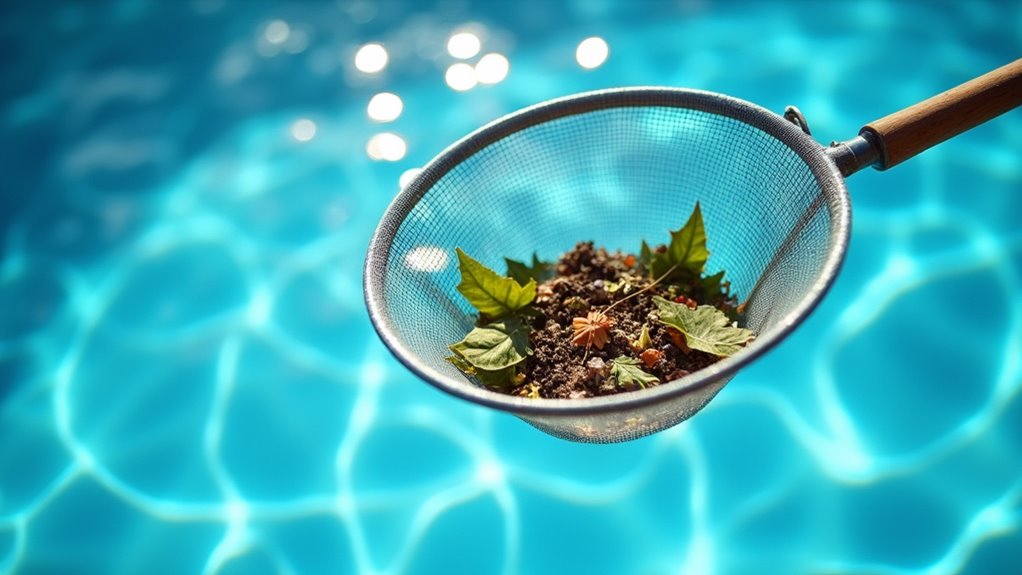
While fiberglass pools offer durability through their non-porous gelcoat surface, they require specific maintenance practices to preserve their integrity. Your pool’s surface resists algae growth and chemical absorption better than concrete pools, but it’s sensitive to abrasive materials and improper chemical balance. Daily skimming will prevent debris from sinking and causing surface stains. Proper compaction during installation creates a stable foundation that helps prevent surface stress and cracking.
To guarantee superior surface durability, you’ll need to maintain pH levels between 7.2-7.4 and keep calcium hardness below 120 ppm. Unlike concrete pools, your fiberglass surface doesn’t require calcium for structural strength; in fact, high calcium levels can damage it. Proper fiberglass care involves using only soft-bristle brushes and non-abrasive cleaners specifically designed for gelcoat surfaces. You’ll want to avoid calcium-based sanitizers and harsh cleaning tools that could compromise your pool’s protective gelcoat layer. Regular use of stain and scale control products is essential to prevent permanent discoloration and surface damage.
Essential Non-Abrasive Cleaners for Safe Maintenance
Your fiberglass pool requires non-abrasive cleaners that protect its gel coat while effectively removing dirt and stains. You’ll find specialized products like soft-bristle brushes, fiberglass-specific solutions, and natural enzyme treatments particularly effective for maintaining surface integrity. When addressing tough stains, you should use targeted spot treatments designed specifically for fiberglass rather than harsh, abrasive cleaners that could damage your pool’s finish. Calcium hypochlorite treatments can effectively eliminate stubborn stains while preserving surface quality. Regular application of stain and scale preventers helps maintain the pristine appearance of your pool’s surface while protecting against mineral buildup. Maintaining proper water chemistry levels is crucial for preventing stains and ensuring the longevity of your pool’s surface.
Gentle Surface Cleaning Solutions
Since fiberglass pools require delicate maintenance, selecting the right cleaning solutions is essential for preserving their gelcoat finish. You’ll want to use mild dish soap mixed with warm water for gentle scrubbing techniques at the waterline, where most stains accumulate. For effective cleaning routines, apply specially formulated fiberglass cleaners that won’t compromise your pool’s surface integrity. A properly functioning circulation pump system helps distribute cleaning chemicals evenly throughout your pool water for optimal results.
When dealing with stubborn stains, opt for pool tile cleaners without abrasive ingredients or dedicated fiberglass stain removers designed for gelcoat surfaces. You’ll need to maintain proper sanitization using chlorine-based products while avoiding harsh chemicals like bleach or acidic solutions. Remember to pair these cleaning solutions with soft sponges or nylon brushes, and always work in circular motions to prevent surface damage during your maintenance routine.
Natural Pool Care Products
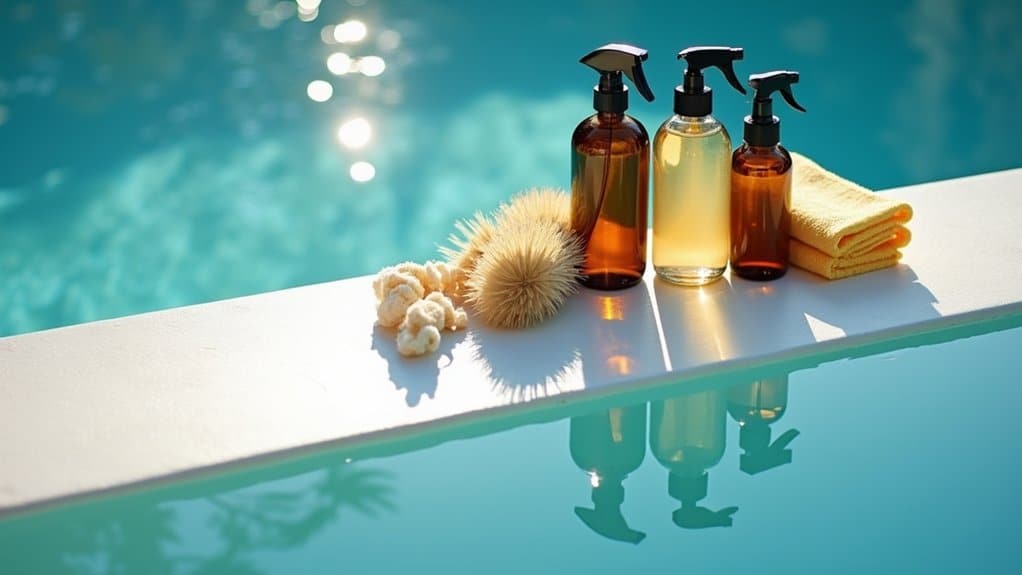
Natural pool care products offer an eco-friendly approach to maintaining fiberglass pools without compromising their delicate gelcoat surfaces. You’ll find that eco cleaners like white vinegar and lemon juice effectively balance natural pH while dissolving mineral deposits and organic stains. These alternatives work alongside traditional pool chemicals, reducing their required quantities. For optimal disinfection, unscented bleach containing 5.25% sodium hypochlorite provides effective sanitization at a lower cost than specialty products. Regular cleaning with dishwashing soap helps remove visible waterline rings and body oil buildup. Using a soft sponge for scrubbing prevents damage to the pool’s surface while effectively removing stains.
| Product | Primary Use | Benefits |
|---|---|---|
| Baking Soda | pH Balance | Raises pH, softens water |
| White Vinegar | Cleaning | Dissolves deposits, sanitizes |
| Borax | Stabilization | Controls algae, reduces chlorine |
For regular maintenance, you can use Simple Green diluted solutions and melamine sponges to tackle stubborn stains. These non-toxic options protect your pool’s surface while maintaining water quality. Remember to test water chemistry regularly when using natural products to guarantee ideal balance and effectiveness.
Specialized Stain Treatment Tools
Five essential non-abrasive tools form the foundation of effective stain treatment for fiberglass pools. When implementing targeted cleaning solutions, you’ll need specialized equipment that won’t compromise your pool’s gel coat while addressing stubborn discoloration. Additionally, incorporate proper cleaning tools and solutions into your routine as part of the steps to improve pool painting finish. This helps prevent stains, maintain appearance, and extend the beauty of your fiberglass pool.
For successful stain removal techniques, rely on these proven tools:
- Soft sponges and microfiber cloths for localized scrubbing of persistent stains
- Nylon-bristled brushes specifically designed for fiberglass surfaces
- Manual vacuums with non-abrasive heads to remove settled debris
- Professional-grade enzymatic cleaners for breaking down organic matter
Using a Scale & Stain Prevention Liquid can help prevent stains from returning for up to six months after treatment. You’ll want to pair these tools with pH-neutral cleaning agents and avoid any abrasive materials like steel wool or high-pressure washers. The Dolphin Nautilus CC Plus offers an automated alternative for comprehensive cleaning coverage. Maintaining proper calcium hardness levels under 120 ppm helps prevent difficult-to-remove scale buildup on surfaces. For ideal results, incorporate regular skimming and weekly brushing into your maintenance routine, focusing extra attention on high-traffic areas where stains commonly develop.
Specialized Chemical Products for Waterline Treatment
Your fiberglass pool’s waterline requires specialized chemical treatments that balance effective cleaning with surface protection. You’ll need gentle pH-balanced cleaners and non-abrasive scale removers to address mineral deposits without damaging the gel coat. When treating stubborn stains, use chemical solutions specifically formulated for fiberglass surfaces and apply them with soft, non-abrasive cloths to maintain your pool’s pristine appearance. For best results, using a Magic Eraser treatment can effectively remove tough stains while preserving your pool’s surface integrity.
Gentle Ph-Balanced Cleaners
Three essential properties define gentle pH-balanced cleaners for fiberglass pools: their non-corrosive nature, material compatibility, and targeted waterline treatment capabilities.
When selecting pH-balanced cleaners, you’ll benefit from gentle formulations that protect your pool’s surfaces while maintaining effective cleaning power. Similar to discussions about water balance in hot tubs, these specialized products work in harmony with your pool’s chemistry, ensuring ideal pH benefits without compromising your fiberglass surfaces.
Key advantages of pH-balanced cleaners include:
- Non-abrasive ingredients that won’t scratch or damage gel-coat finishes
- Acid-free formulas that prevent harsh chemical reactions with pool surfaces
- Biodegradable components that reduce environmental impact
- Residue-free results that discourage debris accumulation
Use these cleaners weekly to prevent waterline stain buildup while preserving your pool’s protective gel coat and maintaining its UV-resistant properties.
Non-Abrasive Scale Removers
While traditional pool cleaners can damage fiberglass surfaces, non-abrasive scale removers offer specialized chemical solutions for treating stubborn calcium deposits at the waterline. You’ll find pH-neutral formulations specifically designed for fiberglass pools that dissolve scale without compromising your pool’s gel coat. Four active ingredients work together to safely eliminate all types of calcium buildup on pool surfaces.
For ideal scale removal techniques and product effectiveness, start by pre-cleaning visible debris with a soft brush. Then apply calcium-specific removers using a direct-spray method to target deposits precisely. You’ll want to avoid harsh scrubbers or steel wool that can scratch your pool’s surface. Instead, use gentle tools like pumice stones for stubborn buildup after chemical treatment. Don’t forget to thoroughly rinse afterward to prevent chemical residue from causing future scaling issues. Choose chlorine-compatible products to maintain proper sanitizer levels throughout the treatment process.
Safe Stain Treatment Options
Maintaining a pristine waterline requires specialized chemical products that won’t compromise your fiberglass pool’s surface. You’ll find eco-friendly alternatives that effectively tackle tough stains while protecting your pool’s finish.
- Enzyme cleaners like Pool Magic and Clean & Perfect break down organic compounds naturally, dissolving oils and sunscreen residue without harsh chemicals
- Acid-free formulas such as Star brite offer spray-on convenience for removing stubborn waterline stains while preventing surface etching
- Metal elimination products target rust and mineral deposits, especially beneficial if you’re using well water
- Preventive treatments applied regularly help maintain waterline cleanliness and reduce the frequency of manual scrubbing
For best results, pair these treatments with soft sponges rather than abrasive brushes, and maintain a consistent cleaning schedule to prevent stain buildup.
Natural and Eco-Friendly Cleaning Solutions
When caring for a fiberglass pool, natural and eco-friendly cleaning solutions offer effective alternatives to harsh chemicals. You’ll find sustainable cleaning options like mild dish soap diluted in water work effectively for regular maintenance and light stain removal. These eco-friendly solutions protect both your pool’s surface and the environment.
For daily cleaning, use soft-bristle brushes with gentle detergents to tackle organic stains without scratching the fiberglass. You can enhance your pool’s sanitization naturally by installing a saltwater chlorinator or UV system, reducing your reliance on traditional chemicals. Consider phosphate-free algaecides and fiberglass-specific cleaners that don’t contain abrasives. Always test new products on a small, inconspicuous area first, and maintain proper pH balance to maximize the effectiveness of your natural cleaning routine.
Professional-Grade Surface Care Products
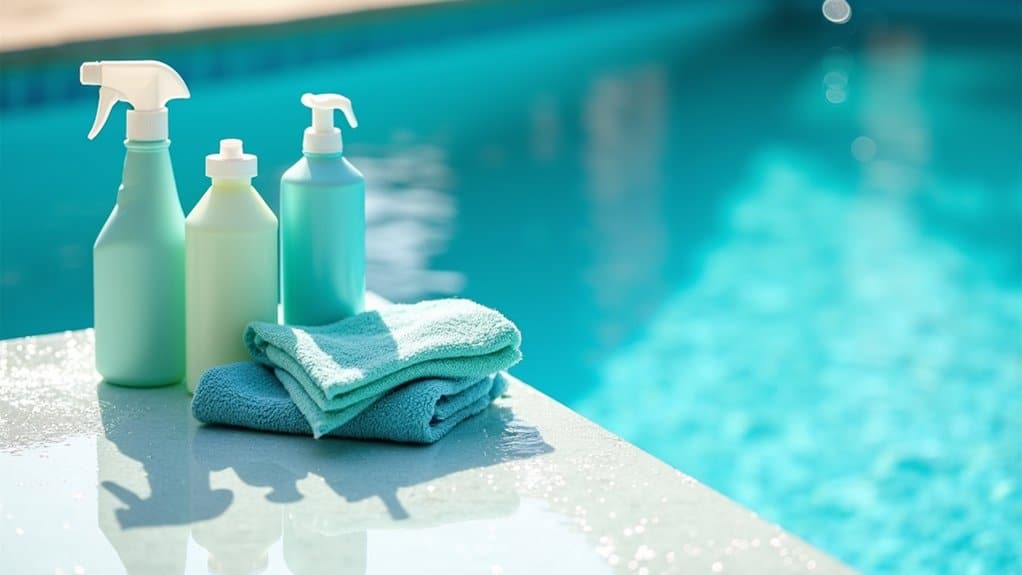
Professional-grade surface care products offer enhanced cleaning power while maintaining the integrity of your fiberglass pool’s gel coat. When selecting professional products, focus on specialized formulations designed specifically for fiberglass surfaces. These advanced cleaning solutions provide superior results while protecting your pool’s finish.
- Choose pH-balanced cleaners that won’t compromise your pool’s chemical balance or damage the gel coat surface
- Use enzymatic cleaning solutions that effectively break down organic stains and prevent buildup along the waterline
- Apply non-abrasive professional cleaning techniques using soft brushes or specialized tools to prevent surface scratching
- Select professional-grade algae inhibitors that provide long-lasting protection without harsh chemicals
Remember to always follow manufacturer guidelines for dilution ratios and application methods when using professional cleaning products. Regular maintenance with these specialized solutions will help extend your pool’s lifespan and maintain its pristine appearance.
Preventative Cleaning Tools and Materials
Proper tools and materials form the foundation of effective fiberglass pool maintenance. Your preventative cleaning arsenal should include nylon brushes specifically designed for fiberglass surfaces and soft-bristle brushes for algae removal. You’ll also need a pool skimmer with a lightweight frame and a manual vacuum with specialized attachments to prevent surface abrasion.
Establish a maintenance frequency that includes daily skimming, weekly vacuuming, and monthly filter cleaning. Keep pH-testing kits on hand to monitor water chemistry, and use non-abrasive cleaners formulated for non-porous surfaces. For stubborn stains, rely on ascorbic acid treatments or magic eraser-type sponges rather than harsh chemicals. Avoid steel brushes, high-pressure washers, or stiff-bristle brushes that could compromise your pool’s gel coat integrity.
Frequently Asked Questions
Can I Use Baking Soda to Clean My Fiberglass Pool Surface?
Yes, you can safely use baking soda to clean your fiberglass pool surface. Its mild abrasive properties make it effective for removing stains and waterline buildup without damaging the gel coat. Mix baking soda with water to create a paste, then apply it using a soft sponge or nylon-bristle brush. You’ll find this method particularly useful for routine fiberglass surface maintenance, as it’s both gentle and economical compared to commercial cleaners.
How Often Should I Replace My Fiberglass-Safe Cleaning Tools?
You’ll need to monitor your cleaning tool lifespan based on usage frequency and wear indicators. Replace daily-use tools like skimmer nets every 3-6 months, while weekly-use brushes can last 6-12 months. Your maintenance frequency should double if you have high pool usage. Watch for signs like bristle damage, reduced effectiveness, or surface scratches to determine when replacement is needed. For vacuum components, plan on replacements every 2-3 years.
Will Pool Toys Cause Scratches on My Fiberglass Pool Surface?
Yes, pool toys can scratch your fiberglass pool surface, but you can prevent damage by choosing appropriate pool toy materials. Select soft, rounded toys made from foam or smooth rubber instead of hard plastic or metal ones. Don’t let kids drag toys along pool walls or floors, and remove toys from the pool after use. For scratch prevention, inspect toys regularly for rough edges or deterioration, and replace damaged items promptly.
Does Hard Water Affect the Cleaning Products I Should Use?
Yes, hard water effects greatly impact which cleaning products you’ll need to use. You’ll want to avoid standard cleaners since they often can’t effectively dissolve calcium deposits. Instead, choose specialized products that are specifically formulated for hard water conditions and compatible with fiberglass surfaces. Look for pH-neutral, non-bleach formulas that include scale inhibitors. These targeted cleaners will help prevent mineral buildup while protecting your pool’s gel coat finish.
Can I Use Automatic Pool Covers With Fiberglass-Safe Cleaning Products?
Yes, you can safely use automatic covers with fiberglass-safe cleaning products, as long as you choose solutions specifically formulated for compatibility with both surfaces. You’ll need to make sure your cleaning products won’t leave residue in the cover tracks or degrade the cover material. When using automatic covers, it’s crucial to maintain proper chemical balance and use non-abrasive cleaners that won’t scratch either the fiberglass surface or cover components.