


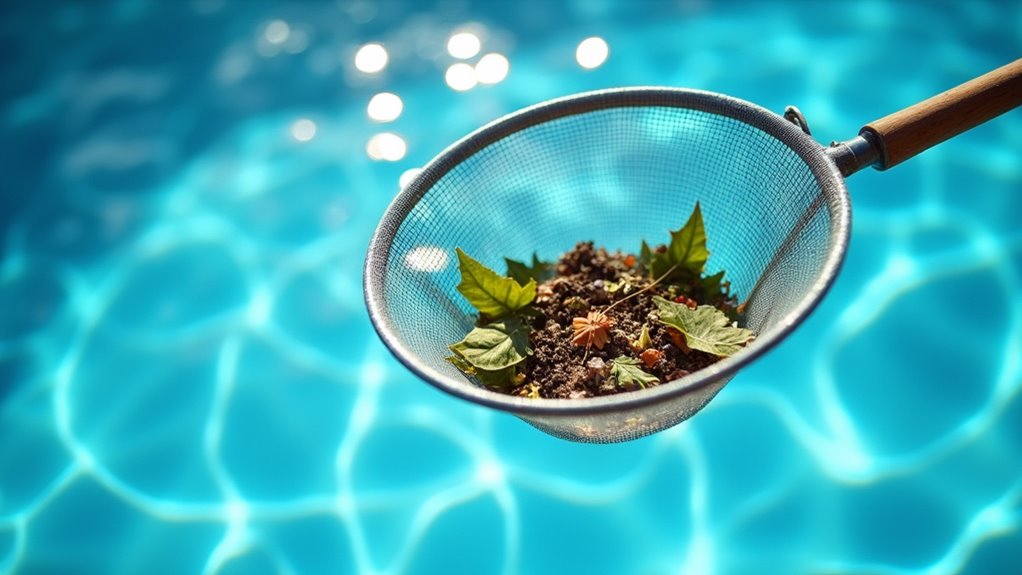

To safely clean your fiberglass pool, start with daily skimming using non-abrasive tools and a telescoping pole to remove surface debris. Maintain proper chemical balance by testing pH (7.2-7.4), chlorine (1-3 ppm), and alkalinity (80-120 ppm) levels weekly. Use soft-bristle brushes for walls and a gentle vacuum for the floor, following systematic cleaning patterns to prevent surface damage. Professional inspections every six months will help identify potential issues. The following maintenance guidelines will guarantee your pool’s long-term durability.
Essential Tools for Fiberglass Pool Maintenance
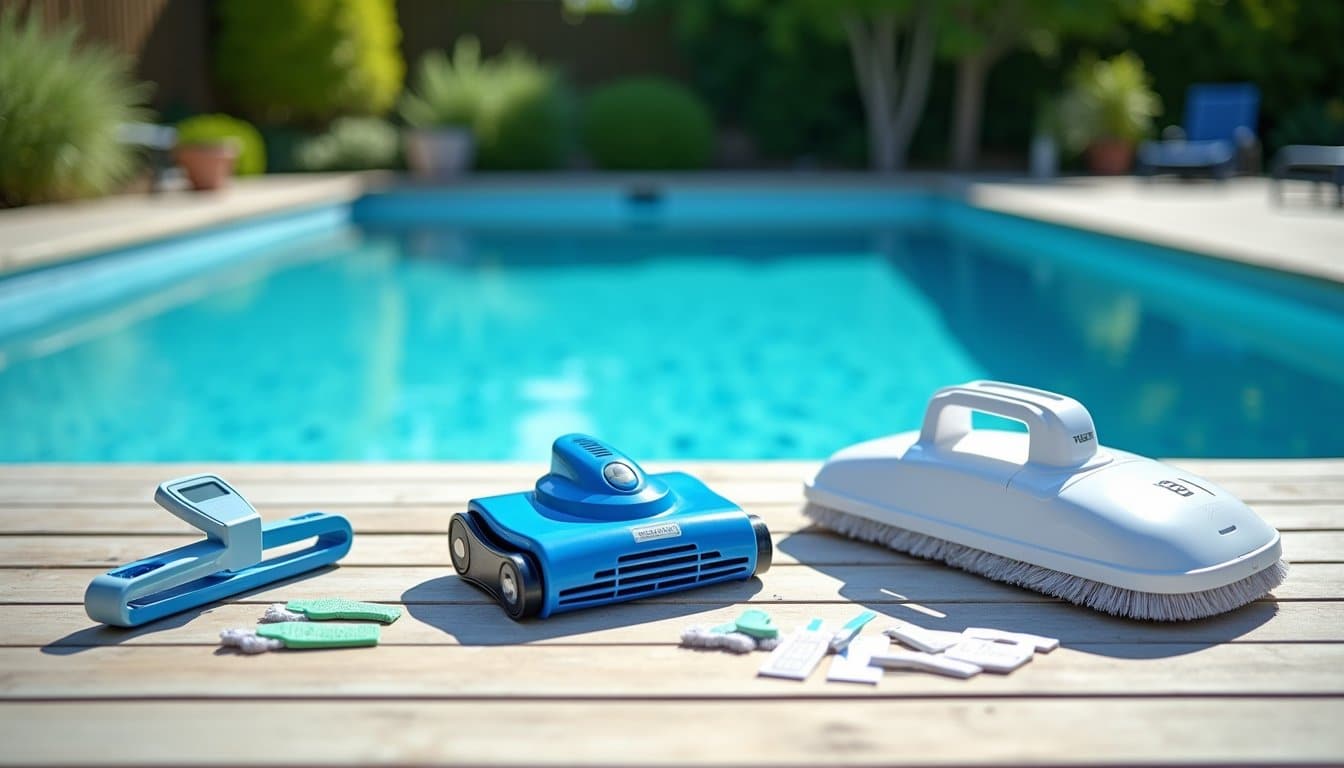
Five essential categories of tools are required for proper fiberglass pool maintenance: surface debris removal, floor cleaning, wall brushing, chemical testing, and specialized cleaning solutions.
For surface debris, you’ll need a skimmer net, leaf rake, and telescoping pole to effectively remove floating waste. Your pool maintenance tools should include both robotic and manual vacuum cleaners for thorough floor cleaning, while soft-bristle brushes and non-abrasive scrubbers are vital for wall maintenance. Essential cleaning equipment must also feature reliable chemical testing instruments, including digital water testing kits and pH strips to monitor water chemistry. Complete your toolkit with specialized solutions like non-abrasive cleaners and fiberglass-safe algaecides that won’t damage your pool’s gel coat. Regular maintenance helps protect your valuable pool investment and prevents costly repairs. Brushing the pool walls and floor twice weekly will help prevent buildup and maintain water quality. Remember to select tools specifically designed for fiberglass surfaces to prevent scratching or deterioration. An automatic pool cover can significantly reduce your cleaning workload by keeping debris out when the pool isn’t in use.
Daily and Weekly Cleaning Tasks
To maintain your fiberglass pool’s pristine condition and extend its lifespan, following a structured cleaning schedule is essential. You’ll need to perform specific daily tasks like skimming surface debris, emptying skimmer baskets, and monitoring pump operation. Weekly tasks involve careful brushing with soft-bristled tools and systematic vacuuming to protect your pool’s delicate surface. Using non-abrasive cleaners helps preserve the gel coat’s integrity while effectively removing dirt and grime. Regular testing and monitoring of water chemistry levels ensures proper sanitization and prevents surface deterioration. Maintaining proper water levels with the pool filled above the skimmer prevents operational issues and ensures efficient debris collection.
| Task Type | Morning | Afternoon | Evening | Night |
|---|---|---|---|---|
| Daily | Skim surface | Check pump | Empty baskets | Visual inspection |
| Weekly | Brush walls | Vacuum floor | Clean deck | Check filters |
| Filter | Monitor PSI | Backwash | Clean parts | System check |
| Area Care | Clear debris | Trim plants | Secure cover | Drain check |
Remember to maintain systematic cleaning patterns and use fiberglass-compatible equipment to prevent surface damage while ensuring thorough maintenance of your pool’s ecosystem.
Proper Chemical Balance and Water Treatment
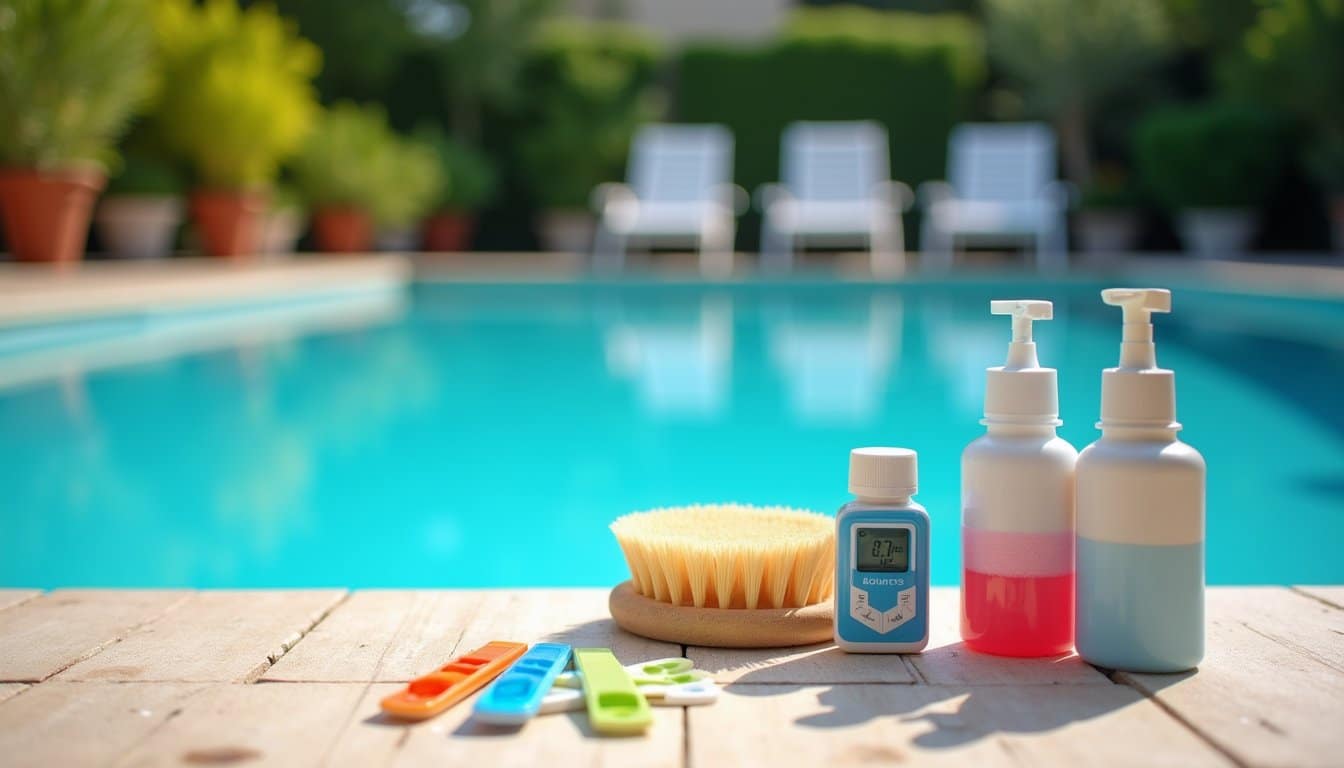
Maintaining proper chemical balance in your fiberglass pool requires consistent monitoring of pH (7.2-7.4), total alkalinity (80-120 ppm), and free chlorine levels (1-3 ppm). Using stain and scale control products is essential for preventing surface damage and discoloration. You’ll need to test pH and chlorine levels weekly, while checking alkalinity every two weeks, making adjustments with appropriate chemicals to keep readings within their target ranges. To protect your chlorine from UV degradation, you’ll also need to maintain cyanuric acid levels between 30-50 ppm, especially for outdoor pools exposed to direct sunlight. Regular attention to calcium hardness levels between 200-400 ppm will help prevent scaling and protect your pool’s fiberglass surfaces. A soft-bristled brush should be used for cleaning to avoid damaging the protective gelcoat layer.
Ph and Alkalinity Testing
Regular pH and alkalinity testing forms the cornerstone of proper fiberglass pool maintenance, as these chemical parameters directly impact both swimmer comfort and pool longevity. You’ll need to check pH levels 2-3 times weekly, maintaining a range of 7.2-7.4, while testing alkalinity at least once per week to guarantee it stays between 80-120 ppm. Using pool test strips provides a quick and simple way to monitor these levels.
For accurate pH testing techniques, use digital testers whenever possible, and always test after significant weather changes or chemical treatments. When measuring alkalinity, take samples from 18 inches below the surface for the most reliable results. You’ll want to test and adjust these levels before closing your pool and after shock treatments, waiting 24-48 hours for chemicals to stabilize. Remember, maintaining proper alkalinity helps buffer pH changes, protecting your fiberglass surface from potential damage. The nonporous finish of fiberglass pools makes maintaining proper chemical balance easier compared to other pool types.
Chlorine Level Management
Three critical aspects define proper chlorine management in fiberglass pools: maintaining ideal levels between 1-3 ppm, choosing the right sanitizing products, and implementing consistent testing protocols.
Regular chlorine testing is essential to prevent damage to your fiberglass surface while ensuring proper sanitization. Maintaining pH below 7.8 helps optimize chlorine effectiveness and prevents surface damage. You’ll need to conduct tests twice weekly during normal use and daily during high-traffic periods. When shock treatment becomes necessary, opt for non-chlorine alternatives like potassium peroxymonosulfate to protect your pool’s finish. Automated dosing systems can help maintain consistent chlorine levels and prevent accidental over-chlorination. Proper filtration and circulation through daily pump operation ensures chlorine is evenly distributed throughout the pool.
- Never exceed 5 ppm chlorine concentration
- Wait 24-48 hours after shock treatment before retesting
- Maintain cyanuric acid levels between 30-60 ppm for peak chlorine stability
Use liquid chlorine instead of calcium hypochlorite for routine sanitization, and always follow manufacturer guidelines for proper dosing based on your pool’s volume and usage patterns.
Stabilizer Balance Requirements
Building upon proper chlorine management, stabilizer balance plays a fundamental role in your fiberglass pool’s chemical harmony. You’ll need to maintain cyanuric acid levels at 50 ppm to protect your chlorine from UV degradation. Most stabilizer sources come from chlorine tablets or pucks, eliminating the need for frequent additions. The manufacturer’s guidelines suggest keeping cyanuric acid levels between 20-50 parts per million for optimal performance.
| Parameter | Target Level | Testing Frequency |
|---|---|---|
| Initial Dose | 50 ppm | After adding |
| Maximum Level | 100 ppm | Quarterly |
| Minimum Level | 30 ppm | Quarterly |
| Daily Loss | 2-3 ppm | As needed |
| Annual Addition | Once | Spring opening |
Test your stabilizer levels after initial dosing and monitor chlorine effectiveness. If you notice rapid chlorine loss, check your stabilizer levels. Don’t exceed 100 ppm, as this can reduce chlorine efficiency. For ideal results, adjust stabilizer levels during your pool’s opening season.
Safe Stain Removal Methods
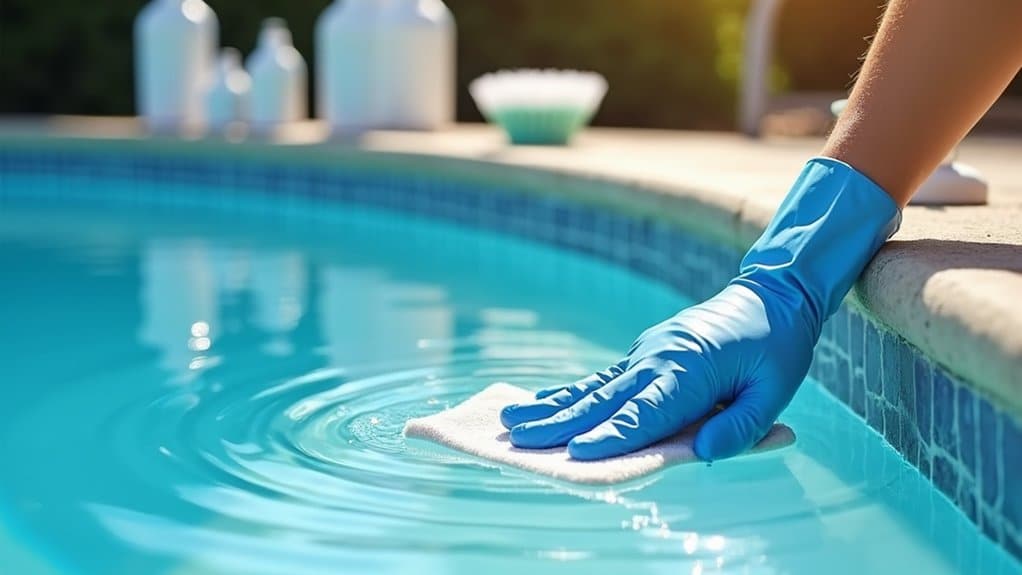
Begin with gentle enzyme-based cleaners and soft-bristle brushes for most stains before escalating to stronger chemical treatments. You’ll need to spot-treat stubborn stains using specific products like Culator for metal deposits or ascorbic acid for dirt accumulation, always testing a small area first. For particularly resistant stains that don’t respond to initial treatments, you’ll want to implement a systematic approach using targeted chemical solutions while maintaining proper pH levels and following manufacturer guidelines for safety. Regular cleaning and prompt removal of debris using approved fiberglass products helps prevent difficult staining issues from developing.
Gentle Cleaning Solutions First
When dealing with fiberglass pool stains, always start with the gentlest cleaning solutions before escalating to stronger treatments. Begin by using safe cleaning products specifically formulated for fiberglass surfaces, focusing on pH-neutral or enzyme-based cleaners that won’t compromise your pool’s gel coat. Apply gentle scrubbing techniques with soft sponges or cloths, working methodically to protect the surface integrity.
- Test the stain’s response to water and gentle agitation first, using a soft-bristle pool brush designed for fiberglass
- Progress to enzyme-based cleaners for organic stains like sunblock oils, applying with non-abrasive materials
- Consider ascorbic acid solutions only if gentler methods prove ineffective, particularly for metal-based stains
Remember to maintain consistent water chemistry throughout the cleaning process, as proper pH levels contribute greatly to successful stain removal without surface damage.
Spot Treatment Best Practices
Three essential principles guide effective spot treatment of fiberglass pool stains: proper identification, targeted application, and surface protection. You’ll need to identify whether you’re dealing with rust, organic matter, or calcium deposits before selecting appropriate spot treatment techniques.
For rust stains, apply metal-eliminating agents directly to the affected area using a soft cloth. When treating organic stains, use enzyme-based cleaners with targeted cleaning movements, working from the stain’s outer edge inward. For calcium buildup, apply manufacturer-approved calcium treatments without scrubbing aggressively.
Dealing With Tough Stains
Removing tough stains from a fiberglass pool requires a systematic approach based on proper identification and targeted treatment methods. Start with proper stain identification and assessment by evaluating the color, texture, and location of the discoloration. You’ll need to determine if you’re dealing with organic matter or metal deposits, as each requires different treatment protocols.
- For organic stains, apply chlorine shock treatment and use enzyme-based cleaners like Pool Magic to break down residues
- For metal stains, use ascorbic acid solutions or specialized metal removers while maintaining proper water chemistry
- For stubborn deposits, place granular chlorine in a nylon stocking and position it directly on the stain for 1-6 hours
Always use non-abrasive cleaning tools to protect your pool’s gelcoat, and consider professional help for deep-set stains that don’t respond to initial treatments.
Preventative Care and Best Practices
Maintaining a fiberglass pool requires a systematic approach to preventative care that safeguards both its aesthetics and structural integrity. Your weekly maintenance routines should include chemical testing, gentle brushing with soft bristles, and consistent debris removal. To maximize your pool’s longevity, implement these preventative tips while avoiding harsh chemicals and abrasive tools.
| Essential Task | Critical Timing |
|---|---|
| Chemical Tests | Weekly |
| Surface Brushing | Twice Weekly |
| Debris Skimming | Daily |
| Filter Checks | Every 3 Days |
| Professional Inspection | Seasonally |
Remember to maintain proper water chemistry levels, using only fiberglass-compatible products. You’ll want to keep your sanitizer levels consistent and use automated systems to guarantee regular filtration cycles. Never use calcium hypochlorite products or abrasive cleaners, as they can permanently damage your pool’s gel coat surface.
Long-Term Maintenance Schedule
A well-structured long-term maintenance schedule builds upon your daily and weekly care routines to protect your fiberglass pool’s beauty and functionality. Your maintenance frequency should align with seasonal changes and usage patterns, ensuring thorough care throughout the year.
- Schedule professional inspections every six months to assess your pool’s structural integrity, including the gel coat condition and mechanical systems
- Plan quarterly deep cleaning sessions for your filtration system, including thorough backwashing and component checks
- Set up monthly chemistry evaluations to track pH trends and adjust your sanitizer strategy accordingly
Don’t forget to document all maintenance activities and readings to identify patterns that might indicate developing issues. By following a consistent long-term scheduling approach, you’ll extend your pool’s lifespan and maintain peak performance while preventing costly repairs.
Frequently Asked Questions
Can I Use a Pool Cover to Reduce Cleaning Frequency?
Yes, you can greatly reduce your pool maintenance frequency by using a proper pool cover. It’ll prevent debris from entering your pool and help maintain stable water chemistry by reducing UV exposure and evaporation. You’ll need less frequent skimming, vacuuming, and chemical adjustments. However, don’t eliminate regular maintenance entirely, you should still monitor water chemistry and clean your pool periodically to prevent potential stagnation issues.
How Often Should I Replace My Fiberglass Pool’s Filter System?
Your filter maintenance schedule depends on your pool’s usage patterns and the type of filter system you’ve installed. For ideal system longevity, replace cartridge filters every 1-2 years, sand media every 5 years, and DE filters every 1-2 years. You’ll know it’s time to replace when you notice consistently high pressure readings (+8-10 psi above normal), decreased filtration efficiency, or visible damage. Always follow your manufacturer’s specific guidelines for replacements.
What Temperature Is Best for Cleaning a Fiberglass Pool?
The ideal cleaning temperature for your fiberglass pool is between 70-84°F (21-29°C). You’ll want to avoid cleaning when temperatures drop below 65°F (18°C), as this can trigger winterizing protocols and affect chemical effectiveness. Temperature effects directly impact your cleaning success – warmer conditions help cleaning solutions work more efficiently, while maintaining these temperatures prevents algae growth. For best results, schedule your cleaning during mid-morning when temperatures are steadily rising.
Do LED Pool Lights Affect the Cleaning Process?
Yes, LED lighting does affect your cleaning process. You’ll need to be extra cautious around these fixtures to maintain cleaning efficiency. When working near LED lights, turn off the power first and use soft, non-abrasive cloths to avoid damaging the housings. Don’t use high-pressure cleaning tools or harsh chemicals near the lights, as they can compromise seals. Schedule your light maintenance to coincide with regular pool cleaning to streamline the process.
Should I Adjust Cleaning Methods During Different Seasons?
Yes, you’ll need to adapt your seasonal maintenance based on weather considerations. During summer, increase your brushing to 2-3 times weekly and run filtration longer to combat algae growth. In winter, you can reduce cleaning frequency to weekly if the pool isn’t active. You’ll want to adjust your chemical balancing schedule accordingly, with more frequent testing during high-use summer months and stabilizing treatments before winter sets in.