

You’ll prevent tree debris from falling into your pool by trimming branches strategically, remove limbs directly overhead and plant trees at least 15 feet away. You should install physical barriers like mesh covers, fences, or dense hedges to deflect airborne debris. You’ll also maintain consistent water chemistry by skimming weekly, testing chlorine levels twice weekly, and treating tannin release from decomposing leaves. These three approaches work together to keep your pool protected year-round, though there’s considerably more depth to optimizing each strategy.
Tree Trimming and Strategic Landscaping
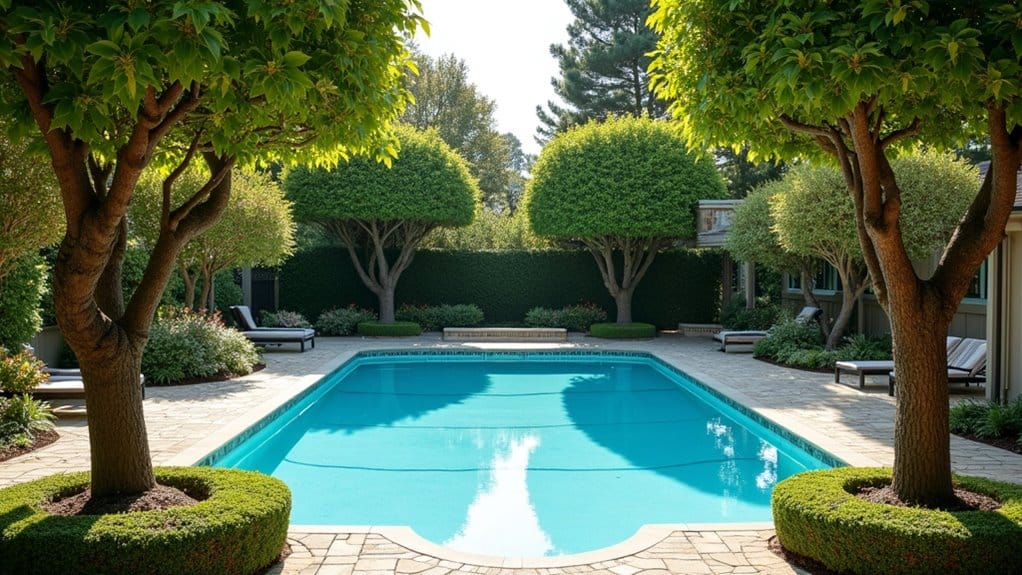
Because overhanging branches and accumulated debris pose the greatest threats to pool cleanliness and structural integrity, you’ll want to prioritize tree maintenance as a core component of your pool care strategy. Schedule trimming every 6 to 12 months to reduce falling leaves and branches greatly. Focus on limb overhang reduction by removing branches directly above your pool initially; this prevents storm damage and pest infiltration. For tree species selection, choose low-debris or evergreen varieties, and plant trees at least 15 feet from your pool edge to minimize root damage and debris risks. Avoid fast-growing or weak-wooded species prone to frequent shedding. Tree roots can grow over 4.5 meters and pose significant risks to pool foundations, walls, and plumbing systems, making strategic distance placement essential. Prune evergreen trees lightly in late winter to maintain their health while minimizing debris accumulation. Regular tree maintenance also enhances the pool’s appearance and safety throughout the seasons. Strategic landscaping with ground cover on the perimeter catches debris before it reaches your pool, reducing maintenance demands substantially.
Installing Physical Barriers and Pool Covers
While strategic tree maintenance forms your initial line of defense, physical barriers and pool covers provide the secondary layer of protection that’ll stop debris from reaching your water. You can deploy structural wind barriers, fences, screens, or dense hedges, positioned strategically to deflect airborne debris before it enters your pool.
For extensive coverage, implement pool covers suited to your climate. Mesh covers drain water while blocking leaves; solid covers seal completely. Automatic covers with automated control systems offer superior protection, reducing evaporation and chemical usage by 35–60% while enabling year-round debris monitoring. Over time, accumulated water and wet fallen leaves can cause damage to your cover, so using a pool cover pump to remove trapped water is essential for maintaining your investment. Installing high-efficiency circulation pumps alongside your covers ensures optimal water clarity and reduces the workload on your filtration system. These pumps also help counteract the effects of decomposing debris by maintaining consistent water circulation, which prevents stagnation and bacterial growth.
Combine these solutions for ideal results. Regular inspections and prompt debris removal from cover surfaces maintain their effectiveness. Many insurance companies offer discounts for certified safety covers, recognizing their dual benefit of preventing both contamination and accidents.
Maintaining Routine Cleaning and Water Chemistry
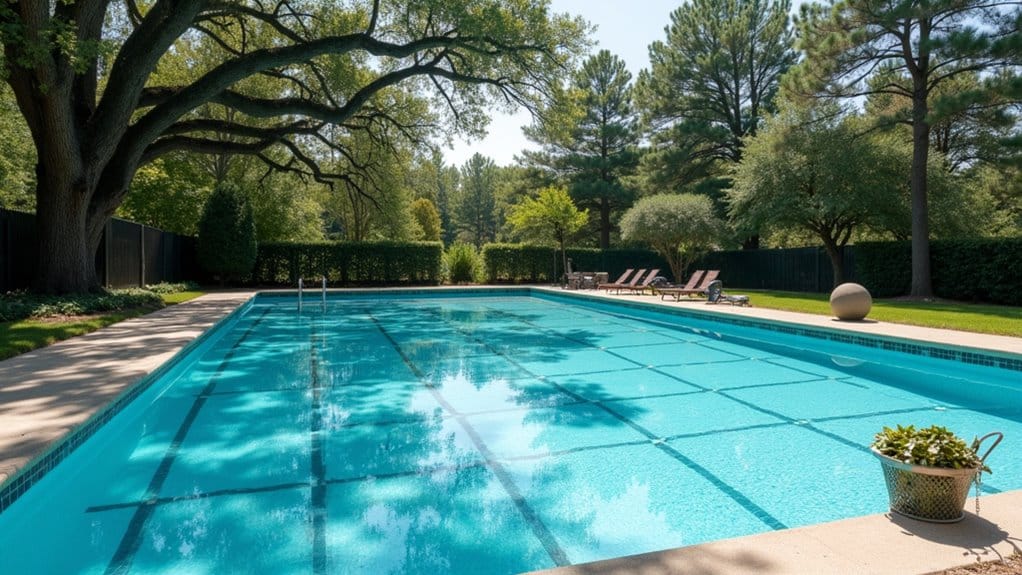
Once you’ve installed physical barriers and covers, maintaining consistent cleaning routines and balanced water chemistry becomes your most critical defense against tree debris contamination. You’ll want to establish weekly skimming, brushing, and vacuuming schedules to remove organic material before decomposition compromises water quality. Regular equipment inspection of filters and baskets prevents circulation disruptions that allow debris accumulation. Addressing tannin release from decomposing leaves is particularly important, as these organic compounds can turn your water murky brown or green while overwhelming your chlorine’s sanitizing capacity. Using a product like E-Z Pool provides a specially blended, multi-tasking formula that proactively manages your swimming pool water and simplifies the chemical balancing process despite debris-induced fluctuations.
Proactive chemical adjustments are just as essential. You should test chlorine and pH levels twice weekly, targeting 1–3 ppm free chlorine and a 7.2–7.8 pH range. Shock your pool biweekly to oxidize organic contaminants. Monthly monitoring of alkalinity, calcium hardness, and stabilizer levels maintains chemical balance despite debris-induced fluctuations.
| Task | Frequency | Purpose |
|---|---|---|
| Manual Skimming | Weekly | Remove surface debris |
| pH/Chlorine Testing | Twice Weekly | Maintain sanitization |
| Pool Shocking | Biweekly | Oxidize organics |
| Filter Backwashing | As Needed | Sustain circulation |
| Alkalinity Testing | Monthly | Preserve chemistry |
Frequently Asked Questions
How Often Should I Schedule Professional Tree Maintenance to Prevent Debris Accumulation?
You should schedule annual professional tree trimming as your baseline maintenance frequency. However, you’ll benefit from adopting a seasonal tree trimming schedule customized to your specific tree species and climate conditions. Implement proactive debris monitoring through quarterly assessments if you’re surrounded by dense canopy coverage. Fast-growing or messy species warrant bi-annual pruning. After storms, you’ll need immediate intervention on overhanging branches. This integrated approach minimizes debris accumulation while protecting your pool infrastructure.
What Types of Trees Shed the Least Amount of Leaves and Debris Year-Round?
You’ll find that evergreen tree varieties like Arborvitae, Leyland Cypress, and Weeping White Spruce shed minimally year-round. These drought tolerant tree species retain their foliage consistently, producing negligible debris. For deciduous options, you’ll want Bur Oak and Sweet Bay Magnolia, which drop substantially fewer leaves than traditional oaks or maples. Broadleaf evergreens such as Boxwood and Nellie Stevens Holly offer dense, persistent coverage with minimal shedding, making them ideal pool-adjacent specimens.
Can Storm Damage Increase Tree Debris Problems, and How Should I Respond?
Yes, storms markedly increase tree debris problems in your pool area. You’ll need to conduct immediate safety inspections using proper tree health assessment methods to identify hazardous limbs and damaged trees. Implement storm damage prevention strategies like professional pruning before high-risk seasons and engaging arborists for structural evaluations. You should prioritize threats to your pool’s integrity, avoid risky DIY removals, and contact experts for major damage. Quick action minimizes ongoing debris accumulation and prevents costly repairs.
What Seasonal Timing Is Best for Tree Trimming to Minimize Peak Shedding Periods?
You’ll achieve excellent seasonal timing by trimming trees in late winter and early spring, before buds break and peak shedding begins. This ideal trimming schedule removes frost-damaged branches and shapes your trees before heavy growth periods. By establishing proper structure early, you’ll dramatically reduce problematic debris development during fall. You should also trim back branches that overhang your pool before autumn arrives, minimizing leaf accumulation during peak shedding months.
Should I Consult a Professional Arborist Before Making Major Landscaping or Tree Removal Decisions?
You should absolutely consult a professional arborist before making major landscaping or tree removal decisions. They’ll assess property risks and evaluate tree health using industry-standard protocols, identifying structural weaknesses and disease you’d miss. Arborists provide data-driven recommendations that protect your investment, minimize liability, and guarantee conformity with local regulations. Their expertise prevents costly mistakes, optimizes long-term landscape value, and safeguards your property against hazards.