



Your pool accumulates debris through external sources, wind, rain, and nearby vegetation, combined with internal circulation failures. Undersized pumps can’t move water effectively, creating stagnant dead zones where debris settles instead of reaching filters. Clogged filtration systems, poor skimmer placement, and air leaks further compromise water flow. Bather load and organic contamination intensify the problem. Understanding these interconnected causes reveals how strategic equipment upgrades and maintenance adjustments can dramatically improve your pool’s clarity.
Wind and Airborne Debris Transport

Because prevailing wind patterns determine where debris accumulates in your pool, understanding these patterns is essential to effective management. You’ll notice debris collects along specific edges where winds push leaves, twigs, and litter into visible lines near your skimmer.
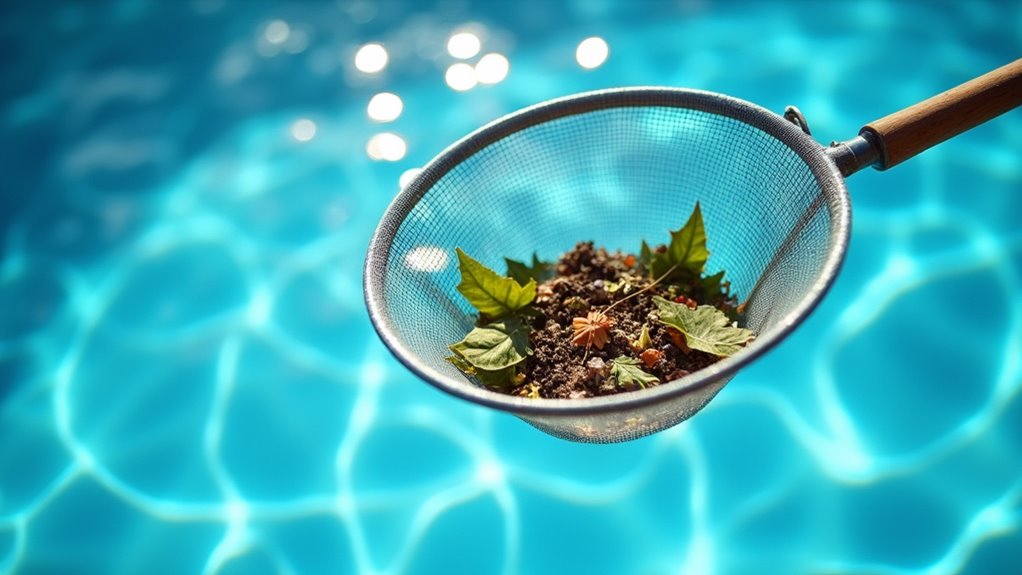
Seasonal wind phenomena, like Santa Ana winds or spring storms, can overwhelm your pool with debris for weeks. Moderate gusts transport dust, pollen, and sand from distant sources, while localized eddies near fences deposit material unevenly across your surface. Motorised covers can quickly extend across your pool surface to protect against wind-blown dust and debris during high-wind events. This organic matter from wind-borne debris depletes chlorine levels, which can compromise your pool’s sanitization effectiveness. A leaf rake with sturdy net is an efficient tool for manually removing accumulated debris before it settles and decays.
Perimeter landscaping changes and surrounding construction projects intensify airborne transport. High-wind events introduce substantial organic matter that increases filtration demands and chlorine consumption. Gusts near structural obstacles create unpredictable swirling patterns, making debris entry difficult to predict. You’ll need proactive monitoring during peak seasons to maintain water clarity and chemical balance.
Heavy Rainfall and Runoff Contamination
While wind carries debris across your pool’s surface, heavy rainfall introduces a more complex and immediate threat: contamination through overflow and runoff. Rain rapidly increases your water level, causing overflow that transports deck debris directly into the basin while diluting treated chemicals with untreated stormwater. Runoff washing from surrounding areas carries soil, fertilizers, and organic matter, introducing phosphates and nitrogen that fuel algae growth. This contamination raises your total dissolved solids (TDS), clouding water and demanding stronger chemical treatment. Atmospheric particulates in raindrops further compromise water chemistry, introducing acids and trace metals. Raindrops form when water vapour attaches to microscopic dust, dirt, pollen, and algae spores, which are then carried into your pool. The acidic nature of rainwater, typically around pH 5.6, significantly lowers your pool’s pH balance and reduces chlorine effectiveness. Seasonal temperature fluctuations compound these issues by affecting evaporation rate impacts on chemical concentration. You’ll need immediate post-storm chemical testing and adjustment to restore proper water balance and safety.
Impact of Nearby Vegetation
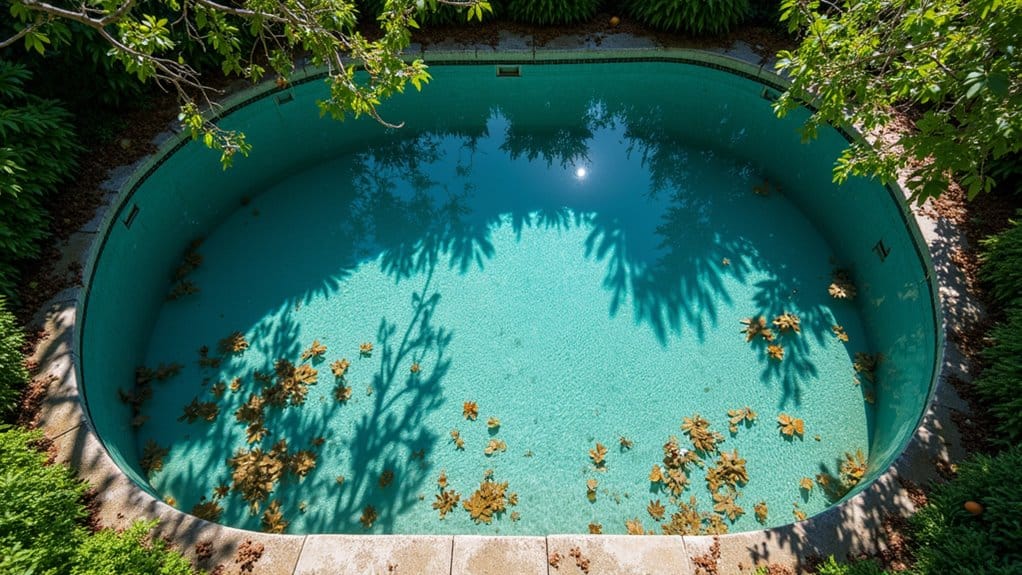
Nearby trees and shrubs pose a substantial threat to your pool’s cleanliness and water chemistry. Deciduous trees shed leaves during autumn, dramatically increasing your debris load, while flowering plants like bougainvillea drop blooms continuously. This leaf litter composition, containing cellulose, lignin, and tannins, decomposes in water, releasing nutrients that fuel algae and bacterial growth. Soil and root dynamics create extra concerns; roots may penetrate pool liners and structures, causing costly damage. Hiring professional pool technicians can efficiently remove debris and address structural damage before it becomes severe.
Organic matter overwhelms your filtration system, clogging skimmers and pump impellers while reducing chlorine effectiveness. Decomposing vegetation alters pH levels, complicating water balance maintenance. The tannins from leaves can discolor water and lead to stubborn staining on pool surfaces. Beyond chemistry issues, you’ll face aesthetic problems: floating debris, sunken leaves in corners, and stubborn stains discoloring pool surfaces. Trimming back tree branches overhanging your pool significantly reduces the amount of natural debris falling into the water. Regular trimming and installing leaf covers significantly reduce these maintenance challenges.
Filtration System Failures and Inefficiencies
Your pool’s filtration system stands as the critical barrier against debris accumulation, yet even well-maintained equipment can fail or underperform in ways that compromise water clarity and quality. Clogged filter media, worn pump seals, and undersized filters all reduce your system’s effectiveness. Irregular backwashing schedules allow debris buildup that restricts water flow and increases pressure readings. Air leaks in suction-side plumbing cause your pump to lose prime, interrupting filtration cycles. Incomplete filtration system checks enable component damage and debris bypass. Chemical imbalances coat filter media, inhibiting its trapping ability. A clogged pump impeller significantly reduces your pump’s efficiency and can cause it to overheat, further compromising your filtration system’s performance. You’ll notice cloudy water, slow returns, and heightened pressure as warning signs. Ensuring your filter is set to the proper filter mode rather than backwash or waste settings prevents debris from bypassing the system entirely. A broken multiport valve can fail to direct water through the filter properly, allowing debris to recirculate back into your pool. Addressing these issues promptly, through regular maintenance, proper equipment sizing, and consistent water chemistry monitoring, restores your system’s debris-removal capacity and maintains pool clarity.
Circulation Problems and Dead Zones
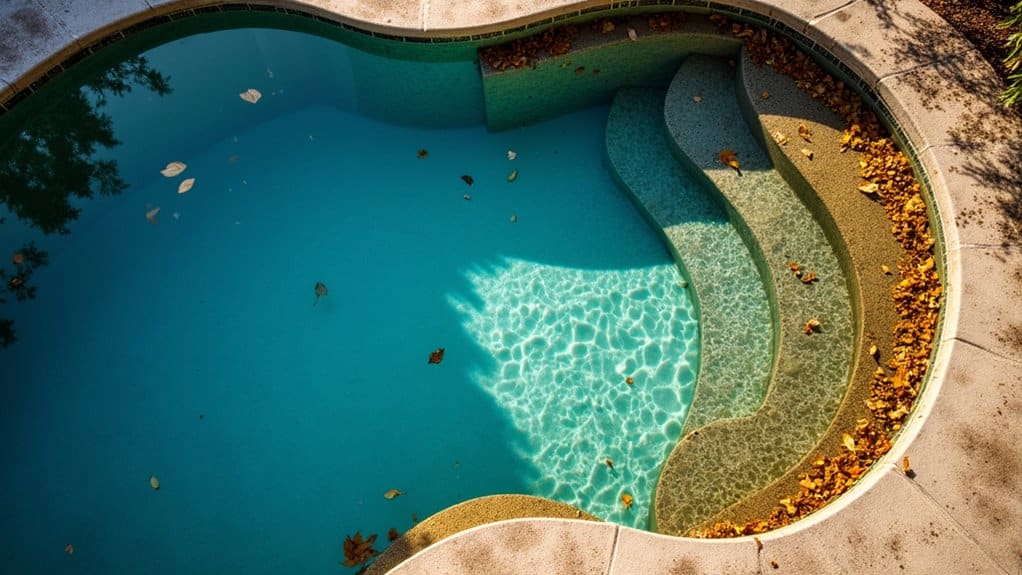
If your pump’s capacity doesn’t match your pool’s volume, you’ll struggle to achieve adequate water turnover, allowing stagnant zones to develop throughout the basin. You’re fundamentally creating pockets where debris settles and contaminants accumulate unchecked, particularly in corners, steps, and areas distant from returns. An undersized pump compounds the problem by forcing you to run equipment longer and work harder while still failing to circulate all regions of your pool effectively. Solutions like floor-level circulation systems push water from the bottom up to eliminate these dead zones more efficiently. Regular filter cleaning and maintenance prevents additional circulation restrictions that can worsen dead zones. Dead spots in irregular pool shapes are particularly prone to trapping debris and require strategic return placement adjustments to ensure consistent water flow.
Undersized Pump Capacity
An undersized pump can’t move enough water to circulate your entire pool effectively, leaving stagnant zones where debris accumulates instead of being drawn in the direction of skimmers and filters. You’ll often find dead spots in corners, behind ladders, and along steps, areas where water movement is weakest.
Incorrect water pressure requirements calculations during installation frequently cause this problem, particularly in pools with irregular shapes or extensive plumbing infrastructure challenges. Low flow rates prevent even chemical distribution and compromise your skimmer’s debris-capture ability. You’ll notice cloudy water, visible debris pockets, and increased manual cleaning demands as a result.
Addressing this issue requires upgrading your pump to match your pool’s actual circulation needs, ensuring adequate flow throughout your entire system.
Stagnant Water Accumulation
Even when your pump has adequate capacity, poor circulation patterns can still allow debris to accumulate in specific areas of your pool. Insufficient water turnover creates dead zones where debris settles instead of reaching your filter. Inadequate jet placement produces stagnant pockets, particularly in corners and recessed sections where water barely moves.
These circulation problems stem from unbalanced plumbing, clogged skimmers, or air leaks that disrupt consistent flow. Stagnant regions become breeding grounds for algae and bacteria since sanitizers don’t distribute evenly. The accumulated debris increases chlorine demand and maintenance requirements extensively.
To combat this issue, adjust your return jet angles strategically and routinely clean skimmer baskets and filters. Professional inspections can identify hidden circulation deficiencies you’d otherwise miss, ensuring thorough water movement throughout your pool.
Bather Load and Swimmer Contamination
Three primary mechanisms drive pool contamination when bather loads increase: microbial shedding, chemical introduction, and organic pollution. You’re introducing microbiological contamination through Enterococci and Staphylococcus aureus shedding, which correlates directly with swimming-related illnesses. Simultaneously, you’re contributing organic compound introduction via urine (30–80 mL per swimmer), sweat, saliva, and personal care products. These contaminants drastically increase chlorine demand, averaging 4,120 mg per bather, while promoting disinfection byproduct formation. Your pool’s conductivity rises as ionizable substances accumulate, and combined chlorine levels increase, reducing water quality despite chemical treatment. Higher bather loads generate 12.1% serious violations during inspections. Pre-swim showers and bathroom breaks substantially diminish contaminant loads, yet public compliance remains low. Implementing effective hygiene education directly mitigates both microbiological and chemical contamination risks.
Pool Equipment and Design Shortcomings
Your pool’s debris problems often stem from equipment inadequacies and structural design flaws that directly compromise water clarity and safety. Substandard pool equipment, undersized filters, weak pumps, or poorly positioned skimmers, fails to capture fine particles effectively. Sand filters miss smaller debris compared to cartridge or DE alternatives, allowing accumulation of fine particulates. Improper pool layout creates dead zones where stagnant water lets debris settle unchecked. Single skimmers in larger pools miss floating debris from multiple directions, while inadequate return jet placement restricts water circulation to vulnerable areas. Damaged filter elements and worn seals enable debris to bypass filtration entirely. Clogged or deteriorated pipes reduce system efficiency further. You’ll notice reduced debris removal rates when equipment doesn’t match your pool’s volume and shape, directly limiting comprehensive system performance.
Inadequate Maintenance and Cleaning Routines
You’ll find that skipping regular skimming and brushing allows debris to accumulate faster than your pool’s circulation system can manage, creating stubborn films on surfaces and promoting algae growth. When you neglect vacuuming and delay filter maintenance, debris clogs your system and reduces water flow efficiency, leaving “dead spots” where contaminants settle. These combined gaps in your cleaning routine compound each other, forcing you to invest considerably more effort in recovery cleanings rather than maintaining manageable weekly schedules.
Skimming and Brushing Neglect
When you neglect regular skimming and brushing routines, you’re fundamentally inviting a cascade of maintenance problems that compromise both water quality and equipment longevity. Skimming removes floating debris before it sinks and decomposes, while brushing eliminates biofilm and algae from surfaces. Without these practices, organic accumulation accelerates water discoloration, reduces sanitizer effectiveness, and increases chemical demand.
Seasonal fluctuations intensify these challenges. Fall leaves, pollen, and storm debris compound accretion rates, demanding more aggressive skimming schedules. High swimmer loads introduce additional contaminants like hair and personal care products, further straining your filtration system.
Neglecting corners, waterline tiles, and circulation dead spots creates algae hotspots and stubborn stains. Inadequate maintenance strategies directly inflate operational costs through increased chemical usage, shortened equipment life, and eventual costly repairs. Regular skimming and brushing prevent these cascading failures.
Vacuuming and Filter Gaps
Most pool maintenance failures stem from inadequate vacuuming and filter care, two interconnected systems that directly determine whether debris settles in the water or gets removed.
You’ll encounter reduced suction when you neglect hose connections integrity or ignore clogged filters. Dirty filters impede water flow, while worn vacuum head operation fails to capture fine particles and algae spores. You must maintain strict cleaning schedules to prevent cumulative debris buildup.
| Issue | Impact | Solution |
|---|---|---|
| Clogged filters | Reduced suction, debris suspension | Weekly cleaning, seasonal replacement |
| Compromised hose connections | Air leaks, power loss | Regular inspection, prompt repair |
| Low suction settings | Incomplete debris removal | Adjust for pool size and model |
You’ll prevent settlement of stubborn debris by scheduling weekly vacuuming, backwashing filters regularly, and inspecting components for damage before major issues develop.
Water Chemistry Imbalances and Algae Growth
Because water chemistry directly controls your pool’s ability to resist contamination, even minor imbalances create ideal conditions for algae proliferation and debris accumulation. When you neglect pH levels or allow chlorine to drop, algae thrives rapidly, trapping organic material and creating biofilm. High temperatures’ role amplifies this problem by accelerating bacterial growth and chemical reactions, intensifying the disrupted chemical balance.
Your pool’s warm environment combined with improper sanitizer levels creates a perfect storm. Algae colonizes surfaces, clogs your filter system, and releases phosphates that fuel further microbial activity. This debris-algae feedback loop overwhelms your filtration’s effectiveness, leaving you with cloudy water and persistent contamination.
Prevent this cycle by maintaining pH between 7.2–7.8 and consistent sanitizer levels through regular testing. Prompt chemical correction stops algae before it establishes itself and compounds your debris problems.
Health and Equipment Consequences of Debris Buildup
Beyond compromising water chemistry, accumulated debris creates a cascade of health risks and equipment failures that extend far beyond cloudy water. You’ll face pathogenic contamination from E. coli, Pseudomonas aeruginosa, and chlorine-resistant bacteria that cause gastrointestinal and skin infections. The spread of airborne spores from mold and mildew triggers heightened respiratory risks, particularly for asthmatic individuals. Your pool equipment suffers significant strain as debris clogs filters and pumps, reducing circulation efficiency and accelerating corrosion of metal components.
| Consequence | Impact | Duration |
|---|---|---|
| Pathogenic Growth | Gastrointestinal infections | Immediate |
| Airborne Spores | Respiratory irritation | Ongoing |
| Filter Clogging | Reduced efficiency | Progressive |
| Equipment Corrosion | Costly repairs | Long-term |
| Water Discoloration | Deterred usage | Persistent |
Frequently Asked Questions
How Can I Prevent Animals and Insects From Entering My Pool?
You’ll discourage wildlife access by installing physical barriers like a 4-5 foot pool fence with minimal ground clearance or solid safety covers. You should also maintain proper water chemistry (chlorine 1.0-3.0 PPM) to deter insects and trim surrounding vegetation. You can employ motion-activated sprinklers and remove standing water nearby. You’ll strengthen effectiveness by combining these strategies, fencing, environmental management, and regular maintenance, creating a holistic defense against unwanted pool visitors.
What’s the Best Pool Cover Type to Minimize Debris Accumulation?
You’ll find solid pool covers most effective for minimizing debris since they block virtually all leaves, twigs, and dirt. However, you should prioritize proper pool cover maintenance and seasonal cover adjustments to optimize their performance. If you prefer easier handling, mesh safety covers work well while still blocking larger debris. For frequent users, automatic covers provide motorized convenience. Your choice depends on your pool’s location, usage frequency, and maintenance commitment level.
How Often Should I Replace My Pool Filter Media?
Your filter media replacement interval depends on your system type. You’ll need to replace sand every 3–7 years, cartridge filters every 2–3 years, and glass media every 5 years for ideal efficiency. DE filters require replacement every 4–6 weeks during peak season. Your filter media maintenance schedule should account for usage intensity and backwashing frequency. Regular maintenance extends lifespan and prevents channeling that reduces filtration effectiveness.
Can Contaminated Pool Toys Reintroduce Algae After Treatment?
Yes, you can absolutely reintroduce algae through contaminated toys. Algae spores persist in seams and porous surfaces, surviving desiccation and resisting standard sanitization. When you reuse uncleaned toys, you’re reseeding bacteria growth and organic matter buildup that’ll rapidly colonize your treated pool. You’ll prevent recontamination by thoroughly disinfecting toys with bleach solution, scrubbing textured areas, and air-drying completely before pool use.
What’s the Ideal Bather Load to Maintain Water Clarity?
You’ll maintain ideal water clarity by keeping your bather load at the lower end of the recommended range for your pool’s volume and filtration capacity. Bather load factors, including instantaneous occupancy and daily usage patterns, directly impact your water chemistry balance. You shouldn’t exceed capacity limits, as heavy loads introduce organic contaminants that cloud water and spike chlorine demand. You’ll preserve clarity by monitoring pH, alkalinity, and sanitizer levels daily while matching your turnover rate to actual bather loads.