

You’ll encounter white debris from five primary culprits. Initial, your filter media can crack or collapse, releasing particles. Second, chemical imbalances, high pH or alkalinity, cause mineral precipitation. Third, organic biofilm accumulates on surfaces. Fourth, you’re overdosing algaecides or calcium products. Fifth, UV exposure degrades your fiberglass gel coat. Each source demands specific solutions, and understanding which one affects your pool determines your next steps.
Filter Media Breakdown
When your pool’s filtration system fails internally, white debris accumulates because the filter media itself, whether sand, cartridge material, diatomaceous earth, or glass beads, breaks down and enters your pool water.
Sand filters deteriorate when laterals crack or standpipes wear, allowing particles to bypass filtration. Cartridge filters fail due to torn end caps, pleated core collapse, or substandard replacement parts that disintegrate prematurely. D.E. filters release powdered media when grids tear or manifolds misalign during reassembly. Glass media filters shed particles from cracked laterals or physical bead breakdown. Worn sand grains create larger gaps that reduce filtering effectiveness and allow media particles to pass through into the pool.
Internal system pressure from undersized systems or blockages accelerates component failure across all filter types. Additionally, insufficient backwashing allows debris accumulation that stresses media and causes breakage. Moving the valve handle while the pump runs can damage the spider gasket, creating leakage pathways that allow media to escape into the pool. Most media requires replacement every 3–8 years depending on type and usage conditions. Sand loses its jagged edges as it ages, becoming increasingly ineffective at trapping dirt and debris.
Chemical Imbalance and Precipitation
Chemical imbalances in your pool create ideal conditions for white debris formation through precipitation and scaling. When your pH exceeds 7.6 or alkalinity surpasses 120 ppm, you’re pushing water in the direction of its mineral saturation point. Calcium carbonate precipitates out, coating surfaces with white deposits. Low pH, conversely, corrodes fiberglass gel coat, leaving chalky residue. Inadequate circulation compounds these problems by allowing minerals to settle in stagnant zones rather than staying suspended. High calcium hardness accelerates precipitation, especially in saltwater systems where elevated pH naturally intensifies scale formation. In saltwater pools, scale fractures into white flakes as the salt cell reverses polarity, creating the characteristic debris many pool owners encounter. Oxidation and UV damage are also primary contributors to gel coat degradation that intensifies white residue visibility. Using enzymes in pools can further help by breaking down organic debris that contributes to water balance problems and mineral precipitation. Test your water chemistry twice weekly, maintaining pH between 7.2–7.6 and alkalinity between 80–120 ppm. Keep calcium hardness within 200–400 ppm. These parameters prevent saturation and keep minerals dissolved, eliminating white debris at its source.
Organic Residue and Biofilm
While mineral precipitation creates visible white deposits through chemical imbalance, organic matter introduces a different, and often more persistent, source of debris and contamination.
You accumulate organic debris from bathers, environmental sources, and decomposing material. This organic buildup promotes biofilm formation on pool surfaces, which consumes chlorine rapidly and reduces disinfection effectiveness. You’ll notice persistent haziness, white flakes, or scum at the waterline, often biofilm residue rather than mineral deposits. Surface tension allows this organic debris to remain suspended at the water’s surface rather than settling to the bottom. Biofilms can harbor bacteria like Pseudomonas aeruginosa, which thrive in warm aquatic environments and pose health risks to swimmers.
You can combat this by implementing enzyme treatments weekly to break down organic nutrients. Maintain proper oxidation levels and employ repeated shock chlorination to eliminate chlorine-resistant bacterial colonies. You should also use water clarifiers and aeration to disperse debris. Regular physical scrubbing after draining accelerates stubborn biofilm removal. Combined management strategies effectively prevent biofilm establishment and restore water clarity.
Algaecide and Chemical Overuse
Have you ever noticed white foam suddenly coating your pool’s surface or fine powder settling on the bottom after treating for algae? You’re likely overdosing algaecide or other chemicals. Linear quats and metal-based algaecides foam excessively when overused, while calcium products create white flakes that accumulate rapidly. Exceeding weekly dosing recommendations causes these residues to persist for days as chemicals break down slowly.
Chemical imbalances compound the problem. When you add excessive calcium-based sanitizers, hardness impacts water chemistry greatly, promoting precipitation. Inefficient circulation allows undissolved particles to settle rather than filter properly. You’ll need to test your water chemistry immediately; pH should stay 7.4-7.6, alkalinity 80-120 ppm, and calcium hardness 200-400 ppm. High cyanuric acid levels can also reduce chlorine effectiveness and contribute to persistent residue accumulation. Gradual chemical supplementation and pre-dissolving products before pool introduction prevent these issues effectively. Particles precipitating out of water due to chemistry imbalances indicates that immediate corrective action is necessary to restore balance.
Surface Degradation and Water Hardness
Beyond chemical dosing errors, your pool’s structural integrity itself can generate white debris through surface degradation and water hardness issues.
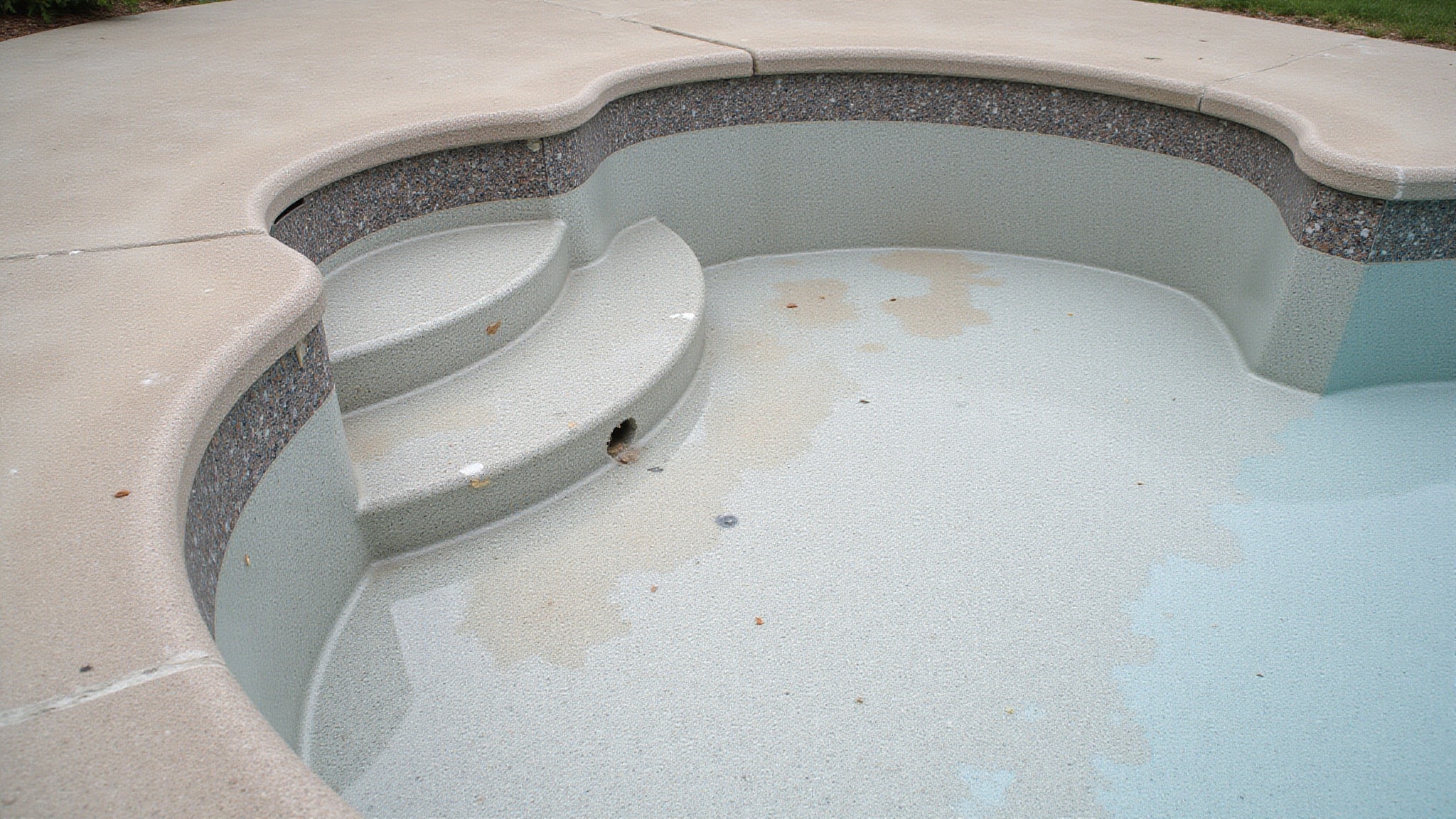
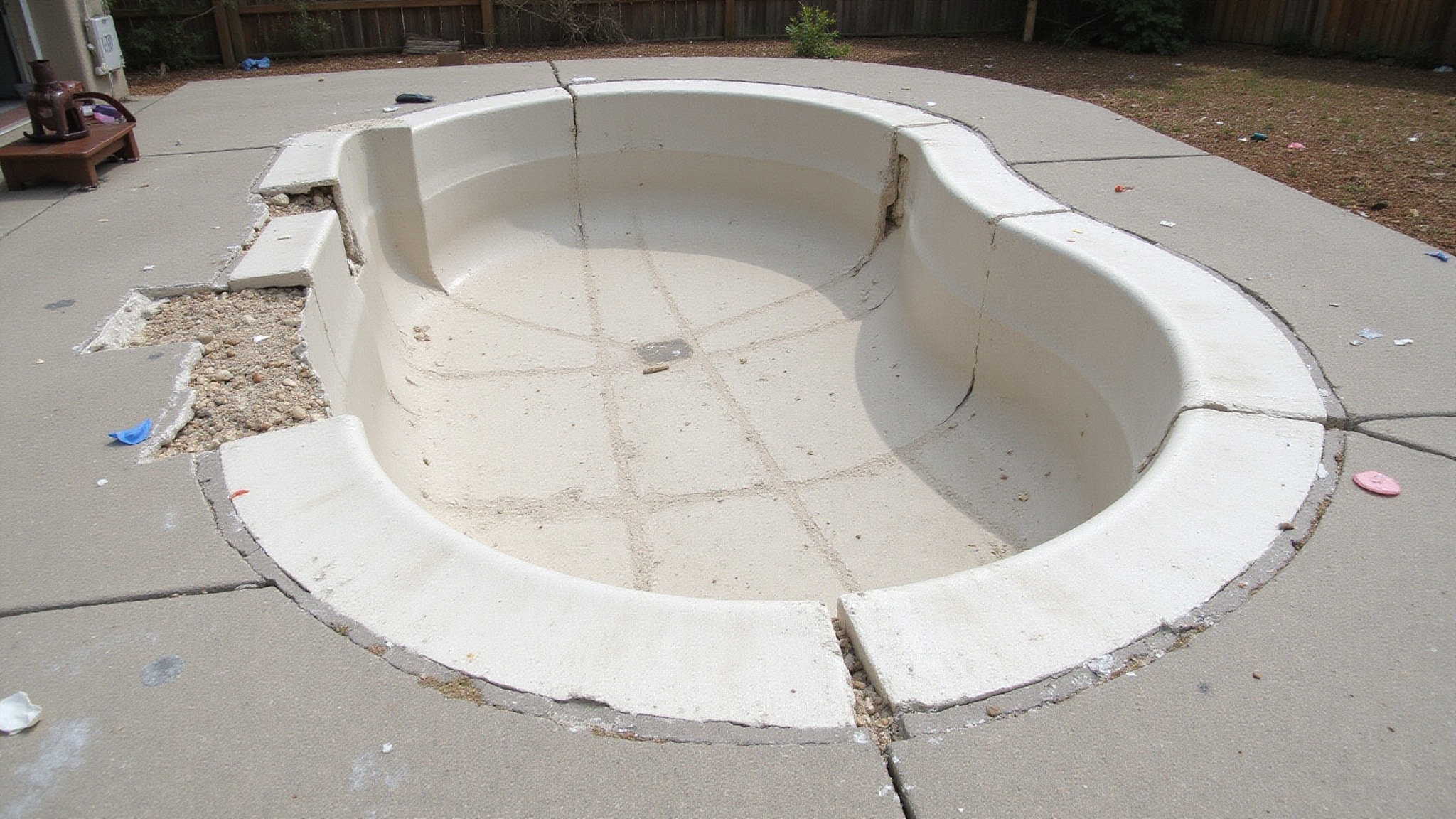
UV light exposure breaks down your fiberglass gel coat, releasing chalky white residue that accumulates in your water. Simultaneously, high calcium hardness, exceeding the recommended 200–400 ppm range, precipitates calcium carbonate, forming white dust and scaling deposits across surfaces and equipment. Carbonate clouding can also occur when calcium carbonate becomes oversaturated in the water, creating additional white debris independent of cement composition or pool finish type. Monthly preventative scale and stain control treatment can help minimize these accumulations before they become problematic.
Address these issues systematically:
- Install protective covers to block 99% of UV radiation
- Test water chemistry twice weekly to maintain balanced pH and alkalinity
- Monitor calcium hardness levels consistently
- Replace water or apply chemical sequestrants when hardness exceeds safe thresholds
Gel coat deterioration combined with calcium scaling creates a compounding problem. Without intervention, you’ll face increasingly difficult maintenance cycles and costly surface repairs.
Frequently Asked Questions
How Quickly Do White Flakes Typically Appear After Pool Chemicals Are Added?
White flakes typically appear within hours to three days after you add pool chemicals, depending on your water circulation patterns and chemical concentration levels. You’ll notice immediate precipitation if you’ve overdosed calcium-based products or created pH imbalances. High pump speeds accelerate flake visibility, while stagnant areas develop them slower. If you’re experiencing cloudy water within hours of dosing, you’ve likely disrupted your water’s equilibrium, requiring prompt testing and adjustment.
Can White Debris in Pools Pose Health Risks to Swimmers?
Yes, white debris poses indirect health risks to you and other swimmers. While the debris itself isn’t directly toxic, it indicates poor sanitation that allows harmful bacteria and pathogens to thrive. You’re vulnerable to skin irritation, ear infections, and gastrointestinal illness. Neglected pools facilitate algae growth and microbial proliferation resistant to chlorination. You shouldn’t swim until you’ve addressed chemical imbalances, shock-treated the water, and verified filtration effectiveness through testing.
What Is the Most Cost-Effective Way to Remove White Flakes Permanently?
You’ll achieve permanent white flake removal by combining chemical balance adjustments with consistent pool filter maintenance. Start by testing and correcting your pH, alkalinity, and calcium hardness to ideal ranges. Next, install a sequestering agent monthly to keep calcium dissolved. Ultimately, maintain your filter through regular backwashing and cleaning. You’ll prevent flake recurrence by addressing root causes rather than repeatedly removing debris.
How Often Should Pool Water Be Tested to Prevent White Debris?
You should test your pool water daily for pH and chlorine during peak season to maintain proper chemical balance. Weekly testing of alkalinity and calcium hardness supports regular maintenance checks that prevent white debris formation. Monthly metal and TDS testing completes your systematic approach. You’ll retest immediately after heavy rain or parties. This rigorous schedule catches imbalances early, stopping calcium precipitation and scale buildup before they create costly problems requiring expensive equipment repairs or replacements.
Are Certain Pool Types or Sizes More Prone to White Flake Problems?
Yes, your pool’s vulnerability to white flakes depends on its finish and size. White plaster pools show debris more visibly than aggregate finishes. Larger pools accumulate flakes in low-flow areas like corners. Your pool lining materials matter greatly; vinyl liners resist debris buildup better than rough plaster surfaces. In addition, pool filter efficiency directly impacts flake persistence. Sand filters allow more fine particles to escape compared to cartridge or D.E. systems, heightening visible white debris problems in bigger pools with inadequate filtration.