



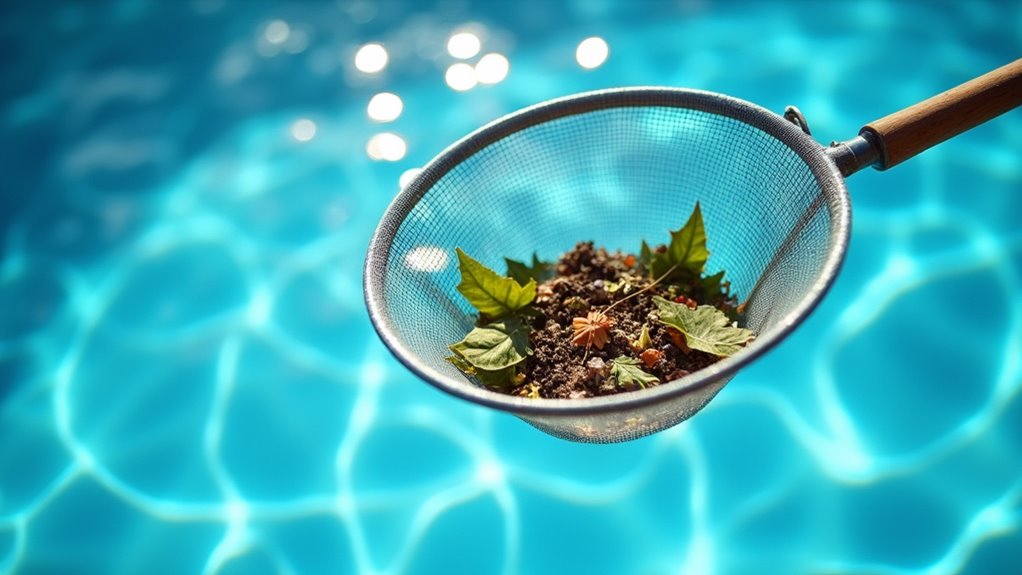

Yes, you’re likely dealing with pool debris, organic matter like leaves, inorganic particles like dust, and swimmer-introduced contaminants continuously accumulate in your water. This debris compromises water quality by disrupting chemistry, clogging filters, and allowing bacteria and algae to proliferate. Beyond cloudy water and odors, you’re facing legitimate health risks including pathogenic contamination and chemical imbalances. Effective management requires daily skimming, regular brushing, and consistent filter maintenance to protect your swimmers and maintain crystal-clear water.
Common Types of Pool Debris

Your pool’s water can accumulate five distinct categories of debris, each requiring different removal strategies. Organic material composition includes leaves, flower petels, twigs, and grass clippings from surrounding vegetation. Inorganic particles like dust, sand, and pollen create visible contamination levels that cloud your water. Swimmers introduce body oils, hair, sunscreen, and cosmetics that increase organic load. Animal and insect debris, flies, spiders, bird feathers, and pet hair frequently enter your pool environment. Ultimately, pool equipment fragments from broken toys, filter media residues, and lost personal items accumulate over time. Understanding these five categories helps you identify contamination sources and implement targeted cleaning protocols. Regular skimming, filtration maintenance, and chemical balancing address each debris type effectively, maintaining ideal water clarity and hygiene standards. Bacteria and pathogens can harbor in debris, creating potential health hazards for swimmers. Tennis balls can be used to absorb natural and synthetic oils from swimmers that would otherwise create a greasy film on the water surface. Using enzymes extracted from benign bacteria provides an effective long-term solution for breaking down organic debris that traditional filtration alone cannot remove.
How Debris Compromises Water Quality
Because debris continuously accumulates in your pool, it fundamentally compromises water quality across multiple critical dimensions.
As organic matter decomposes, you’re dealing with water chemistry disruption that lowers pH and reduces chlorine effectiveness. Simultaneously, contaminant accumulation occurs through heavy metals and dissolved solids that exceed safety guidelines. Studies analyzing swimming pools have documented that heavy metals like mercury, arsenic, and cadmium consistently exceed drinking water safety standards, creating serious health risks for regular swimmers.
Your filtration system struggles under the load:
- Clogged skimmer baskets and filters restrict water circulation
- Reduced filtration capacity allows microorganisms to proliferate
- Bacteria and algae growth creates cloudy water and unpleasant odors
- Chemical imbalances lead to skin and eye irritation
These issues escalate maintenance demands while shortening equipment lifespan. The visible degradation, discolored water, floating particles, and persistent cloudiness signals inadequate maintenance and discourages pool use. Tannins from decomposing leaves can further stain pool surfaces and create additional aesthetic problems that compound your water quality concerns. You’re facing both immediate safety concerns and potential regulatory compliance violations.
Why Debris Accumulates in Your Pool
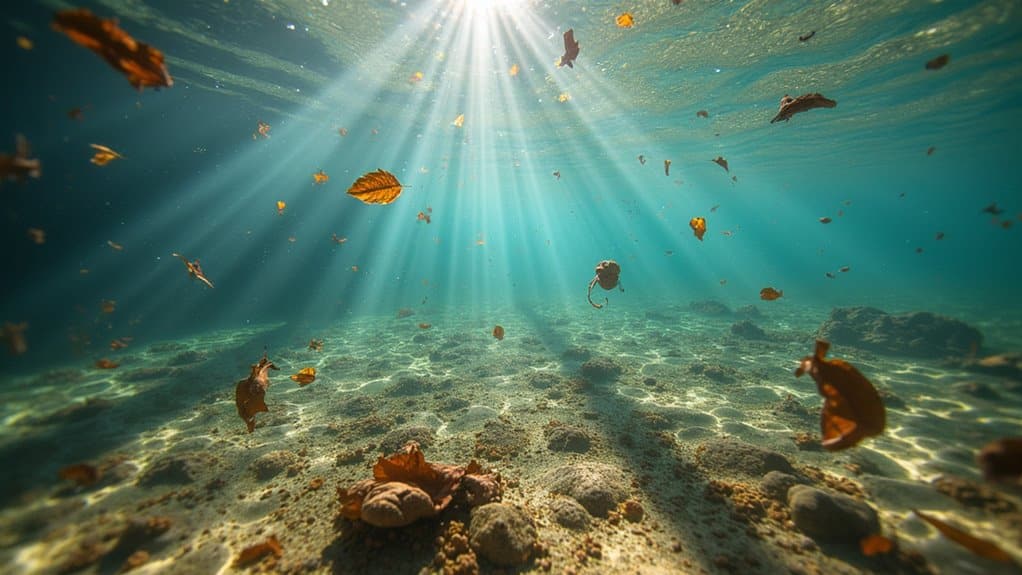
Multiple environmental, mechanical, and biological forces work simultaneously to populate your pool with unwanted debris. Wind and rainfall drive leaf litter deposition from surrounding vegetation, while proximity to trees intensifies this influx. Wildlife contamination from birds and insects introduces feathers and droppings directly into your water.
Your pool’s maintenance systems also contribute to accumulation. Clogged filters, damaged skimmers, and overflowing baskets fail to capture debris efficiently, allowing particles to persist and settle. Frequent manual removal compounds this problem as organic matter builds up over time. Without regular equipment inspection and filter backwashing, clogged components restrict water flow, enabling debris to accumulate rather than be properly filtered out.
Pool design factors matter too. Inadequate barriers, poor drainage, and proximity to gardens or landscaping increase exposure to environmental contaminants. Moreover, decomposition of accumulated organic material releases tannins and acids, creating conditions that encourage further debris adhesion and biofilm formation throughout your pool.
Health and Safety Risks of Floating Debris
While pool debris might seem like a minor aesthetic nuisance, it poses serious health and safety risks that shouldn’t be overlooked. Floating debris creates multiple hazards that compromise both swimmer safety and water quality:
Pool debris poses serious health and safety risks that compromise swimmer safety and water quality far beyond mere aesthetics.
- Pathogenic contamination – Organic matter harbors E. coli, Cryptosporidium, and Giardia, triggering gastrointestinal outbreaks and skin infections. Dead insects and bird droppings are particularly problematic as breeding grounds for harmful bacteria and parasites. According to CDC data, over 200 pool-associated outbreaks from 2015 to 2019 affected more than 3,600 people with skin infections, respiratory issues, ear infections and gastrointestinal distress.
- Hidden injury hazards – Sharp debris causes cuts and punctures; algae accumulation creates slippery surfaces increasing fall risks.
- Chemical imbalances – Debris reacts with chlorine, forming chloramines that irritate eyes, skin, and respiratory systems while overloading filters.
- Vector breeding – Stagnant, debris-laden pools attract mosquitoes carrying West Nile Virus and Zika.
You’ll experience reduced swimmer enjoyment and amplified infection transmission risks. For pool owners seeking guidance on debris management, over 150 help pages are available through the site’s comprehensive resources. Children and immunocompromised individuals face heightened vulnerability to serious illness from contaminated water.
Effective Strategies to Keep Your Pool Clean
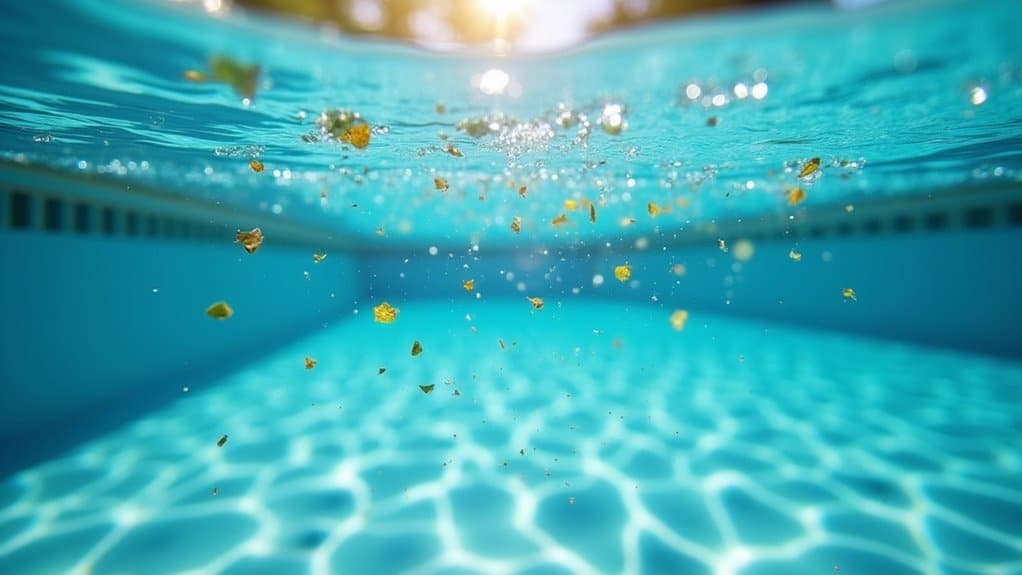
Now that you understand the serious health and safety risks posed by pool debris, it’s time to implement a detailed pool cleaning schedule. Start by skimming surface debris daily and brushing walls weekly to prevent algae formation. Vacuum regularly to eliminate sediment and cloudy water. Empty skimmer baskets frequently and backwash filters consistently to maintain peak performance.
Enhance your strategy by monitoring water circulation through proper filter runtime, aim for 10–12 hours daily. Strategically position return jets to eliminate dead spots where debris settles. Consider robotic cleaners for thorough debris removal and smart chemical monitors for continuous water balance. Water in motion helps prevent stagnation and keeps your pool cleaner overall. Testing and adjusting chemical levels weekly ensures safe swimming conditions and prevents both algae growth and skin irritation. A water testing kit is essential to understand your pool water composition and verify that all parameters are within safe ranges.
Finally, maintain chemical levels with appropriate chlorine, pH, and shock treatments. Use algaecide weekly and pool flocculant when needed to aggregate suspended particles, ensuring crystal-clear water.
Frequently Asked Questions
How Often Should I Clean My Pool Filter to Prevent Debris Buildup?
You should establish a regular maintenance schedule based on your filter type. Cartridge filters need cleaning every 2–6 weeks, while sand and DE filters require backwashing monthly. Monitor your pressure gauge, clean whenever it rises 8–10 psi above baseline. Proper filter cleaning prevents debris accumulation, maintains water clarity, and protects your pump. Increase frequency during heavy use, storms, or high debris periods. Following manufacturer guidelines guarantees proficient filtration efficiency and prolongs your filter’s lifespan.
What Is the Best Type of Pool Cover for Debris Prevention?
You’ll find that solid pool covers offer the strongest debris prevention, blocking all particles completely. However, if you’re seeking flexibility, permeable pool covers like mesh or hybrid options work well; they’re easier to manage while still catching debris. For maximum convenience, you should consider automatic pool covers, which provide motorized protection and reduce your maintenance workload greatly. Your choice depends on your climate, budget, and whether you prefer lightweight or substantial solutions.
Can Debris Damage Pool Equipment or Require Costly Repairs?
Yes, debris can severely damage your pool equipment and trigger costly repairs. When you neglect debris accumulation impact, you’re risking pump failure, filter clogs, and corrosion of metallic components. You’ll face equipment replacement costs ranging from hundreds to thousands of dollars. Blocked impellers strain your pump, while decomposing organic matter compromises water chemistry, accelerating corrosion. You’ll need frequent maintenance to prevent expensive breakdowns and extend your system’s lifespan.
How Long Does It Take for Debris to Affect Water Chemistry?
Debris affects your pool’s chemistry within hours as chemical reactions begin immediately upon entry. Organic matter rapidly increases chlorine demand, while fine particulates like pollen alter pH and total dissolved solids in a single filtration cycle. You’ll notice water turbidity rising quickly, especially in warm conditions. Bacteria and algae can proliferate within 24–48 hours if you don’t remove debris promptly, destabilizing your sanitizer levels and compromising water quality considerably.
Should I Drain My Pool if Debris Accumulation Becomes Severe?
You shouldn’t drain your pool immediately when debris accumulates severely. Instead, consider your pool drainage schedule and assess potential filter upgrades initially. Try skimming, vacuuming with the waste setting, and using flocculants to manage debris. Backwash filters regularly to maintain efficiency. Only drain when these methods fail, water chemistry becomes unsafe, or debris overwhelms your filtration system completely. Draining poses structural risks and environmental concerns, so exhaust alternatives before proceeding.