


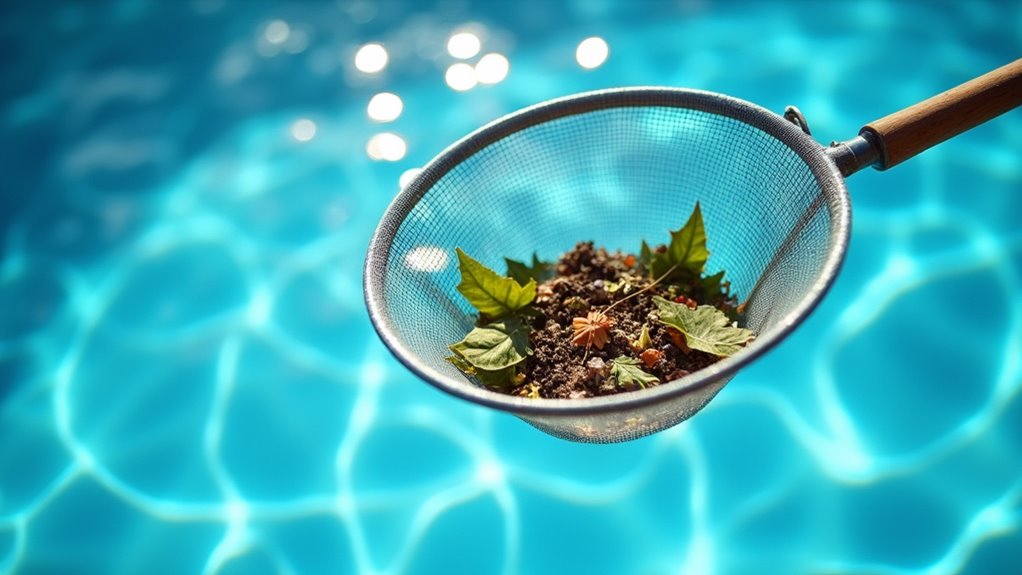

Protecting your pool during cold seasons prevents costly damage that can reach up to $15,000 in repairs. You’ll need to maintain proper pH levels (7.2-7.8), guarantee adequate chlorination (1-4 ppm), and implement freeze protection strategies for equipment. Regular winter maintenance prevents structural deterioration, equipment failure, and water quality issues. By following essential winterization steps and monitoring key metrics, you’ll shield your investment and discover proven strategies for long-term pool preservation. Additionally, preparing pools for harsh winters means using a quality winter cover, adding antifreeze to plumbing, and securing all accessories. These steps protect your pool and make spring opening easier.
The Hidden Costs of Winter Pool Neglect
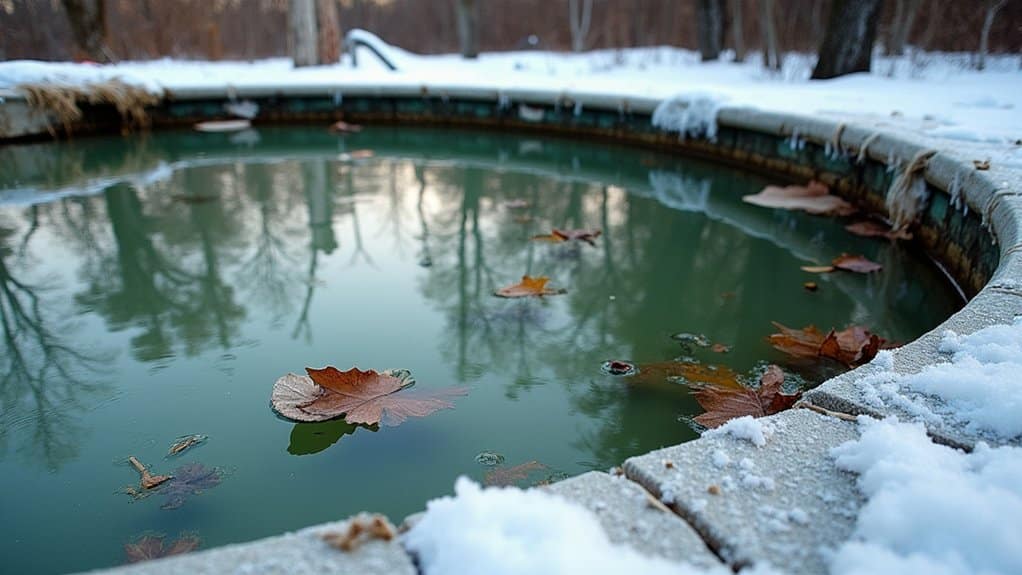
While many pool owners focus on immediate maintenance costs, neglecting your pool during winter months can lead to exponentially higher expenses down the road. Without proper winter preparation, you’ll face significant repair bills across multiple areas. Surface damage alone can require resurfacing costs between $7,000-$15,000, while equipment failures from frozen pipes and burned-out pumps often exceed routine maintenance expenses. You’ll also encounter increased chemical costs from algae growth and pH imbalances, requiring specialized treatments and shock chemicals. Stagnant water can create ideal breeding conditions for disease-carrying mosquitoes, posing health risks to your family. Using a high-quality cover made from durable materials helps protect against harsh weather conditions and extends your pool’s lifespan. Continuous operation of pool pumps and filtration systems for 6-12 hours daily drives up electricity costs significantly. Utility bills spike from inefficient heating systems and excessive water loss through evaporation. Most critically, your property value can decline due to visible deterioration and potential structural issues. Proper pool maintenance during cold seasons isn’t just about preservation it’s about protecting your investment from these costly consequences.
Essential Steps to Protect Your Pool Equipment
Protecting your pool equipment from winter damage requires a systematic approach that builds on proper winterization practices. Effective winter preparation combines thorough drainage management, protective insulation, and regular maintenance checks to safeguard your pool’s critical components.
- Start by implementing an all-encompassing drainage strategy to clear water from pumps, filters, and heaters while lowering water levels below skimmer lines to prevent freeze damage to your equipment’s plumbing systems. Using an air compressor system helps eliminate any remaining water trapped in equipment lines. A thorough backwash of filters removes lingering dirt and algae that could cause problems during storage. Adding a drop light beneath equipment tarps provides essential warmth during snowy conditions.
- Install proper insulation by wrapping exposed pipes with foam or heat tape, securing weatherproof covers over outdoor equipment, and sealing any gaps that could let cold air penetrate.
- Maintain seasonal checks throughout winter by monitoring water circulation, clearing snow and ice accumulations promptly, and inspecting for potential leaks or equipment issues that could worsen in freezing conditions.
Smart Ways to Prevent Structural Damage
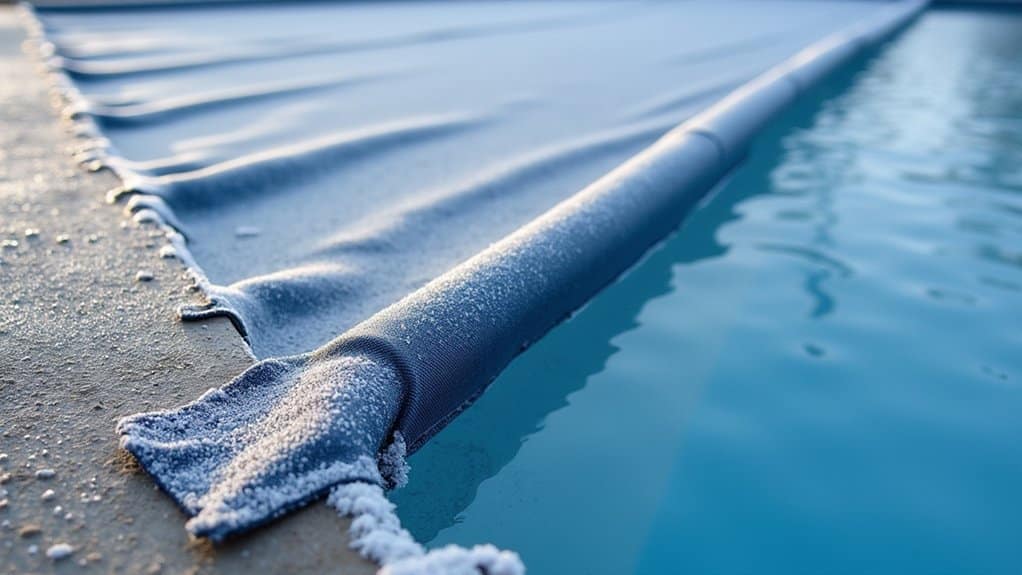
To effectively shield your pool’s structural integrity during harsh winter conditions, you’ll need to implement a thorough defense strategy that addresses multiple vulnerable points. Focus on managing water levels below skimmer lines to minimize ice expansion pressure, and guarantee proper weight distribution across your pool’s surface. Solid safety covers provide superior protection against accidental falls while maintaining aesthetic appeal. Applying a protective tile sealant before winter helps prevent moisture damage and extends the life of pool surfaces.
| Protection Area | Critical Action | Prevention Method |
|---|---|---|
| Pool Walls | Lower water level | Reduces ice expansion stress |
| Pool Cover | Install air pillows | Distributes weight evenly |
| Supporting Structure | Remove accessories | Prevents collapse risk |
Don’t overlook the importance of removing floating accessories and securing adjacent structures that could compromise your pool’s structural integrity. Install weighted cover systems to evenly distribute snow loads, and maintain regular inspections of your pool liner for potential weak points that could fail during freeze-thaw cycles.
Maintaining Water Quality Through Cold Months
Even during cold months, maintaining proper water chemistry remains essential for preventing long-term pool damage and costly spring repairs. You’ll need to monitor pH levels between 7.2-7.8 and maintain alkalinity at 80-120 ppm while keeping chlorine levels at 1-4 ppm for effective sanitization. Neglecting these tasks can lead to costly winter repairs that could have been easily prevented. A professional pool service can effectively monitor chemistry levels throughout the winter season. Installing a winter pool cover helps block debris and sunlight that can affect water chemistry balance.
For ideal algae prevention and water quality maintenance through winter, follow these critical steps:
- Test water chemistry weekly, adjusting chemical levels according to APSP guidelines for cold-climate protocols
- Apply winter-specific algaecide treatments regularly, combined with enzyme products that break down organic contaminants
- Maintain proper chlorine stabilization while following manufacturer instructions for chemical sequencing to avoid neutralization
Remember to conduct final testing one week before closure and keep detailed records of all chemical applications for reference during spring reopening.
Planning Ahead for a Hassle-Free Spring Season
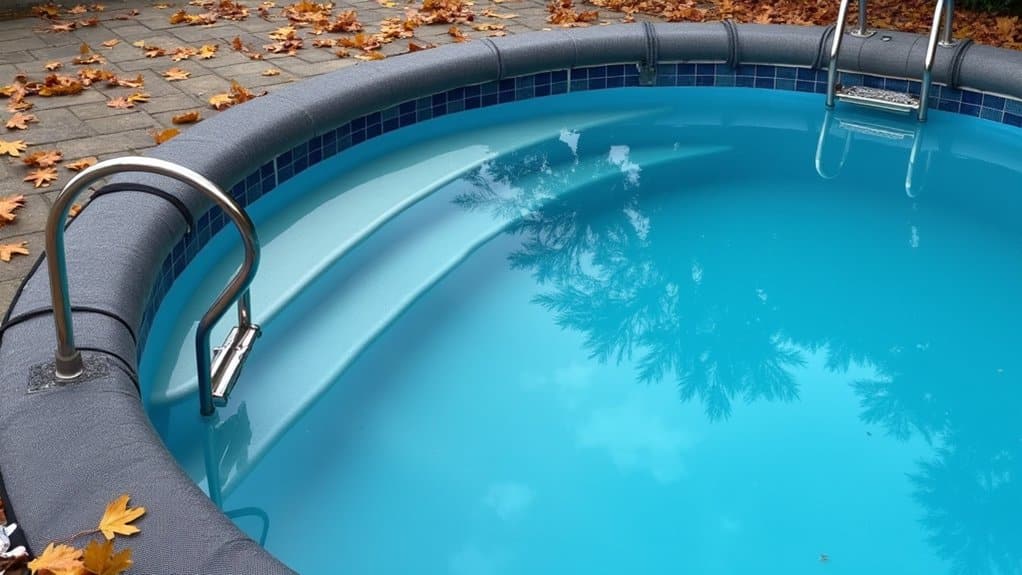
Proper winter preparation directly impacts your pool’s spring reopening success. By implementing thorough spring preparations now, you’ll greatly reduce hassle-free maintenance when warmer weather returns. Start by performing a detailed pre-winter cleaning, including skimming, vacuuming, and scrubbing all surfaces to prevent stubborn contaminant buildup. A high-quality pool cover provides essential protection from debris throughout winter months. Setting up freeze alerts on your phone helps you stay proactive about protecting your pool during dangerous temperature drops.
Store your equipment properly by cleaning and drying filters, pumps, and accessories before placing them in storage. You’ll want to apply winter-specific algaecides to inhibit growth during dormant months. Verify your winter cover fits perfectly and maintains proper tension to prevent sagging. Running your pump for a few daily hours during winter helps prevent equipment freezing and water stagnation. Don’t forget to balance your water chemistry, keeping pH between 7.2-7.6, and adjust alkalinity and calcium hardness levels before closing. These preventive steps will protect your investment and make your springtime pool opening much more manageable.
Frequently Asked Questions
Can I Use My Pool During Winter if I Have a Heated System?
Yes, you can use your heated pool during winter, but you’ll need to maintain strict temperature control between 78°F-82°F. You must run your circulation system continuously when temperatures drop below 40°F to prevent freezing. Install a solar cover to retain heat and reduce energy costs. Remember to monitor water chemistry more frequently during winter usage, and make certain your pipes are properly insulated to protect your heating system’s efficiency.
How Often Should Pool Covers Be Cleaned During Winter Months?
You’ll need to perform pool cover maintenance at least weekly during winter months. Remove debris using soft brushes or brooms whenever you notice accumulation to prevent damage to the cover material. After major snow or ice storms, increase your winter debris removal frequency to daily inspections. For automatic covers, you should schedule monthly professional cleaning services. Don’t forget to clean melted snow and ice regularly using a cover pump to prevent water buildup.
What Temperature Triggers the Need to Start Winterizing My Pool?
You’ll need to start the winterization process when nighttime temperatures consistently drop below 65°F (18°C) and your pool water temperature falls below 60°F (15.5°C). Don’t wait until freezing temperatures arrive, as this can damage your equipment. Monitor these pool temperature thresholds carefully, especially during early fall. In warmer regions, you’ll have more flexibility, but in colder climates, you should begin preparations as soon as these temperature markers are reached.
Are There Special Considerations for Saltwater Pools in Winter?
Yes, your saltwater pool needs specific winter precautions. You’ll need to remove and store the salt cell to prevent freeze damage, and you should test salt levels using strips rather than electronic meters in cold weather. For saltwater maintenance, keep your chemistry balanced before closing, with pH between 7.2-7.8 and lower salt levels to prevent scaling. Don’t forget to drain all equipment thoroughly and use non-toxic antifreeze in plumbing if you’re in a freezing climate.
Should I Maintain Different Chemical Levels for Winter Compared to Summer?
Yes, you’ll need different chemical levels for winter compared to summer. During winter chemical balance, raise your pH to 7.6-7.8 and increase alkalinity to 150-175 ppm to counteract stagnation effects. You can maintain lower chlorine levels since there’s reduced demand and UV exposure. For proper seasonal maintenance, test your LSI before winter, adjusting total hardness and other parameters to prevent surface damage during extended periods of cold water stagnation.