

Winterizing your inground pool requires five essential steps to prevent damage and guarantee a smooth spring opening. Start by balancing and cleaning the water chemistry, then lower the water level and clear all plumbing lines. Next, add winter chemical treatments including shock and algaecide. Protect your equipment by draining and covering all components. Ultimately, install a secure winter cover with proper tension. Following these critical steps in detail will safeguard your investment.
Key Takeaways
- Test and balance pool water chemistry, including pH, alkalinity, and calcium hardness levels before adding winterizing chemicals.
- Lower water level below skimmer opening and blow out all plumbing lines using an air compressor or shop vacuum.
- Add winter chemical treatment including shock, algaecide, and winterizing kit to prevent algae growth during winter months.
- Remove and store pool accessories, drain equipment completely, and protect remaining components with weatherproof covers.
- Install winter pool cover securely with proper overlap, using cable systems or cover locks and water bags for stability.
Balance and Clean Pool Water
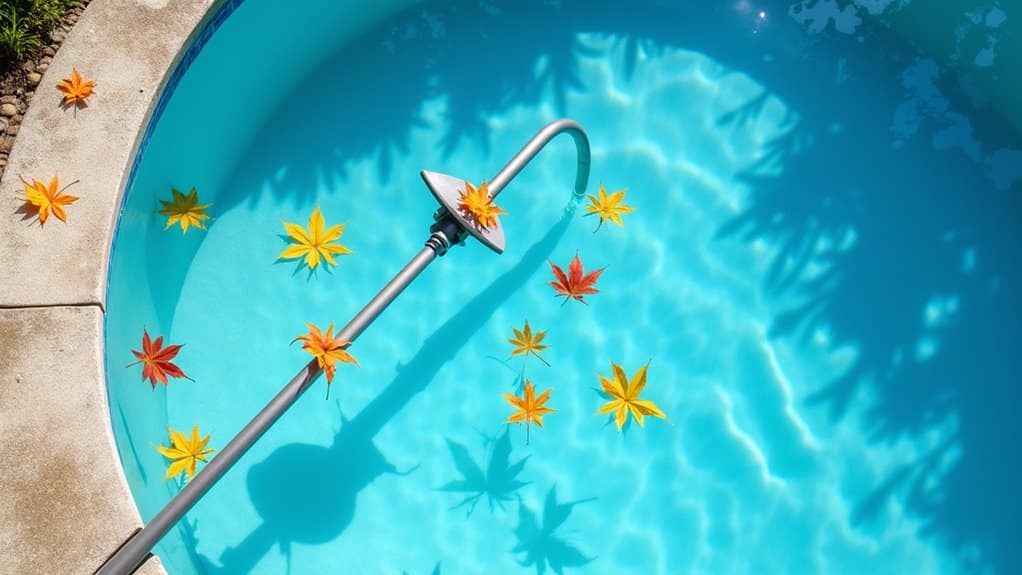
Before closing your pool for winter, test and adjust the water chemistry to prevent staining, scaling, and algae growth during the off-season. Begin water testing by checking pH levels (7.2-7.6), total alkalinity (80-120 ppm), and calcium hardness (180-220 ppm). Adjust these levels with appropriate chemicals as needed.
Once you’ve achieved proper chemical balance, shock your pool with chlorine to eliminate any remaining bacteria or contaminants. Wait until chlorine levels return to normal (1-3 ppm) before proceeding. Next, vacuum the pool thoroughly to remove debris and brush the walls and floor to prevent algae formation. Add a winter algaecide according to manufacturer specifications. Ultimately, test the water one last time to verify all parameters remain within recommended ranges before covering your pool.
Lower the Water Level and Clear the Lines
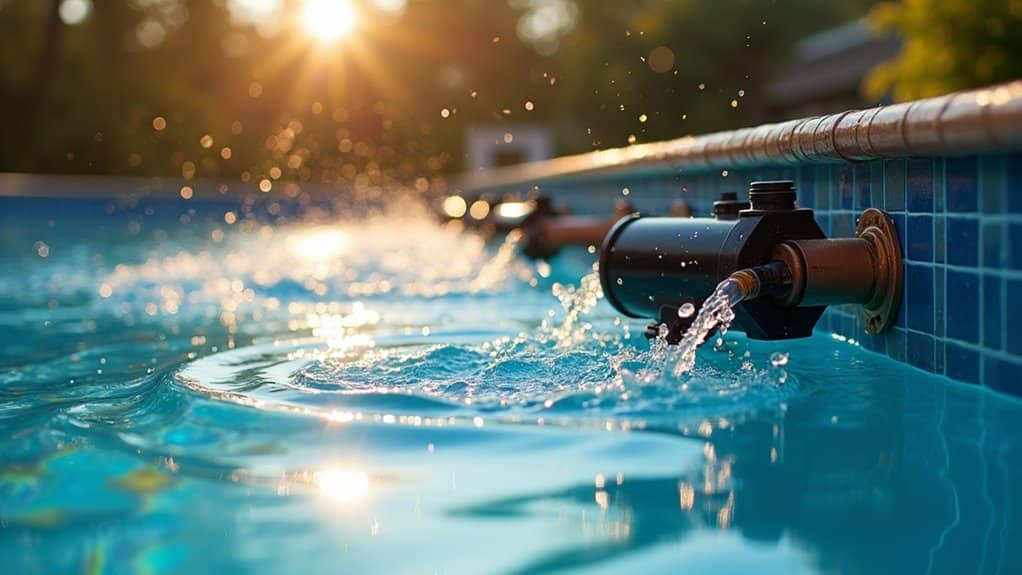
With your pool water now properly balanced and sanitized, you’ll need to reduce the water level and protect your plumbing system from freeze damage. Lower the water to approximately 4-6 inches below the skimmer opening using a submersible pump or your pool’s drain system.
For proper plumbing maintenance, remove all drain plugs from your pump and filter system. Using a shop vacuum or air compressor, blow out all water from the plumbing lines, starting at the pump and working your way through each line. Pay special attention to the skimmer lines, return lines, and main drain. Once you’ve cleared all lines, install winterizing plugs in the return jets and skimmer. If you’re using an air compressor, don’t exceed 40 PSI to avoid damaging the plumbing components.
Add Winter Chemical Treatment
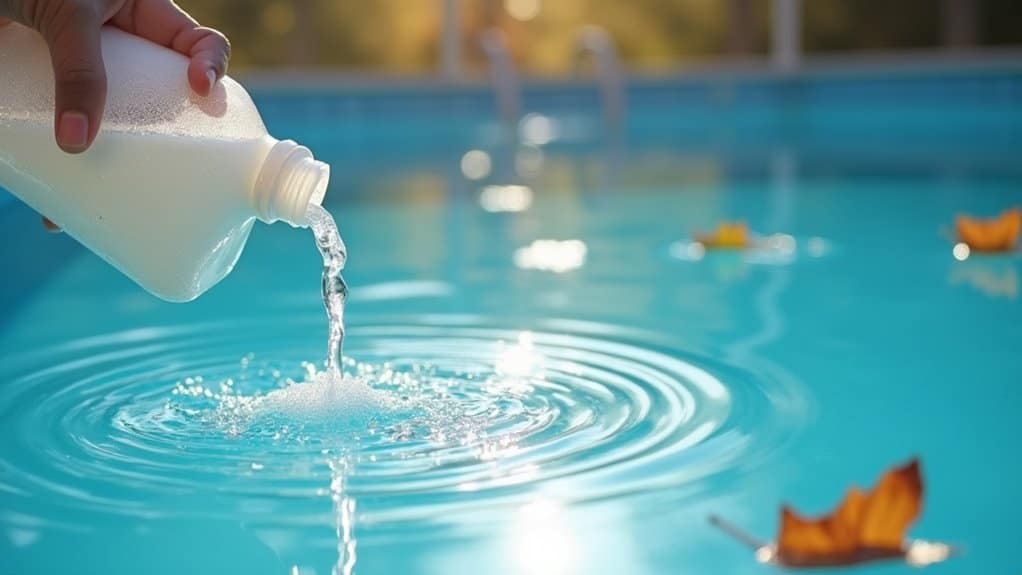
Proper winter chemical treatment requires three essential products: a winterizing chemical kit, an algaecide, and a winter shock treatment. You’ll need to apply these winter chemicals in the correct sequence to guarantee your pool remains balanced throughout the cold season.
| Chemical Product | Purpose | Treatment Timing |
|---|---|---|
| Winter Shock | Eliminates bacteria | 24 hours before closing |
| Algaecide | Prevents algae growth | After shock treatment |
| Winter Kit | Maintains pH balance | Ultimate step before cover |
Begin by distributing the shock treatment evenly throughout the pool. Once the shock has circulated for 24 hours, add the algaecide according to the manufacturer’s dosage instructions. Ultimately, apply your winter chemical kit, which typically includes scale preventers and stain inhibitors. Keep the pool pump running during this process to guarantee proper chemical distribution.
Protect Pool Equipment and Accessories
Once you’ve balanced your pool’s chemistry, protecting your equipment and accessories becomes critical for preventing winter damage. Start by draining all water from your pool pump, filters, heater, and related plumbing lines to prevent freeze damage. Remove drain plugs and store them in your pump basket for safekeeping.
Proper heater maintenance includes draining the heat exchanger completely and disconnecting the gas line if you have a gas heater. For any equipment that can’t be removed, use weatherproof covers to shield against snow, ice, and debris. Don’t forget to clean and store removable accessories like ladders, diving boards, and handrails in a dry location. Label all disconnected parts and take photos of your setup to make spring reconnection easier. Consider using pool antifreeze in plumbing lines for added protection.
Install and Secure Winter Pool Cover
After completing the equipment winterization, installing a high-quality winter cover stands as your pool’s primary defense against harsh weather and debris. Proper cover installation guarantees your pool’s protection throughout the dormant season while minimizing spring cleanup efforts.
For successful cover maintenance and longevity, follow these essential steps:
- Position the cover evenly across the pool, allowing a 2-inch overlap on all sides, and secure it using heavy-duty cable and winch systems or cover locks designed for your specific pool type.
- Install water bags or cover blocks at regular intervals along the perimeter, filling them to 75% capacity to prevent over-expansion during freezing conditions.
- Monitor your cover’s tension weekly, removing accumulated snow or water using a pool cover pump to prevent sagging and potential damage to the cover’s structural integrity.
Frequently Asked Questions
When Is the Best Time of Year to Start Winterizing My Pool?
You’ll want to start your fall maintenance when nighttime temperatures consistently drop to around 65°F (18°C), typically in early to mid-autumn. Don’t wait until freezing temperatures arrive, as this compromises your winter preparation efforts. Begin the process when you’re no longer using your pool regularly but while it’s still warm enough to work comfortably. In most regions, September to early October is the ideal timeframe for winterizing.
How Much Does Professional Pool Winterization Typically Cost in My Area?
Professional pool service rates for winterization typically range from $200 to $500, though local rates can vary considerably based on your specific market and pool size. You’ll find that prices in competitive urban areas tend to be lower, while rural locations may charge more due to travel time. Most pool service companies offer package deals that include chemicals, covers, and equipment prep. It’s best to contact 2-3 local providers for accurate quotes.
Can I Partially Winterize My Pool if We Have Mild Winters?
While partial winterization can work in mild climates, it’s not recommended due to unpredictable weather patterns. You’ll need to maintain proper chemical balance and run your pump during freezing temperatures to prevent damage. The minimal cost savings from partial winterization don’t outweigh the risks of equipment damage. If temperatures drop unexpectedly, you won’t have adequate protection for your pool’s plumbing and mechanical components. Full winterization remains your safest option.
What Happens if I Forget to Winterize My Inground Pool?
If you don’t winterize your inground pool, you’re risking severe pool damage when temperatures drop below freezing. Water expansion can crack your pipes, damage your pump and filter system, and even cause structural damage to your pool walls. You’ll face considerably higher maintenance costs in spring, potentially thousands of dollars in repairs. Your pool’s surface finish might also deteriorate, and debris accumulation can lead to stubborn stains and algae growth.
How Long Does the Pool Winterization Process Usually Take to Complete?
The pool winterization timeline typically takes 2-4 hours to complete when you’re familiar with the process. You’ll spend most of this time lowering the water level, adding winterizing chemicals, and blowing out the plumbing lines. If you’re new to pool maintenance, plan for 4-6 hours to guarantee you’ve properly completed each step. The timing can vary depending on your pool’s size and the complexity of your plumbing system.