
You’ll need to perform essential pool maintenance tasks at specific intervals for best results. Test chemical levels daily, empty skimmer baskets, and run the pump 10-12 hours. Complete weekly tasks like pH balancing, alkalinity testing, and shock treatments. Monthly duties include thorough filter cleaning and extensive chemical analysis. Deep clean filters every 3-4 months when pressure increases 8-10 PSI. Understanding the complete maintenance schedule will guarantee your pool’s longevity and safety.
Daily Essential Pool Tasks for Crystal Clear Water
To maintain crystal clear pool water, performing essential daily maintenance tasks is crucial for preventing contamination and equipment issues. You’ll need to focus on two primary areas: surface debris management and water chemistry monitoring.
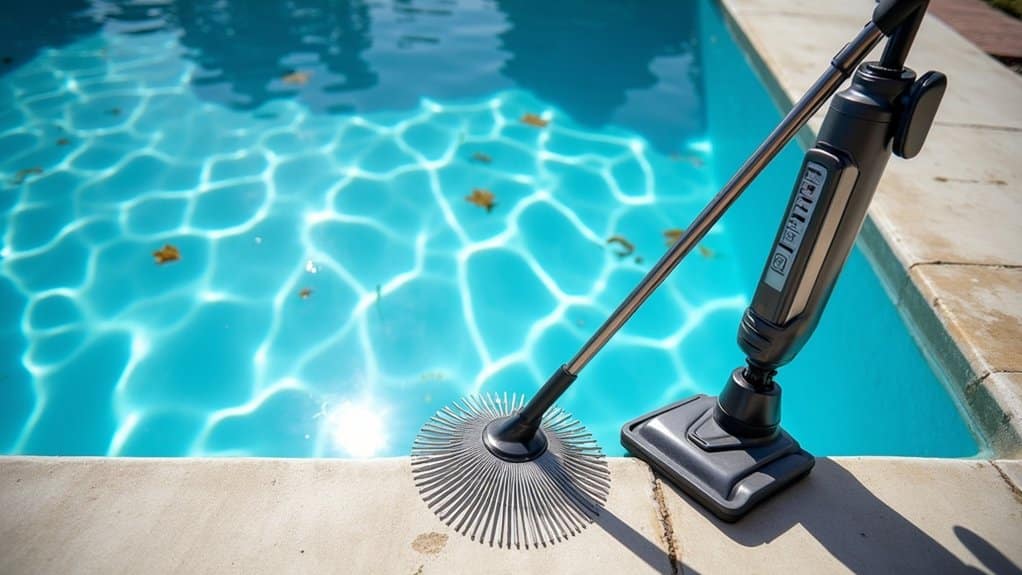
Start each day by conducting thorough daily skimming using a net to remove leaves, insects, and floating debris. Empty the skimmer basket when it’s full to maintain proper water circulation. Running your pool pump for proper circulation time of 10-12 hours daily ensures optimal water distribution. While managing surface debris, inspect your equipment, checking the pump, filter, and skimmer for any signs of damage or unusual operation. Maintaining proper water level checks daily helps ensure optimal circulation system performance. Remember to inspect all safety equipment each day to maintain compliance with regulations and ensure swimmer protection.
For water quality, test pH, alkalinity, and chlorine levels daily, making chemical adjustments based on the results. Use reliable testing kits to guarantee accuracy, and follow manufacturer guidelines when balancing chemicals. Brush pool walls and floor to prevent algae buildup, paying special attention to corners and areas with poor circulation.
Weekly Chemical Balance Routines
Building upon daily maintenance, your weekly chemical balance routine forms the backbone of proper pool sanitation. You’ll need to test pH, Total Alkalinity, and Calcium Hardness 2-3 times weekly using reliable test strips or digital meters for maximum testing accuracy. Empty pump baskets regularly to ensure proper chemical circulation throughout your pool system. If you encounter issues accessing online pool maintenance resources, be aware that some sites may have security blocks in place to protect their content.
Make chemical adjustments as your readings indicate: raise alkalinity with sodium bicarbonate when below 80 ppm, lower it carefully with muriatic acid when above 120 ppm. Maintain pH between 7.4-7.6 using soda ash or muriatic acid. Weekly shock treatments are essential to eliminate organic contaminants and restore chlorine effectiveness. A proper chemical balance will help prevent skin and eye irritation for swimmers while maintaining optimal pool conditions.
Don’t forget to add algaecide preventatively, especially during sunny conditions. Keep chlorine levels at 1-3 ppm, and verify calcium hardness monthly, adjusting as needed to prevent equipment damage and surface issues.
Monthly Deep Cleaning Requirements
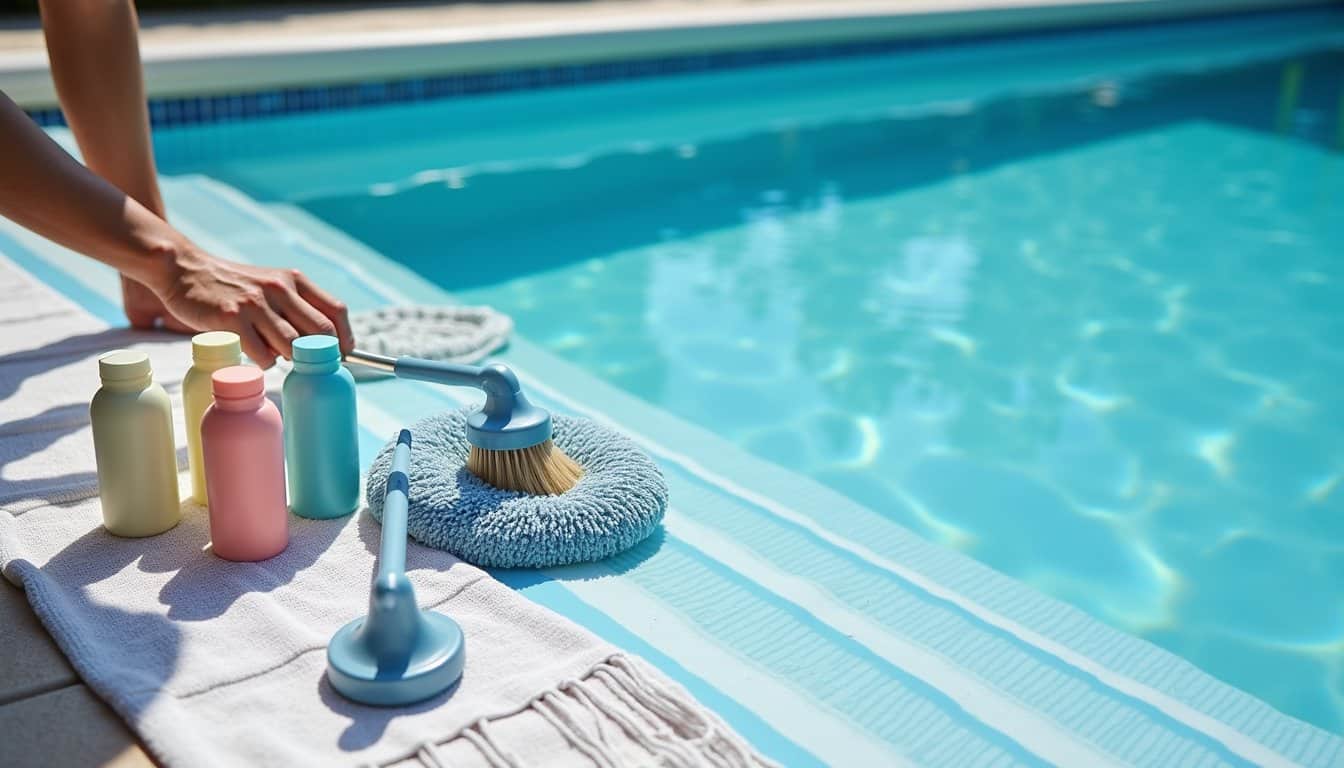
Your monthly deep cleaning regimen must include a thorough filter cleansing process, which involves backwashing sand filters or cleaning cartridge elements to restore maximum circulation efficiency. You’ll need to conduct extensive chemical tests that evaluate total alkalinity, calcium hardness, and cyanuric acid levels to maintain proper water chemistry beyond standard chlorine and pH measurements. The combination of proper filter maintenance and detailed chemical analysis guarantees your pool’s filtration system operates at peak performance while preventing common issues like scale buildup and cloudy water. Regular monthly maintenance helps prevent algae growth and maintain water clarity for safe swimming conditions. A comprehensive cleaning should include pool deck rinsing to remove debris and chemical residue. Monthly tasks should include inspecting all safety equipment to ensure a secure swimming environment for guests.
Filter Deep Clean Process
Regular filter deep cleaning represents one of the most critical aspects of pool maintenance, requiring thorough attention every 3-4 months or when pressure readings increase by 8-10 PSI above baseline. Proper cleaning prevents unsafe water and helps maintain optimal pool conditions. Using manufacturer-recommended pool filter cleaners helps effectively remove oils and greases that can clog the system. A plastic trash can or bucket is essential for proper filter soaking and chemical treatment during cleaning.
Your filter maintenance frequency will vary based on usage patterns and seasonal demands. For sand filters, you’ll need to backwash for 3-5 minutes, apply commercial cleaner to the strainer basket, and allow an 8-hour soak before performing a final backwash. Cartridge filter cleaning techniques involve a 3-hour soak in TSP solution (or dishwasher detergent), followed by manual scrubbing and thorough rinsing. Don’t forget to clean the housing during cartridge soaking. After completing either process, you must flush the system thoroughly to prevent cleaner residues from entering your pool water.
Essential Monthly Chemical Tests
Beyond filter maintenance, proper chemical balance forms the backbone of pool health and requires an extensive monthly testing schedule.
You’ll need to perform calcium testing every 4-8 weeks, maintaining 200-400 ppm to prevent equipment damage and scaling. Monitor alkalinity levels monthly, targeting 80-120 ppm for pH stability. TDS analysis should be conducted monthly, keeping levels between 1,000-2,000 ppm. Cyanuric monitoring is vital quarterly, aiming for 30-50 ppm to protect chlorine effectiveness. Include metal screening and phosphate testing in your monthly routine to prevent stains and algae growth. Consider using liquid test kits for more accurate results compared to test strips. Don’t forget chlorine balancing after rainstorms, and pair these chemical tests with regular equipment maintenance. Shock treatment should be performed weekly to eliminate contaminants and maintain water clarity. If you encounter issues accessing online pool maintenance resources, you may need to contact your provider about security blocks. This thorough approach guarantees proper stain prevention and scale management while maximizing your pool’s longevity.
The Importance of Regular Filter Maintenance
Maintaining pool filters through consistent cleaning and monitoring serves as the cornerstone of effective pool care. Each filter type demands specific cleaning intervals to guarantee peak filter efficiency: cartridge filters need cleaning every 2-6 weeks, sand filters require backwashing every 1-2 months, and DE filters need monthly maintenance with fresh powder addition.
Your cleaning techniques should align with pressure gauge readings, clean filters when pressure rises 8-10 psi above baseline. During peak swimming season, monitor gauges weekly and don’t ignore pressure spikes, as they indicate clogging. Cloudy water appearance often signals it’s time for immediate filter maintenance. For long-term maintenance, deep clean cartridge filters 1-2 times annually, chemically clean sand filters twice yearly, and replace cartridges every 2-3 years. Sand media needs replacement every 3-5 years to maintain proper filtration and prevent harmful bacteria growth.
Seasonal Adjustments for Pool Care

Proper pool care follows a seasonal rhythm that adapts to changing environmental conditions throughout the year. Your maintenance strategies must shift with each season to address specific challenges. In spring, you’ll need to focus on reopening procedures, including thorough cleaning, chemical balancing, and equipment inspection. Summer demands more frequent monitoring, with daily skimming and bi-weekly chemical testing due to increased usage and sun exposure. As fall nears, cover the pool and balance chemicals to prevent debris buildup. Check essential equipment for pool care, like filters and pumps, to ensure they perform well through winter. Periodic inspections help keep your pool ready for spring.
As fall approaches, you’ll shift to preventive maintenance, inspecting structural components and preparing for reduced usage. Winter requires specific adjustments to chemical levels and protective measures against freezing. Throughout these seasonal adjustments, you’ll need to maintain consistent chemical management protocols, monitoring pH, alkalinity, and sanitizer levels while adapting the frequency and intensity of treatments to match seasonal demands.
Impact of Weather on Maintenance Schedules
Weather conditions greatly influence your pool maintenance schedule, requiring dynamic adjustments to care routines throughout the year. During extreme weather events, you’ll need to test pH and chlorine levels immediately to restore chemical balance. Summer’s intense UV exposure demands daily testing, while spring and fall require weekly monitoring due to seasonal variations.
Weather impacts are particularly notable after rainfall, necessitating water testing within 24 hours to address dilution effects. You’ll need to perform daily skimming during storm seasons and fall leaf periods, while increasing filter cleaning frequency to manage additional debris loads. During heatwaves, check water levels daily to counteract increased evaporation, which typically causes a quarter-inch loss. Pre-storm equipment inspections are essential to guarantee your system can handle increased debris and prevent potential damage.
Post-Event Pool Care Guidelines
Beyond routine weather-related maintenance, specific events like storms, heavy usage periods, or contamination incidents require systematic post-event care protocols. You’ll need to implement thorough sanitation procedures to restore your pool’s safety and cleanliness.
Follow these critical post-event protocols:
- Remove surface debris with a net, brush walls and floors, then vacuum thoroughly avoiding fecal matter if present
- Test and adjust chlorine levels to 1-3 ppm, shock treat if necessary, and backwash filters to remove trapped contaminants
- Document all maintenance actions, including incident details, disinfection steps, and equipment status
Don’t forget to maintain detailed logs of your sanitation procedures for health authority compliance. Regular staff training ensures quick, effective responses to contamination events and maintains your pool’s safety standards.
Equipment Inspection Timelines
Regular equipment inspections form the cornerstone of effective pool maintenance, with five critical timing intervals ranging from daily checks to annual assessments. You’ll need to monitor chlorine levels daily, particularly in older systems prone to corrosion. Weekly tasks include checking filter pressure gauges and performing necessary backwashing. Monthly inspections should focus on pumps, skimmers, and drain systems to guarantee ideal water flow and detect potential issues early.
For maximum equipment longevity, schedule quarterly reviews of chemical systems and cross-connection devices, especially in high-usage pools. The inspection benefits become evident through annual thorough evaluations, which must include electrical systems, paint conditions, and GFCI protection. If your pool is over ten years old or experiences heavy use, you’ll need to increase these inspection frequencies to maintain safe, efficient operations.
Professional Service Intervals
Three key factors determine the ideal frequency of professional pool service: usage patterns, environmental conditions, and equipment complexity. Your service frequency should align with these variables to maintain optimal pool health and equipment longevity.
Regular pool maintenance isn’t one-size-fits-all your service schedule must match your pool’s unique usage, environment, and equipment needs.
For most pool owners, you’ll need to schedule professional maintenance according to these guidelines:
- Weekly service – If you’re in a warm climate, have daily pool usage, or experience frequent debris accumulation
- Bi-weekly service – For moderate usage pools with standard filtration systems and mild weather conditions
- Monthly service – Suitable for lightly used pools in controlled environments with minimal external contamination
Your maintenance scheduling may require adjustment based on special events, seasonal changes, or unexpected weather patterns. Professional services during these visits include thorough water testing, equipment inspection, and preventive maintenance tasks that extend beyond routine cleaning.
Adapting Maintenance for High-Traffic Pools
When managing a high-traffic pool, you’ll need to increase your chemical testing frequency to 2-3 times per week for chlorine and daily monitoring of pH levels during peak usage periods. Your daily cleaning routine must expand to include surface skimming, more frequent vacuuming of the pool floor, and immediate removal of oils and sunscreen residues after heavy swim sessions. Maintaining proper sanitization requires strict adherence to an enhanced maintenance schedule, with increased shock treatments and regular verification of stabilizer levels to combat the higher bather load.
Increased Chemical Testing Schedule
Maintaining proper chemical balance in high-traffic pools requires a considerably more rigorous testing schedule than standard residential pools. You’ll need to implement increased testing protocols to guarantee chemical stability, particularly during periods of heavy usage and after weather events.
For high-traffic pools, follow these essential testing frequencies:
- Test chlorine and pH levels 2-3 times weekly, increasing to daily checks when pools are frequented by children or after social events
- Monitor alkalinity weekly and calcium hardness every 2-4 weeks to prevent chemical imbalances that could compromise sanitizer effectiveness
- Perform immediate testing after rainstorms, extreme weather, or high-contamination events, with follow-up tests within 24 hours of any chemical adjustments
During summer months or when temperatures exceed 70°F, double your testing frequency to maintain ideal water chemistry.
Daily Cleaning Requirements
Beyond chemical balance, daily cleaning protocols serve as the foundation for high-traffic pool maintenance. You’ll need to intensify your surface skimming and basket cleaning routines during peak usage periods, often requiring multiple sessions throughout the day.
| Task | Standard Pool | High-Traffic Pool |
|---|---|---|
| Surface Skimming | Once daily | 2-3 times daily |
| Basket Cleaning | Every 2 days | Daily |
| Wall Brushing | Weekly | Every 1-2 days |
| Vacuuming | Weekly | 2-3 times weekly |
| Deck Cleaning | Twice weekly | Daily |
For peak results, you’ll need to run your pump for extended periods, typically 12+ hours daily. Direct your pool jets downward at 45-degree angles to maintain proper circulation, and inspect low-circulation areas near ladders and corners where debris tends to accumulate. This enhanced cleaning schedule helps prevent common issues like algae growth and cloudy water.
Frequently Asked Questions
How Long Should I Wait After Shocking Before Swimming?
After adding shocking chemicals, you’ll need to wait 8-24 hours before swimming if using chlorine-based treatments. For chlorine-free oxidizers, you can safely enter after 15-30 minutes. Always test your water before swimming chlorine levels must drop below 1 ppm for swimming safety. Your waiting time may increase if your pool’s heavily contaminated or cloudy. Use DPD test strips to confirm chemical levels have returned to safe ranges.
Can I Run My Pool Pump Less Often to Save Electricity?
While you can reduce your pool pump runtime to save electricity, you shouldn’t run it less than 8 hours daily for proper filtration. For maximum pool pump efficiency, consider upgrading to a variable-speed pump, which can cut energy costs by 80%. You can also achieve electricity savings by running your pump during off-peak hours and breaking the runtime into shorter intervals. Just verify you’re maintaining a complete water turnover cycle daily.
What’s the Best Time of Day to Add Pool Chemicals?
You’ll get the best results by adding pool chemicals in the evening, after sunset. This pool chemical timing maximizes effectiveness since UV rays won’t degrade the chlorine overnight. Evening application allows chemicals to circulate and work efficiently while you sleep, ensuring your pool’s ready for use the next day. If you’re using a stabilizer (CYA 30-50 ppm), timing becomes less critical, but evening dosing remains ideal for maximum sanitizing power.
Should I Drain My Pool Completely When Doing Major Repairs?
You shouldn’t completely drain your pool unless absolutely necessary, as it can cause serious structural damage. Instead, consider partial draining (30-50%) as your primary drain method for most repair options. If full draining is unavoidable, always hire a professional contractor who’ll assess groundwater pressure and soil conditions first. They’ll use specialized equipment and proper techniques to protect your pool’s structure during repairs while minimizing risks of shell damage or collapse.
How Do I Prevent My Pool From Turning Green During Vacation?
To prevent your pool from turning green during vacation, you’ll need to focus on preventing algae growth before you leave. Shock your pool 2-3 days prior to departure, adjust pH levels to 7.2-7.6, and add a long-lasting algaecide. Make sure your pump runs 8-12 hours daily through automated scheduling, and install a secure pool cover to block sunlight and debris. Consider using an automatic chemical dispenser for consistent sanitization while you’re away.