
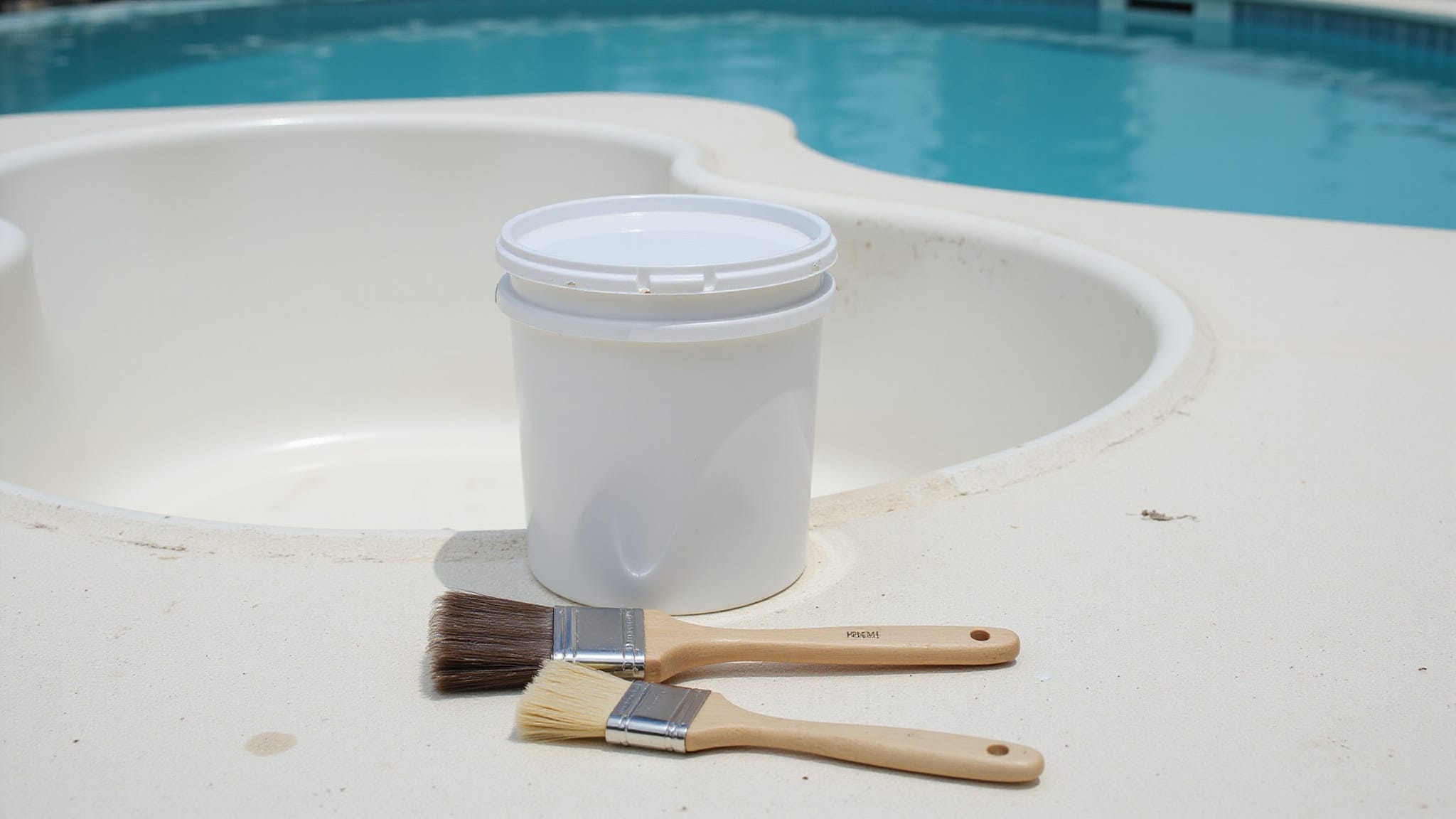
The 10 most common fiberglass pool problems include surface cracks, gelcoat fading or staining, bulging walls, settlement, plumbing leaks, poor drainage, hydrostatic pressure, improper installation, water-chemistry damage, and limited repair options. Many of these issues can be reduced through proper installation and balanced water chemistry, including maintaining free chlorine around 1–3 ppm and pH near 7.2–7.6. Regular inspections can also help catch small cracks, leaks, or surface changes before they develop into more expensive repairs. Using effective methods for pool repair, such as thorough surface preparation, quality materials, and proper curing time, ensures durable results and preserves the pool’s appearance.
Structural Cracks and Settlement Issues
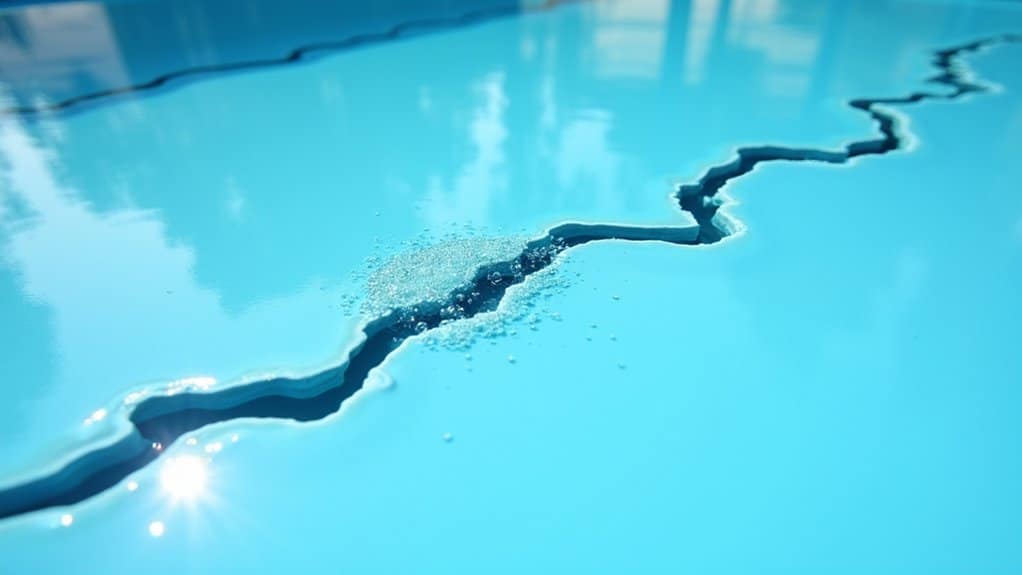
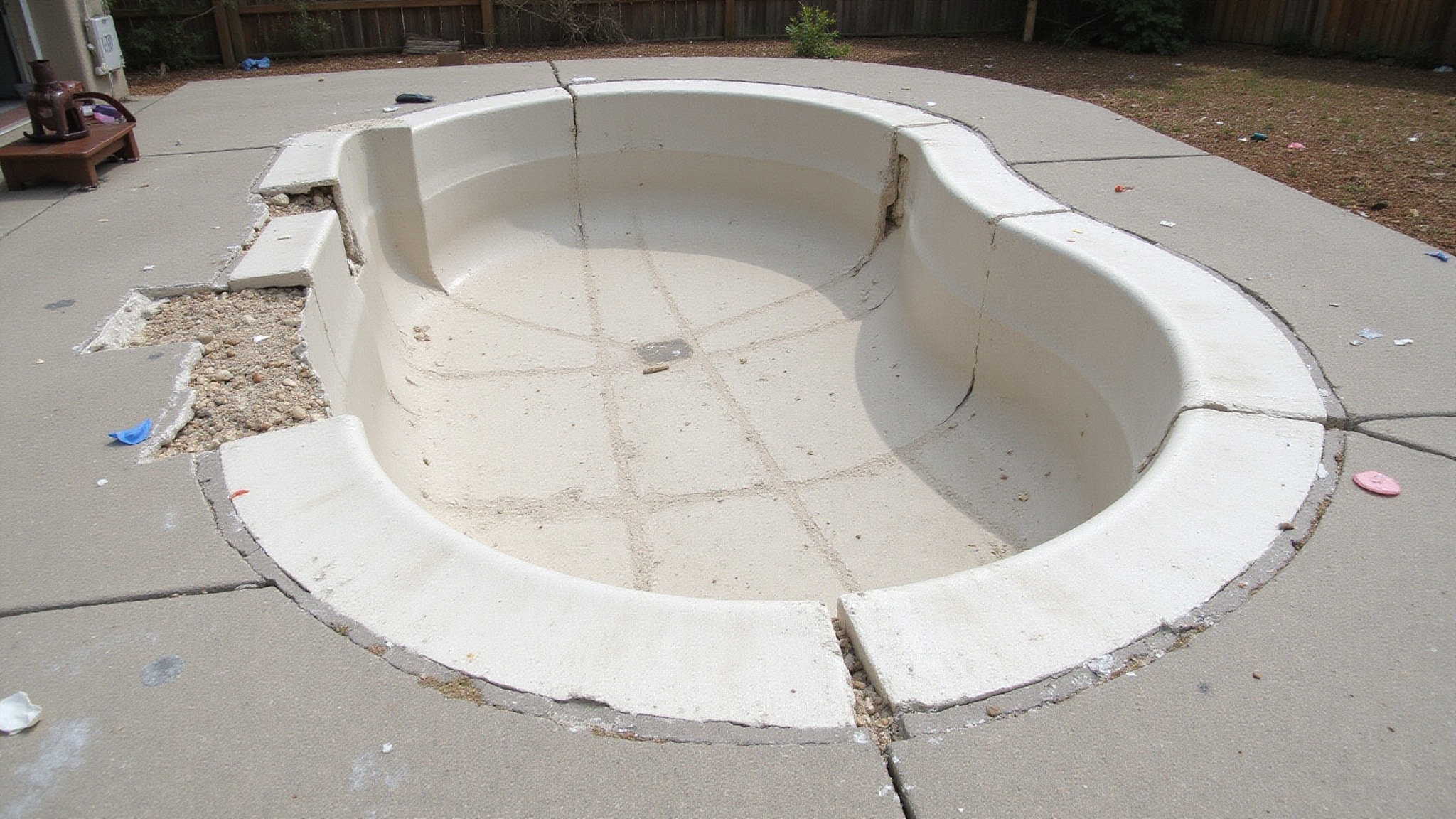
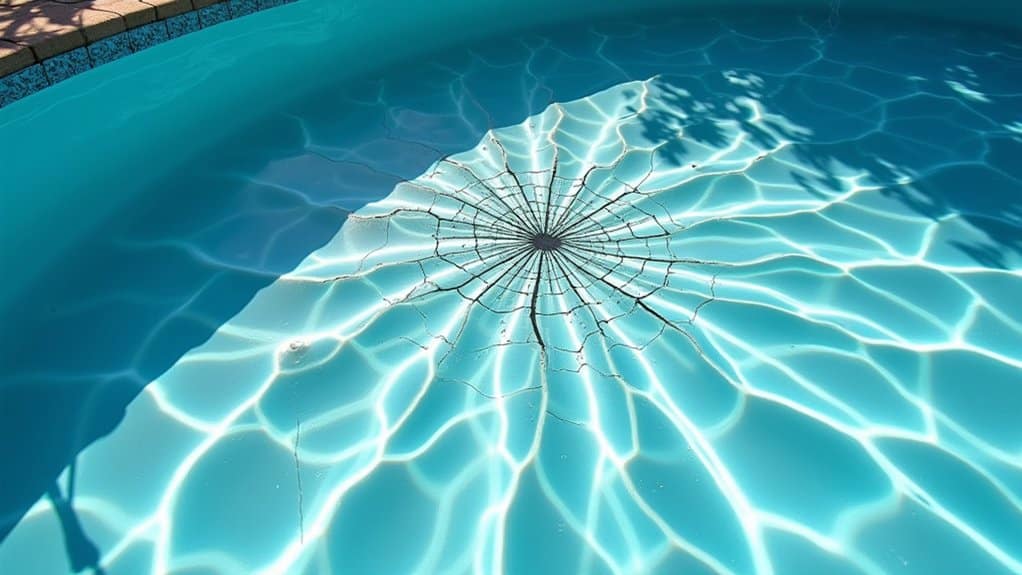
While fiberglass pools offer durability and quick installation, structural cracks and settlement issues can emerge from multiple interconnected factors. You’ll need to distinguish between superficial spider cracks in the gelcoat and deeper structural fissures that compromise the pool’s integrity. Key factors in crack prevention include proper manufacturing with quality vinylester resin and avoiding shell manipulation during installation. Spider cracking can often occur during shipping if proper support is not maintained. Working with reputable manufacturers helps ensure strong multi-layered composites that resist cracking.
Settlement mitigation starts with thorough soil assessment and addressing hydrostatic pressure through effective drainage systems. You’ll want to watch for signs of wall bulging or deformation, which often indicate serious structural stress. Using clean crushed stone for backfill provides superior stability compared to sand-based materials. Critical prevention measures include installing French drains, ensuring proper gravel backfill compaction, and maintaining stable soil conditions around the pool perimeter. Poor runoff management and inadequate groundwater control can accelerate structural deterioration.
Gelcoat Surface Deterioration
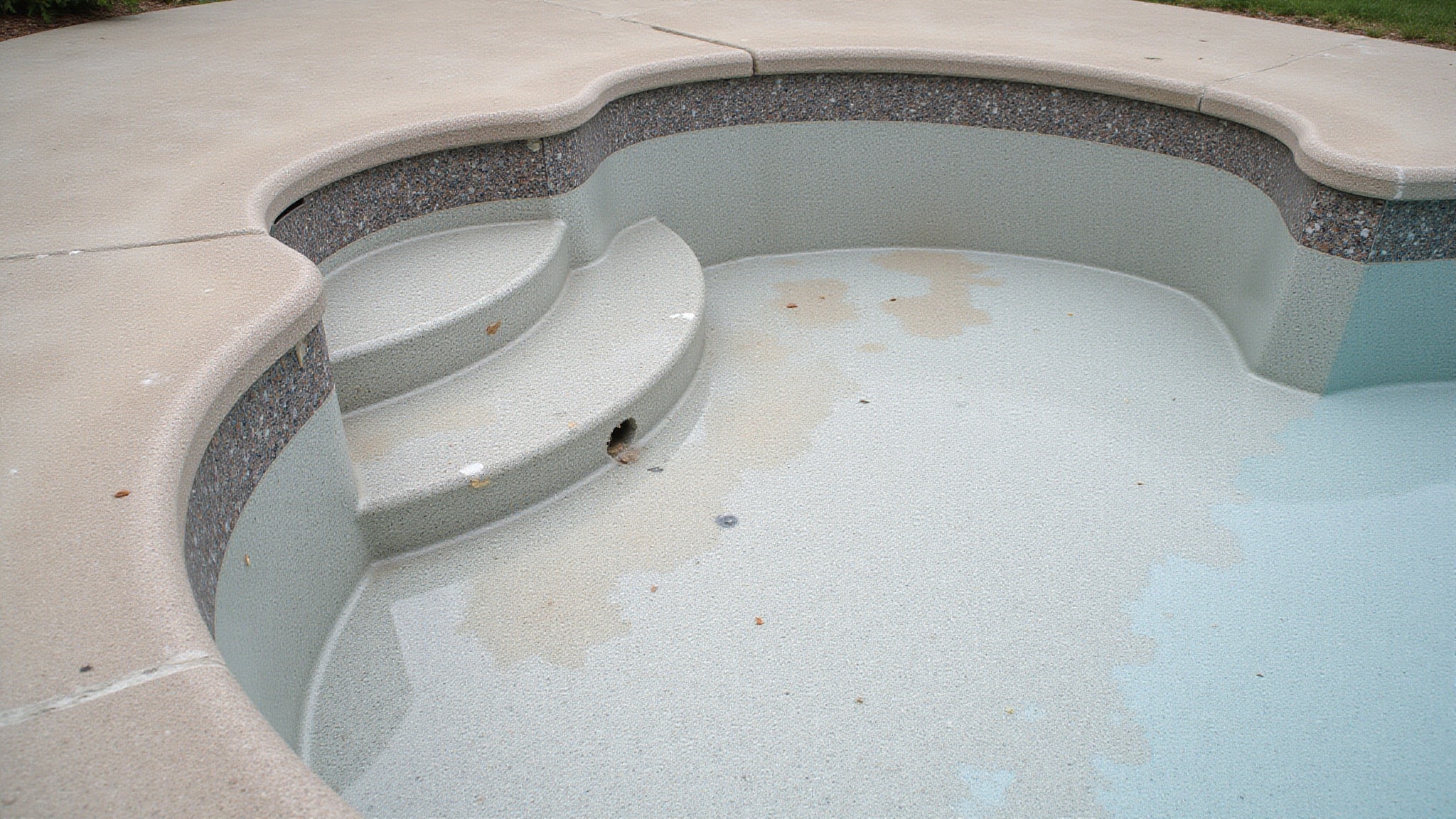
Surface deterioration in fiberglass pool gelcoats manifests through several distinct mechanisms that pool owners need to monitor. Understanding these issues is essential for implementing effective gelcoat maintenance techniques and determining appropriate surface repair options. Proper installation during manufacturing requires three layers of gelcoat to ensure optimal protection and durability. High pH levels can accelerate surface damage and discoloration of the gelcoat finish.
Regular monitoring of gelcoat deterioration patterns enables pool owners to implement timely maintenance and select suitable repair solutions.
Common deterioration patterns include:
- Osmotic blistering from water permeation beneath the gelcoat
- Spider cracks resulting from pressure, UV exposure, or temperature changes
- Color fading due to UV degradation and chemical imbalances
- Chemical etching from improper water chemistry
You’ll need to address these issues promptly to prevent further damage. Professional repair services can remedy surface problems through specialized techniques, though prevention remains your best strategy. Maintain proper chemical balance, implement UV protection measures, and schedule regular inspections to detect early signs of deterioration. When repairs become necessary, consult professionals who understand fiberglass-specific restoration methods.
Improper Base Preparation Problems
Beyond gelcoat issues, base preparation stands as a foundational challenge that can make or break your fiberglass pool’s long-term stability. When you’re installing a fiberglass pool, base material stability depends heavily on proper soil assessment, material selection, and compaction techniques. Using clean stone backfill instead of sand significantly reduces the risk of hydrostatic pressure problems. You’ll face significant risks if you don’t address uneven ground conditions or fail to implement proper slope management strategies. Stepped excavation techniques are essential when installing pools on sloped terrain to ensure proper leveling and support.
Critical factors affecting your pool’s structural integrity include using the right base materials (gravel is superior to sand), ensuring thorough compaction with vibratory equipment, and implementing effective drainage solutions. Poor site grading can lead to structural imbalances that compromise the entire installation. You’ll need to avoid common pitfalls such as using disturbed soil, skipping geotextile fabric installation, or neglecting proper backfilling procedures. Remember, hydrostatic pressure and soil settlement can compromise even well-built pools if you don’t establish a properly compacted, stable foundation.
Hydrostatic Pressure and Floating Concerns
When groundwater levels rise around your fiberglass pool, hydrostatic pressure becomes a critical concern that can threaten your pool’s structural integrity. Stationary water pressure increases with depth, making deeper pools especially vulnerable to damage. The buoyant forces from external groundwater can overcome the pool’s weight when internal water levels drop too low, disrupting hydrostatic balance and potentially causing the shell to float. The Tundra Loc system helps prevent floating issues by providing proper drainage through its clean stone base construction. Fiberglass pools installed on sand-based foundations are particularly susceptible to movement in wet conditions.
To protect your fiberglass pool from pressure-related damage:
- Never drain the pool completely without professional supervision
- Maintain water levels above the skimmer height
- Install a PVC standpipe in the deep end for emergency dewatering
- Use permeable stone backfill during installation
Watch for problems with fiberglass pools such as bulging walls, uneven surfaces, or deck displacement. In areas with high water tables, consider a sump pump or other groundwater control system to help balance pressure around the pool shell and reduce the risk of structural movement.
Chemical Balance and Staining Challenges
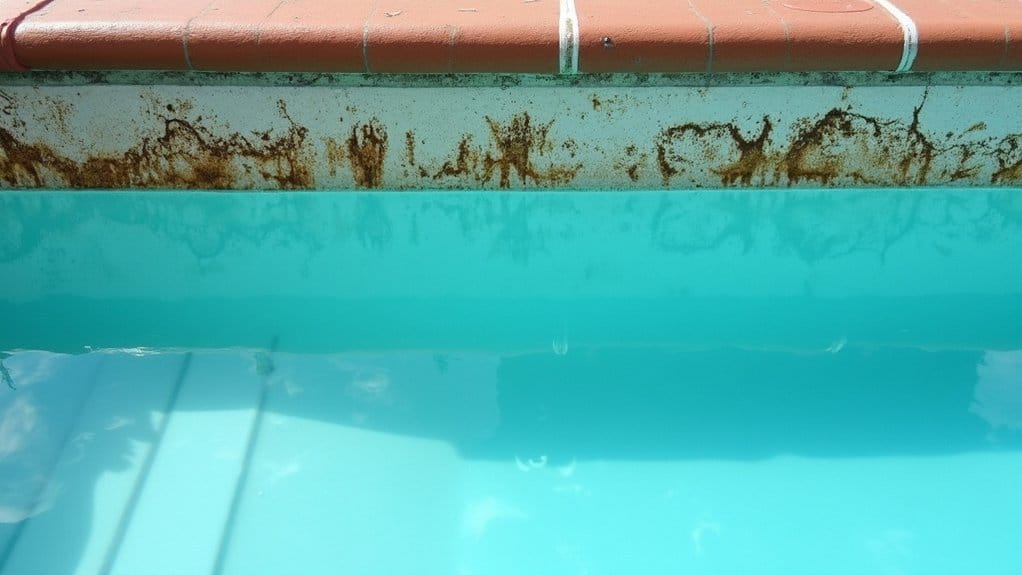
Maintaining proper chemical balance in fiberglass pools requires a distinct approach from traditional concrete pools, as improper chemistry management can trigger persistent staining and surface deterioration.
You’ll need to maintain pH levels between 7.2-7.4 and keep calcium hardness below 120 ppm to prevent scaling. Regular chemical testing of pH, total alkalinity, and cyanuric acid levels is essential for stain prevention. Regular maintenance should include weekly testing and equipment checks to ensure optimal water quality. When using chlorine, opt for liquid variants instead of calcium-based products to avoid mineral buildup. Multiple chlorine floaters can cause excessive stabilizer buildup that’s difficult to correct. Adding baking soda helps achieve the proper alkalinity range of 80-120 ppm for stable pH levels.
If you’re dealing with fiberglass pool gelcoat problems such as metal staining or scaling, start by correcting the water chemistry. Reduce chlorine to 1 to 2 ppm before stain treatment, use metal sequestrants when appropriate, and monitor LSI values during adjustments. Avoid relying on surface treatments alone, and use caution with calcium-based shock products that may worsen scaling.
UV Damage and Color Fading
Prolonged exposure to ultraviolet radiation presents a significant threat to your fiberglass pool’s gel coat integrity, potentially leading to color degradation and surface deterioration. To implement effective UV protection strategies, you’ll need to address both preventive measures and maintenance protocols. Regular testing of chemical levels helps prevent UV-related damage by maintaining proper water chemistry that protects the gel coat. Pool covers are one of the most effective ways to shield the pool surface from harmful UV rays.
Critical color restoration techniques and protective measures include:
- Installing automatic pool covers or shade structures to minimize direct UV exposure
- Applying UV-resistant gel coat formulations during resurfacing
- Utilizing professional polishing services to restore faded areas
- Maintaining proper chemical balance to prevent accelerated degradation
Regular inspections and prompt intervention are essential when you notice signs of fading. If surface deterioration becomes evident, consider consulting pool restoration specialists who can assess the damage and recommend appropriate refinishing solutions, from targeted repairs to complete resurfacing treatments.
Plumbing System Complications
The complex network of pipes, fittings, and mechanical components in fiberglass pools requires careful attention to prevent system-wide complications that can compromise pool functionality. You’ll need to address pipe displacement issues through proper backfilling techniques and monitor circulation efficiency to maintain peak performance.
| Issue | Solution |
|---|---|
| Sand compaction | Use 3/4″ stone backfill |
| Flow restriction | Regular pipe cleaning |
| Connection leaks | Pressure test fittings |
To prevent plumbing failures, you’ll want to install UV-resistant tubing for exposed pipes and secure plumbing with hose straps to prevent vertical displacement. Don’t overlook the importance of proper pump sizing and regular maintenance of mechanical components. You can maintain system integrity by implementing preventative measures like routine filter cleaning and professional inspections to detect pressure imbalances before they cause significant damage.
Installation-Related Leaks
Failing return fitting seals, particularly around the jets and skimmers, frequently result from improper initial torque application or missing gaskets during the installation process. You’ll need to verify that all pool fittings have properly seated O-rings and gaskets, installed with manufacturer-specified torque values to prevent water intrusion. Poor plumbing joint assembly, including improperly primed PVC connections and rushed glue joints, can create immediate or delayed leaks that compromise your pool’s integrity.
Return Fitting Seal Failures
When installing fiberglass pool return fittings, proper sealing techniques and materials prove critical for preventing costly leaks and maintenance issues. CMP Fiberglass Pool Returns with 2″ nuts offer superior structural support, while proper sealant application using 100% pure silicone guarantees long-term seal integrity.
Key factors contributing to return fitting seal failures include:
- Using fine backfill materials instead of recommended 3/4″ clean stone
- Failing to properly sand rough fiberglass edges before fitting attachment
- Incorrect gasket installation or over-tightening without adequate sealant
- Poor environmental protection against freeze-thaw cycles
You’ll need to verify proper surface preparation and use appropriate backfill material during installation. Professional installation practices, including thorough visual inspections and proper PVC insertions, greatly reduce the risk of seal failures and subsequent water loss through compromised return fittings.
Poor Plumbing Joint Assembly
Proper plumbing joint assembly stands as a critical factor in preventing installation-related leaks throughout your fiberglass pool’s plumbing system. You’ll need to focus on joint integrity and proven assembly techniques to avoid costly repairs.
| Assembly Requirements | Impact on Performance |
|---|---|
| Reinforced Fittings | Prevents connection failures |
| Rigid PVC Selection | Resists ground movement stress |
| Secure Anchoring | Eliminates joint displacement |
| Proper Backfilling | Reduces settling pressure |
| Connection Testing | Guarantees long-term reliability |
Don’t rely on flexible PVC components that can’t withstand soil settlement. Instead, use industrial-grade fittings like Waterway #25523-701-000 and implement rigorous pre-installation inspections. You’ll need to verify each connection’s resistance to displacement before backfilling with gravel, which provides superior compaction compared to sand. Remember to pressure test all joints to identify potential weaknesses before completing the installation.
Winter Damage Prevention
To protect your fiberglass pool from winter damage, you’ll need to implement proper drain procedures by lowering the water level below the skimmer opening while maintaining sufficient water volume to prevent structural destabilization. You’ll want to clear all plumbing lines using a blower system and introduce pool-grade antifreeze in regions where temperatures consistently drop below freezing. Installing freeze sensors and maintaining a properly secured winter cover will provide additional protection against ice damage and debris accumulation during the dormant season.
Freeze Protection Methods
Protecting your fiberglass pool from winter freeze damage requires a multi-layered defense strategy that combines structural safeguards, chemical maintenance, and automated monitoring systems.
Apply freeze-proof insulation to critical components and implement automated monitoring devices that activate at 35°F. You’ll need to maintain proper chemical balance with pH between 7.2-7.8 and stabilized chlorine levels to prevent structural deterioration during winter months.
Essential freeze protection steps include:
- Install freeze-protector devices with remote diagnostics for real-time monitoring
- Maintain partial water levels (1/4 to 1/2 capacity) to counteract ground pressure
- Apply winterizing chemicals including algaecide and stabilizer before closing
- Manage hydrostatic pressure through strategic drainage systems
For severe climates, supplement these measures with heavy-duty insulation and automated pump systems that circulate water when temperatures approach freezing.
Winterization Drain Procedures
Strategic winterization drain procedures encompass five critical domains for fiberglass pool protection: water level management, plumbing evacuation, equipment preservation, hydrostatic pressure control, and chemical stabilization.
Proper drainage techniques start with maintaining water levels above skimmer openings while preventing overflow from rainfall or snowmelt. You’ll need to systematically evacuate plumbing lines using compressed air, working from the farthest returns toward equipment. Equipment storage requires removing all components above the frost line and winterizing pumps according to manufacturer specifications. Control hydrostatic pressure by guaranteeing proper ground drainage and monitoring water tables. Finally, stabilize chemical balance before winterizing to prevent algae growth and maintain water quality. Always document disconnection points and consult professionals for complex systems to guarantee successful spring recommissioning.
Design and Size Limitations
While fiberglass pools offer numerous advantages, their design and size limitations stem primarily from manufacturing and transportation constraints. You’ll find that pre-molded shells restrict customization options, with maximum widths capped at 16 feet due to DOT regulations. These design restrictions greatly impact your pool choices, especially when compared to concrete alternatives.
Key size limitations you’ll encounter include:
- Width restrictions of 16 feet due to transport regulations
- Standard lengths typically maxing out at 40 feet
- No custom modifications beyond existing mold dimensions
- Limited shape options with no irregular or bespoke designs
Understanding these constraints is essential for proper planning, as you won’t have the flexibility to modify structural elements post-installation. Additionally, specialty transport permits for wider pools can increase costs and complicate delivery to remote locations.
Frequently Asked Questions
How Long Does a Fiberglass Pool Typically Last Before Needing Replacement?
Your fiberglass pool will typically last 25-30 years, though with proper care, it can extend beyond 50 years. Lifespan factors include manufacturing quality, installation precision, and environmental conditions. To maximize longevity, you’ll need to maintain strict maintenance requirements: regular chemical balancing, gelcoat protection, and prompt repairs. If you’re investing in a premium manufactured pool with professional installation and follow proper care protocols, you’ll enjoy decades of service.
Can Existing Fiberglass Pools Be Converted to Saltwater Systems?
Yes, you can convert your existing fiberglass pool to a saltwater system with minimal modifications. Your pool’s non-porous gel coat finish is already well-suited for saltwater conversion. You’ll need to install a salt cell, controller, and add pool-grade salt. For successful maintenance, keep salt levels between 2700-3400 ppm and regularly clean the salt cell. The conversion process typically takes 1-2 days and doesn’t require structural changes to your pool.
What Insurance Considerations Should Homeowners Know Before Installing a Fiberglass Pool?
Before installing a fiberglass pool, you’ll need to meet specific pool insurance requirements to guarantee coverage. You must install a safety fence at least 4 feet high with secure locks, and comply with local building codes. Your pool will typically be covered under “other structures” at 10% of your dwelling coverage. You’ll also need proper lighting, secure ladder systems, and documented professional installation to maintain valid insurance coverage and protect against liability claims.
Are Fiberglass Pools More Energy-Efficient Compared to Concrete or Vinyl Pools?
Yes, you’ll find fiberglass pools are considerably more energy-efficient than concrete or vinyl options. Their smooth, non-porous surface reduces pump workload and energy consumption by minimizing friction and turbulence. The natural insulating properties of fiberglass help retain heat longer, cutting heating costs. In a cost comparison over time, you’ll see lower utility bills due to reduced chemical usage, less frequent cleaning needs, and more efficient equipment operation.
How Difficult Is It to Remove or Relocate a Fiberglass Pool?
Removing or relocating your fiberglass pool is a complex undertaking that requires extensive planning and professional expertise. You’ll need heavy machinery, precise excavation, and careful handling to prevent shell damage during extraction. Pool relocation typically costs between $5,000-$20,000, including new installation costs at the destination site. The process involves disconnecting plumbing, proper lifting techniques, and ensuring the shell’s structural integrity throughout the move. You’ll also need permits for both locations.
Problems With Fiberglass Pools Develop Around Built-In Steps and Benches?
Yes. Built-in steps and benches can develop flexing, cracking, or gelcoat stress if the shell is not evenly supported underneath. Problems are more likely where backfill settles or leaves voids, so any new crack, movement, or visible separation around these areas should be inspected before it worsens.
Fiberglass Pool Problems Include Coping Separation Around the Pool Edge?
Yes. Coping can separate from a fiberglass shell because of ground movement, deck expansion, failed sealant, or improper installation. Even a small gap that continues widening over several months should be checked because water entering the joint can contribute to further movement.
Fiberglass Pool Gelcoat Problems Make the Surface Rough or Chalky?
Yes. Aging, UV exposure, scaling, and unbalanced water chemistry can make fiberglass gelcoat feel rough or develop a chalky appearance. Keeping pool water around pH 7.2 to 7.8 and free chlorine near 1 to 3 ppm helps reduce unnecessary surface deterioration.