

To maintain a safe swimming pool, you’ll need several essential chemicals: chlorine (as a sanitizer), cyanuric acid (CYA) for stabilization, pH and alkalinity adjusters, shock treatments, and clarifiers. You should keep chlorine levels at 1-3 ppm, pH between 7.4-7.6, and CYA at 30-50 ppm for standard pools. Regular testing twice weekly guarantees proper chemical balance, while algaecides help prevent unwanted growth. Understanding these core chemicals and their proper application will enhance your pool maintenance expertise. Along with water chemistry, choosing the right equipment matters. Common types of pool filters for fiberglasss include sand, cartridge, and D.E. filters, each with benefits for clarity and maintenance ease.
Essential Chlorine Types and Their Safety Guidelines
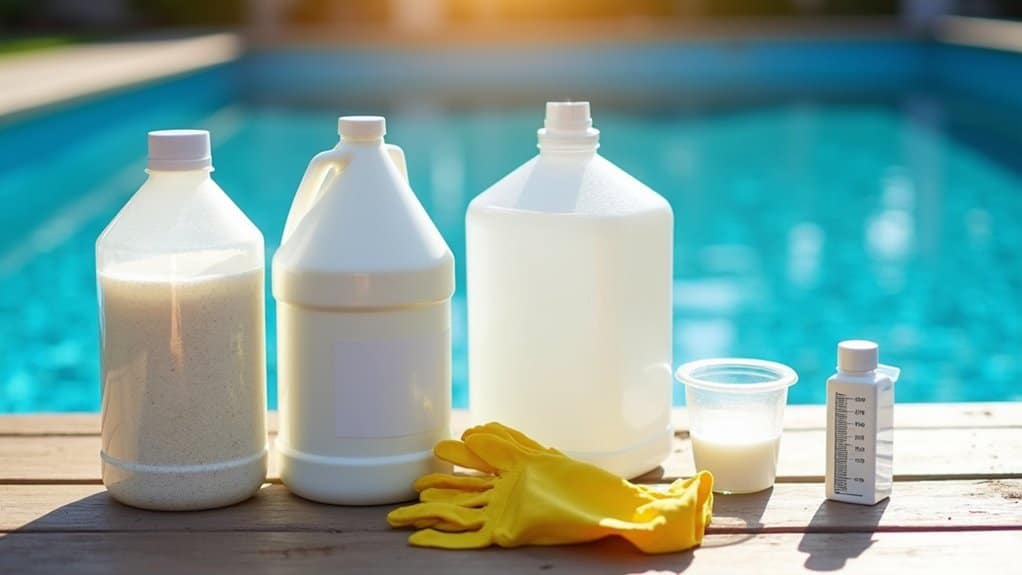
Five essential chlorine types are essential for maintaining safe pool water: sodium hypochlorite, calcium hypochlorite, trichlor tablets, dichlor granular, and both stabilized and non-stabilized variants. Alongside choosing the right chlorine, focus on circulation and filtration. When choosing pool pumps for fiberglass, the right pump supports clear, sanitized water and a safe, enjoyable swim.
For ideal chlorine safety, you’ll need to handle each type differently. Store sodium hypochlorite (liquid bleach) in cool, dry locations and test frequently, as it’s volatile in sunlight. Calcium hypochlorite requires protective gear due to its burn hazard, while trichlor tablets provide slow-release sanitization with UV protection. Dichlor granular offers quick dissolution and pH stability but needs careful CYA monitoring. alkalinity increaser should be added when levels fall below 80 ppm to maintain proper chemical balance. The standard dosage of one pound per 10,000 gallons yields optimal chlorine levels for shock treatment. Trichlor and dichlor products contain cyanuric acid stabilizer that helps protect chlorine from UV degradation.
Proper chemical storage is critical for all types. You’ll want to keep them separately in secure, temperature-controlled areas to prevent dangerous reactions. Never mix different chlorine types, and always maintain appropriate protective measures during handling.
Balancing Ph and Alkalinity for Optimal Pool Health
While maintaining proper chlorine levels is essential, achieving the right balance of pH and alkalinity forms the foundation of pool water chemistry. You’ll need to keep pH between 7.4-7.6 and alkalinity between 80-150 ppm for ideal results. Regular pH testing helps you identify when adjustments are necessary, as improper levels can damage equipment and affect swimmer comfort. Using a titration test kit provides more accurate readings than test strips for water chemistry measurements. If you encounter issues accessing online pool chemistry resources, security measures may temporarily restrict website access.
For alkalinity adjustments, use sodium bicarbonate to raise levels or muriatic acid to lower them. Always pre-dissolve chemicals in water before adding them to your pool to prevent clumping. Wearing protective gear is crucial when handling acids for pH and alkalinity adjustments. Remember that alkalinity and pH are interdependent – when making corrections, start with alkalinity first, as it helps stabilize pH levels. After any chemical additions, wait 24 hours before retesting to verify proper equilibrium has been achieved.
The Critical Role of Pool Stabilizers
Pool stabilizers, particularly cyanuric acid (CYA), play a fundamental role in maintaining effective chlorine levels – especially in outdoor pools exposed to sunlight. CYA forms protective bonds with free chlorine molecules, preventing rapid UV degradation and maintaining consistent sanitization levels throughout the day. Personal protective equipment must be worn during CYA handling for safety. Regular cyanuric acid testing helps ensure optimal pool health and sanitation. Adding stabilizer at the swimming season start helps establish proper chemical balance from the beginning.
You’ll need to maintain CYA levels between 30-50 ppm in standard pools, while saltwater systems require 60-80 ppm for ideal chlorine stabilization. Higher concentrations don’t provide additional protection and can actually reduce chlorine’s effectiveness against contaminants.
When using stabilized chlorine products like dichlor or trichlor tablets, you’re adding both chlorine and CYA simultaneously. Monitor levels monthly and adjust as needed, particularly after significant water loss. Remember that over-stabilization can compromise your pool’s sanitation, requiring partial water replacement to restore proper chemical balance.
Understanding Pool Shock Treatments
When maintaining a safe swimming environment, shock treatments serve as a critical defense against harmful contaminants and chemical imbalances. You’ll need to select from several shock treatment options, including calcium hypochlorite, sodium dichlor, or non-chlorine oxidizers, based on your pool’s specific needs. Heavy pool use typically requires immediate shock treatment to eliminate bather waste and bacteria. Regular water testing is essential before applying any shock treatments to ensure proper chemical balance. For standard maintenance, experts recommend weekly shocking to maintain proper sanitization levels.
To guarantee chemical safety and maximum effectiveness, you’ll want to perform shock treatments during low-usage hours, preferably at night. Before application, adjust your pool’s pH to 7.2-7.4 and always wear appropriate protective equipment like gloves and goggles. Never mix different chemicals, as this can cause dangerous reactions.
After treatment, you’ll need to monitor your pool’s free chlorine levels and run the filter continuously. Allow 24-48 hours for chemical levels to stabilize before resuming normal pool use.
Water Clarity Management With Chemical Clarifiers
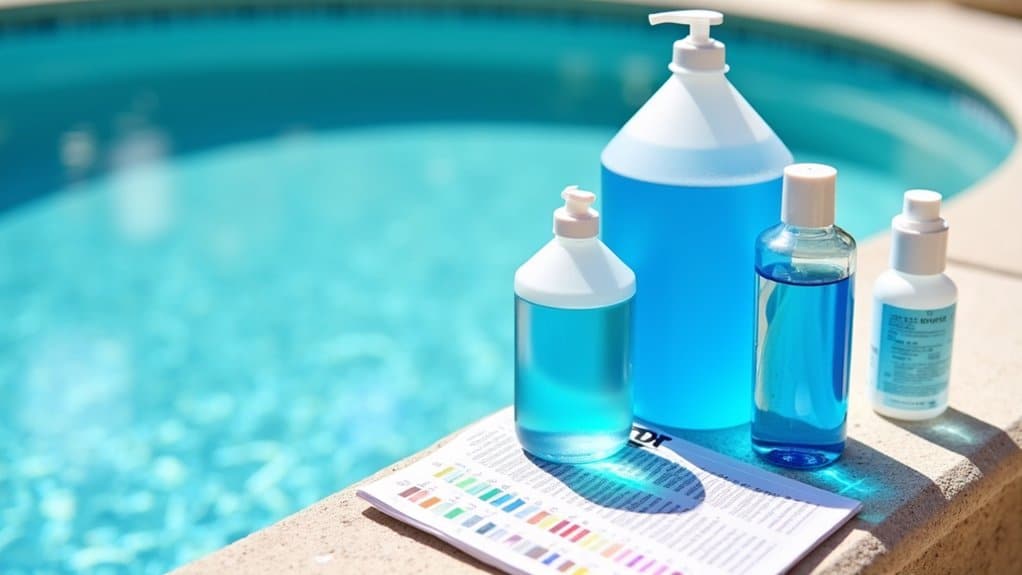
Chemical clarifiers offer a precise solution for maintaining crystal-clear water after completing your shock treatment regimen. You’ll find two primary clarifier types: chitosan-based formulations using natural biopolymers and synthetic Polyquat 60 products. Both work by binding fine particles into larger masses that your filter can capture more effectively. With 109 clarifier options available, pool owners have extensive choices to address their specific water clarity needs. Regular water testing procedures help determine when clarifier treatments are necessary for optimal results. Products like In The Swim’s Super Clarifier formula provide concentrated treatment at competitive price points.
Follow these application guidelines carefully: maintain your pool’s pH between 7.2 and 7.8, and don’t add clarifiers immediately after shocking or with DE filters. You’ll need to run your filter continuously for 2-3 days while the clarifier works. For ideal results, clean your filter after treatment and maintain proper chemical balance. If cloudiness persists beyond three days, consider alternative solutions like enzyme treatments or phosphate removers.
Preventing and Treating Algae Growth
Effective algae prevention requires a multi-faceted approach combining proper chemical balance with targeted algaecide treatments. You’ll need to maintain chlorine levels between 1-3 ppm and pH between 7.2-7.8 to optimize your sanitization system’s effectiveness. Regular testing twice weekly during summer months is essential for monitoring these levels.
For algae prevention strategies, apply Maintain Pool Pro Algae Control 10 at 1 qt per 12,500 gallons in clear water. When treating visible algae, increase the dosage to 1 qt per 5,000 gallons. The product effectively targets both green and blue-green algae species commonly found in pools. Effective algaecide application includes direct addition to pool water, avoiding skimmer baskets. You can choose from copper-based, quaternary, or polyquat algaecides based on your specific needs. Remember to brush surfaces regularly and maintain proper circulation to maximize your chemical treatment’s effectiveness.
Frequently Asked Questions
How Long Should I Wait Between Adding Different Pool Chemicals?
You’ll need to wait at least 10 minutes between adding different pool chemicals to prevent unwanted chemical interactions. For peak safety, follow these timing guidelines: wait 8-12 hours after adding clarifier before shocking, and make certain chlorine levels drop below 3 ppm before adding algaecide. When using Cal Hypo shock, you must allow a full 12-hour separation from other chemicals to avoid adverse reactions and maintain safety.
Can I Swim Immediately After Adding Chemicals to My Pool?
You shouldn’t swim immediately after adding chemicals to your pool, as waiting times vary based on the specific treatments used. While algaecides allow safe swimming after 15 minutes, other chemical reactions require longer waiting periods. You’ll need to wait 30 minutes to 2 hours for pH adjusters, 4 hours for liquid chlorine, and up to 24 hours after shock treatments. Always test chemical levels before resuming safe swimming activities.
Where Should I Store Pool Chemicals During Winter Months?
You’ll need to store your pool chemicals in a cool, dry, ventilated area during winter months, maintaining temperatures above freezing but below 95°F (35°C). Keep them in their original containers, off the ground, and away from direct sunlight. Don’t store chemicals in your garage or basement if these areas experience high humidity. Guarantee proper chemical storage by separating incompatible substances and maintaining good ventilation, even during winter precautions.
What Protective Gear Should I Wear When Handling Pool Chemicals?
When handling pool chemicals, you’ll need several essential pieces of protective equipment. Always wear chemical-resistant protective gloves, preferably nitrile or neoprene, to prevent skin contact. Safety goggles are vital to protect your eyes from splashes and fumes. You should also wear a chemical-resistant apron and work in well-ventilated areas. If you’re handling chlorine granules or other dust-producing chemicals, you’ll need a proper respirator for additional protection.
How Often Should I Replace My Chemical Testing Kit Supplies?
You’ll need to replace your chemical testing supplies based on both usage and expiration dates. For weekly testing, replace test strips every 1-2 years, while twice-weekly testing requires replacement every 6-12 months. Always check expiration dates on reagents and strips, as they typically last 18-24 months. Replace supplies immediately if they become contaminated or show signs of degradation, like faded colors or inconsistent results.