
Some of the best-known chemical brands for fiberglass pool care include HTH, Clorox Pool&Spa, and Leslie’s, with products available for sanitizing, shocking, clarifying, and controlling scale. More important than the brand is maintaining chemistry that protects the fiberglass surface. Latham recommends 1–3 ppm free chlorine, pH of 7.2–7.6, total alkalinity of 80–120 ppm, calcium hardness of 250–350 ppm, and CYA of 40–60 ppm for its fiberglass pools. Choose chemicals specifically compatible with fiberglass and always follow the product label for dosing.
Why Fiberglass Pools Need Specialized Chemical Care
While traditional pool chemistry standards were developed for concrete pools, fiberglass pools require a fundamentally different chemical approach due to their unique material properties. Your fiberglass pool’s nonporous gelcoat surface doesn’t need calcium for stability in fact, excess calcium can damage it, causing scaling and discoloration above 120 ppm. Weekly pH testing is critical to maintain proper chemical balance and prevent surface damage. With a 30-year lifespan when properly maintained, investing in the right chemical care is essential for protecting your pool’s longevity. Stain and scale control products should be used regularly to prevent permanent cosmetic damage.
Specialized sanitation methods matter because fiberglass gelcoat can be sensitive to chemical imbalances. When choosing the best brand of pool chemicals, make sure every product is compatible with fiberglass surfaces. Maintain pH control around 7.2 to 7.4 and monitor sanitizer levels and metals carefully to help protect the pool’s finish.
Top Shock Treatment Brands for Fiberglass Surfaces
Selecting the right shock treatment for your fiberglass pool requires careful consideration of chemical compatibility and surface preservation. Recent shock treatment innovations have led to specialized products like HTH Pool Care Shock Advanced and Clorox Pool&Spa Shock Clear, which offer non-calcium formulations ideal for fiberglass surfaces. Weekly maintenance shock treatments during peak swimming season help prevent algae growth and maintain pristine water quality. Proper storage practices in cool, dry environments away from direct sunlight ensure these shock treatments maintain maximum effectiveness.
You’ll find chlorine alternatives in products like Zodiac’s bromine-based shocks, which provide effective sanitization without risking surface damage. When choosing between brands, prioritize AquaSafe and Leslie’s Power Powder Plus for their fast-acting, low-calcium properties. These products maintain proper sanitization while protecting your pool’s gelcoat finish. UV degradation prevention makes nighttime application essential for maximizing shock treatment effectiveness.
For best results, apply your chosen shock treatment at night and maintain strict pH control between 7.2-7.4. Always verify compatibility with saltwater systems if your pool uses one.
Essential Chlorine Tablet Options and Their Benefits
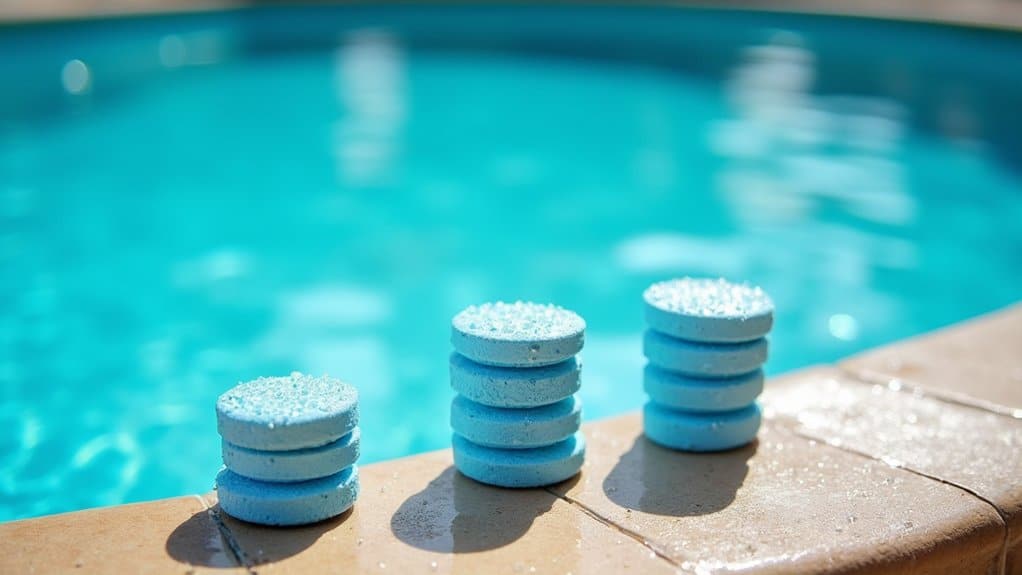
When selecting chlorine tablets for your fiberglass pool, you’ll need to compare the dissolution rates of 1-inch versus 3-inch options, with In The Swim’s 3-inch tablets offering superior longevity for pools over 5,000 gallons. Your automatic chlorinator‘s compatibility with specific tablet sizes directly impacts dosing efficiency, making it essential to match the tablet dimensions to your feeder’s specifications. This traditional method is highly effective at pool sanitization, proven by pool builders in Toronto to maintain safe swimming conditions. Stabilized chlorine tablets provide enhanced protection against UV degradation and longer-lasting sanitization in outdoor pools. While manual maintenance is required more frequently with traditional chlorine systems, for ideal weekly maintenance, you’ll want to adjust your tablet quantity based on pool volume, with larger pools typically requiring 2-3 three-inch tablets per week through an automatic feeder system.
Tablet Strength Comparison Chart
Three essential chlorine tablet options dominate the fiberglass pool care market: stabilized trichlor tablets at 90% concentration, unstabilized dichlor tablets for rapid dissolution, and hybrid formulations with integrated algaecides.
When comparing tablet efficiency, you’ll find that 3-inch trichlor tablets deliver superior performance for pools over 5,000 gallons, maintaining steady chlorine concentration through slow dissolution. The 1-inch tablets, like Chemtech 2815, provide faster release rates ideal for smaller volumes. HTH 42049’s stabilized formula offers superior UV protection, while maintaining a consistent 90% chlorine concentration that prevents algae growth. For enhanced protection, you’ll want to take into account tablets with built-in clarifiers and pH buffers. Hypochlorous acid forms immediately upon tablet dissolution for instant sanitization. Regular testing should maintain free chlorine levels between 1-3 PPM for optimal sanitization. Using floating dispensers or feeders ensures proper chlorine distribution and regulation throughout your pool. Remember that stabilized options will increase cyanuric acid levels, requiring regular monitoring of your water chemistry.
Automatic Chlorinator Compatible Options
Most automatic chlorinator systems require highly compatible tablets that meet specific pressure and dissolution standards for maximum performance. You’ll find that stabilized 3″ tablets work best with high-capacity chlorinators, offering extended coverage and reduced maintenance frequency. For precise dosing control, 1″ tablets provide an excellent alternative in smaller systems. User-defined settings help maintain proper chlorine levels based on your pool’s specific needs. Many pool owners are switching to salt water systems for their ability to automatically maintain steady chlorine levels without manual chemical additions. Using individually wrapped tablets helps prevent harmful chlorine dust and ensures each dose remains protected until use.
When selecting tablets for an automatic chlorinator, compare products from the best pool chemical brands that offer slow-release formulas and integrated stabilizers to maintain steady chlorine levels and reduce UV degradation. Also confirm tablet compatibility with your chlorinator, pressure ratings up to 50 psi, and consistent dissolution for reliable performance.
Weekly Dosage Best Practices
Maintaining proper chlorine levels in your fiberglass pool requires precise tablet dosing based on water volume and usage patterns. For ideal weekly maintenance, you’ll need 1 tablet per 5,000 gallons of water, scaling up proportionally for larger pools. A 15,000-gallon pool typically requires 3 tablets weekly.
Choose 3-inch tablets for pools over 5,000 gallons, as they provide slower chlorine release and better residue control. Weekly chlorinator checks are essential to ensure proper tablet levels and distribution. You’ll want to maintain 1-3 ppm chlorine levels in your fiberglass pool, making dosage adjustments based on weekly testing results. Use automatic feeders or floaters for distribution, never placing tablets directly on pool surfaces. Pair your chlorine treatment with cyanuric acid stabilizer to prevent UV degradation, and incorporate weekly algaecide applications for thorough sanitization. Monitor filter efficiency to prevent over-chlorination.
Water Clarifier Solutions for Crystal Clear Results
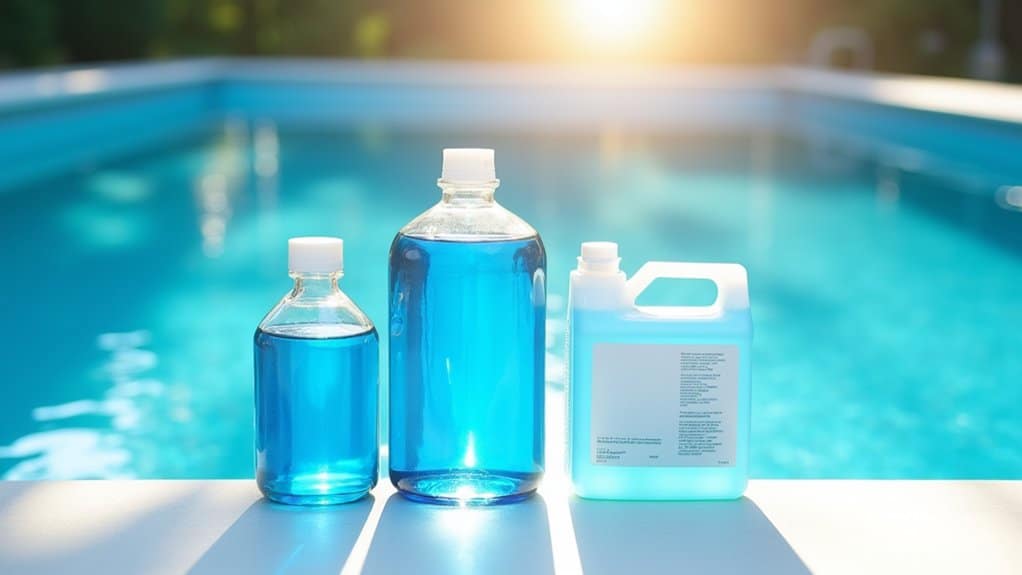
Water clarity stands as a critical component of fiberglass pool maintenance, with advanced chemical clarifiers serving as the primary defense against particulate contamination. You’ll find clarifier effectiveness maximized with brands like Pool Pro Super Clarifier and HTH Clarifier Advanced, which utilize cationic polymers for superior particle coagulation. These eco-friendly options require minimal dosing while delivering ideal results.
| Brand | Key Features |
|---|---|
| Pool Pro Super | 1oz/5,000gal, Baquacil compatible |
| HTH Advanced | Dual-action, pH neutral |
| In The Swim | Ultra-concentrated formula |
| Baquacil-Compatible | System-specific design |
| Pristine Blue | Non-chlorine specialized |
For best results, apply your chosen clarifier directly to the skimmer during regular maintenance cycles. Post-shock applications should wait 4-12 hours, and you’ll need to clean your filter afterward due to increased particle collection.
Leading Stain and Scale Prevention Products
To protect your fiberglass pool’s surface integrity, you’ll need effective scale prevention products like Leslie’s Scale Removers and specialized calcium eliminators that target mineral deposits before they become permanent. Your prevention strategy should include regular applications of stain and scale inhibitors, particularly focusing on products explicitly formulated for gel-coated surfaces. Maintaining proper chemical balance while using these specialty products will greatly extend your pool’s lifespan and preserve its pristine appearance.
Scale Prevention Top Picks
When selecting scale prevention products for your fiberglass pool, Orenda SC-1000 and Pool Stain Remover’s Stain & Scale Eliminator stand out as industry-leading chelating agents. These products’ scale prevention techniques focus on binding calcium and preventing mineral deposits before they can damage your pool’s surface.
- Apply chelating agents weekly or biweekly, adjusting frequency based on your water’s calcium hardness levels
- Implement treatments before shock applications to maximize chelation effectiveness
- Monitor calcium levels to stay below 120 ppm, using testing kits for precise measurements
- Dilute products according to manufacturer specifications for best results
You’ll achieve the best results by combining these premium scale preventers with proper pH management (7.2-7.4) and avoiding calcium-based chemicals in your maintenance routine. Regular applications of these chelating agents will protect your fiberglass surface from long-term scale damage.
Surface Protection Solutions
Protecting your fiberglass pool’s surface requires a multi-faceted approach using specialized chemical solutions beyond basic sanitizers. You’ll need a strategic combination of algaecides, clarifiers, and stain preventers to maintain ideal water quality. Additionally, regular testing and balanced chemistry are key. Using safe pool chemicals for fiberglass protects the surface and keeps your water clean, promoting long-term durability and swim enjoyment.
Apply algaecides weekly, particularly during warmer months, to prevent microscopic growth and reduce maintenance frequency. For chemical compatibility with your fiberglass surface, choose polyquat 60 formulations. When water clarity becomes an issue, use flocculant-based clarifying agents to coagulate suspended particles, making filtration more effective. These products work especially well with saltwater systems and won’t disrupt pH balance.
Key maintenance tips: Test water weekly, adjust chemical levels accordingly, and verify all products are specifically formulated for non-porous fiberglass surfaces. This thorough approach will help preserve your pool’s pristine condition while minimizing chemical usage.
Most Effective Algaecides for Fiberglass Pool Protection
Selecting the right algaecide for your fiberglass pool requires careful consideration of both effectiveness and surface compatibility. You’ll find polyquat-based products offer superior algaecide effectiveness while guaranteeing fiberglass compatibility, without the foaming issues common to traditional quat formulations. HTH 67084 and SeaKlear 90-Day stand out as top performers, delivering long-lasting protection without risking surface damage.
- Polyquat algaecides provide dual-action protection, killing existing algae while creating a preventive barrier
- Avoid metallic-based solutions, as copper and silver variants can permanently stain fiberglass surfaces
- Test water balance before application to guarantee ideal chemical effectiveness
- Use higher-concentration formulas for severe infestations, but never exceed recommended dosage limits
For best results, you’ll want to pair your algaecide treatment with regular maintenance and proper water chemistry monitoring.
Ph and Alkalinity Management Solutions
Maintaining proper pH and alkalinity levels stands as a critical cornerstone of fiberglass pool care. You’ll need to keep pH between 7.2-7.4 to protect your gelcoat surface, while maintaining total alkalinity at 80-120 ppm. Regular pH adjustments and alkalinity testing are essential for preventing damage to your pool’s finish.
Chemical | Application
—|—
Sodium Carbonate | Increases pH when below 7.2
Sodium Bisulfate | Decreases pH when above 7.6
Muriatic Acid | Alternative pH reducer
Sodium Bicarbonate | Raises alkalinity (1.5 lbs/10k gallons = +10 ppm)
Baking Soda | Alternative alkalinity increaser
For best results, you’ll want to address alkalinity issues before making pH adjustments. Remember to avoid calcium-based chlorine products, as they can cause unwanted pH spikes. After any chemical additions or introducing new water, always retest your levels to guarantee proper balance.
Year-Round Chemical Maintenance Schedule
Beyond pH and alkalinity management, a structured year-round maintenance schedule will keep your fiberglass pool in prime condition. Your chemical testing regimen should adapt to seasonal changes, with increased maintenance frequency during peak swimming months. Establish a consistent schedule that accounts for usage patterns, weather conditions, and equipment performance.
- Perform weekly sanitizer level tests and adjust chemicals based on accurate readings from reliable test kits
- Run your filtration system for 6+ hours daily during peak season, cleaning the filter basket weekly and conducting monthly thorough cleanings
- Maintain ideal water levels at the skimmer midpoint, using pool covers to minimize evaporation and debris
- Address debris and algae immediately through daily skimming, twice-weekly wall brushing, and weekly vacuuming to prevent long-term issues
Cost Comparison of Premium Pool Chemical Brands
When comparing premium pool chemical brands, you’ll find annual treatment costs ranging from $360-900 for chlorine-based systems to $600-1,200 for mineral sanitizers like Magna Pool and Prism. Your geographic location greatly impacts pricing, with urban areas typically commanding 10-15% higher costs than rural regions due to supplier availability and shipping factors. Subscription services through major retailers like Leslie’s and SCP can reduce your annual expenses by 15-25% through auto-ship programs and bundled maintenance packages.
Annual Treatment Costs
Premium pool chemical brands typically cost between $800-1,200 annually for a standard fiberglass pool, with high-end manufacturers like Bio-Guard, Leslie’s, and HTH commanding 15-25% higher prices than generic alternatives. Your annual maintenance costs will fluctuate based on seasonal adjustments and specific chemical demands of your pool.
- Monthly chlorine treatments average $30-50, requiring higher doses during peak swimming seasons
- Quarterly shock treatments cost $75-100 per application, with increased frequency during heavy usage
- pH balancers and stabilizers add approximately $150-200 to your yearly expenses
- Algaecide treatments range from $120-180 annually, depending on your climate and pool exposure
You’ll need to factor in additional costs for test kits, filter media replacements, and unexpected chemical corrections throughout the swimming season.
Brand Price Differences
To effectively manage your fiberglass pool’s chemical program, understanding brand price variations is essential for budgeting and maintenance planning. When conducting brand comparisons, you’ll find that pricing strategies vary greatly among premium manufacturers.
| Brand | Price Range | Best For |
|---|---|---|
| Leslie’s Pool | Premium | Specialty treatments |
| Clorox Pool&Spa | Mid-range | Basic maintenance |
| HTH Pool Care | Economy | Routine care |
While Baquacil offers non-chlorine alternatives specifically designed for fiberglass pools at higher price points, BioGuard specializes in professional-grade saltwater solutions with premium pricing. You’ll need to factor in both initial and ongoing costs. Chlorine-based systems from HTH offer the lowest upfront investment, while Baquacil’s non-chlorine products require a larger initial investment but may provide better long-term value for sensitive users.
Safety Considerations When Using Pool Chemicals
Safe handling of pool chemicals requires a thorough understanding of proper storage, ventilation, and security protocols that protect both people and property. You’ll need to maintain storage temperatures below 95°F (35°C) and guarantee secondary containment features prevent chemical mixing during spills. Your facility must comply with local regulations and manufacturer guidelines while implementing robust security measures to restrict access to trained personnel only. Additionally, choose the best chemicals for winter pool protection to extend your pool’s life. Update safety protocols regularly and train staff on proper handling to maintain a safe, compliant environment.
- Install emergency stations with safety showers and eyewash units within immediate reach of chemical handling areas
- Maintain separate air handling systems for chemical storage, pump rooms, and swimming areas to prevent cross-contamination
- Implement automated safety cutoffs for feed pumps when water flow is compromised
- Secure chemical storage areas with locks, surveillance systems, and clear hazard warning signs
Frequently Asked Questions
Can I Use Chemical Brands Not Recommended by My Fiberglass Pool Manufacturer?
While you can use alternative chemical brands for pool maintenance, you’ll need to carefully verify their compatibility with fiberglass surfaces. Non-recommended products must be calcium-free and meet strict manufacturer guidelines for pH and mineral content. You’re taking a risk with your warranty coverage, as damage from unapproved chemicals might not be covered. It’s safest to stick with manufacturer-approved products to protect your pool’s gelcoat surface.
How Do Water Temperature Changes Affect Chemical Dosing in Fiberglass Pools?
When water temperature changes in your fiberglass pool, you’ll need to adjust your chemical dosing accordingly. Higher temperatures accelerate chemical reactions and increase chlorine consumption, requiring more frequent additions. You’ll typically need to increase chemical doses by 10-15% for every 10°F rise in temperature. Conversely, colder water slows reactions and requires less frequent dosing. Monitor your chemical balance closely during temperature shifts to maintain proper levels and prevent gel coat damage.
Should I Adjust Chemical Treatments Based on Pool Usage Frequency?
Yes, you’ll need to adjust your chemical balance based on usage patterns. When your pool sees heavy use, you should test water chemistry daily and increase sanitizer levels to combat higher contaminant loads from swimmers. For low-usage periods, weekly testing is sufficient. You’ll also need more frequent shock treatments during high-use periods to oxidize organic matter, and you should maintain stricter pH control (7.2-7.8) when usage increases.
Are Natural or Enzyme-Based Alternatives Effective for Fiberglass Pool Maintenance?
Yes, natural cleaners and enzyme-based treatments are highly effective for fiberglass pool maintenance. You’ll find that enzymes break down organic contaminants like oils, dead algae, and microscopic debris that traditional chemicals might miss. They’re particularly beneficial because they reduce your chlorine dependency by up to 60% while maintaining proper sanitization. You can expect enhanced filter performance and decreased cleaning frequency when incorporating enzyme treatments into your maintenance routine.
What Chemical Combinations Should Never Be Mixed in Fiberglass Pools?
You should never mix different types of chlorine products together, as these chemical reactions can create dangerous gases and damage your fiberglass pool’s surface. Don’t combine acid-based products with chlorine sanitizers, and avoid mixing calcium-based chemicals with chlorine in high pH conditions. For safety precautions, always maintain separate storage for acids and bases, and never add water to acid. Wait at least 24 hours between adding different chemical types.
Best Brand of Pool Chemicals Offer Products for Saltwater Fiberglass Pools?
Yes. Major pool chemical brands offer products suitable for saltwater fiberglass pools, including sanitizers, balancers, stain controls, and scale preventers. Product choice should support a pH around 7.2 to 7.8 and free chlorine around 1 to 3 ppm without using harsh products that can affect the gelcoat.
Bioguard Pool Chemicals Safe for Fiberglass Gelcoat Surfaces?
Many BioGuard products can be used with fiberglass pools when the individual product label specifically permits it. Avoid letting concentrated chlorine or undissolved chemicals sit directly on the gelcoat, and keep water chemistry within recommended ranges, including roughly 7.2 to 7.8 pH.
Best Pool Chemical Brands Provide Consistent Active Ingredient Concentrations?
Reputable pool chemical brands normally list the active ingredient and its concentration on the product label, allowing more consistent dosing. For example, liquid chlorine products may contain roughly 10% to 12.5% sodium hypochlorite, while concentrations vary by product type and manufacturer.
Fiberglass Pool Chemicals Differ From Chemicals Used in Concrete Pools?
The basic sanitizers and water-balancing chemicals are often the same, but fiberglass pools require greater attention to protecting the gelcoat from staining, scaling, and concentrated chemicals. Fiberglass pools generally perform well with calcium hardness around 150 to 250 ppm, while concrete pools often require higher calcium levels.
Fiberglass Pool Cleaning Chemicals Safe for Steps and Tanning Ledges?
Yes, if the cleaner is specifically labeled safe for fiberglass or gelcoat surfaces. Steps and tanning ledges receive more direct chemical contact, so avoid highly abrasive or strongly acidic cleaners and rinse treated areas thoroughly after the recommended contact time on the product label.