



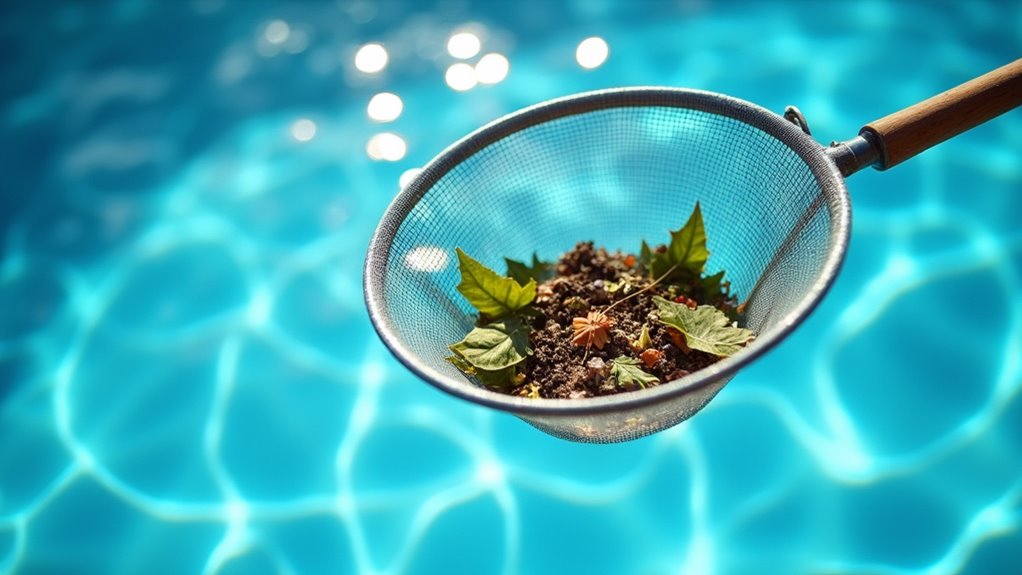

To properly prepare your fiberglass pool for painting, you’ll need to follow three critical steps. First, deep clean the surface using a pool skimmer, soft-bristle brush, and fiberglass-safe vacuum to remove all debris. Next, sand the entire surface with 80-grit water-resistant sandpaper, making 1-2 light passes while avoiding cross-hatch patterns. Finally, guarantee complete dryness using the plastic sheet method to test for moisture. These foundational steps will determine your paint job’s ultimate success and longevity. After prepping the surface, apply a fiberglass-specific primer to boost adhesion and aid in restoring shine to fiberglass pools, ensuring a lasting, attractive finish.
Deep Cleaning the Fiberglass Surface
Before you can achieve a successful paint job on your fiberglass pool, thorough cleaning is essential to guarantee proper paint adhesion. Start by removing all surface debris using a pool skimmer for floating particles and a soft-bristle brush for the walls and bottom. Follow up with a fiberglass-safe vacuum cleaner to capture fine particles and sediment. For best results, employ a robotic pool cleaner that can thoroughly and gently clean without damaging the sensitive fiberglass surface. After the initial cleaning, check for any wear or damage. Following the proper steps for cleaning fiberglass pool creates a smooth, paint-ready surface finish by rinsing to remove all cleaning agents.
Regular maintenance featuring proper chemical balance will help prevent extensive cleaning needs before painting. Next, apply appropriate chemical treatments designed specifically for fiberglass surfaces. After cleaning, coarse sandpaper should be used to manually sand the entire surface. Don’t use abrasive cleaning tools or harsh chemicals that could damage the substrate. Instead, focus on problem areas like corners and the waterline where stains typically accumulate. You’ll want to use gentle, non-abrasive cleaners and soft brushes to remove buildup. For automated cleaning, consider using robotic systems that are programmed to clean without causing surface damage.
Proper Sanding Techniques
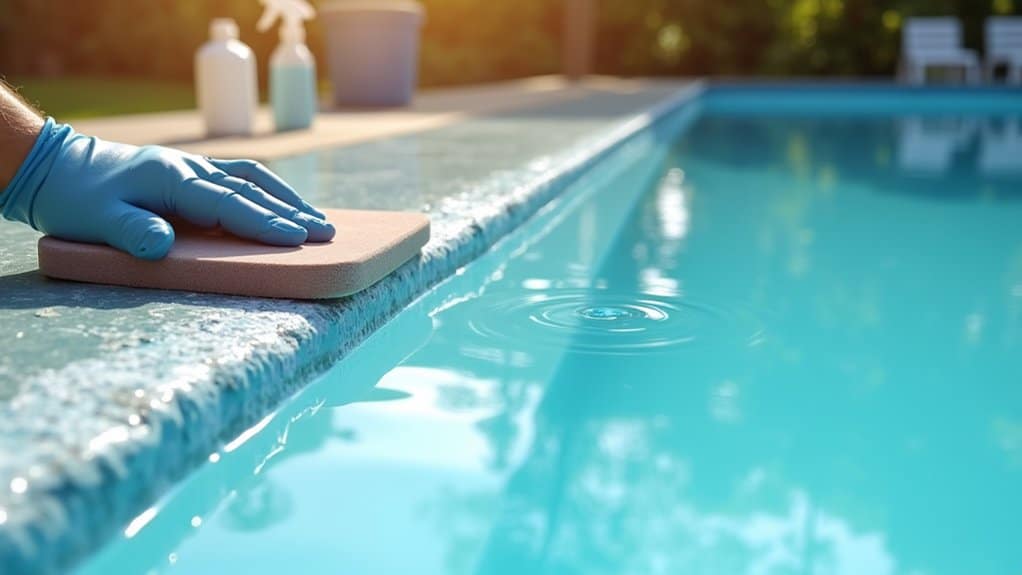
After thoroughly cleaning your fiberglass pool surface, proper sanding creates the ideal foundation for paint adhesion. Use 80-grit water-resistant sandpaper with handheld blocks or pole-mounted pads, avoiding orbital sanders that can damage the surface. Apply even sanding pressure while working parallel to surfaces, making only 1-2 light passes to roughen without exposing the underlying layers. Quality sanding preparation helps ensure your paint will last five to six years. When using sandpaper, attach it securely to wooden pole extensions for effective reach across pool surfaces.
Pay special attention to curved areas, steps, and areas around pool fittings, where manual sanding guarantees precise control. You’ll need to work systematically across walls, floors, and connections, maintaining consistent pressure throughout. Don’t create cross-hatch patterns, as they’ll trap moisture and compromise your paint’s longevity. Once you’ve finished sanding, rinse the surface immediately and pump out the water to prevent dust settlement. Let the pool dry completely before proceeding with paint application.
Ensuring Complete Dryness
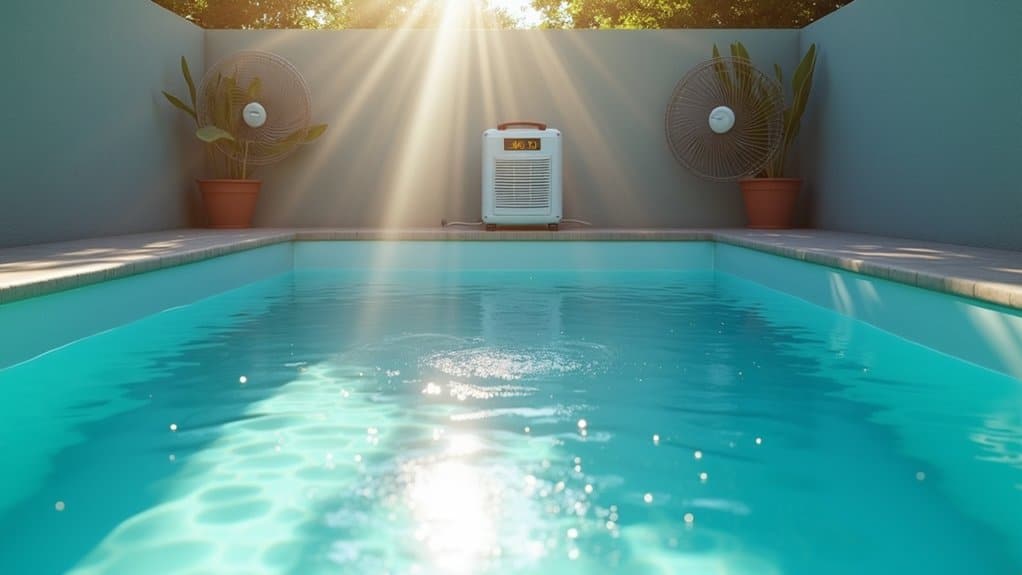
Complete dryness stands as the cornerstone of a successful pool painting project. To guarantee your pool surface is ready, you’ll need to conduct thorough moisture testing using the plastic sheet method. Place clear plastic sheets in multiple areas – particularly the shallow floor, deep end, and shaded walls securing them with duct tape to detect any condensation. Using a coarse sandpaper surface, fiberglass pools require thorough sanding rather than acid etching for proper paint adhesion.
After waiting four to five hours, check all test areas carefully for any signs of trapped moisture. Monitor weather conditions carefully, as temperature, humidity, and sun exposure greatly impact drying times. While summer applications may cure in 7 days, winter projects can take up to 14 days. If you’re using epoxy paint, the surface must be completely dry, though acrylics can tolerate slightly damp conditions. Once painted, avoid chemical treatments for 3-5 days and wait the full curing period (7-14 days) before filling. Remember, surfaces may feel dry but still contain hidden moisture.
Frequently Asked Questions
How Long Should the Pool Paint Cure Before Refilling With Water?
You’ll need to allow at least 7 days of curing time before refilling your pool with water. If you’re working in winter or with indoor pools, extend this to 14 days. You can reduce the curing time to 3 days if temperatures consistently stay around 65°F. Don’t rush this process proper curing prevents paint failure. Once you’re ready to fill, make certain the water temperature isn’t extreme, as this could affect the paint’s adhesion.
Can Fiberglass Pools Be Painted in Humid Weather Conditions?
While you can paint fiberglass pools in humid conditions, you’ll need to take extra precautions due to humidity effects on paint curing. Don’t paint when relative humidity exceeds manufacturer-specified thresholds, typically 85%. Adjust your painting techniques by working in early morning hours, using fans for air circulation, and extending drying times by 1-3 days. You’ll also need to thoroughly test surface dryness with acetone before starting the paint application.
What Type of Paint Provides the Longest-Lasting Finish for Fiberglass Pools?
For your fiberglass pool, epoxy coatings provide the longest-lasting finish, offering 5-8 years of paint durability under normal conditions. You’ll get superior protection against chemicals, UV exposure, and mechanical stress from pool cleaners. To maximize longevity, you’ll need to apply two coats and allow 4-7 days for proper curing. While it’s more expensive than other options, epoxy’s superior bonding and resistance to wear make it worth the investment.
How Often Should a Fiberglass Pool Be Repainted for Optimal Maintenance?
For ideal pool maintenance, you’ll need to repaint your fiberglass pool every 10-15 years. However, paint longevity depends on several factors that you should monitor. If you’re experiencing heavy UV exposure, improper chemical balance, or intense pool usage, you might need to repaint sooner. You’ll know it’s time when you notice fading, chalking, or peeling. Regular inspections will help you determine the right timing for your specific situation.
Are Special Primers Required Before Applying Paint to a Fiberglass Pool?
You don’t always need special primers for fiberglass pools, as many modern pool paints are self-priming. However, your choice depends on the paint type and surface condition. If you’re using epoxy paint on bare or rough fiberglass, you’ll benefit from an epoxy primer for better adhesion. For most applications, proper surface preparation through manual sanding and TSP cleaning can effectively substitute for primer, especially when using acrylic or rubber-based paints.