
Low-cost swimming pool ideas for small backyards include stock tank pools, inflatable pools, compact above-ground pools, and small plunge pools. A DIY stock tank pool typically costs about $310–$1,360, while a 7-foot model holds around 550 gallons. Small above-ground plunge pools can start near $3,000, although professionally installed plunge pools more commonly range from $10,000–$40,000. Choosing a compact design and limiting excavation, decking, and custom features can help keep the total budget lower.
Stock Tank Pools: The Ultimate Budget-Friendly Solution
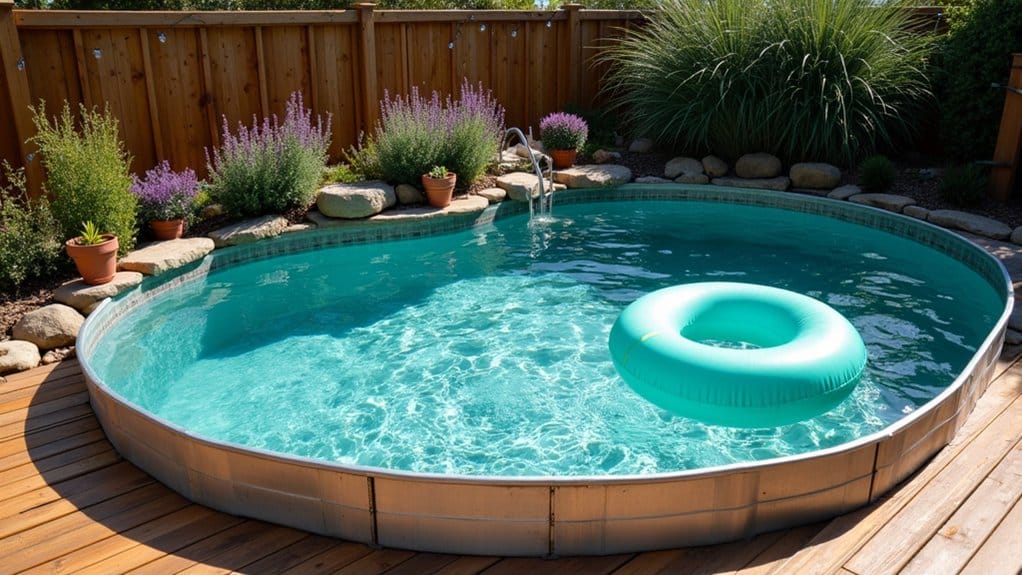
Looking for an affordable backyard pool solution? Stock tank pools have emerged as one of the most economical pool solutions, costing just $200-500 for the tank plus $120-300 for essential equipment. These cheap small pools offer impressive durability and straightforward DIY installation that you can complete in hours.
To create your budget backyard swim space, you’ll need to level the ground with paver sand, cut holes for the pump system using a hole saw, and install basic filtration equipment. Silicone waterproof sealant must be applied around all connections to prevent leaks. Installing the inlet and outlet valves in specific positions helps optimize water circulation and debris removal. Using filter glass media instead of traditional sand provides superior water filtration performance. The 8-foot diameter tanks hold 500-800 gallons and resist damage from pets and children. While they’re not suitable for lap swimming, these pools are perfect for cooling off and casual soaking. Regular maintenance includes monitoring water chemistry, cleaning filters, and taking rust prevention measures to guarantee longevity.
Inflatable Pools: Beyond the Kiddie Pool Stereotype
While inflatable pools once carried a reputation for being merely children’s playthings, today’s models offer sophisticated features and impressive capacities that rival permanent installations. Modern three-ply vinyl construction guarantees durability, while capacities up to 639 gallons can accommodate 4-6 adults comfortably. Short-term rental options make inflatable pools an excellent choice for temporary living situations. Regular maintenance requires ground cloth placement beneath the pool to prevent punctures and extend its lifespan.
You’ll find rectangular designs perfect for lap swimming, built-in seating for lounging, and even models with integrated basketball hoops. Many units include dual air chambers for enhanced stability and safety during use. Prices range from $50-$150 for family-sized options, with premium features available up to $500. Most units include convenient drain valves and can be set up within 30 minutes.
For pool maintenance, you’ll want to invest in a pool cover and consider models with built-in filtration systems. These features help keep your water clean while minimizing upkeep time and extending your pool’s lifespan.
Smart Ways to Finance Your Small Pool Project
When planning a small pool project, understanding your financing options can help you make the most cost-effective decision for your budget. Home equity loans offer the lowest rates (2-4% below unsecured options) with predictable monthly payments, but they’ll put your home at risk as collateral. Personal loans provide quick funding up to $100,000 without collateral, though rates range from 6-36% based on your credit score. Using online loan estimators can help you compare personalized offers from multiple lenders without impacting your credit score. Choosing a fiberglass pool design can help offset financing costs through reduced maintenance and chemical expenses over time. FHA 203(k) loans provide 30-year repayment terms for qualified homeowners looking to finance both their pool and other home improvements.
For smaller pool projects, consider exploring credit union offerings, which typically feature better rates than traditional banks. You’ll also want to compare contractor financing plans, which might include promotional rates or same-as-cash deals. Before committing, calculate your total costs, including interest, and guarantee monthly payments fit within your budget. Remember, financing can double or triple your pool’s original cost over time.
Space-Maximizing Design Tips for Tiny Yards
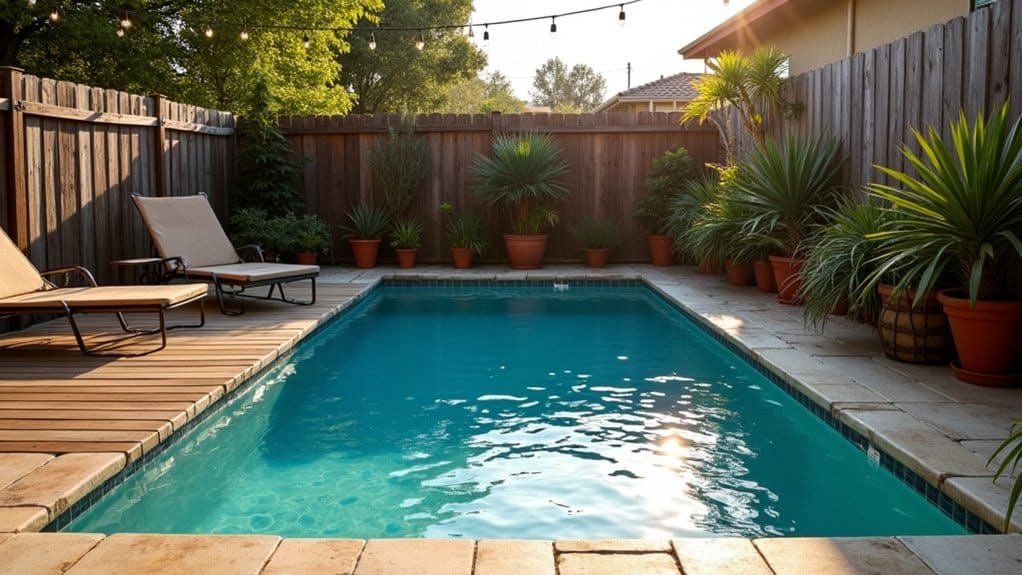
Now that you’ve secured your financing, making smart design choices can help you maximize every inch of your limited yard space. Consider rectangular or cocktail pool designs under 200 sq ft, which offer ideal swim area for tight spaces. A 10′ × 16′ layout can efficiently fit most small yards while maintaining functionality. Above-ground pools provide a practical alternative for those seeking seasonal use and easier storage options. Exploring mini pool ideas for small spaces can transform your yard into a refreshing retreat. Adding built-in seating or surrounding planters creates a cozy, inviting atmosphere, making even a small pool the focal point of your garden.
Integrate multi-level decking with built-in seating and benches around the pool’s perimeter to create versatile relaxation zones. Adding a tanning ledge provides an ideal spot for lounging in shallow water. For optimal safety and enjoyment, maintain a 5 to 6 feet maximum depth throughout the pool design. You’ll maximize usability by installing vertical features like water cascades or privacy walls instead of space-consuming horizontal elements. For added efficiency, choose compact furniture that’s easy to store and floating accessories that won’t crowd your deck space.
Add layered container gardens and climbing plants along edges to create visual depth without sacrificing precious square footage.
DIY Installation Strategies to Cut Labor Costs
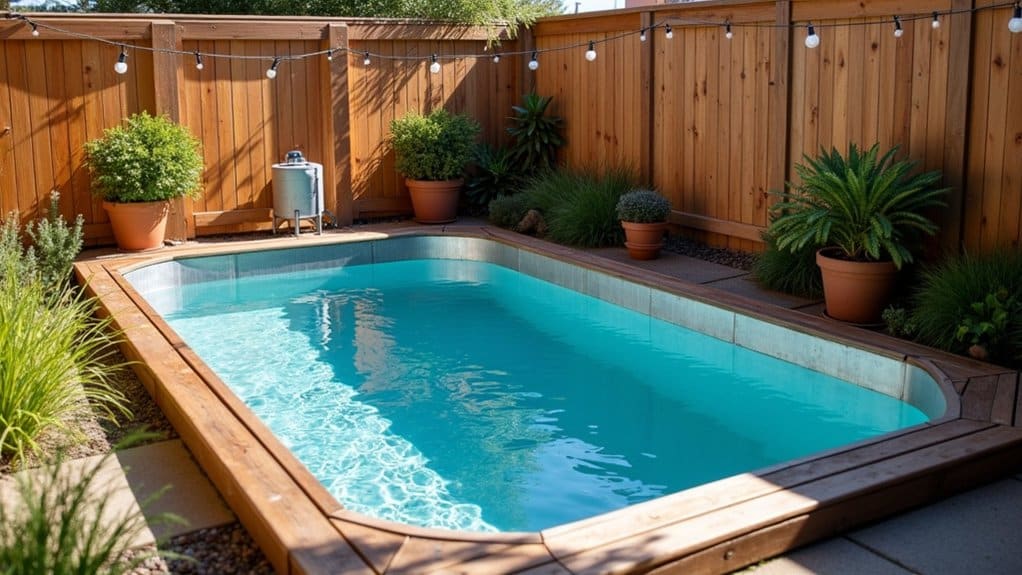
By taking a strategic DIY approach to pool installation, you’ll considerably reduce labor costs while maintaining quality and safety standards. Focus on tasks you can safely handle yourself, like site preparation and basic assembly, while leaving specialized work like electrical to licensed professionals. Heavy machinery requirements make professional excavation necessary for most in-ground pool installations. Building a concrete pool yourself is generally not advisable since it requires specialized skills for proper installation.
| Task Type | DIY-Friendly | Potential Savings |
|---|---|---|
| Site Prep | Hand digging, leveling | $500-1000 |
| Shell Install | Vinyl liner, stock tank | $1000-2000 |
| Plumbing | Flexible PVC, pre-assembled kits | $300-800 |
| Finishing | Gravel surround, basic decking | $400-1200 |
Remember to vacuum-stretch vinyl liners properly to prevent wrinkles, and always backfill while filling to maintain equal pressure on pool walls. For equipment installation, pre-assembled pump and filter kits starting at $300 offer the most straightforward setup for DIY installers.
Money-Saving Maintenance Tricks and Tips
Smart maintenance strategies can dramatically reduce the ongoing costs of pool ownership while ensuring safe, crystal-clear water. By implementing basic DIY practices and preventative care, you’ll save hundreds in professional service fees while extending your pool’s lifespan.
Consider installing an energy-efficient motor that can reduce operational expenses significantly over time. Test water chemistry regularly using affordable test strips ($10-20 monthly) instead of expensive digital testers, and buy chemicals in bulk for 30% savings. Clean filters and skimmer baskets yourself, brush walls weekly, and vacuum manually to avoid $80-150 monthly service charges. Run pumps during off-peak hours and maintain proper water levels to reduce electricity costs by up to 30%. Use pool covers to minimize evaporation and chemical loss, saving $60-120 per refill while keeping debris out.
Remember to document your maintenance schedule and stay consistent with these money-saving practices.
Four-Season Pool Solutions on a Budget
You’ll maximize year-round pool enjoyment while minimizing costs by investing in a quality thermal cover that prevents heat loss and keeps debris out during winter months. Incorporate winter-ready features like dark interior finishes to absorb solar heat and strategically position your pool near natural windbreaks to reduce heating expenses. Maintain separate sets of seasonal equipment, including an efficient heat pump for shoulder seasons and solar heating options, to optimize your pool’s performance throughout changing temperatures.
Pool Covers Save Money
While many pool owners focus on initial installation costs, investing in a quality pool cover delivers substantial long-term savings across multiple categories. You’ll see immediate reductions in operating expenses while extending your pool’s usability throughout the year.
Even basic covers provide significant financial benefits:
- Water conservation: Reduces evaporation by up to 90%, saving 20,000+ gallons annually
- Chemical savings: Cuts chemical consumption by 70% and decreases debris-related maintenance
- Energy efficiency: Lowers heating costs by up to 70% through improved insulation
- Safety benefits: ASTM-rated covers reduce drowning risks by 80% and may lower insurance premiums
For budget-conscious homeowners, manual and solar bubble covers offer affordable starting points while still delivering robust savings on water, chemicals, and energy costs over time.
Winter-Ready Design Features
Getting your small pool ready for winter doesn’t require an expensive overhaul. Start by installing rigid foam board insulation around your pool walls to maximize heat retention and reduce heating costs. Add a dense evergreen hedge or strategic fencing as a windbreak to minimize heat loss through evaporation. Additionally, consider using a quality pool cover for added insulation and protection from snowfall. For professional advice and installation, consult with pool construction experts who can help optimize your winter preparations.
Consider upgrading to freeze-resistant plumbing materials like flexible PVC or PEX to prevent winter damage. If you’re building new, choose durable materials like fiberglass or galvanized stock tanks that better withstand freeze-thaw cycles. Install your pool on a properly compacted gravel base to prevent frost heave.
For budget-friendly heating, explore DIY solutions such as solar mat systems or black hose coils positioned in sunlight. You can also add a small attached spa zone using existing pool infrastructure for comfortable winter soaking without significant energy costs.
Seasonal Equipment Planning
Planning your pool’s seasonal equipment needs starts with choosing the right small backyard pool ideas on a budget. A cost-effective strategy combines essential temperature control, circulation, and protective elements to extend usability across seasons without overspending.
- Install a combination heat pump/chiller unit for efficient temperature management in both warm and cool months, particularly effective for small-volume pools that adjust temperature quickly
- Choose a variable speed pump with programmable circulation schedules to reduce energy costs by up to 80% while maintaining ideal filtration during high-debris periods
- Invest in a thermal pool cover or solar blanket to retain heat, minimize evaporation, and reduce chemical consumption year-round
- Select compact cartridge filters for easy maintenance, scheduling biannual cleanings to guarantee efficient operation and lower operating costs throughout the seasons
Creative Alternatives to Traditional Pool Options
Looking to create a backyard oasis without breaking the bank? You’ll find several innovative alternatives to traditional pools that offer both functionality and affordability. Stock tanks and shipping containers can be transformed into stylish swimming spaces at a fraction of the cost of conventional installations. Consider incorporating features like DIY deck installations or surrounding plants to enhance your outdoor space without overspending. With a little creativity, you can achieve stunning pool design on a budget while still enjoying a refreshing retreat right in your backyard.
| Option | Cost Range | Key Benefits |
|---|---|---|
| Stock Tank | Under $1,000 | Rust-resistant, easy maintenance |
| Shipping Container | $5,000-$10,000 | Above-ground installation, sturdy |
| Plunge Pool | $10,000-$15,000 | Compact design, lower utilities |
When exploring swimming pool ideas on a budget, focus on multi-functional features like built-in seating and removable decks to save space and reduce extra costs. Affordable upgrades such as LED lighting, vertical gardens, and simple water features can improve the look without overspending. Always prioritize proper filtration and safety features.
Essential Safety Features That Won’t Break the Bank
Three critical safety features can transform your small backyard pool into a secure swimming environment without depleting your savings. You’ll find that affordable safety measures offer complete protection while maintaining your budget-conscious approach.
- Install a DIY removable mesh fence ($800-$1,700) with self-closing gates for a code-compliant barrier that you can easily store during off-seasons
- Add dual-layer protection with pool gate alarms (under $100) and water surface motion detectors (under $200) to instantly alert you of unauthorized access
- Secure pool drains with anti-entrapment covers (under $150) to prevent suction-related accidents and meet federal safety standards
- Enhance poolside safety with slip-resistant mats ($50/area) and basic rescue equipment like life rings and reaching poles ($40 each)
Frequently Asked Questions
How Long Does Pool Water Typically Last Before Needing Replacement?
You’ll typically need to replace your pool water every 2-5 years, though it’s best to perform partial replacements (20-30%) every 2-3 years to maintain chemical balance. Watch for signs like high TDS levels, persistent algae, or frequent chemical imbalances that signal the need for fresh water. You can extend your water’s lifespan through regular maintenance, proper chemical monitoring, and protecting against debris contamination.
Can Homeowners Insurance Rates Increase After Installing a Small Pool?
Yes, you’ll see an increase in your homeowners insurance premiums after installing any pool, even a small one. Expect to pay about $50-$75 more annually for basic coverage. Since pools are considered an “attractive nuisance,” you’ll likely need to increase your liability coverage from $100,000 to $500,000. Consider adding an umbrella policy for extra protection; it’ll cost you an additional $200-$300 yearly for $1 million in coverage.
What Permits Are Required for Temporary Above-Ground Pools?
You’ll need permits if your temporary above-ground pool exceeds 24 inches in depth, holds over 5,000 gallons, or has a surface area larger than 150 square feet. You must submit a site plan, construction drawings, and barrier plan to your local authority. Don’t forget to check if you need an electrical permit for pumps or lighting. Even if your pool falls below these thresholds, it’s indispensable to verify requirements with your specific jurisdiction.
How Much Weight Can My Deck Support for a Portable Pool?
Your standard deck isn’t designed to support a portable pool, even a small 12-foot pool creates 131 psf, far exceeding the typical 50 psf deck load capacity. Don’t risk a catastrophic collapse. If you’re determined to install a pool on your deck, you’ll need a structural engineer’s assessment and likely substantial reinforcement work. For safety, it’s best to place your portable pool on solid ground instead of a raised deck surface.
Are There HOA Restrictions Specific to Temporary or Stock Tank Pools?
Yes, your HOA likely has specific restrictions on temporary and stock tank pools. You’ll need to carefully review your HOA documents, as many associations require written approval before installation, even for portable pools. Rules often limit pool size, depth, and visibility from neighboring properties. Even if municipal permits aren’t required, your HOA can enforce stricter guidelines, including safety barriers and seasonal removal requirements. Ignoring these rules could result in fines.
Small Backyard Pool Ideas on a Budget Use Gravel or Pavers Around the Pool?
Yes. Gravel and concrete pavers can reduce surrounding hardscape costs compared with a fully poured decorative deck. For example, a 10 × 20-foot pool with a 3-foot-wide border needs about 216 square feet of surrounding material, making it easier to budget the finish by square footage.
Swimming Pool Ideas on a Budget Include Refurbished Pool Equipment?
Yes. Refurbished pumps, filters, and heaters can reduce upfront costs if they are professionally inspected and correctly sized for the pool. Check the equipment’s manufacture date, remaining warranty, voltage, and rated flow in GPM before buying rather than relying only on the purchase price.
Inground Backyard Pool Ideas on a Budget Cost Less With Simple Rectangular Shapes?
Often, yes. Rectangular pools can be less complex to excavate, form, deck, and cover than highly curved custom shapes. A 10 × 20-foot rectangle has a 60-foot perimeter, giving contractors a straightforward layout with fewer curves and custom transitions, although there is no universal percentage savings for every project.