
Transform your backyard into a budget-friendly oasis by choosing cost-effective pool options like above-ground ($2,000-$8,000), stock tank ($500+), or modular designs ($15,000). You’ll maximize limited space through strategic L-shaped layouts, multi-level features, and boundary-aligned positioning. Add affordable DIY elements using repurposed materials, solar lighting, and slip-resistant surfaces to create a luxurious feel. Smart design choices and sustainable materials will unveil countless possibilities for your dream pool project.
Smart Pool Types for Cost-Conscious Homeowners
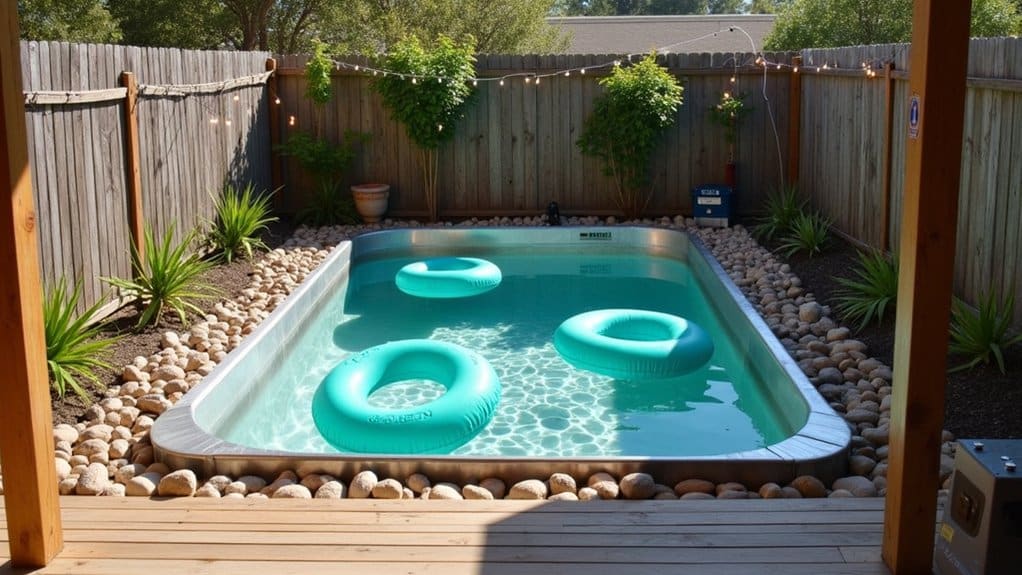
When planning a budget-friendly pool installation, selecting the right pool type can drastically impact both initial costs and long-term maintenance expenses. Above-ground pools offer the most affordable entry point, ranging from $2,000 to $8,000, while stock tank and inflatable options start as low as $500. Lifetime ownership costs must be considered, as vinyl liner replacement will be needed approximately every 7 years. With an average cost between standard inground pools typically ranging from $30,000 to $50,000, these options represent a significant investment.
For those seeking more permanent solutions, modular pools provide a cost-effective middle ground at $15,000, featuring contemporary designs and streamlined installation. For a traditional in-ground option, vinyl liner pools represent the most economical choice, with base packages starting around $45,000. Plunge pools and cocktail pools, starting around $20,000, maximize limited space while minimizing maintenance costs. If you’re prioritizing exercise, lap pools deliver functionality with sleek aesthetics, though they typically require a higher investment of $40,000.
Consider semi-inground installations for sloped yards, offering a balance between affordability and aesthetics at $8,000 to $25,000, with added insulation benefits that reduce ongoing operating costs.
Maximizing Small Yards With Strategic Pool Placement
Beyond selecting the right pool type, smart placement transforms even the smallest backyard into a luxurious aquatic retreat. Whether you opt for a geometric plunge pool or a freeform cocktail pool, strategic positioning maximizes your available space while creating distinct functional zones. L-shaped designs work exceptionally well for maximizing awkward corners in compact yards.
Consider multi-level designs that incorporate infinity edges or waterfalls if you’ve got a sloped yard. You’ll want to position your pool where it receives ideal sunlight while maintaining privacy through strategic placement of privacy screens and landscaping. Evaluate the natural drainage patterns carefully to prevent your pool area from becoming a collection point for yard runoff. Don’t overlook the importance of lighting; it enhances safety and ambiance without consuming additional space. Positioning the pool near common living spaces allows parents to keep a watchful eye on children while going about daily activities.
For tight spaces, align your pool with property boundaries or existing structures. This approach creates seamless integration between your home and pool area while leaving room for essential features like seating and walkways. Additionally, consider working with professionals who specialize in pool construction services to ensure the best results in limited areas. They can offer innovative design solutions that enhance functionality and aesthetics without compromising space.
DIY Pool Design Features That Save Money
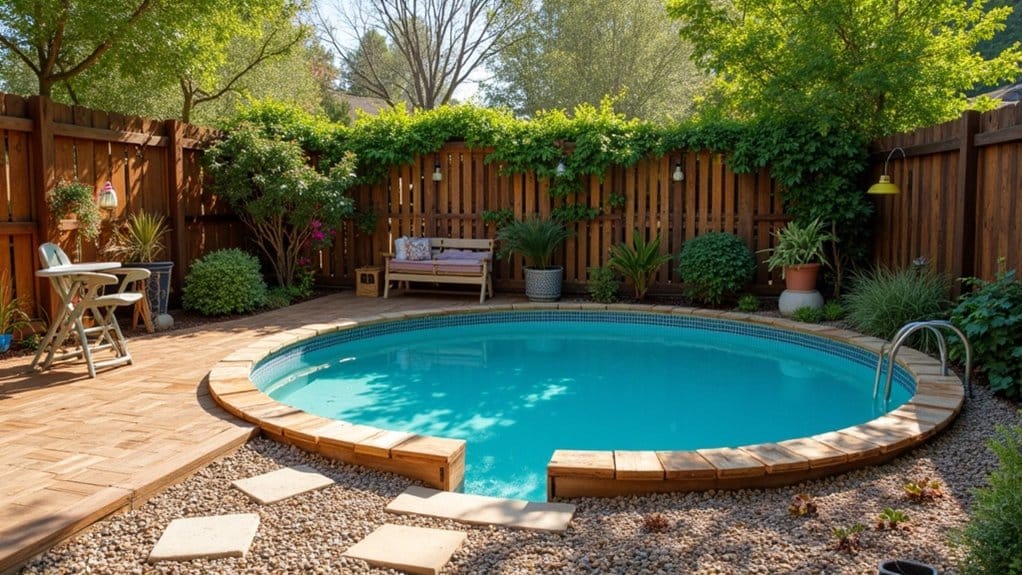
You’ll maximize your pool’s aesthetic appeal while minimizing costs by repurposing materials like reclaimed wood pallets for seating areas and planter boxes around the perimeter. Strategic placement of solar-powered path lights and LED string lights creates ambiance without increasing your electricity bill. Your DIY lighting plan should focus on key zones, entry points, steps, and gathering spaces, while using weather-resistant fixtures that complement your pool’s overall design scheme. Adding slip-resistant mats near walking areas helps prevent accidents while maintaining an attractive poolside appearance. Consider adding a neutral-toned pool to create a timeless look that allows for changing color schemes as trends evolve. Installing concrete pavers around your pool area provides a durable and cost-effective alternative to expensive natural stone options.
Repurposed Materials As Decor
Looking to maximize your pool budget without sacrificing style? Transform your poolside space by strategically incorporating repurposed materials as functional decor elements. Convert salvaged pallets into weather-resistant deck surfaces and integrated storage benches, while reclaimed industrial containers serve as low-cost planters and towel stations. Custom sign displays made from plywood add a personal touch while marking different areas around the pool.
Upcycle discarded tires into non-slip steps and creative seating options, and repurpose salvaged metal pipes into eco-friendly water features. Install refurbished cabinets for waterproof storage, and mount industrial brackets to create budget-friendly towel hooks and accessory organizers. Consider incorporating sustainable elements like DIY planter boxes crafted from offcut wood to seamlessly blend your pool area with the surrounding landscape. The UV-protective canopy, crafted from upcycled materials, provides a comfortable shaded area for lounging while adding artistic flair to your outdoor space. These creative solutions allow for creating a lasting inground pool that will serve your family for generations while keeping costs down through innovative material reuse.
Budget Lighting Solutions
Transforming your pool’s ambiance doesn’t require expensive commercial lighting systems when strategic DIY solutions can deliver professional results at a fraction of the cost. You’ll find individually addressable LED options under $60 that offer 16 million color combinations and custom animations. A standard power transformer is essential for safe LED operation.
Consider installing solar-powered units ($20-$50 each) around your pool’s perimeter to eliminate wiring costs and reduce energy consumption. For broader coverage, budget-friendly halogen lights provide bright illumination, though they consume more power than LEDs. Maximize impact by combining weatherproof LED strips ($25/16ft) along walkways with strategic spotlights for feature accents. For added ambiance, suspend string lights overhead or position floating lights and mason jar lanterns poolside. These DIY lighting combinations create sophisticated atmospheres while maintaining strict budget control.
Budget-Friendly Pool Landscaping Solutions
Creating an inviting pool landscape doesn’t require an extensive budget when you leverage smart design principles and cost-effective materials. By incorporating native plants and drought-resistant species, you’ll minimize water consumption while reducing maintenance costs. Install ground cover like creeping thyme to prevent erosion and replace traditional grass, while climbing plants add vertical interest to your space. Soft lighting placement along pathways creates an enchanting evening atmosphere without excessive costs. Above-ground pools can cost up to ten times less than inground options while providing similar benefits. Natural stone materials and concrete pavers offer durable, cost-effective solutions for pool surrounds that complement any design style.
Optimize your hardscape with affordable materials such as pea gravel for pathways and concrete stepping stones for defined borders. Wood pallet panels can transform an above-ground pool’s exterior, while artificial turf provides a chlorine-resistant, low-maintenance surface. Consider decorative fencing that doubles as a privacy barrier and safety feature. These strategic choices create a cohesive, sustainable poolscape that maximizes visual appeal while maintaining budget constraints.
Essential Maintenance Tips to Reduce Expenses
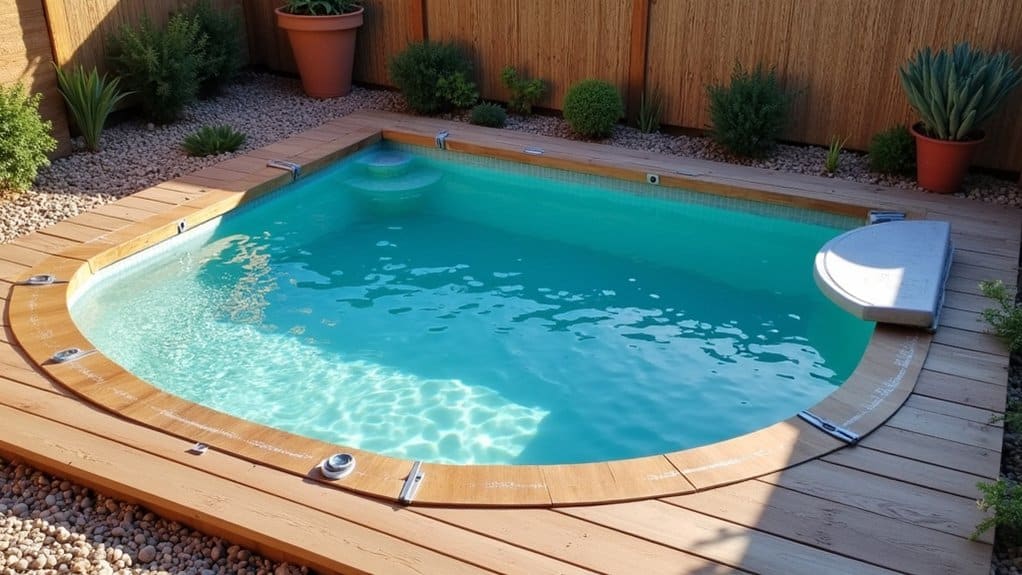
While maintaining a pool can appear formidable, implementing strategic maintenance practices considerably lessens long-term expenses. You’ll need to focus on five key areas: daily skimming, chemical balance monitoring, proper use of pool covers, equipment efficiency, and preventative inspections.
Start by establishing a routine of daily skimming and weekly brushing to prevent debris accumulation. Regular filter cleaning and water testing guarantee ideal chemical balance, preventing costly imbalances and repairs. Install a quality pool cover to reduce evaporation, chemical usage, and debris contamination. Maximize equipment efficiency by scheduling pump operation during off-peak hours and conducting regular system inspections. Don’t overlook preventative maintenance; addressing minor issues promptly prevents them from escalating into major expenses. These practices will dramatically reduce your pool’s operational costs while maintaining its pristine condition.
Creative Ways to Enhance Your Pool Area
You’ll maximize your pool area’s functionality by installing weatherproof storage benches that double as seating while keeping pool toys, cleaning supplies, and safety equipment organized and protected. Strategic placement of solar-powered LED strips along your pool’s perimeter creates safe nighttime swimming conditions while reducing energy costs. Adding motion-sensor flood lights near entry points and incorporating waterproof battery-operated lanterns around seating areas transforms your pool space into an evening entertainment zone that’s both practical and atmospheric.
Pool-Side Storage Solutions
Smart storage solutions transform your pool area from cluttered to organized while maximizing limited space. Start with waterproof deck boxes that double as seating while protecting pool toys and towels. Install wall-mounted racks near your above-ground pool to efficiently store nets, brushes, and maintenance equipment.
Consider ventilated storage sheds to protect expensive pool equipment and chemicals while preventing moisture damage. If you’re on a budget, explore DIY options like converting pallets into vertical organizers or weatherproofing old furniture for poolside storage. Built-in benches with hidden compartments maintain a clean aesthetic while providing essential storage space.
For compact backyards, opt for slim cabinets integrated into your deck or utilize vertical space with floating shelves. These practical solutions keep your pool area tidy without compromising style or functionality.
Lighting For Evening Swimming
Strategic pool lighting transforms your evening swimming experience while guaranteeing both safety and ambiance. Start with in-pool lights and submersible LED lights to illuminate the water, creating a safe swimming environment while adding visual appeal. Layer your lighting design by incorporating landscape lighting around the pool’s perimeter and accent fixtures to highlight architectural features.
Install path lights and step lights along walkways and stairs to prevent accidents, while deck post lights define entertainment zones. For budget-conscious solutions, consider solar-powered floating lights that charge during the day and automatically illuminate at night. When spotlighting key features like waterfalls or pergolas, position fixtures strategically to avoid harsh shadows. This multi-layered approach secures your pool area remains functional and inviting long after sunset while maintaining energy efficiency.
Money-Saving Equipment and Upgrades
The right equipment and upgrades can dramatically reduce your pool’s operating costs while enhancing its functionality. Start by investing in energy-efficient pool pumps, particularly variable-speed models that cut energy usage by up to 80%. Install LED lights to minimize electricity consumption while providing 25 times longer lifespan than traditional bulbs.
Add a solar cover to retain heat and decrease water evaporation, potentially reducing heating costs by 70%. Incorporate a timer-based system to optimize filtration cycles. For maintenance efficiency, consider a robotic cleaner paired with enhanced skimmer attachments. Install a budget-friendly sand filter and automatic chlorinator to simplify water treatment while maintaining consistent chemistry. These strategic upgrades deliver substantial long-term savings through reduced energy consumption, water usage, and maintenance requirements.
Year-Round Pool Value Optimization
Maintaining your pool’s value throughout the year requires a systematic approach to preservation and efficiency optimization. You’ll need to implement routine maintenance schedules that encompass water quality testing, chemical balance monitoring, and circulation system checks.
Focus on structural longevity through consistent surface care, including weekly brushing and debris removal. Your filtration system should run 10-12 hours daily to prevent stagnation and guarantee even chemical distribution. To maximize utility savings, install energy-efficient pumps and use pool covers to reduce evaporation and chemical loss.
Cost efficiency comes from preventive maintenance, inspect equipment regularly, clean filters according to their specific requirements, and address minor issues before they escalate. By maintaining proper pH levels (7.2-7.6) and alkalinity (80-120 ppm), you’ll protect both your investment and your family’s health while minimizing long-term repair costs.
Return on Investment: Making the Right Pool Choice
While maintaining your pool’s value requires consistent upkeep, selecting the right pool type initially determines your long-term return on investment. Inground pools offer the highest ROI potential, ranging from 5% to 56%, with typical returns of 7-8%. Their installation costs average $65,500, but design features and local market demand noticeably influence resale value.
Above ground pools, though more budget-friendly at $3,500, yield minimal ROI at around 7% ($245). Your climate plays an essential role; warm-weather regions like Florida and California see stronger returns. Consider that construction quality, premium finishes, and integrated landscaping enhance value appreciation. However, don’t base your decision solely on ROI metrics. Personal enjoyment often outweighs financial returns, especially in markets where pools aren’t standard features. Research your local real estate trends thoroughly before committing to any pool installation. Exploring affordable pool designs can lead to a more tailored approach that suits both your budget and lifestyle. Additionally, consider the long-term maintenance costs associated with different pool types, as these can impact your overall investment.
Frequently Asked Questions
How Long Does It Take to Install Different Types of Pools?
You’ll find installation times vary remarkably based on your chosen pool type. Fiberglass pools are quickest, taking 3-5 weeks from permit approval. Vinyl liner pools require 2-4 weeks of construction after excavation. Concrete pools demand the longest timeline at 3-6 months due to extensive curing periods. Note that permitting can add 1-10 weeks to any pool project, and factors like weather, site conditions, and design complexity affect completion times.
Can I Convert My Existing Above-Ground Pool Into an In-Ground Pool?
While it’s technically possible, you shouldn’t convert a standard above-ground pool into an in-ground pool due to significant structural risks. Most above-ground pools aren’t engineered to withstand soil pressure and could collapse when buried. If you’re determined to pursue this, you’ll need a specially designed “semi-inground” model and professional reinforcement. Consider that the conversion costs often approach those of a new in-ground pool while offering reduced longevity.
What Permits and Regulations Should I Consider Before Building a Pool?
You’ll need to secure a building permit for any pool deeper than 18-24 inches, with your application including site plans, construction drawings, and project specifications. Check your local zoning laws and HOA rules for setback requirements and location restrictions. Install safety barriers at least 48 inches high with self-closing gates, and guarantee compliance with health department regulations if you’re near septic systems. Don’t forget to verify utility locations before digging.
Are There Specific Insurance Requirements for Different Types of Pools?
Yes, you’ll face different insurance requirements based on your pool type. In-ground pools are typically classified as “other structures” with coverage up to 10% of your dwelling limit, while above-ground pools may be treated as “personal property” if portable. You’ll need to maintain specific safety features like a 4-foot fence with a lockable gate, and consider increasing your liability coverage to $300,000-$500,000 due to pools being “attractive nuisances.”
How Do Local Climate Conditions Affect Pool Material and Design Choices?
Your local climate noticeably impacts which pool materials and designs will perform best. In cold regions, you’ll want flexible fiberglass pools that resist freeze-thaw damage, while concrete pools excel in areas with temperature fluctuations but need regular resealing. For humid climates, you’ll benefit from non-porous materials to prevent mold growth. Consider using locally sourced stone for durability and incorporating natural windbreaks to reduce evaporation in windy conditions.