




While fiberglass pools require a higher upfront investment ($45,000-$85,000) compared to vinyl liner pools ($35,000-$65,000), you’ll save considerably on long-term maintenance. Fiberglass pools offer a 25-35 year lifespan with minimal upkeep, while vinyl liners need replacement every 5-9 years at $4,500-$7,000 per replacement. Your choice depends on initial budget versus lifetime costs, installation timeline preferences, and design flexibility requirements. A deeper analysis of these factors will guide your ideal pool selection.
Key Takeaways
- Fiberglass pools cost $10,000-$20,000 more initially but require less maintenance and fewer replacements over their 25-35 year lifespan.
- Vinyl liner pools offer greater design flexibility and customization options, while fiberglass pools come in pre-manufactured shapes.
- Installation time favors fiberglass pools at 2-3 weeks, compared to 4-6 weeks for vinyl liner pools.
- Vinyl liners need replacement every 5-9 years at $4,500-$7,000, while fiberglass pools mainly need resurfacing after 15-20 years.
- Both pool types are safe investments, but fiberglass pools typically offer better resale value and lower annual maintenance costs.
Initial Investment and Installation Costs
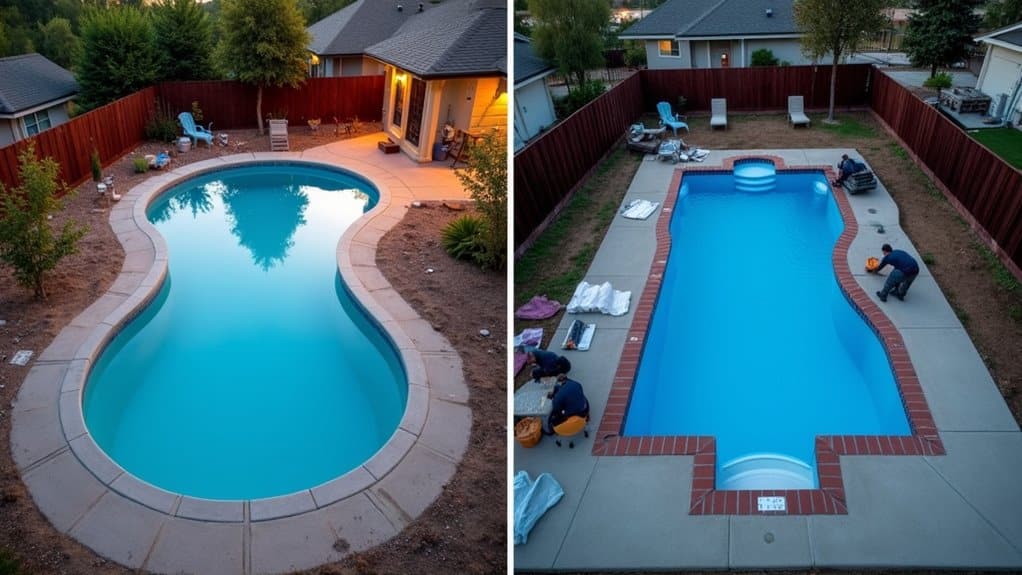
When comparing initial costs between fiberglass and vinyl liner pools, fiberglass models typically require a higher upfront investment ranging from $45,000 to $85,000, while vinyl liner installations average $35,000 to $65,000.
You’ll need to factor in site preparation costs, which can fluctuate considerably based on your property’s terrain and accessibility. While fiberglass pools arrive as pre-manufactured shells requiring specialized equipment for installation, vinyl liner pools are built on-site with more flexibility in customization. Diverse financing options are available for both types, including home equity loans and pool-specific lending programs.
Your budget planning should account for supplementary expenses like permits, excavation, and necessary landscaping modifications. Many contractors offer payment plans customized to your financial situation, making either pool type more attainable through structured payment arrangements.
Durability and Lifespan Comparison
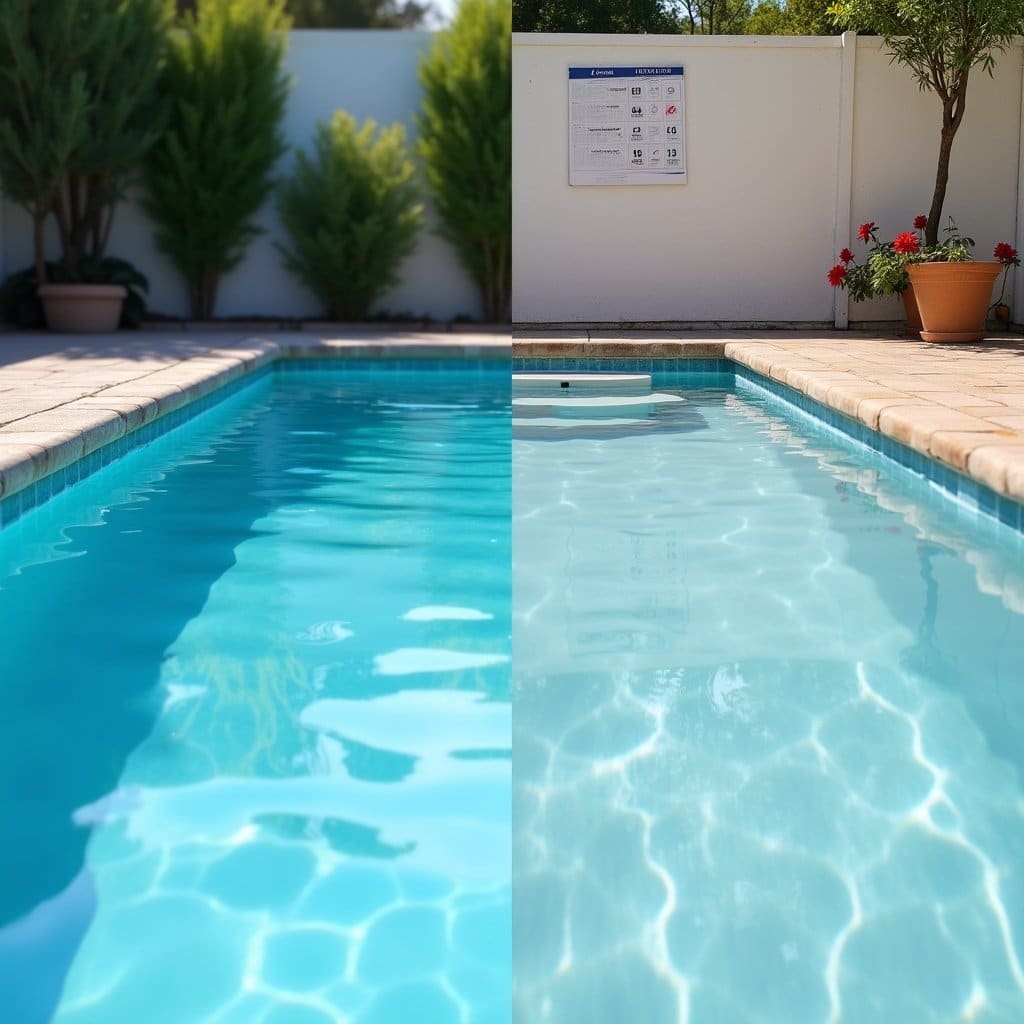
Beyond initial investment considerations, the lifespan characteristics of each pool type directly impact your long-term value proposition. Fiberglass pools demonstrate superior material strength with a gelcoat surface that’s engineered to last 25-35 years, while vinyl liners typically require replacement every 5-9 years.
Key durability factors between these pool types include:
- Fiberglass shells resist algae growth and withstand chemical exposure without degradation
- Vinyl liners can tear from sharp objects and suffer UV damage over time
- Fiberglass maintains structural integrity without wall buckling or bowing
- Vinyl’s seams and corners are vulnerability points that may compromise pool integrity
You’ll notice fiberglass pools’ durability translates to lower maintenance costs and fewer replacements throughout your ownership period, making them a more resilient long-term investment despite higher upfront costs.
Customization Options and Design Flexibility
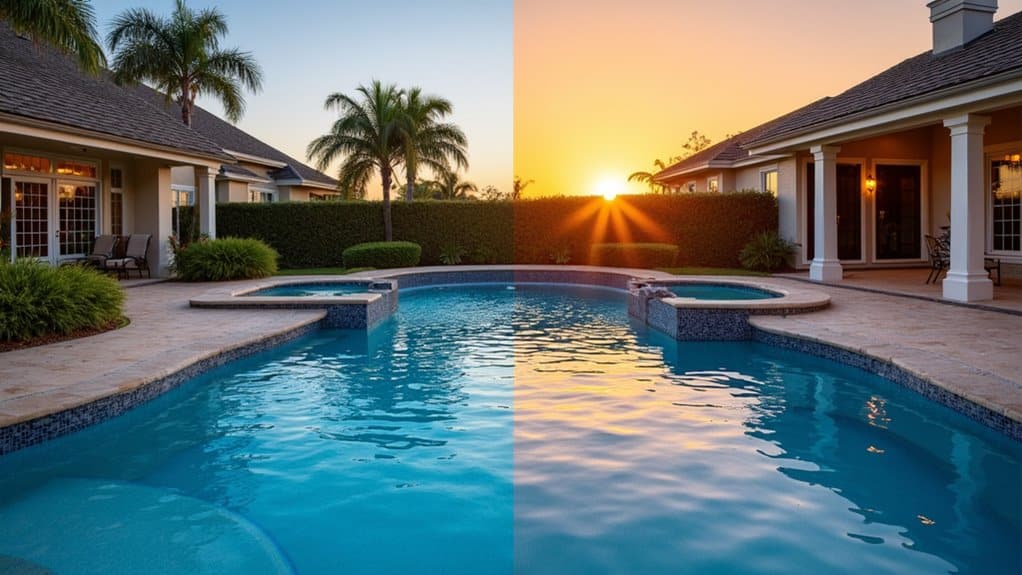
Although both pool types offer distinct aesthetic possibilities, they differ markedly in their design flexibility and customization potential. With vinyl liner pools, you’ll have extensive personalization options, including custom shapes, depths, and sizes. You can modify the design aesthetics through different liner patterns, textures, and colors, allowing for precise matching to your scenery vision.
Fiberglass pools, while beautiful, come in pre-manufactured shapes and sizes, limiting your design flexibility. However, you’ll find modern fiberglass pools offer sophisticated features like tanning ledges, built-in seating, and sleek water features. The surface finish options include various gel coat colors and patterns. Despite these limitations, fiberglass pools compensate with integrated steps, benches, and spa combinations that create cohesive, resort-style appearances without requiring further customization.
Maintenance Requirements and Annual Expenses
Since proper maintenance directly impacts longevity, both fiberglass and vinyl liner pools require different upkeep approaches and budget considerations. Fiberglass pools demand less frequent cleaning and lower chemical usage due to their non-porous gelcoat surface, while vinyl liners need more attentive maintenance to prevent algae growth and staining.
Key maintenance cost differences include:
- Vinyl liner replacement every 7-10 years ($4,500-$7,000)
- Fiberglass shell resurfacing every 15-20 years ($6,000-$10,000)
- Weekly cleaning frequency: 2-3 hours for vinyl vs. 1-2 hours for fiberglass
- Annual repair costs: $500-$1,000 for vinyl vs. $200-$400 for fiberglass
You’ll find fiberglass pools generally require less intensive maintenance routines and offer lower long-term operational expenses compared to vinyl liner options, though initial installation costs may be higher. Additionally, Fiberglass pools resist tears and fading, saving on repairs. Choosing the right pool material is key, as it affects comfort, durability, and long-term costs, so weigh each option carefully.
Installation Timeline and Process Overview
When comparing installation timelines, fiberglass and vinyl liner pools present distinct differences in their project completion schedules. A fiberglass pool installation typically takes 2-3 weeks from start to finish, with the shell being lowered into a pre-excavated hole and plumbing connections made within days.
Your vinyl liner pool’s installation steps will span 4-6 weeks due to the more complex construction process. The project timeline includes excavation, wall panel assembly, vermiculite bottom formation, and liner installation. You’ll need to factor in extra time for concrete deck pouring and curing around both pool types.
Weather conditions can impact both installations, but fiberglass pools offer quicker turnaround since they arrive pre-manufactured. Vinyl liner pools require more on-site construction phases, extending their completion timeline.
Impact on Property Value and Resale Appeal
While both pool types can improve property values, fiberglass pools typically offer a higher return on investment compared to vinyl liner options. Current market trends indicate that homes with fiberglass pools command 5-7% higher property appraisal values than those with vinyl liner installations.
When you’re considering resale appeal, these factors make fiberglass pools more attractive to potential buyers:
- Permanent structure appearance that suggests durability and quality
- Lower ongoing maintenance costs that appeal to cost-conscious buyers
- Modern aesthetic that aligns with contemporary home design trends
- Longer warranty periods that transfer to new owners
Your property’s future marketability benefits from fiberglass pools’ reputation for longevity and structural integrity. Real estate professionals often cite fiberglass pools as a more valuable selling point compared to vinyl alternatives, particularly in upscale neighborhoods where pool quality influences buying decisions.
Environmental Considerations and Energy Efficiency
Beyond property value considerations, environmental impact and energy consumption have become defining factors in pool ownership decisions. Fiberglass pools offer superior energy efficiency due to their non-porous surface and built-in insulation, reducing heat loss and lowering your ongoing energy costs. Their smooth gel coat surface also requires fewer chemicals for maintenance, supporting sustainability practices.
Vinyl liner pools, while initially requiring less energy during installation, can face sustainability challenges. You’ll need to replace vinyl liners every 5-10 years, contributing to landfill waste. They’re also more prone to heat loss, demanding higher energy consumption for temperature maintenance. However, you can offset these drawbacks by implementing energy-efficient pool covers and modern filtration systems, regardless of which type you choose.
Safety Features and Structural Integrity
As pool safety remains paramount in residential installations, both fiberglass and vinyl liner pools incorporate distinct structural features that affect their general integrity. Fiberglass pools offer superior structural stability through their one-piece shell construction, meeting rigorous safety standards for long-term durability.
- Non-abrasive gel coat surface reduces slip risks and prevents cuts
- Integral structural ribs provide improved wall strength
- Factory-controlled manufacturing guarantees consistent safety compliance
- Built-in steps and benches are permanently molded for stability
When comparing structural integrity, vinyl liner pools require proper wall bracing and careful installation to maintain safety parameters. You’ll need to monitor liner condition regularly, as tears or separations can compromise the pool’s structural stability. While both options meet basic safety requirements, fiberglass pools typically provide more inherent structural advantages with fewer maintenance concerns.
Frequently Asked Questions
Can You Switch From a Vinyl Liner to Fiberglass Pool Later?
While it’s technically possible to convert your vinyl liner pool to fiberglass, you’ll face significant pool installation challenges. The process involves removing the liner, extensively modifying the existing structure, and potentially dealing with size limitations since fiberglass shells come pre-manufactured. The cost comparison typically reveals that conversion expenses often match or exceed new pool installation costs. You’re usually better off building a new fiberglass pool rather than attempting a conversion.
Do Fiberglass and Vinyl Liner Pools Feel Different When Swimming?
You’ll notice distinct differences in the swimming experience between these pool types. Fiberglass pools have a smooth, non-abrasive gel coat surface that feels silky against your skin while swimming. Vinyl liners offer a softer, more cushioned feel but can become slippery. The water temperature retention also varies – fiberglass pools typically maintain heat better due to their insulating properties, while vinyl liner pools may require more heating to maintain consistent temperatures.
Which Pool Type Is Better for Areas With Frequent Earthquakes?
In seismic-active regions, you’ll want to prioritize a fiberglass pool for superior earthquake resistance. Its one-piece shell design and flexible nature allow it to move with the ground during seismic events without compromising structural integrity. While both options offer installation flexibility, fiberglass pools distribute ground forces more evenly and are less likely to tear or crack. You’ll also benefit from fewer post-earthquake repairs compared to vinyl liner installations.
How Does Pool Chemistry Differ Between Fiberglass and Vinyl Liner Pools?
You’ll find that pool chemistry management differs significantly between these surfaces. Fiberglass pools require less chemical maintenance due to their non-porous, algae-resistant surface. You’ll typically use fewer chemicals to maintain proper balance. With vinyl liners, you’ll need to monitor chemical balance more carefully, as high chlorine levels can bleach or damage the liner. Furthermore, you’ll want to avoid letting pH levels become too acidic, as this can wrinkle and deteriorate vinyl material.
Can Pets’ Claws Damage Vinyl Liner or Fiberglass Pool Surfaces?
Your pets’ claws can potentially damage both pool types, but vinyl liners are more susceptible to punctures and tears. While fiberglass pools offer better claw protection with their durable gel coat surface, you’ll still want to monitor pet activity. For improved pet safety, consider installing designated entry/exit points or pet ramps. If you have large dogs, trim their nails regularly and teach them to use specific pool access areas to minimize surface wear.