



When selecting your 2025 Latham pool finish, you’ll find premium options featuring advanced polymer-based coatings and crystalline quartz aggregates that deliver 15-20 years of vibrant performance. Deep sapphire blues and Caribbean blue-greens dominate contemporary designs, while sophisticated neutrals offer versatility. Consider your local climate‘s impact lighter finishes reflect sunlight in warm regions, while darker tones absorb heat in cooler areas. Understanding the relationship between climate, maintenance, and long-term value will guide your ideal choice.
Key Takeaways
- Deep sapphire blues and Caribbean blue-green blends dominate 2025 pool trends, offering both contemporary style and timeless appeal.
- Premium Latham polymer-based finishes provide superior UV resistance and color vibrancy, lasting up to 20 years with proper maintenance.
- Climate considerations affect color selection, with lighter finishes ideal for sunny regions and darker options for cooler climates.
- Premium finishes cost $3,500-$8,000 more than standard options but reduce long-term maintenance expenses and refinishing frequency.
- Crystalline quartz and ceramic-bonded composites offer enhanced durability against chemical exposure while maintaining aesthetic appeal.
Popular Latham Pool Color Trends for 2025
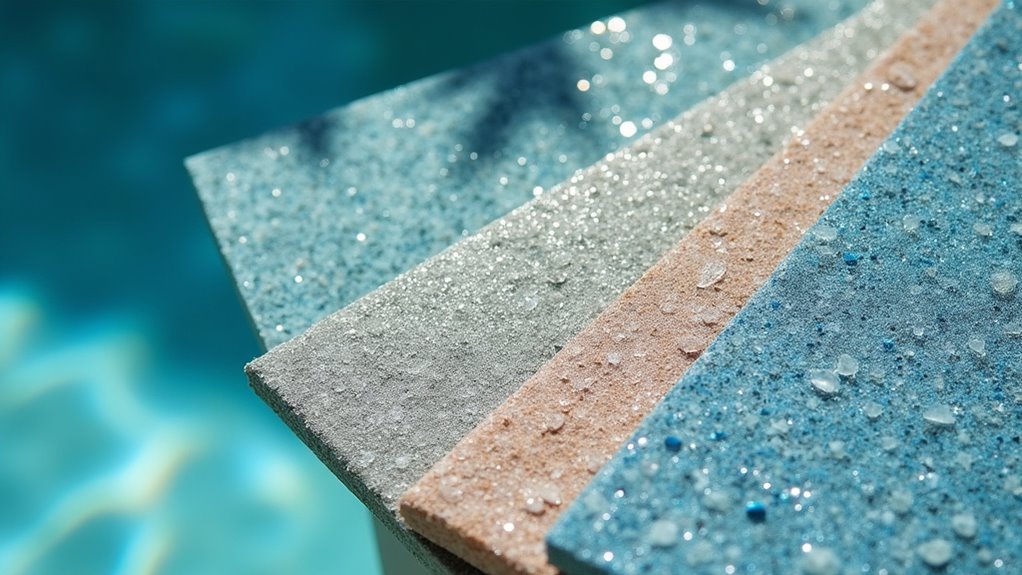
As homeowners increasingly prioritize sophisticated outdoor living spaces, pool color trends for 2025 showcase Latham’s advanced finishes that merge aesthetics with durability. Leading the trend are deep sapphire blues and rich aquamarines that utilize color psychology to create a sense of serenity and depth in your backyard retreat. Latham Pools customer feedback shows that calming color trends boost relaxation and appeal. Modern finishes help turn backyards into stylish, personalized retreats.
You’ll find sophisticated neutrals gaining momentum, with sandy beiges and platinum grays offering versatility for seasonal preferences and outdoor settings. Latham’s cutting-edge Caribbean blue-green blends continue to dominate contemporary designs, while their new graphite-infused options provide modern appeal for urban environments.
The emerging palette also features smart-surface technology with color-shifting finishes that adapt to varying light conditions, ensuring your pool maintains its striking appearance from dawn to dusk while maximizing energy efficiency and heat retention.
Understanding Pool Finish Materials and Durability
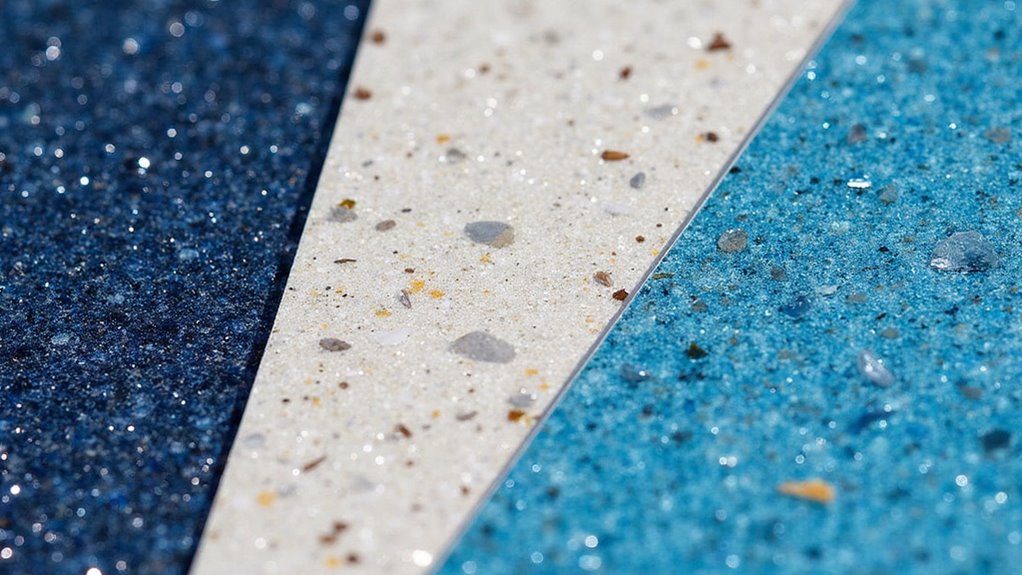
When selecting a premium pool finish, understanding the core materials and their performance characteristics becomes essential for long-term satisfaction. You’ll find that Latham’s finish types include advanced polymer-based coatings, crystalline quartz aggregates, and ceramic-bonded composites, each engineered for specific performance attributes.
Your pool’s color longevity directly correlates with the finish material you choose. Polymer-based finishes offer superior UV resistance and maintain their vibrancy for 15-20 years, while crystalline quartz options provide improved durability against chemical exposure and physical wear. Ceramic-bonded composites deliver the peak balance of aesthetic appeal and structural integrity, resisting staining and deterioration even in challenging environmental conditions.
Consider your local climate and intended usage patterns when evaluating these finish options, as they’ll impact your material’s long-term performance.
Impact of Climate and Environment on Color Selection

The local climate and environmental conditions play a decisive role in your Latham pool’s color selection process. In sunny regions, lighter pool finishes optimize sunlight reflection, keeping water temperatures more comfortable and reducing cooling costs. Conversely, darker finishes increase temperature absorption, which can be beneficial in cooler climates where maintaining warmth is essential. Additionally, pool finishes enhance design, but pairing them with popular lighting options for pools creates a striking nighttime look. Balancing color, lighting, and climate ensures both beauty and function.
Consider your surrounding surroundings when selecting colors. Areas with heavy foliage may require finishes that show less debris and are easier to maintain. Coastal environments benefit from UV-resistant finishes that won’t fade from intense sun exposure. If you’re in an area with hard water or high mineral content, choose finishes that resist staining and scaling. Your pool’s exposure to wind-blown debris and seasonal changes should also influence your color selection to guarantee long-lasting visual appeal.
Maintenance Requirements for Different Finish Types
Different Latham pool finishes demand varying levels of maintenance to preserve their appearance and longevity. Understanding these requirements will help you maintain your pool’s aesthetic appeal while maximizing finish longevity through proper cleaning techniques.
Proper maintenance of pool finishes is essential for protecting your investment and ensuring lasting beauty in your Latham swimming pool.
- Vinyl liners require gentle brushing with soft-bristled tools and pH-balanced cleaners, avoiding abrasive materials that could scratch or damage the surface
- Fiberglass finishes need regular cleaning with non-abrasive solutions and soft cloths, focusing on waterline areas where buildup commonly occurs
- Aggregate finishes benefit from weekly brushing with medium-bristled tools and quarterly acid washing to prevent mineral deposits
- Tile finishes require specialized cleaning products and soft sponges to remove calcium buildup, with particular attention to grout lines and decorative patterns
Choose your finish based on the maintenance commitment you’re willing to make.
Cost Analysis and Long-Term Value Comparison
Making informed financial decisions about pool finishes requires careful analysis of both initial costs and long-term value considerations. When conducting your cost comparison, you’ll find that premium Latham finishes typically range from $3,500 to $8,000 more than standard options, depending on pool size and finish selection.
Your value assessment should factor in durability metrics, with premium finishes lasting 15-20 years compared to 7-10 years for standard options. You’ll save on maintenance costs, as premium finishes resist staining and chemical damage better than basic alternatives. While the upfront investment is higher, you’ll benefit from reduced refinishing frequency and lower annual maintenance expenses. Calculate your return on investment by dividing the price difference by the extended lifespan, helping you determine if premium finishes align with your long-term pool ownership goals.
Frequently Asked Questions
Can Latham Pool Finishes Be Customized With Unique Patterns or Designs?
Yes, you can customize your pool finish with unique patterns and designs. Through custom design options, you’ll be able to create distinctive mosaic patterns, geometric shapes, or flowing designs. You’re not limited to standard finishes – you can combine different textures and unique color combinations to achieve the exact look you want. Work with your pool designer to investigate creative possibilities that’ll make your pool surface truly one-of-a-kind.
How Long Does It Take to Complete a Latham Pool Finish Installation?
The installation timeline for your pool finish typically takes 2-3 days, but several installation factors can affect this duration. You’ll need to account for surface preparation, weather conditions, and curing time. Your contractor will initially prep the surface (1 day), apply the finish (1 day), and allow for proper curing (24-48 hours). Complex patterns or designs might extend this timeline by an extra day or two.
Are Latham Pool Finishes Safe for Saltwater Systems?
Yes, Latham pool finishes are fully compatible with saltwater systems and include built-in safety features to withstand salt exposure. You’ll find their finishes are specifically engineered to resist corrosion and maintain their durability in saltwater environments. However, you’ll need to follow standard maintenance requirements, including monitoring salt levels and pH balance. Regular cleaning and proper chemical balance will help preserve your finish’s integrity and extend its lifespan in your saltwater pool.
Can the Pool Finish Color Be Changed After Installation?
Yes, you can change your pool’s finish color after installation, but it requires significant pool renovation options. You’ll need to drain the pool completely and either resurface or refinish the existing surface. The process involves removing the old finish, preparing the surface, and applying the new color coating. When selecting a new color, consider color fade considerations, as some shades may weather differently over time with UV exposure and chemical treatments.
Do Latham Pool Finishes Affect Water Temperature Differently Than Standard Finishes?
Your pool’s finish color will considerably impact thermal absorption and water temperature. Darker Latham finishes absorb more heat and can elevate water temperature by 2-4°F compared to standard finishes. Light-colored finishes reflect more sunlight, keeping water cooler. You’ll notice this color impact most during peak sunlight hours. If you’re looking to enhance heat retention, choose darker premium finishes like deep blue or black for ideal thermal performance.