
Transform your small backyard pool area by maximizing every square foot through strategic design elements. You’ll want to start with a space-efficient pool shape like a rectangular or plunge design, then layer your privacy screening using both structural elements and strategic plantings. Incorporate vertical gardens, slip-resistant pavers, and drought-tolerant plants to create a sustainable oasis. Your compact pool paradise can combine style, function, and privacy through smart spatial planning and thoughtful material selection.
Smart Space-Saving Pool Designs for Compact Yards
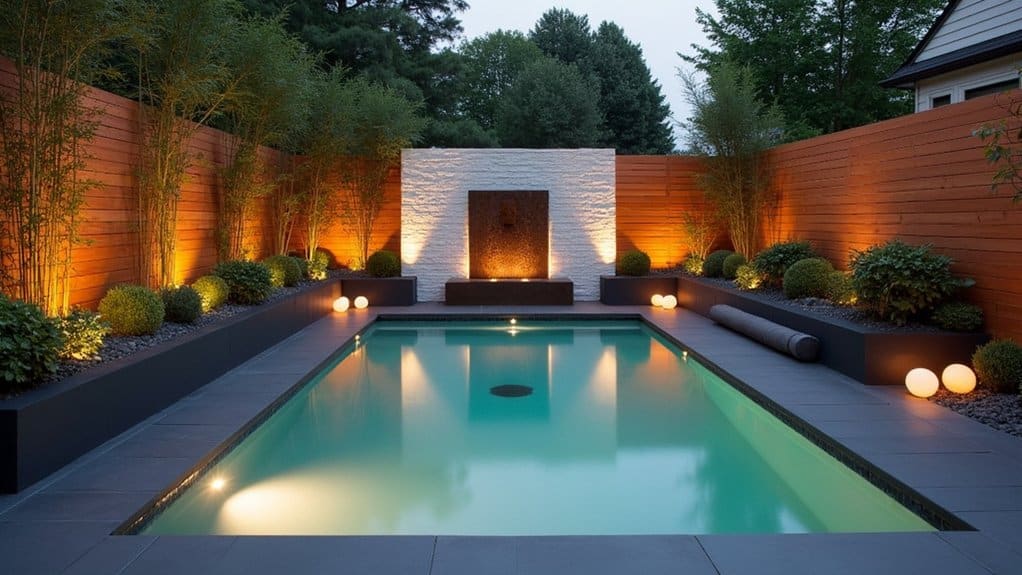
When designing a pool for a small backyard, maximizing every square foot becomes essential for both functionality and aesthetics. Your tiny backyard pool’s shape directly impacts how effectively you’ll utilize available space. Consider rectangular designs for clean lines and maximum swim area, or opt for freeform curves to work around existing landscape features. Depth restrictions of 6 feet make these compact pools perfect for casual swimming and relaxation. Vertical elements like tall planters and privacy screens create natural boundaries while preserving precious space.
For affordable backyard design, explore space-saving options like plunge pools measuring just 10′ × 16′, or narrow lap pools that prioritize length over width. Multi-level designs with built-in benches and tanning ledges maximize functionality without expanding the pool’s footprint. Strategic corner placement and light-colored interiors create an illusion of spaciousness, while integrated features like swim jets enable full-body workouts in compact spaces. Small pool landscaping becomes more manageable with these thoughtful design choices, ensuring both practicality and visual appeal. Installing above-ground pools offers a flexible solution that’s easier to implement and can be relocated if needed.
Creating Private Oasis: Screening Solutions That Work
When planning privacy for your small pool area, you’ll want to layer natural barriers like dense evergreen hedges with structural elements such as slatted screens or decorative panels. Strategic placement of fast-growing bamboo or columnar trees can establish vertical screening within a minimal footprint, while trellis-mounted vines offer rapid coverage for unsightly views. Integrating modular planters with built-in screens allows you to adjust your privacy solutions as your landscape evolves, maximizing both function and aesthetic appeal in your compact outdoor retreat. Consider installing sunshade screens in areas that receive direct afternoon sun to create a more comfortable lounging environment. For optimal protection and ventilation, install fiberglass screen mesh that provides effective insect control while maintaining clear sightlines and airflow through your outdoor living space. Quality screening solutions offer pest protection while allowing you to fully enjoy your outdoor living area without unwanted intrusions.
Natural Privacy Barriers
Three key approaches to natural privacy barriers can transform your small backyard pool into a secluded sanctuary. Start with tall evergreen hedges like boxwood or privet, which create year-round living walls while supporting local wildlife and buffering sound. Layer these with fast-growing ornamental grasses, such as Miscanthus or Fountain Grass, to add depth and movement while maintaining minimal maintenance requirements. Natural stone elements and curved pathways create an organic flow throughout the space. Consider installing a 6-8 foot fence for maximum coverage and enhanced pool safety. For vertical dimension, incorporate climbing plants like wisteria or clematis on pergolas and trellises. These provide adjustable screening and partial shade without compromising airflow. Consider installing acoustic fencing panels alongside your living barriers to maximize sound reduction in your pool area. You’ll achieve maximum seclusion by combining these elements strategically, position dense hedges along property lines, integrate ornamental grasses for mid-level coverage, and train vines overhead for complete enclosure. This multi-tiered approach guarantees both visual privacy and ecological benefits.
Strategic Plant Layering
Creating effective privacy around your small backyard pool requires strategic plant layering that maximizes both vertical and horizontal space. Start by positioning taller evergreen species like arborvitae or holly at the rear, then gradually step down to mid-height shrubs and ornamental grasses. You’ll want to incorporate understory plantings beneath limbed-up trees to achieve complete coverage without sacrificing ground space. Climbing vines and trellises can provide additional vertical screening while occupying minimal floor area. Consider installing metal troughs for bamboo plantings to prevent invasive root spread while gaining the benefits of its tall, dense screening properties. Decorative panels can be incorporated between plantings to provide instant privacy while waiting for vegetation to mature.
For ideal screening, place denser groupings where multiple sightlines intersect, and select compact, columnar varieties for narrow areas. Mix fast-growing plants with slower-developing species to guarantee both immediate and long-term privacy solutions. Remember to factor in mature plant sizes when planning your layout, and maintain regular pruning schedules to keep your privacy screen healthy and effective year-round.
Vertical Screening Elements
A well-designed vertical screening strategy transforms your small backyard pool into a secluded retreat through strategic layering of fences, walls, and living barriers.
Consider installing natural stone walls that blend beautifully with the surrounding landscape while providing complete privacy from neighboring properties. Combine wood privacy fences with metal or glass elements to create multi-dimensional screening that balances visibility and seclusion. Install decorative metal screens or lattice panels for partial coverage while maintaining airflow, or opt for stone feature walls that serve as both privacy barriers and architectural focal points. Consider incorporating stainless steel rails for a modern yet unobtrusive boundary that seamlessly blends with the landscape. You’ll maximize vertical space by incorporating living walls and hanging plant systems that add lush greenery without consuming precious square footage. Tall Leyland Cypress trees planted along the perimeter provide excellent natural screening.
For adaptable privacy solutions, consider freestanding partition panels or outdoor curtains mounted on pergolas. Enhance your screening with trellises supporting climbing vines, or install modular vertical gardens that double as sound-absorbing green barriers while purifying the air around your pool area.
Strategic Plant Selection for Pool-Side Beauty
Successful poolside landscaping hinges on strategic plant selection that balances both form and function. When choosing plants for your pool area, prioritize species that won’t create maintenance headaches or compromise safety. Look for low-litter, non-invasive varieties that can withstand intense sun and chlorine exposure while adding visual interest to your outdoor retreat. Tropical hibiscus blooms provide vibrant pops of color throughout the summer months. Incorporating hardscapes like stone pathways or wooden decking adds style and function. For budget-friendly upgrades, explore low cost backyard pool ideas that blend with your plants, creating a safe and inviting space for relaxation.
Smart pool landscaping requires plants that combine beauty with practicality, focusing on low-maintenance species that enhance safety and aesthetics.
- Select architectural plants like Yuccas and Agave for strong structural elements that require minimal water
- Incorporate drought-tolerant ornamental grasses for movement and privacy screening
- Use container gardens with summer-blooming bulbs to maximize flexibility and seasonal impact
Layer your plantings with groundcovers, mid-height perennials, and vertical growers to create depth. Position fragrant options near lounging areas, and group plants with similar water needs for efficient irrigation management. Consider evergreen varieties for year-round structure and appeal.
Choosing Your Pool Area’s Signature Style
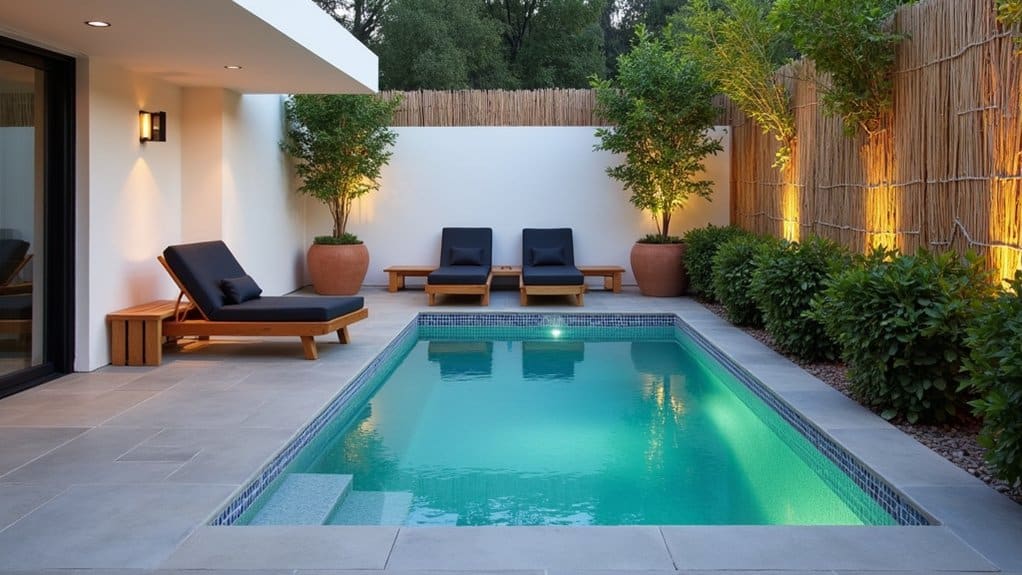
Your pool area’s signature style begins with selecting a core design theme that aligns with your home’s architectural elements and personal aesthetic preferences. You’ll want to create seamless shifts between indoor and outdoor spaces by incorporating complementary materials, colors, and textures that flow naturally from your interior spaces to the pool environment. To personalize your pool space effectively, consider how specific design elements, like modern geometric pavers, Mediterranean tilework, or zen-inspired water features, can work together to express your unique vision while maximizing your compact outdoor area. Collaboration with pool construction experts can also ensure that your vision is brought to life with precision and functionality. By seeking their advice on layout and materials, you can enhance the pool area’s usability and longevity.
Design Theme Selection Process
When selecting a design theme for your small backyard pool area, balancing aesthetic harmony with functional requirements creates the foundation for a cohesive outdoor retreat. Analyze your home’s architectural elements, lifestyle needs, and existing landscape to determine which signature style aligns best with your vision.
- Modern minimalist designs work exceptionally well in compact spaces, utilizing clean lines, geometric shapes, and a limited color palette to create an uncluttered, sophisticated atmosphere.
- Tropical oasis themes can transform tight areas through strategic placement of vertical greenery, water features, and vibrant accents that maximize visual impact without consuming floor space.
- Contemporary Zen aesthetics offer a serene solution through careful integration of natural elements like bamboo screens, stepping stones, and subtle lighting that optimize both form and function.
Blend Indoor-Outdoor Elements
Seamlessly integrating indoor and outdoor pool spaces creates a cohesive living environment that expands your functional square footage while elevating the overall design aesthetic. Install retractable glass walls or sliding doors to establish unobstructed sight lines, and extend uniform flooring materials like stone or porcelain tile across both zones to create visual continuity.
Position shared amenity zones strategically at juncture points, incorporate outdoor kitchens, fire pits, or built-in seating areas that serve both spaces. Synchronize LED lighting schemes and sound systems throughout to maintain ambiance day and night. Consider installing smart HVAC and dehumidification systems to regulate temperature and air quality across the entire pool area. Complete the seamless integration with consistent material palettes, textures, and native plantings that soften boundaries while reinforcing your design vision.
Personalize Your Pool Space
Creating a distinctive pool environment starts with carefully selecting signature design elements that reflect your personal style while maximizing limited space. Whether you’re drawn to coastal serenity, modern minimalism, or tropical luxury, your design choices should create a cohesive aesthetic that transforms your compact pool area into a personalized retreat.
- Select a unified materials palette that reinforces your theme, pair travertine decking with white mosaic tiles for a coastal look, or combine dark stone with glass accents for modern sophistication
- Incorporate signature water features that align with your style, sleek sheer descents for contemporary designs or natural rock waterfalls for organic aesthetics
- Choose strategic lighting elements to highlight key features, underwater LEDs for modern appeal or soft pathway lights for a rustic ambiance
Essential Hardscape Elements for Small Pool Spaces
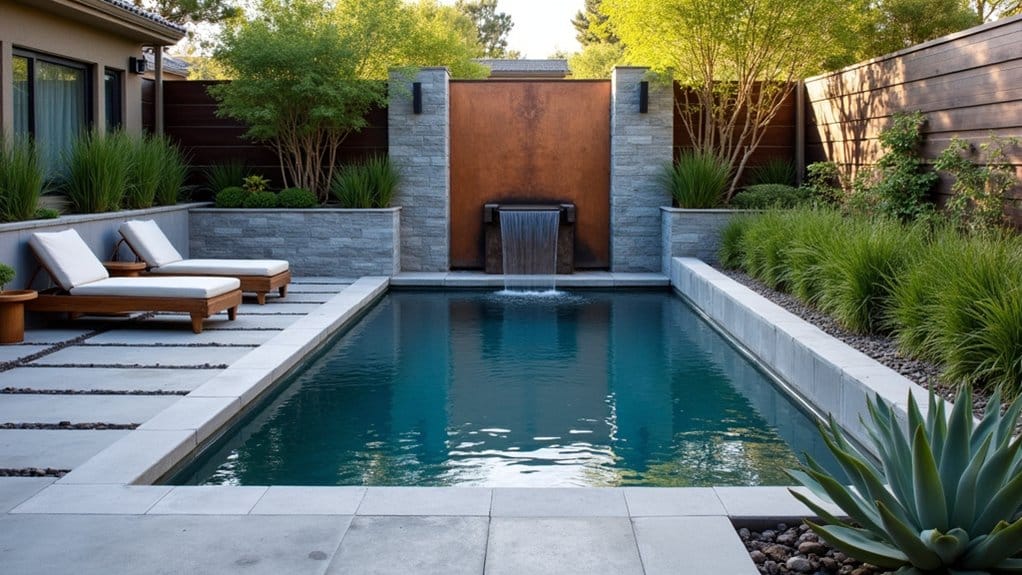
Smart hardscape design forms the backbone of any successful small pool space, where every element must serve both practical and aesthetic purposes. Focus on slip-resistant materials like natural stone pavers or textured tiles for your pool deck, guaranteeing safety while maintaining visual appeal.
Incorporate retaining walls strategically to manage slopes and create built-in seating opportunities. You’ll maximize functionality by installing well-planned walkways using pavers or stepping stones, enhanced with low-voltage lighting for evening safety. Consider metal fencing or glass panels for required barriers; they’ll maintain clear sightlines without overwhelming your compact space.
Add definition with raised planters integrated into walls, creating natural boundaries while introducing greenery. When selecting hardscape materials, prioritize durability and low maintenance to certify your small pool area remains both beautiful and practical year-round.
Sustainable Features for Modern Pool Landscapes
As environmental consciousness reshapes modern pool design, sustainable features have become essential elements in small backyard landscapes. You’ll maximize both efficiency and style by incorporating eco-friendly technology and materials that reduce your pool’s environmental footprint while enhancing its functionality. By focusing on innovative solutions, homeowners can achieve stunning backyard pool designs on a budget that prioritize sustainability without sacrificing aesthetic appeal.
- Install a saltwater chlorination system paired with energy-efficient variable-speed pumps to slash chemical usage and energy costs by up to 80%, while automated controllers optimize your pool’s resource consumption
- Choose recycled composite decking and locally sourced pavers for hardscaping, complemented by porous surfaces that manage rainwater effectively
- Create a multi-layered landscape using drought-tolerant native plants and vertical gardens that support local biodiversity, provide natural cooling, and minimize water usage while adding privacy
These sustainable solutions transform your compact pool area into an eco-conscious retreat that’s both beautiful and responsible.
Frequently Asked Questions
How Long Should I Wait Before Swimming After Adding Pool Chemicals?
You’ll need to wait different lengths of time depending on the chemicals you’ve added. Allow 20-30 minutes for basic additives like pH adjusters and clarifiers. For regular chlorine, wait 4-8 hours. When shock treating your pool, wait 8-24 hours or until chlorine levels drop below 5 ppm. For muriatic acid, wait at least 30-60 minutes. Always test your water chemistry before swimming to verify safe levels.
What’s the Ideal Distance Between Plants and the Pool’s Edge?
You’ll need to maintain at least 3 feet between your pool’s edge and general landscaping, while trees require a minimum 15-foot setback to prevent root damage. For ideal design and maintenance, install a 1-3 foot wide stone or hardscape border between your plantings and the pool edge. If you’re working with potted plants, you can position them closer, but still keep some separation to avoid staining your deck and pool liner.
Can Pool Chemicals Damage or Kill Surrounding Landscape Plants?
Yes, pool chemicals can severely damage or kill your landscape plants. You’ll notice chlorine can burn foliage and cause leaf scorch, while saltwater pools create dangerous salt buildup in soil. Algaecides and pH adjusters will disrupt nutrient absorption and soil biology. To protect your plants, you’ll want to rinse them after accidental splashes, avoid using pool water for irrigation, and consider installing chemical-resistant species in your design plan.
How Often Should Pool Area Lighting Fixtures Be Inspected and Maintained?
You’ll need to inspect your pool lighting fixtures annually before swim season begins, with additional monthly checks during active use and quarterly inspections in off-season periods. Don’t skip your LED lights’ monthly cleaning due to chemical exposure. Schedule quarterly maintenance for surrounding outdoor fixtures, adjusting frequency based on environmental factors. You must immediately inspect if you notice damage, malfunction, or water intrusion. Always turn off power before conducting any lighting maintenance.
What’s the Best Time of Year to Install New Poolside Landscaping?
You’ll achieve excellent results by installing your poolside landscaping in early spring or fall. These seasons offer mild temperatures, ideal soil conditions, and sufficient time for plants to establish strong root systems before extreme weather hits. You’ll benefit from better contractor availability and potential cost savings during these off-peak periods. Spring planting gives you immediate summer enjoyment, while fall installation allows for natural dormancy cycles and reduced transplant shock.