
Fiberglass pools will save you up to 70% on energy costs in 2025 through their superior molecular structure and integrated gel coat layer, which maximizes heat retention and reduces pump strain. You’ll benefit from 30% lower chemical usage, saving $350-$550 annually compared to concrete pools. Smart automation features and variable-speed pumps cut energy consumption by up to 90%, while non-porous surfaces minimize water loss. Discover how these efficiency features combine to deliver substantial long-term environmental and economic benefits.
Natural Insulation Benefits of Fiberglass Construction
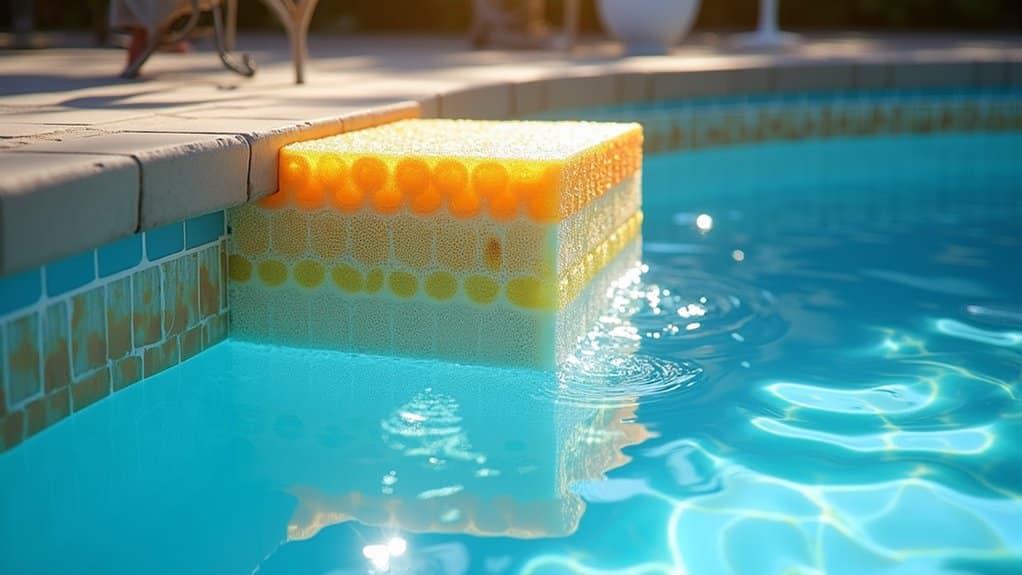
While traditional pool materials struggle with heat retention, fiberglass pools excel in natural insulation due to their unique molecular structure. You’ll find that the integrated gel coat layer works in harmony with the fiberglass insulation properties to maximize thermal efficiency, greatly reducing heat loss through the pool’s shell walls. Since their introduction in the 1950s era, fiberglass pools have proven their superior durability and insulation capabilities. This results in reduced energy costs from minimized heating requirements.
Unlike concrete or vinyl alternatives, your fiberglass pool’s construction creates a superior thermal barrier that maintains consistent water temperatures. The non-conductive properties of the material mean you’re getting enhanced heat retention without additional infrastructure. The combination of the specialized gel coat and the inherent insulating qualities of fiberglass creates a system that naturally resists temperature fluctuations. This built-in thermal efficiency means your pool retains heat more effectively than other materials, translating to lower heating costs throughout the year and more stable water temperatures.
Modern Energy-Saving Technologies and Features
Because modern fiberglass pools incorporate advanced technological features, you’ll find considerable improvements in energy efficiency across multiple systems. Smart automation platforms monitor your energy consumption patterns while automatically adjusting heating controls and pump speeds for maximum performance. High-efficiency filtration systems with self-cleaning mechanisms considerably reduce maintenance requirements and operating costs. The smooth gel-coat surface creates a barrier against debris that keeps maintenance time minimal. The pool’s superior insulation properties help maintain consistent water temperatures year-round, significantly reducing the energy needed for heating. Skilled Australian professionals ensure proper installation of these advanced systems for optimal performance.
Advanced technology in modern fiberglass pools delivers superior energy efficiency through smart automation and self-regulating systems.
- Variable-speed pumps cut energy consumption by up to 90% compared to single-speed systems
- Smart thermostats with demand-response capabilities prevent wasteful heating cycles
- Automated lighting systems with motion sensors reduce unnecessary power usage
- Self-cleaning filtration technology minimizes pump runtime and maintenance frequency
- Data analytics tools identify opportunities to enhance system performance daily
These technological innovations, combined with durable fiberglass construction, deliver maintenance efficiency and energy savings throughout your pool’s lifetime.
Water Conservation and Chemical Reduction
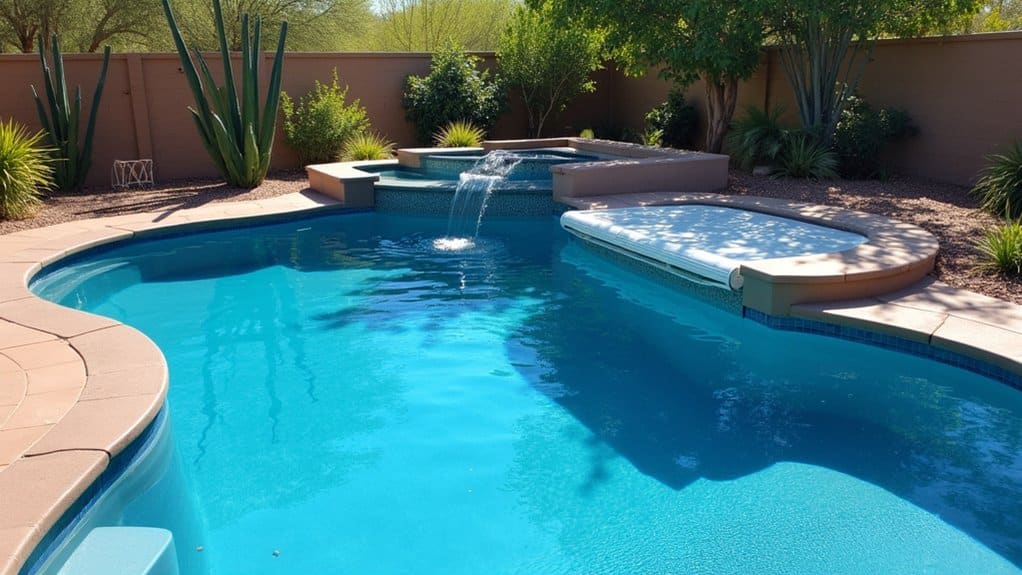
Since fiberglass pools feature non-porous surfaces and advanced filtration systems, they excel at both water conservation and chemical reduction. You’ll notice significant water saving techniques through minimal evaporation and reduced backwashing requirements, typically only needing seasonal top-ups rather than frequent refills. With rising disposable incomes globally, more homeowners can invest in these eco-friendly pool solutions. The gel coat finish ensures exceptional durability while maintaining its pristine appearance for decades without major repairs. The single-piece construction creates a seamless shell that minimizes water loss through cracks or joints.
The smooth, non-porous surface actively prevents algae growth, allowing for more chemical free maintenance approaches. You’ll spend 30% less on chemicals annually, saving $350-$550 compared to concrete pools. The self-cleaning properties of fiberglass eliminate the need for excessive algaecides and shock treatments, while efficient filtration systems reduce chemical runoff into the environment. These features create a more sustainable pool that’s both cost-effective and environmentally responsible, aligning perfectly with modern eco-conscious living standards.
Cost-Effective Long-Term Environmental Impact
As fiberglass pools demonstrate superior energy efficiency through their innovative design features, they deliver substantial environmental and economic benefits over their lifetime. The rapidly expanding USD 2,051.8 million market reflects growing consumer awareness of these benefits. You’ll achieve significant cost savings through reduced energy consumption, minimal maintenance requirements, and extended durability of eco friendly materials. The smooth gel coat surface optimizes water flow and minimizes pump strain, further enhancing energy savings. The pool’s excellent heat retention properties help maintain comfortable water temperatures with minimal energy input.
- Your pool’s non-porous surface will cut chemical usage by 30-50%, protecting both your wallet and local water systems
- You’re contributing to waste reduction with a prefabricated shell that minimizes construction debris and transportation emissions
- Your investment in variable-speed pumps can reduce electricity consumption by up to 80%
- You’ll save thousands of gallons of water annually by eliminating intensive maintenance procedures
- Your property value will increase with an environmentally responsible pool choice that offers 20+ years of structural integrity
The combination of reduced resource consumption and lower operating costs makes fiberglass pools an environmentally conscious and economically sound investment.
Smart Upgrades for Maximum Energy Performance
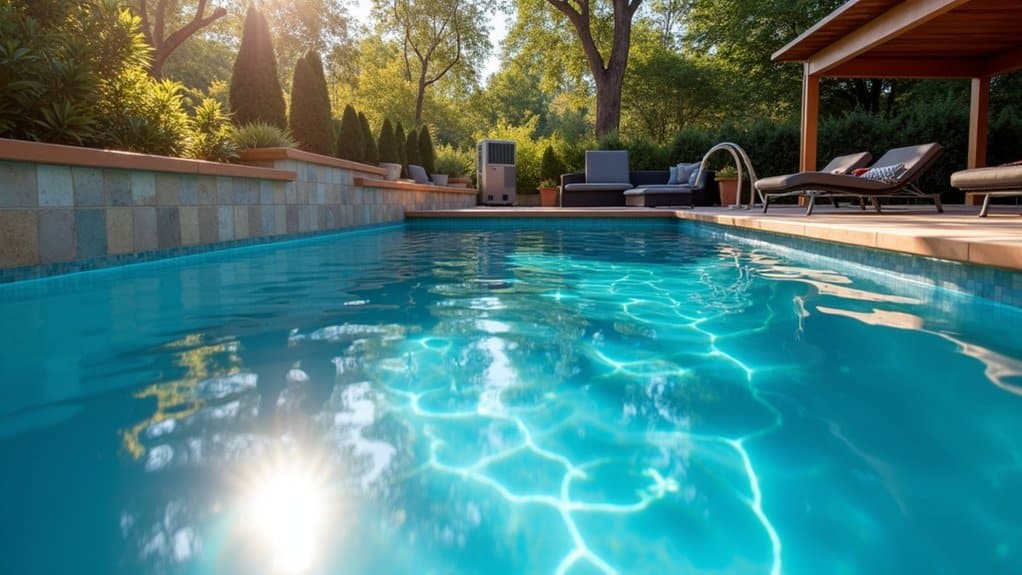
Building on the foundation of fiberglass pools’ inherent efficiency, strategic smart upgrades can dramatically enhance your pool’s energy performance. You’ll maximize savings by integrating variable-speed pumps that reduce electricity consumption by up to 80% while extending equipment lifespan. Smart thermostats and automated sensors work together to optimize heating cycles, ensuring your pool maintains ideal temperatures only when needed.
Install an automation hub to centrally control your pool’s essential systems. This technology enables remote monitoring of chemical levels, temperature, and energy usage through mobile apps. You’ll benefit from automated chemical dosing systems that precisely maintain water chemistry while minimizing waste. For ultimate efficiency, consider adding a heat pump system, which uses 70% less energy than traditional gas heaters, or integrate solar panels to harness renewable energy for heating.
Frequently Asked Questions
How Long Does It Take to Install a Fiberglass Pool?
You’ll typically see a complete fiberglass pool installation timeline of 2-4 weeks, depending on your site’s complexity. The pool preparation process breaks down into specific phases: 1-3 days for site prep, 1-2 days for shell placement, and 2-4 days for backfilling and plumbing. While permit approvals can extend the timeline by 1-10 weeks, fiberglass pools still offer considerably faster installation compared to concrete pools, which can take months to complete.
Can Fiberglass Pools Be Heated Effectively in Extremely Cold Climates?
Yes, you can effectively heat your fiberglass pool in extremely cold climates thanks to its superior insulation properties. With a thermal conductivity of just 0.04 W/mK, coupled with built-in high-density foam insulation, your pool will retain heat remarkably better than concrete alternatives. You’ll find various heating methods work efficiently, from heat pumps to gas heaters, requiring 15-20% less energy to maintain temperatures. Additional insulation options like pool covers can further enhance thermal performance.
What Happens to Fiberglass Pools During Earthquakes or Ground Movement?
Your fiberglass pool’s earthquake resistance is exceptional due to its flexible design. The composite structure can deform up to 2 feet during ground movement without cracking, unlike rigid concrete pools. You’ll benefit from reinforced layers that distribute seismic forces evenly, while flexible flanges prevent pipe ruptures. When it comes to ground stability concerns, the pool’s lightweight construction reduces soil pressure impact, considerably minimizing collapse risks during earthquakes.
Are There Size Limitations for Fiberglass Pools Compared to Concrete Options?
Yes, you’ll find significant size limitations with fiberglass pools compared to concrete options. Fiberglass sizes are restricted to pre-manufactured molds, typically ranging from 10-16 feet in width and 20-40 feet in length, with maximum depths of 8.5 feet. While you can choose from various pre-designed shapes, you won’t have the freedom to create custom shapes like you would with concrete pools, which offer unlimited size and design flexibility.
Can Existing Concrete Pools Be Converted to Fiberglass for Better Efficiency?
Yes, you can convert your concrete pool to fiberglass through a specialized conversion process that takes about 14 days. The transformation involves draining, surface preparation, and applying layers of vinyl ester resin and fiberglass mats. While the cost comparison shows it’s more affordable than full replacement, you’ll need to verify your pool’s structural integrity supports conversion. You’ll gain improved energy efficiency and reduced maintenance costs after the transformation.