
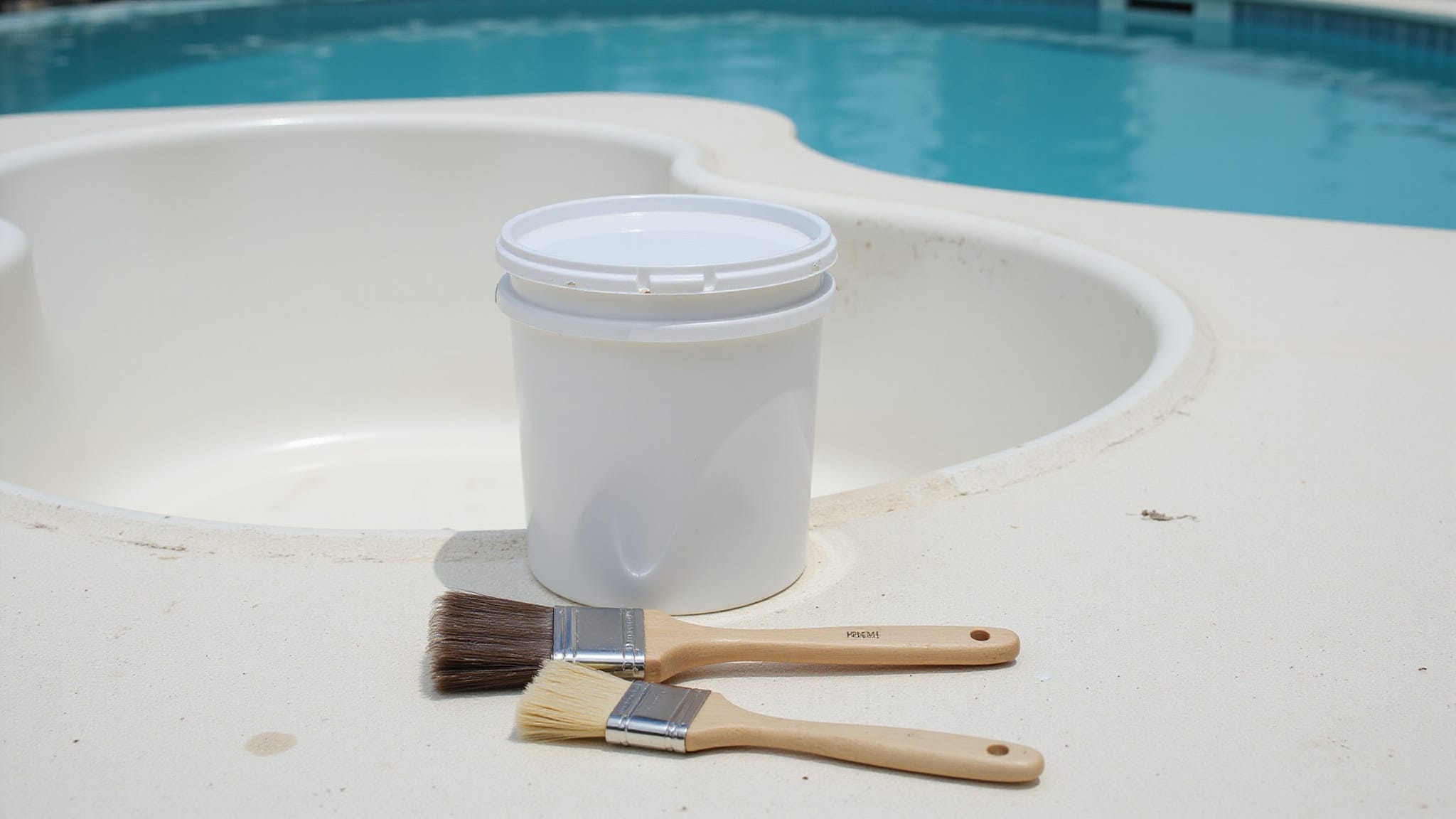
You’ll find San Juan Pools manufacturing process relies on precision-controlled steps established since 1958. Their technique starts with premium resins and fiberglass matting applied to prepared molds. Specialized technicians spray an 18-20 mil gelcoat layer in three passes, followed by structural layering that creates the pool’s durable shell. Quality control checkpoints verify thickness, hardness, and finish at every stage. Understanding their detailed production methods reveals why San Juan remains an industry pioneer.
Key Takeaways
- Molds are thoroughly cleaned and treated with release agents before applying an 18-20 mil gelcoat layer for water resistance.
- Premium polyester and vinyl ester resins are combined with woven fiberglass matting to create the pool’s structural layers.
- Quality control checkpoints monitor gel coat thickness, resin-to-glass ratios, laminate hardness, and surface finish throughout manufacturing.
- Specialized spray guns apply gelcoat in three passes horizontal, vertical, and diagonal – under controlled temperature and humidity.
- Environmental conditions are strictly maintained during manufacturing to ensure proper curing and material bonding.
The History Behind San Juan Pools Manufacturing
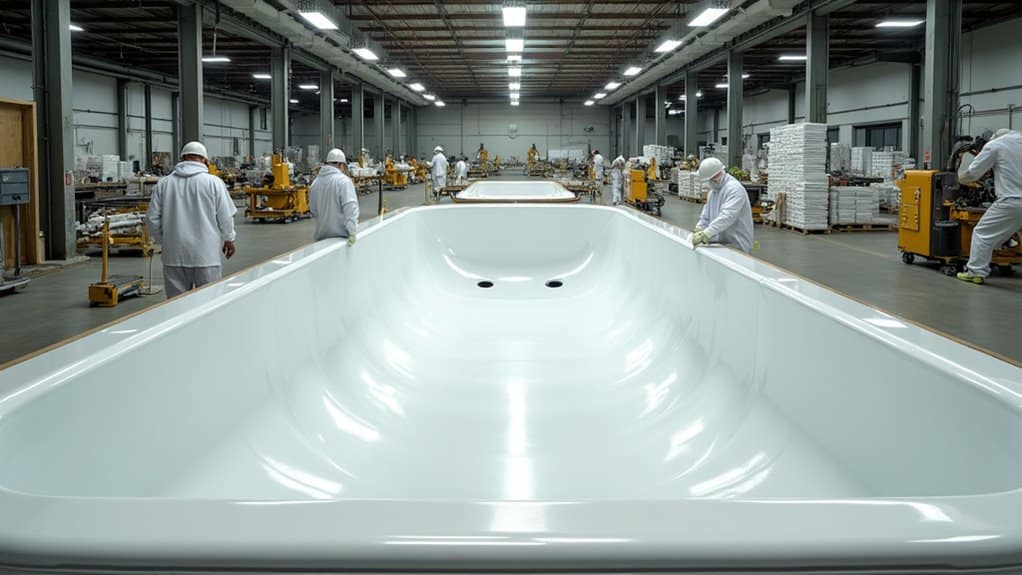
Innovation drove the early days of San Juan Pools, which began manufacturing fiberglass swimming pools in 1958 in San Juan, Puerto Rico. As industry pioneers, they’ve revolutionized pool manufacturing through relentless research and development of advanced composite materials.
You’ll find San Juan’s historical evolution marked by significant technological breakthroughs. In the 1960s, they introduced automated gelcoat application systems, and by the 1970s, they’d developed proprietary fiberglass layering techniques that improved pool durability. The company’s commitment to innovation led to the establishment of multiple manufacturing facilities across North America.
Today, San Juan’s manufacturing processes incorporate computer-aided design, precision robotics, and state-of-the-art quality control systems. Their continuous technological advancement has helped establish industry standards that you’ll see reflected in modern fiberglass pool production methods worldwide.
Raw Materials and Quality Standards
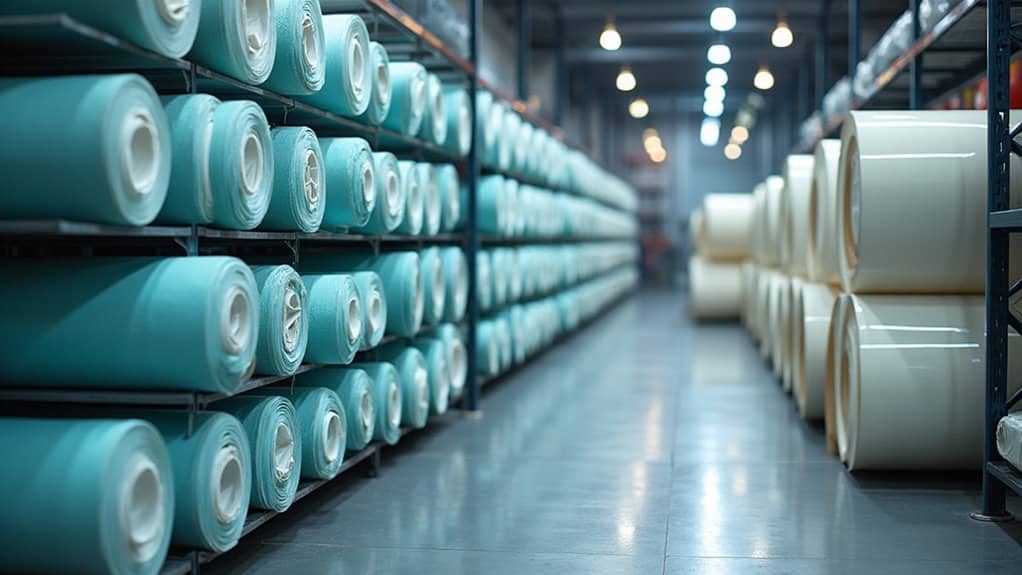
Three essential raw materials form the foundation of fiberglass pool manufacturing: premium-grade polyester resin, vinyl ester resin, and woven fiberglass matting. Each component undergoes rigorous testing before entering production to guarantee compliance with industry standards.
Raw material sourcing involves careful selection of suppliers who meet San Juan’s strict quality benchmarks. You’ll find that vinyl ester resin creates a protective barrier against water penetration, while polyester resin provides structural strength. The woven fiberglass matting delivers reinforcement throughout the shell’s layers.
The quality assurance process includes testing material samples for viscosity, cure rates, and tensile strength. San Juan’s manufacturing standards exceed industry requirements, implementing multiple checkpoints during production. They maintain detailed documentation of batch numbers and material specifications for complete product traceability.
Initial Mold Preparation Process
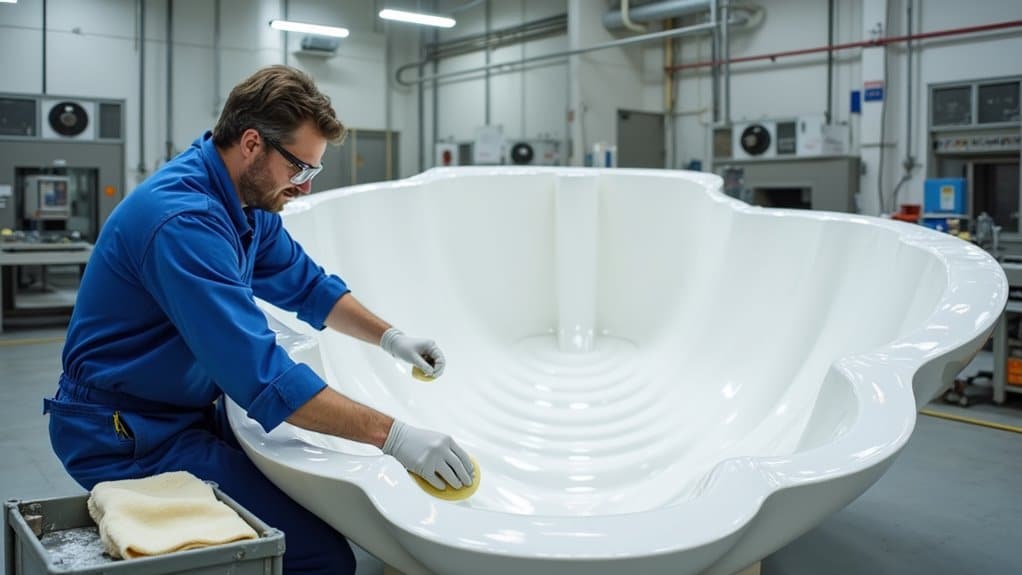
Before any fiberglass pool shell production can begin, technicians must carefully prepare the mold surface to assure flawless casting results. You’ll find that different mold types require specific preparation techniques to guarantee ideal results.
The process starts with a thorough inspection of the mold surface for any damage or irregularities. You’ll need to clean the surface thoroughly, removing all debris and residue from previous castings. Next, you’ll apply a release agent evenly across the entire mold surface, which prevents the new fiberglass from adhering to the mold during extraction.
You must maintain precise environmental conditions throughout this phase, including temperature and humidity levels. The mold’s surface temperature should be consistent, and you’ll need to verify that all preparation techniques have been executed according to manufacturing specifications before proceeding to gelcoat application.
Gel Coat Application Techniques
Once the mold preparation is complete, you’ll apply the gel coat layer, which forms the pool’s durable, water-resistant exterior finish. Using a specialized spray gun, you’ll maintain a consistent 18-20 mil thickness while applying the gel coat at a 90-degree angle to the mold surface.
| Application Step | Temperature Range | Spray Pattern |
|---|---|---|
| Initial Pass | 70-75°F | Horizontal |
| Second Pass | 70-75°F | Vertical |
| Final Pass | 70-75°F | Diagonal |
| Quality Check | 75-80°F | N/A |
Monitor the gel coat’s viscosity and catalyst ratio throughout the application process. You’ll need to achieve proper atomization and maintain a steady hand movement to prevent runs, sags, or thin spots. Allow the gel coat to cure until it reaches a tacky state before proceeding to the next manufacturing phase.
Building the Structural Layers
Building the pool’s structural integrity begins with applying multiple reinforced composite layers. You’ll start by spraying chopped fiberglass strands mixed with catalyzed resin onto the gel coat surface, ensuring complete coverage. This initial layer bonds directly to create the pool’s foundation.
Next, you’ll apply woven roving, a heavy fabric material that contributes exceptional strength. The layering techniques continue with further chopped fiberglass and resin applications, each building upon the previous layer. You’ll pay special attention to stress points like steps and corners, where extra reinforcement is vital.
The final structural layer incorporates a specialized blend of materials designed to prevent osmotic blistering. Each layer must cure properly before proceeding to maintain ideal structural integrity throughout the pool shell’s lifetime.
Reinforcement and Support Systems
While the structural layers form the pool’s core, extensive reinforcement systems provide essential supplementary support and stability. You’ll find strategically placed reinforcement materials integrated throughout the shell, including fiberglass ribs, steel bracing, and composite support structures. These components work together to maintain the pool’s structural integrity under varying load conditions.
You’ll notice vertical and horizontal reinforcements specifically engineered to prevent flexing and distortion. The placement of these support systems follows precise calculations based on the pool’s size, shape, and anticipated stress points. Critical areas like steps, benches, and deep ends receive extra reinforcement to handle concentrated loads. The entire support framework integrates seamlessly with the pool shell, creating a unified structure that resists ground pressure, water weight, and environmental forces.
Quality Control Throughout Production
Rigorous quality control measures permeate every stage of fiberglass pool manufacturing to guarantee consistent product excellence. You’ll find quality assurance inspectors monitoring key checkpoints while maintaining strict production standards throughout the process.
Quality Control Checkpoints | Testing Parameters
—|—
Gel Coat Thickness | 18-22 mils
Resin-to-Glass Ratio | 65:35 ±3%
Laminate Hardness | Shore D 75-85
Air Content | <2% void space
Surface Finish | RA 120-150 grit
You’ll need to document each quality checkpoint in detailed logs, tracking essential metrics from raw material inspection through final finishing. The quality control system guarantees proper gel coat application, consistent laminate thickness, and structural integrity verification. Regular calibration of measurement tools and updating of quality assurance protocols maintains manufacturing precision and reliability.
Final Inspection and Testing
Final inspection marks the critical last phase of fiberglass pool manufacturing, where you’ll conduct thorough testing to verify the pool meets all quality and safety requirements. During final product evaluation, you’ll examine the gel coat finish for consistency, check all surfaces for imperfections, and verify dimensional accuracy.
Performance testing involves evaluating structural integrity through pressure tests and load-bearing analysis. You’ll inspect plumbing connections, verify proper installation of fittings, and confirm the skimmer system functions correctly. Using specialized equipment, you’ll measure shell thickness at multiple points to guarantee compliance with industry standards.
Before shipping, you’ll document all test results, complete the quality control checklist, and apply certification labels. This systematic approach guarantees each pool leaves the facility meeting strict manufacturing specifications and safety requirements.
Transportation and Delivery Methods
Safe transportation of fiberglass pools requires specialized equipment and precise logistics planning. You’ll find that shipping logistics involve custom-built trailers designed to support the pool’s unique dimensions and prevent structural stress during transit. The delivery scheduling process coordinates multiple factors to guarantee a smooth installation.
| Transport Element | Equipment Required | Safety Measures |
|---|---|---|
| Loading | Crane System | Support Bracing |
| Transit | Custom Trailer | Tie-down Straps |
| Route Planning | GPS Navigation | Escort Vehicles |
| Unloading | Heavy Equipment | Safety Barriers |
| Site Placement | Excavator | Ground Protection |
Your pool’s expedition from factory to installation site involves careful route mapping to avoid low bridges, tight turns, and weight-restricted roads. The transport team utilizes real-time tracking systems to monitor the shipment and maintain delivery timelines while ensuring the pool arrives in pristine condition.
Installation Best Practices by San Juan
When installing San Juan fiberglass pools, certified technicians follow a methodical sequence of steps that you’ll need to monitor throughout the process. You’ll initially confirm that the installation guidelines match your specific pool model and site conditions.
The pool preparation phase requires precise excavation according to San Juan’s dimensional specifications, typically allowing for a 6-inch overdig on all sides. You’ll need to verify the installation team properly prepares the base material, usually consisting of crushed stone or sand, and guarantees accurate leveling within 1/8 inch tolerance.
During placement, you’ll watch as installers use crane straps at designated lifting points while simultaneously backfilling with the approved material. The team must maintain equal pressure on all sides to prevent shell distortion during this critical phase.
Frequently Asked Questions
How Many Employees Work at the San Juan Pools Factory?
You’ll find that specific factory workforce numbers for San Juan Pools aren’t publicly disclosed. However, their manufacturing operation typically requires employee roles across multiple departments, including mold technicians, gel coat specialists, lamination experts, quality control inspectors, and finishing crews. When you consider the scale of fiberglass pool production, you can estimate they maintain dozens of skilled workers to handle their daily manufacturing operations.
What Is the Average Lifespan of a San Juan Fiberglass Pool?
You can expect your San Juan fiberglass pool to last 25-35 years with proper pool maintenance, though many installations exceed 50 years. Longevity factors include water chemistry balance, structural integrity maintenance, and protection from UV exposure. Your pool’s gelcoat surface, when properly maintained, won’t require resurfacing like concrete pools. Regular cleaning, chemical balancing, and addressing minor repairs promptly will help enhance your fiberglass pool’s lifespan.
Does San Juan Pools Offer Custom Color Options for Their Pools?
Yes, you’ll find that San Juan Pools offers a range of color options to match your design preferences. You can choose from their standard color selection, which includes multiple shades of blues, whites, and grays. Each color option features specially formulated gel coat finishes that are UV-resistant and designed to maintain their vibrancy. While they don’t offer unlimited custom colors, their existing palette provides enough diversity to complement most terrain designs and architectural styles.
How Long Does It Take to Manufacture One Fiberglass Pool?
The manufacturing process for a standard fiberglass pool typically takes 4-7 days from start to finish. You’ll find that the production timeline includes multiple stages: gel coat application (24 hours), vinyl ester resin and fiberglass layering (48 hours), curing time (24-48 hours), and quality inspection (24 hours). However, your specific pool’s timeline may vary depending on size, complexity, and current production schedules at the facility.
What Warranties Are Included With a San Juan Fiberglass Pool?
When you purchase a San Juan fiberglass pool, you’ll receive extensive warranty coverage. Your pool shell comes with a 25-year structural warranty protecting against manufacturing defects and delamination. You’ll also get a 10-year surface warranty covering gelcoat blistering and cracking. To maintain warranty validity, you’ll need to follow proper pool maintenance guidelines, including maintaining balanced water chemistry and using approved cleaning products. Supplementary warranty terms may apply to equipment and accessories.