

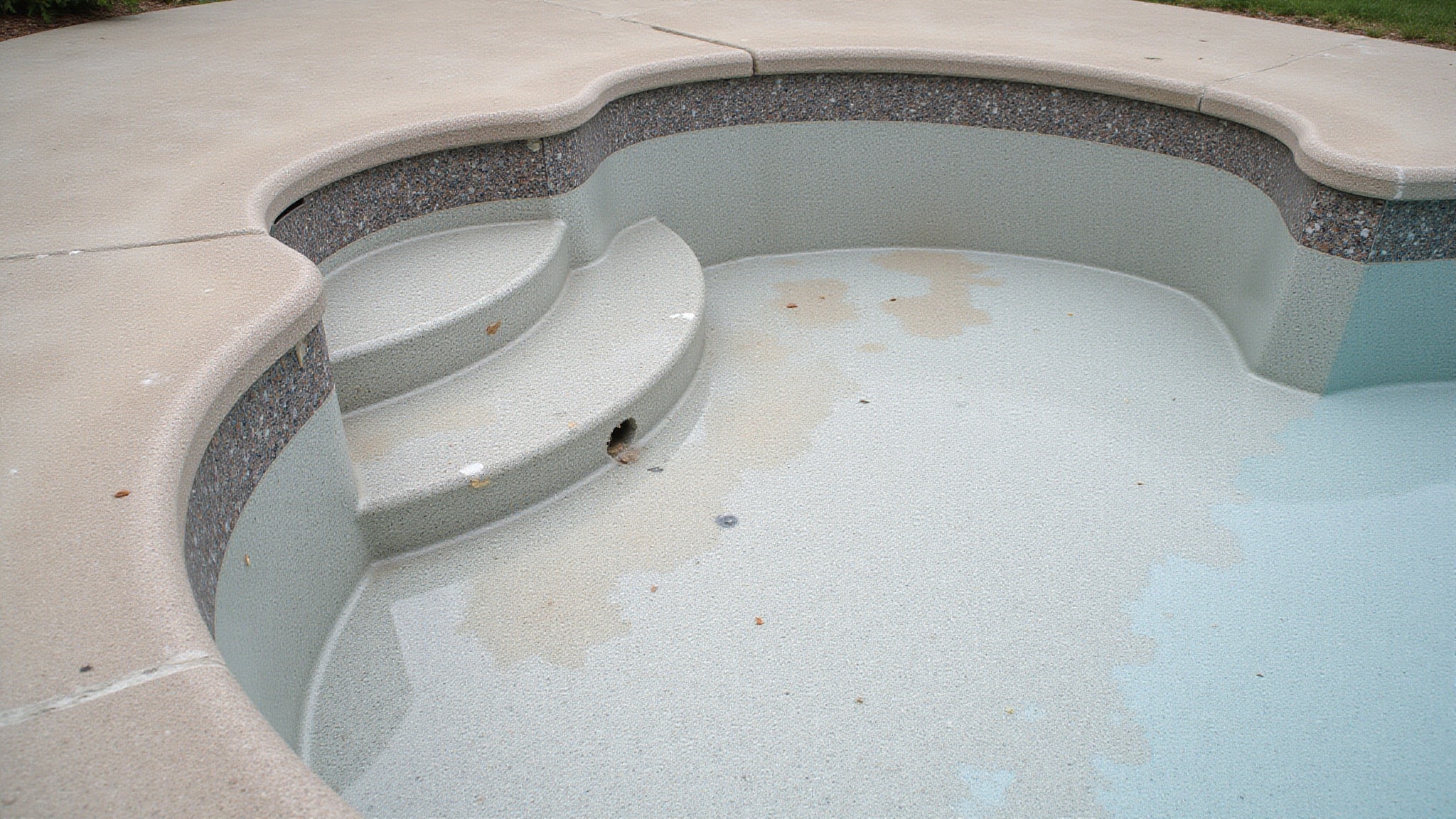
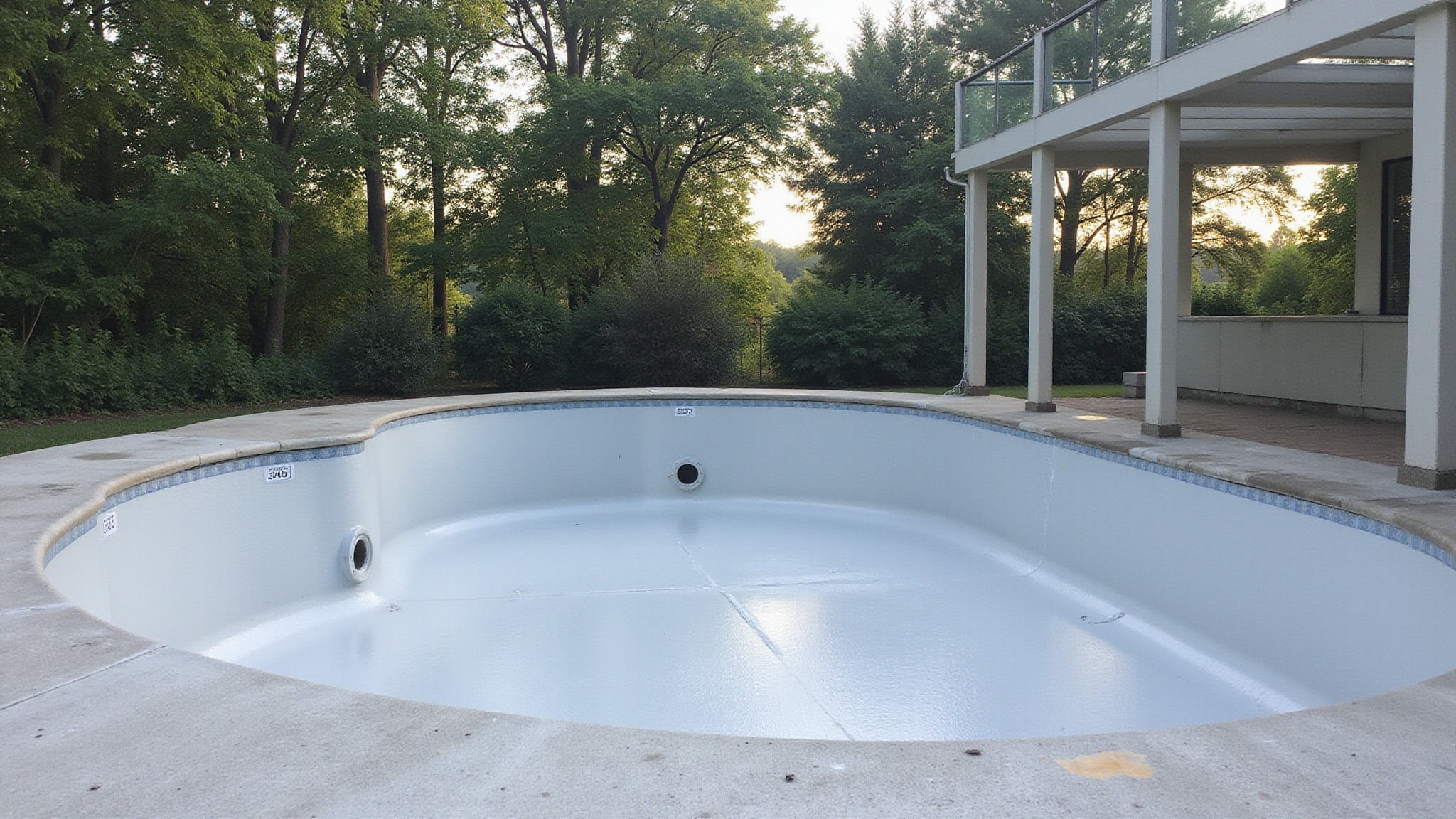
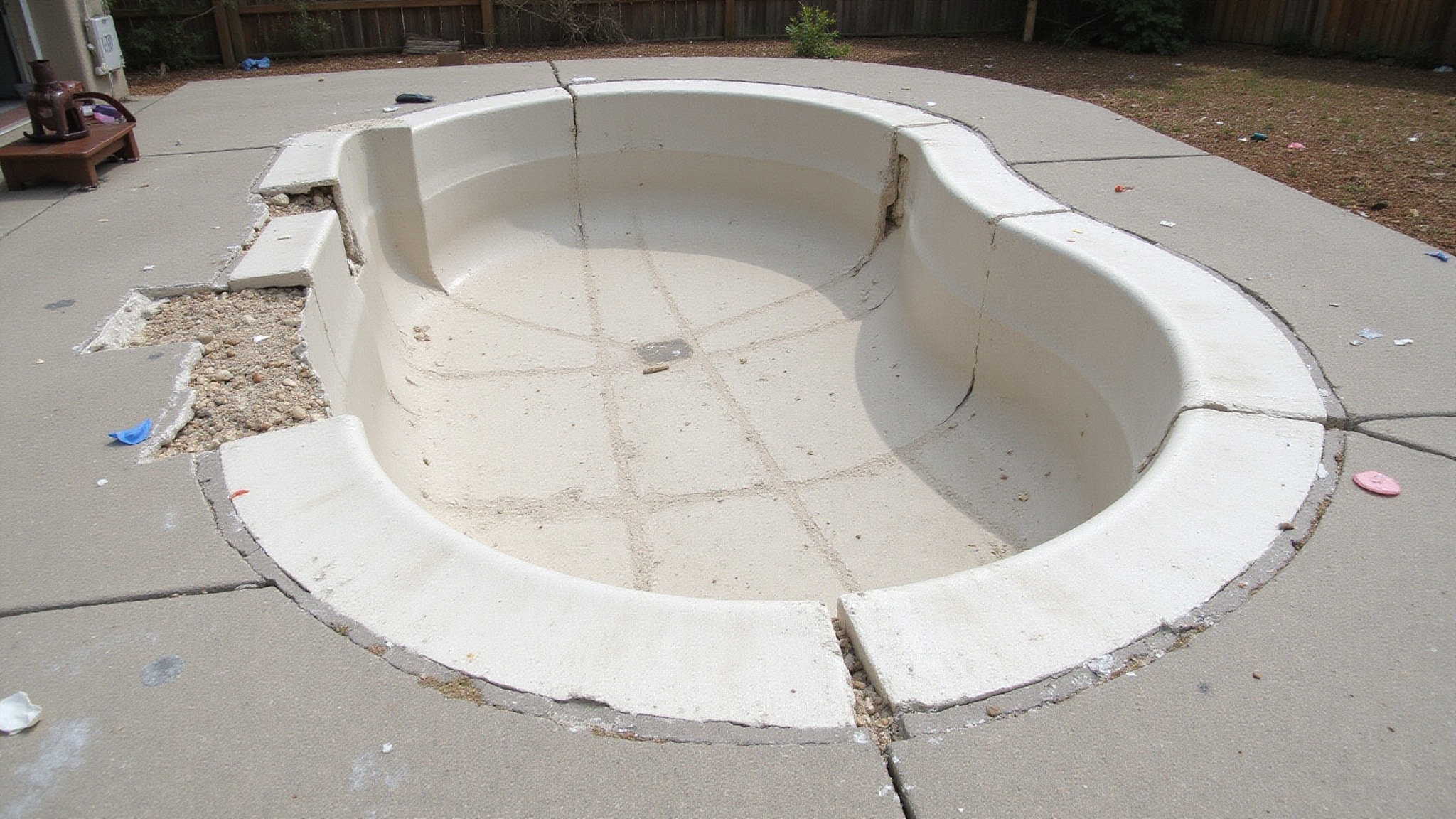
Watch for these critical signs that your fiberglass pool may be developing cracks: spider web patterns forming on surfaces, bulging or bowing walls, unexplained water level drops, surface deterioration like blistering, plaster spalling, visible hairline cracks, and separation at fittings or steps. You’ll need immediate professional assessment if you notice these warning signs, as they often indicate structural compromises. Understanding these indicators can help you prevent costly structural failures. Additionally, monitor water quality to prevent harmful fiberglass pool irritants from worsening issues or damaging the structure. Regular testing and balanced chemicals keep the pool safe and maintain its integrity.
Understanding Common Types of Fiberglass Pool Cracks
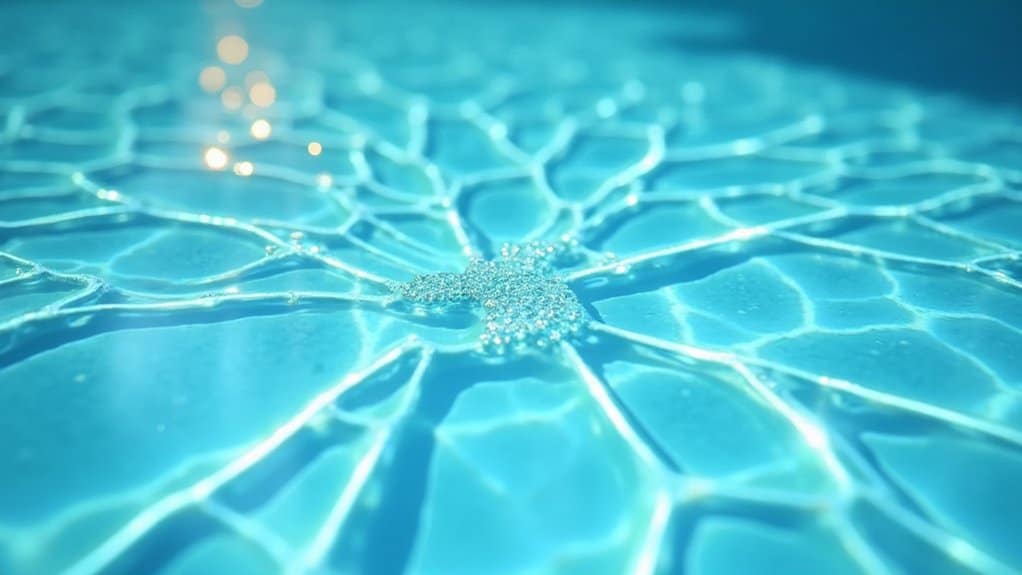
When maintaining a fiberglass pool, recognizing different types of cracks early can prevent costly structural damage. You’ll encounter five primary crack types: spider cracks, which form web-like patterns from impact points; hairline cracks that develop from ground shifts; structural cracks causing bulging walls; leakage cracks that compromise water retention; and impact-induced cracks from external trauma. Regular chemical balance helps prevent degradation that can lead to surface cracks. The quality of construction directly influences how susceptible your pool is to developing these various types of cracks. Poor curing techniques during installation often result in spider cracks appearing shortly after construction.
Each crack type requires specific repair techniques. Spider and hairline cracks often need resin filling, while structural cracks demand professional intervention for wall reinforcement. Leakage cracks call for immediate pressure testing and sealing, and impact-induced damages may require gel coat replacement. You’ll need to monitor these issues carefully, as untreated cracks can lead to water infiltration and progressive deterioration of your pool’s structural integrity.
Critical Warning Signs Your Pool May Be Damaged
Five critical warning signs indicate potential damage to your fiberglass pool’s structural integrity. Early crack identification and understanding repair options are essential for maintaining your pool’s longevity.
| Warning Sign | Action Required |
|---|---|
| Spider Cracks | Monitor gelcoat breakdown, assess for structural risks |
| Wall Bulges | Schedule professional assessment immediately |
| Plaster Spalling | Test water chemistry, evaluate resurfacing needs |
| Water Level Drop | Conduct dye testing for leak detection |
| Surface Deterioration | Inspect for blisters, evaluate UV damage |
You’ll need to act quickly if you notice these signs developing. Spider-like cracks can signal pressure-related stress, while bulging walls indicate serious structural concerns. Regular inspection of your pool’s surface is crucial as loss of gel coat can make the structure more vulnerable to damage over time. Don’t ignore spalling plaster or persistent leaks, as they’ll worsen over time. Surface deterioration, including blistering and discoloration, requires professional evaluation to determine the appropriate repair strategy. Ground movement from shifting soil can cause significant stress on your pool shell, making regular structural assessments essential. Annual professional inspections can help identify potential issues before they become major problems requiring costly repairs, as routine maintenance is key to preventing deterioration.
Environmental Factors That Lead to Pool Cracking
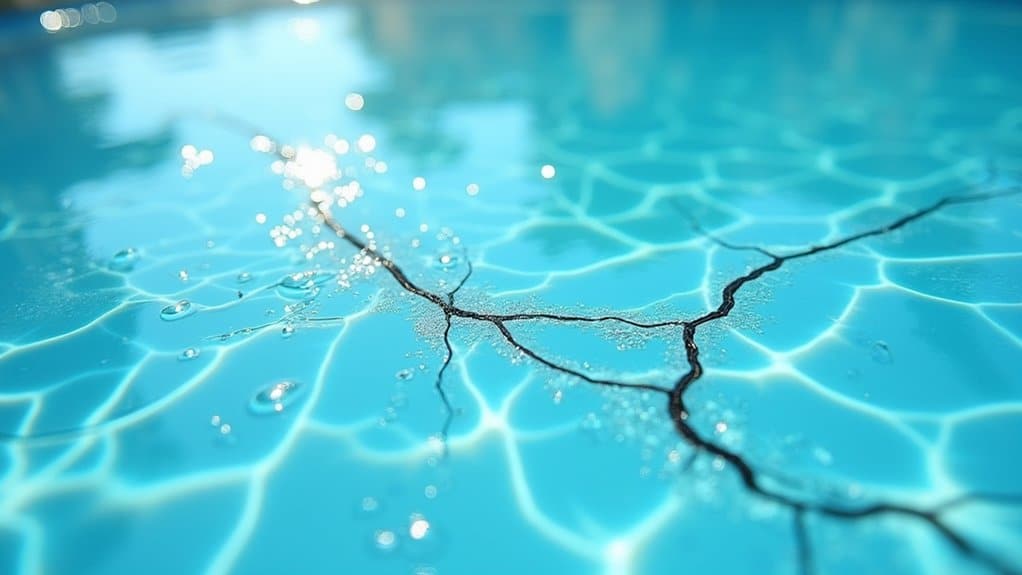
Understanding the environmental forces that compromise fiberglass pool integrity helps you prevent the warning signs we’ve discussed.
Five major environmental factors can threaten your pool’s structure. Ground movement from earthquakes, construction vibrations, and seasonal frost heave creates stress on pool shells. Temperature extremes cause expansion and contraction, particularly during freeze-thaw cycles in northern regions. Poor water runoff management, including improper deck slopes and drainage systems, leads to pressure buildup behind pool walls. Soil composition plays a significant role expansive clay, unstable rocky subgrade, or loose sandy soils can shift and compromise foundation support. Weather stress from UV radiation, extreme sunlight exposure, and chemical imbalances degrades the pool’s gelcoat and resin layers over time. Regular testing of water chemistry levels helps prevent surface deterioration and structural weakness. The pool’s inherent fiberglass construction flexibility helps resist these environmental pressures better than traditional pool materials. Sand backfill installation is critical to prevent shifting and floating in wet conditions. You’ll need to monitor these factors closely to maintain your pool’s structural integrity.
How Installation Quality Affects Pool Durability
The quality of your fiberglass pool’s installation directly impacts its long-term structural integrity and resistance to cracking. Professional installation techniques guarantee proper site assessment, precise leveling, and ideal shell placement to prevent structural stress points that could lead to future cracks. The seamless construction of fiberglass pools provides superior structural stability when installed correctly. Using clean stone backfill instead of sand prevents wall bulging and structural stress.
Your pool’s durability depends heavily on the installer’s expertise in backfilling and anchoring procedures. Quality control measures during installation verify shell integrity, foundation stability, and perimeter bonding. Professional installers use protective padding and careful handling methods to prevent gelcoat damage during placement. They’ll also implement proper support structures to compensate for ground pressure variations. Reputable local dealers provide essential guidance on maintenance practices that enhance installation success.
To maximize your pool’s lifespan, verify your installer follows manufacturer-certified protocols and maintains detailed quality control checkpoints throughout the installation process. This systematic approach considerably reduces the risk of installation-related cracking.
Essential Maintenance Tips to Prevent Pool Cracks
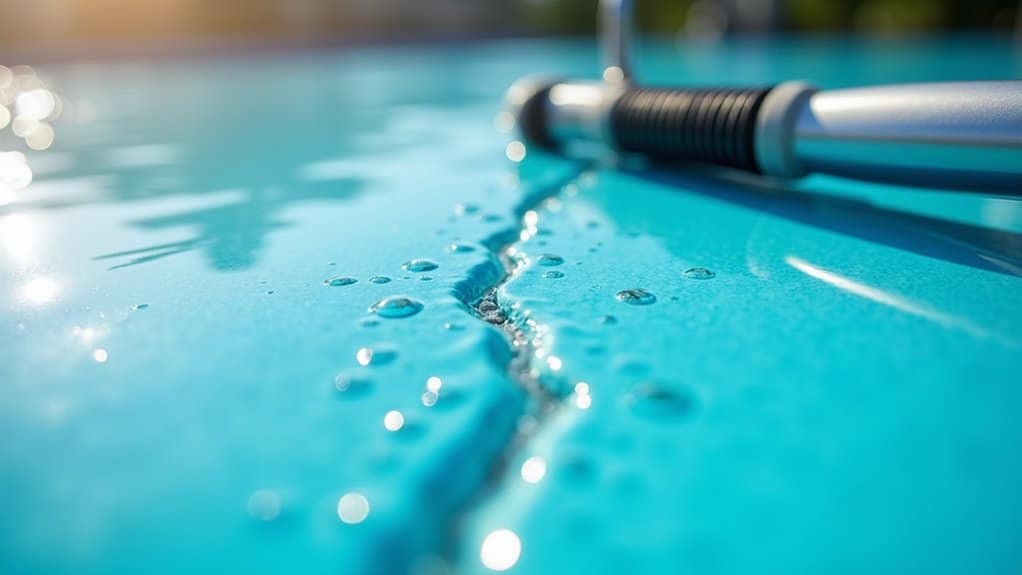
Maintaining your fiberglass pool’s structural integrity requires a systematic approach to preventive care and monitoring. Implement routine inspections by checking walls, floors, and steps weekly for surface damage. You’ll need to maintain proper chemical balances, keeping pH between 7.2-7.8 and chlorine at 1-3 ppm to prevent surface deterioration. Unlike traditional concrete pools, fiberglass pools feature a non-porous gel coat that naturally deters algae buildup. Professional warranties often cover repairs when certified experts handle maintenance issues.
As part of your preventive measures, use a nylon brush weekly to clean walls, and avoid abrasive tools that can damage the gel coat. Monitor your filter’s pressure and backwash when it increases by 10-15 psi. Pay attention to temperature fluctuations, which can cause spider cracks, and maintain stable water levels to prevent structural stress. Using crushed blue stone for backfill provides superior stability against wall bulging compared to sand. For expert oversight, consult certified technicians for chemical imbalances and address any cracks within 24 hours using appropriate repair techniques.
Frequently Asked Questions
How Long Can a Fiberglass Pool Last Before Showing Signs of Cracking?
Your fiberglass pool can last 25-50 years before showing significant cracking, depending on key lifespan factors. With proper maintenance tips like balanced chemicals and UV protection, you’ll typically see minor surface issues around the 25-year mark. However, if you’ve installed a high-quality pool with proper gelcoat thickness (10-20 mil) and multiple lamination layers, you can extend its crack-free performance well beyond this timeframe with regular inspections and care.
Can Existing Cracks in Fiberglass Pools Be Permanently Repaired?
Yes, you can permanently repair existing cracks in fiberglass pools using proper repair techniques and crack prevention methods. You’ll need to apply a multi-layer system: start with a bond coat, followed by polyester putty mixed with catalyst, then reinforce with fiberglass cloth, and finish with gel coat. For lasting results, you’ll want to address underlying causes like settlement issues and guarantee proper surface preparation through grinding and priming.
Does Homeowner’s Insurance Typically Cover Fiberglass Pool Crack Repairs?
Your homeowner’s insurance coverage for fiberglass pool crack repairs depends primarily on the cause of damage. You’ll typically receive coverage if cracks result from covered perils like fire, explosions, or sudden accidents. However, you won’t get insurance coverage for repairs needed due to normal wear, poor maintenance, or gradual deterioration. To protect against repair costs, you should verify your policy’s “other structures” coverage and consider additional riders for thorough protection.
Are Fiberglass Pools More Prone to Cracking in Certain Climates?
While fiberglass pools show strong material durability across regions, you’ll find they’re most vulnerable in areas with extreme freeze-thaw cycles. However, proper installation with crushed stone backfill greatly minimizes climate impact risks. You won’t experience higher crack rates in cold climates if you maintain proper winterization protocols. The pool’s thermal flexibility and non-porous gelcoat surface actually make it more resilient than concrete or vinyl alternatives in harsh conditions.
What’s the Average Cost to Repair Different Types of Pool Cracks?
You’ll find repair costs vary greatly based on crack severity and required repair materials. For minor surface cracks, you’re looking at $300-$600 for epoxy injections or gel coat repairs. Mid-range repairs using stapling methods typically cost $500-$1,500, while severe structural cracks requiring torque lock systems range from $1,000-$2,500. For the best crack prevention and long-term savings, it’s important to address issues early and use professional-grade materials for repairs.