
Resurfacing your pool takes 5 to 10 days of active work, and 1 to 2 weeks total once you factor in curing and water balancing. You’ll spend about 1.5 to 2 days on inspection, draining, and cleaning, then 1 to 2 days on surface prep. Finish application runs 1 to 3 days, while curing, refill, and startup add 3 to 10 days. Below, you’ll find each stage broken down in detail. Fiberglass resurfacing vs repainting can significantly affect both the appearance and longevity of your pool. While resurfacing provides a fresh, durable finish, repainting may be a quicker, albeit less enduring, solution.
Key Takeaways
- Full pool resurfacing takes 5 to 10 days of active work, with 1 to 2 weeks to total completion including curing.
- Inspection, planning, draining, and cleaning together take about 1.5 to 2 days before any finish work begins.
- Surface preparation involves sanding and crack repair, requiring 1 to 2 days depending on hidden damage.
- Finish application ranges from 1 to 3 days, with textured or aggregate finishes taking longer than standard plaster.
- Curing, refilling, and startup form the longest phase at 3 to 10 days, plus 1 to 3 days for water balancing.
How long does it take to resurface a pool
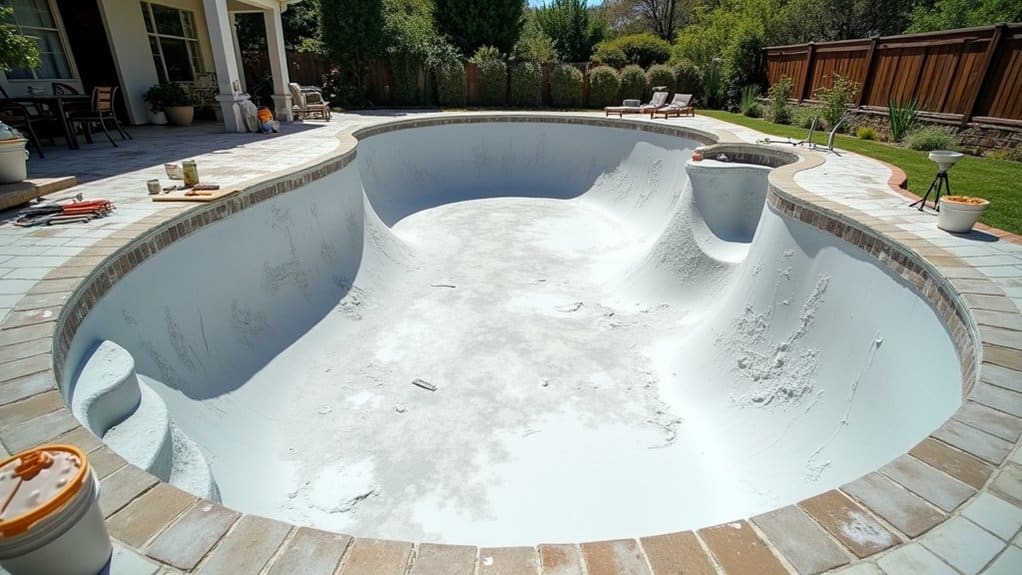
Resurfacing a pool takes 5 to 10 days of active work, from pool drain to refill and startup. A simple job wraps up in 1 to 2 weeks once you factor in curing time and water balancing. Expect the sequence to run through several phases: inspection and planning (about a day), draining and cleaning (half a day to a day), surface prep (1 to 2 days), coating application (1 to 3 days), then curing, refill, and startup (3 to 10 days combined). Heavier finishes push you into the 2 to 3 week range. If you’re adding tile or coping, plan for 2 to 4 weeks. Weather, pool condition, and finish type all shift your final schedule. Pool resurfacing steps are crucial to ensure the longevity and functionality of your pool. Each phase requires careful attention to detail, especially during surface prep and coating application.
What are the stages in the full timeline
The full timeline has five distinct stages: inspection and planning, draining, cleaning, surface prep, and applying your new coating or plaster, followed by curing and startup.
| Stage | Task | Duration |
|---|---|---|
| Prep | Inspection, draining, cleaning | 1.5 to 2 days |
| Surface | Sanding, crack repair | 1 to 2 days |
| Finish | Coating or plaster application | 1 to 3 days |
After you’ve applied the finish, you’ll wait through the longest phase: curing, refill, and startup, which runs 3 to 10 days. Water balancing takes another 1 to 3 days after refill. Track each stage carefully, and you’ll manage expectations and avoid rushing a curing surface that needs time.
How long does draining and surface prep take
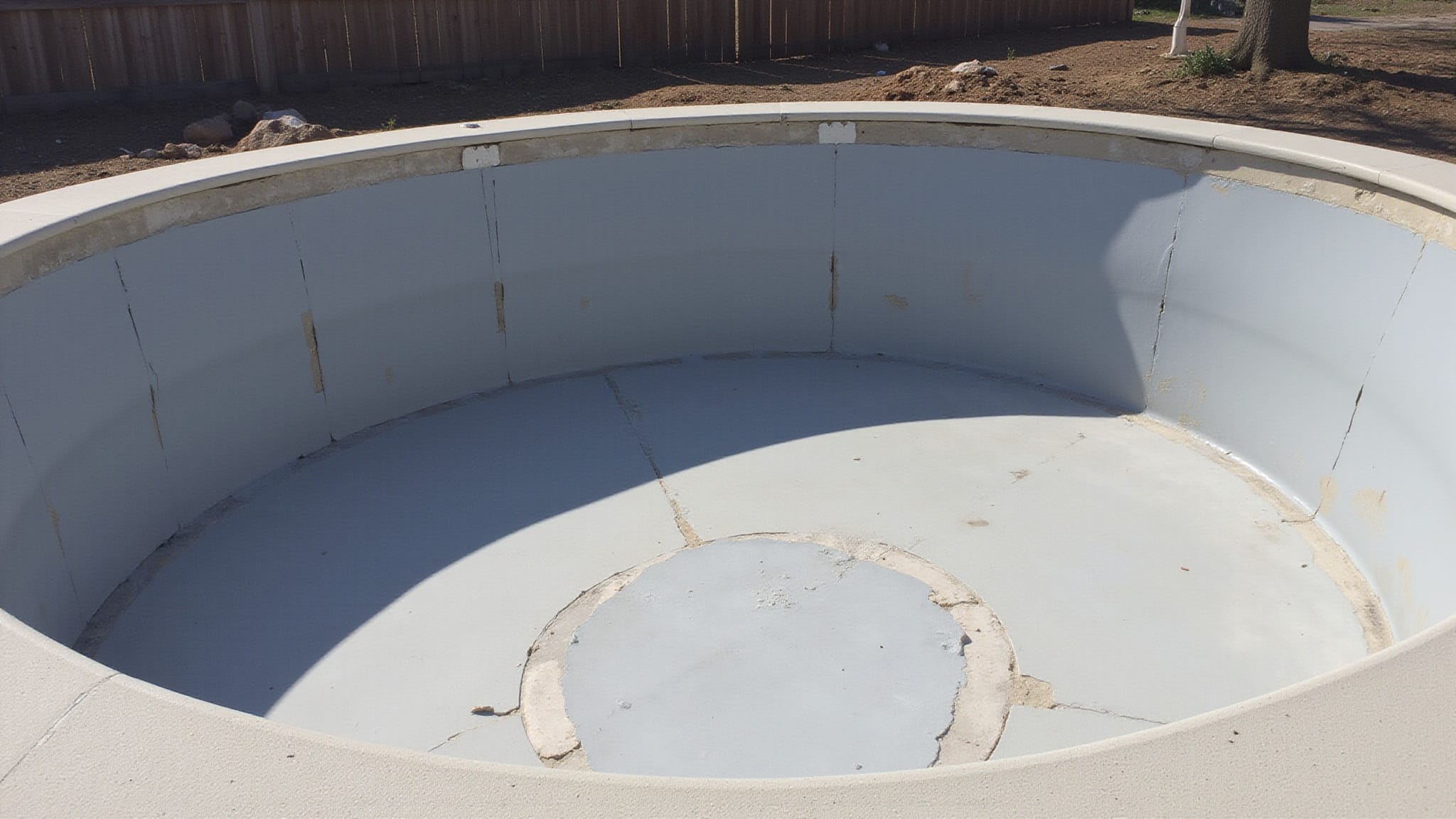
Draining and surface prep take 1.5 to 3 days of combined work before any finish touches the surface. Draining and cleaning run about half a day to a full day, depending on pool volume and how you’re discharging the water. Once the shell’s empty, you’ll clean the interior thoroughly to strip old debris and contaminants.
Surface prep takes another 1 to 2 days. You’re sanding, smoothing, and cutting out cracks so the new finish bonds correctly. If you hit hidden delamination or structural damage, expect this phase to stretch further. Don’t rush it. Prep quality determines how well the coating adheres and how long it lasts. Skipping steps here causes callbacks, so give the substrate the attention it needs.
How long does the coating application take
Coating application takes 1 to 3 days depending on pool size and finish type. If you’re applying standard plaster, expect a single day for smaller residential pools, since crews trowel the surface in continuous passes to avoid cold joints. Larger pools or textured finishes push you toward the two- to three-day mark. Quartz and pebble finishes demand more labor, as you’re broadcasting aggregate into the base coat and exposing it with acid or pressure washing before it fully sets. Gel coat and epoxy systems require controlled application in thin, even layers, so you’ll build up coats sequentially. Weather matters here too. High humidity or heat alters working time, forcing you to adjust batching and application speed to keep the finish consistent throughout.
How long does curing and refilling add
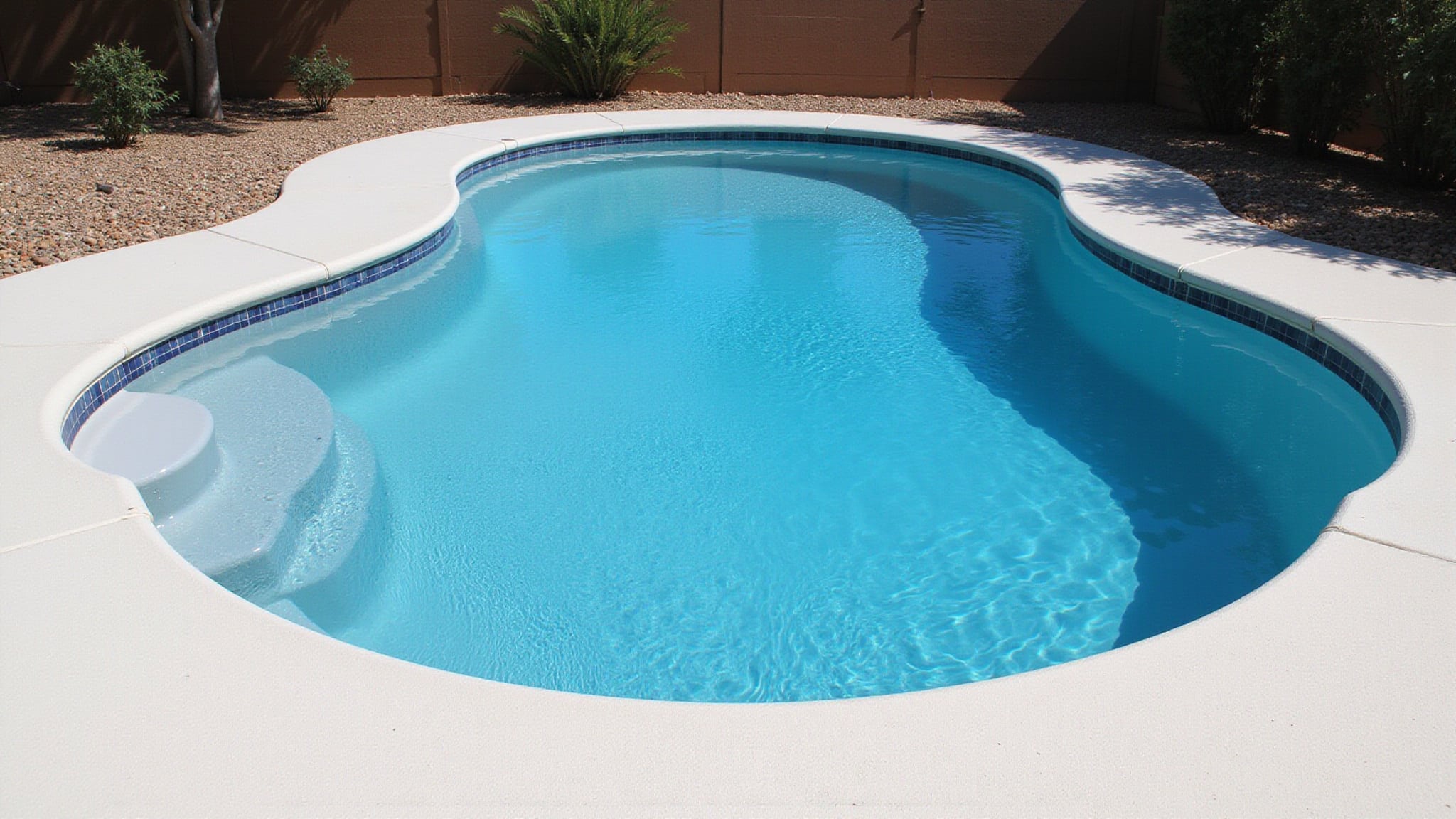
Curing and refilling add 3 to 10 days to the total timeline, and this phase is where impatience ruins otherwise solid work. Once your new surface goes on, it needs time to set before water hits it, and the finish type dictates the pace. Plaster, quartz, and pebble each cure at different rates, so don’t rush the refill. After you start filling, water balancing and startup take another 1 to 3 days, during which you’ll brush the surface and run filtration continuously to prevent staining and scaling. Cold, heat, and humidity all shift these numbers, sometimes stretching curing further. Plan a no-swim window of 7 to 12 days on standard jobs, and 10 to 14 days when the finish demands slower, more careful curing.
What can delay the project
Several factors can delay the project, and hidden problems that surface after the crew drains the pool are the biggest reason a tidy 5-to-10-day job stretches into weeks. What you can’t see until the water’s gone drives most delays.
Once the water’s gone, hidden damage emerges, and that’s what turns a quick job into weeks.
- Structural damage: Hidden cracks and delamination demand repair before any coating goes on, adding days to the schedule.
- Weather: Rain, cold, humidity, and heat all disrupt application and slow curing, easily pushing timelines to 14 days or more.
- Finish type: Plaster, quartz, pebble, gel coat, and epoxy cure at different speeds, so heavier finishes extend the wait.
- Scope creep: Adding tile, coping, decking, or structural modifications shifts you from days into weeks.
Pool size compounds each factor, since larger surfaces need more prep, material, and fill time.
How do you schedule the work around your season
Schedule your work around the season by targeting your region’s dry, moderate season, when temperatures stay mild and rain stays scarce. Cold slows curing, humidity interferes with coating adhesion, and heat can flash-set plaster before you’ve finished troweling. Aim for late spring or early fall in most climates, avoiding peak summer heat and winter cold.
Work backward from when you want to swim. If you need the pool ready by summer, book your contractor two to three months ahead and pad your timeline. A straightforward job might run 5 to 10 days, but heavier finishes and possible weather holds can push you well beyond that window.
Conclusion: Planning a Resurface
A typical resurfacing runs about a week from drain to swim, though the finish you pick and the weather can shift that. Knowing the timeline up front helps you plan around it and keeps the project from feeling like it drags. Pair a realistic schedule with a durable finish and careful early care, and the new surface pays you back for years. When to resurface a pool is an important consideration for maintaining its longevity and aesthetic appeal.
Give Your Pool a Beautiful New Life
Resurfacing or replastering your pool transforms the entire look and extends its life for many years to come. At Pool Doctor of the Palm Beaches in Palm Beach Gardens, FL, our experienced team provides trusted Pool Renovation & Remodeling with expert craftsmanship and premium materials. Call +1 (561) 586-2815 today and plan your pool’s transformation.
Frequently Asked Questions
How Much Does Pool Resurfacing Typically Cost?
Most resurfacing jobs land between 4,000 and 10,000 dollars, driven by pool size, the finish you choose, and any repairs the shell needs first. Basic plaster sits at the low end while quartz and pebble finishes cost more. Getting a couple of local quotes is the surest way to know your number.
How Often Should a Pool Be Resurfaced?
Plaster surfaces generally need it every 10 to 15 years, with premium finishes lasting longer. Upkeep and water chemistry move that timeline. Rather than counting years, watch for rough texture, staining, and thin spots, which tell you the surface has worn down and is ready for a refresh.
Can I Resurface My Pool Myself Instead of Hiring a Contractor?
It is a demanding job that favors a pro. Resurfacing material sets fast and has to go on evenly in one session, which is tough without a trained crew. A DIY attempt often leaves permanent streaks or rough patches, so most owners get a better, longer-lasting result by hiring it out.
What Resurfacing Finish Lasts the Longest?
Pebble finishes are the most durable, often lasting 20 years or more, followed by quartz at around 15. Standard plaster is the most affordable but the shortest-lived at 10 to 15 years. The premium finishes cost more up front but spread that cost over more seasons, which often makes them the smarter buy.
How Do I Maintain a Newly Resurfaced Pool?
Brush the surface daily for the first couple of weeks, keep the chemistry balanced, and hold off on salt and heat while the finish cures. That early care prevents staining and blotching as the surface hardens. Once it has cured for about a month, normal maintenance keeps it looking good for years.