

Glass and porcelain are your best tiles for a pool water line. Glass tile’s impervious and non-absorbing, so it resists pool chemicals like chlorine and saltwater, holds color under UV exposure, and cleans easily where oils, sunscreen, and calcium build up. Porcelain’s your best all-around option, offering very low water absorption plus frost and chemical resistance for waterlines and submerged areas. Ceramic and stone bring alternatives too, each with tradeoffs worth understanding before you decide.
Key Takeaways
- Glass and porcelain rank as the best waterline tile choices due to their impervious, low-absorption performance.
- Glass tile resists fading, pool chemicals, and staining while cleaning easily in convenient mosaic form.
- Porcelain offers very low water absorption, strong chemical and frost resistance, suiting both waterline and submerged areas.
- Ceramic provides an affordable, decorative waterline option but has only moderate water absorption.
- Natural stone delivers a luxury look but is porous, requiring regular sealing to prevent staining.
What is the best tile for a pool water line
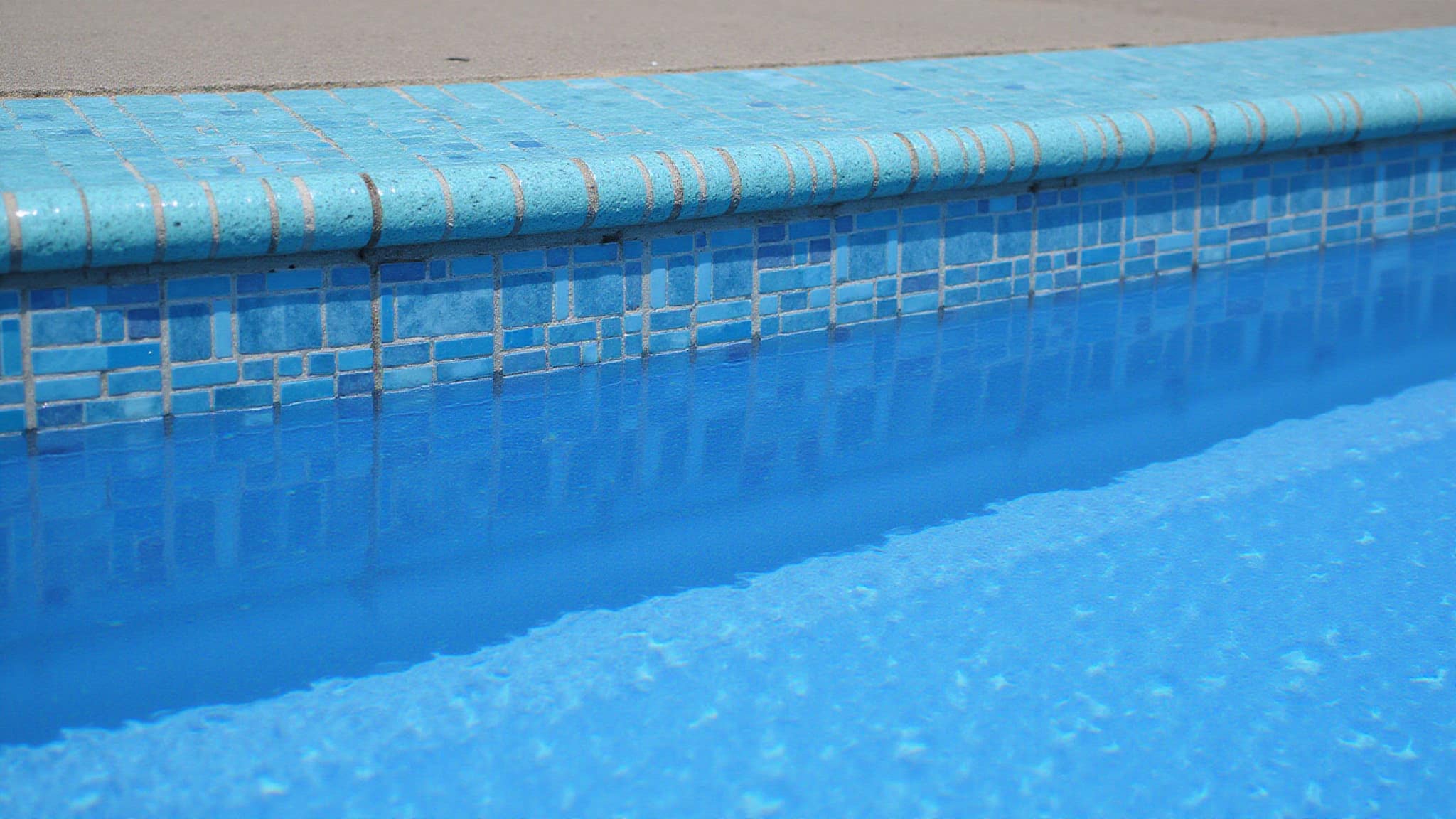
The best tile for a pool waterline is glass or porcelain. Glass tile is impervious to water, resists fading under UV exposure, and stands up to pool chemicals, making it the premium choice. Its mosaic form delivers a classic waterline look, and it cleans easily where sunscreen, oils, and calcium deposits accumulate. Porcelain is the best all-around option, with very low water absorption that supports frost resistance and chemical resistance. It works for waterlines and submerged areas alike, typically costs less than glass, and offers a broad range of colors and finishes. Both materials handle strong sunlight and outdoor conditions reliably. For colder climates, prioritize frost-proof performance, and always confirm the tile’s rating for submerged use.
What makes a good water line tile material
A good water line tile material starts with low water absorption. You want non-porous or low-absorption surfaces, since materials that resist soaking up water avoid staining, deterioration, and freeze-thaw damage. Next, verify chemical resistance so the tile withstands chlorine or saltwater without degrading. UV resistance protects against fading, keeping color consistent through years of direct sunlight. Durability determines how well the surface handles constant wetting, temperature swings, and mechanical wear at the waterline. Factor in cleanability, because oils, sunscreen, and calcium accumulate here. Even affordable ceramic can perform when paired with pool-rated installation materials. Match every property to your climate, pool chemistry, and design before committing.
How do glass options perform
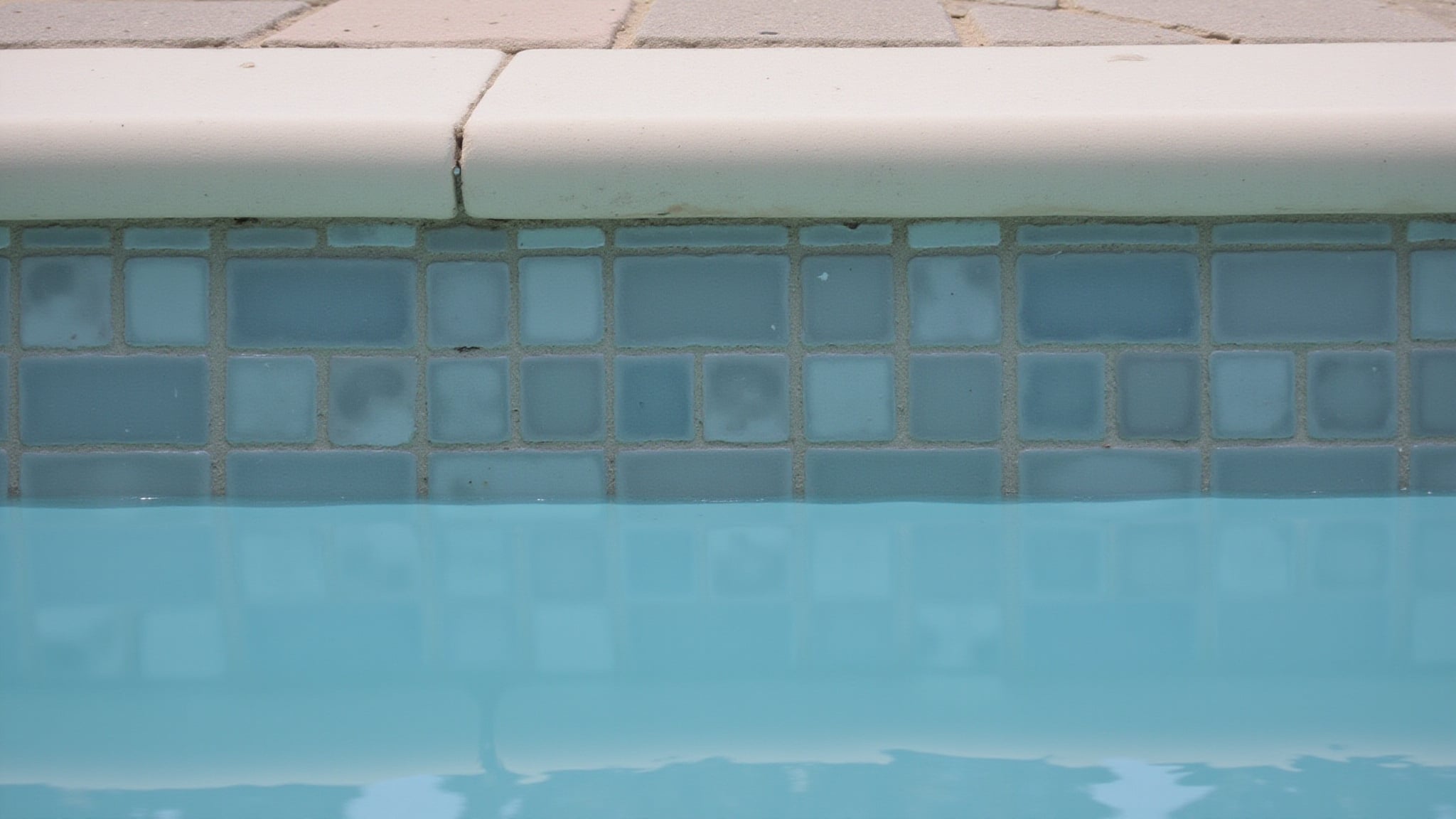
Glass tiles consistently rank among the best waterline choices because they’re impervious to water, so they won’t absorb moisture or deteriorate at the waterline where conditions are harshest. You’ll get strong resistance to pool chemicals, whether you’re running a chlorine or saltwater system. Glass also resists fading, holding its color under constant UV exposure without dulling over time.
Maintenance stays simple too. The waterline collects sunscreen, oils, and calcium deposits, but glass cleans easily and won’t trap residue like porous surfaces do. You’ll typically install it in mosaic form, the classic waterline look that adapts well to curved or freeform shapes. Choose from blue, blue-green, or iridescent finishes when you want maximum visual impact and enhanced water color reflection.
How do porcelain and ceramic tiles compare
Porcelain and ceramic represent two distinct value propositions when weighing durability against budget. Porcelain stands out as the best all-around choice, delivering very low water absorption that supports frost and chemical resistance. You can install it across waterlines and submerged areas, including floors and walls. Ceramic serves as the affordable, entry-level option, best suited for decorative waterline applications rather than demanding submerged conditions.
| Property | Porcelain | Ceramic |
|---|---|---|
| Water Absorption | Very low | Moderate |
| Best Application | Waterline + submerged | Decorative waterline |
| Cost | Mid-range | Budget-friendly |
You’ll pay more for porcelain, but you’ll gain durability and broader placement flexibility. Choose ceramic when budget outweighs premium performance, and pair it with pool-rated installation materials to boost aquatic durability.
How do stone and mosaic options look and last
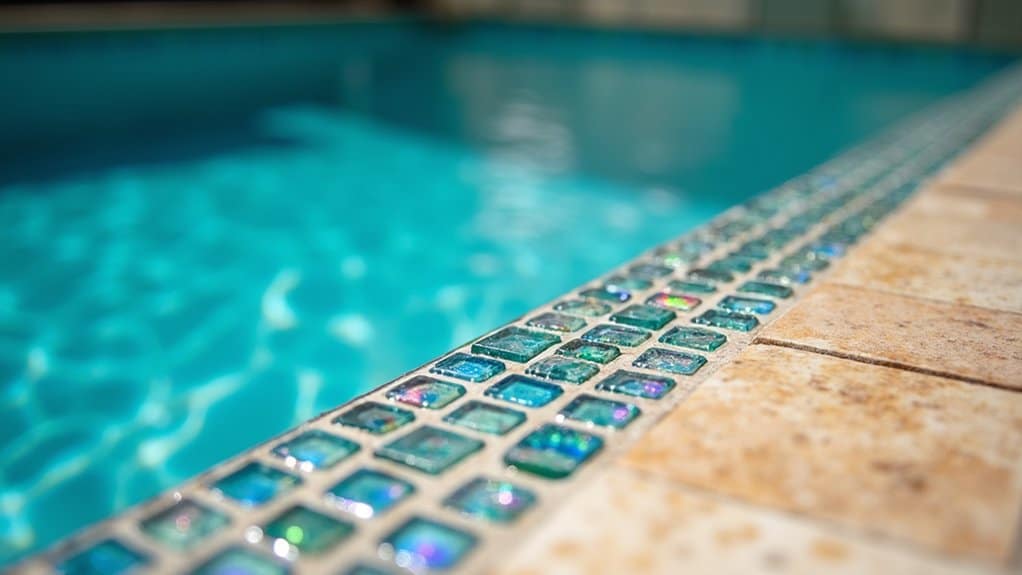
Natural stone and glass mosaic look and last very differently, so you’ll want to match each option to your maintenance tolerance. Natural stone, travertine, limestone, or marble, delivers a luxury, organic look, but many varieties are highly porous. They absorb water, stain, and deteriorate at the waterline, so you’ll commit to regular sealing and ongoing care to keep them intact.
Glass mosaic behaves differently. It’s impervious to water and resistant to many pool chemicals, so it won’t degrade under constant submersion. You’ll see it resist fading and hold color under UV exposure, while cleaning easily where sunscreen, oils, and calcium accumulate. Available in blue, blue-green, and iridescent finishes, mosaic delivers a classic waterline look and conforms well to curved or freeform shapes.
How do you choose the best tile for your pool
Choose the best tile for your pool by using performance criteria that determine how well a tile survives at the waterline. Start by confirming the tile carries a rating for submerged use, outdoor exposure, and pool chemicals, then verify UV resistance and frost-proof performance if you’re in a colder climate.
- Absorption: Prioritize non-porous or low-absorption surfaces to reduce staining and water damage.
- Slip resistance: Check COF ratings and textured finishes for steps and surrounding decks.
- Compatibility: Confirm grout and sealant work with your system, especially saltwater versus chlorine.
You’ll also match tile format to your pool’s geometry and review samples in natural light with water present, since reflections shift the appearance noticeably.
Conclusion: Choosing the Best Waterline Pool Tile
The best waterline tile combines durability, water and chemical resistance, and a look you love. Porcelain and glass are top choices because they resist scale, fading, and wear, while natural stone offers beauty with a bit more upkeep. Matching the tile to your pool finish and climate gives the best result. A quality, well-installed waterline tile keeps the pool looking sharp and stands up to years of splashing and sun. Choosing the right pool tile waterline height is essential for aesthetic appeal and functionality. It can enhance the visual impact of your pool while ensuring the waterline remains clean and manageable.
Call Today and Get Expert Waterline Tile Work
From tile selection to precise installation, waterline tile projects deserve a skilled hand. At Pool Doctor of the Palm Beaches in Jupiter, FL, our skilled team delivers dependable Pool Renovation & Remodeling built around lasting quality and stunning aesthetics. Call +1 (561) 586-2815 today and start your tile project.
Frequently Asked Questions
How Much Does Pool Waterline Tile Installation Typically Cost?
Cost depends on the tile material, the length of the band, and labor, so premium glass or custom mosaics cost more than standard porcelain. A full waterline installation is a bigger project than a small repair. A quote based on your pool size and tile choice gives the clearest figure.
How Often Should Waterline Tile Be Cleaned and Maintained?
Wiping the waterline regularly, ideally weekly, keeps oils and light scale from building up and hardening. Keeping the water balanced limits calcium deposits, the main cause of buildup. A quick, gentle clean with a pool-safe product keeps the tile bright and makes deeper cleaning rarely necessary.
Can I Install Waterline Tile Myself or Hire a Professional?
A skilled DIYer can tile a waterline, but proper surface prep, waterproof adhesive, and even setting are what make it last, and mistakes near water are hard to redo. For a clean, durable band, especially glass or mosaic, a professional is often worth it. Simpler repairs are more DIY-friendly than a full band.
How Long Does Pool Waterline Tile Usually Last?
Quality waterline tile can last many years, often a decade or more, especially porcelain and glass that resist chemicals and fading. Individual tiles may loosen or crack sooner from movement or scale. Good installation and balanced water help the band reach its full lifespan.
Can Old Waterline Tile Be Replaced Without Draining the Pool?
The water usually needs to be lowered below the tile band so the area is dry for setting new tile, but that means partially draining rather than fully emptying the pool. A tile professional can drop the water just enough to work on the band while keeping the rest of the pool intact.