
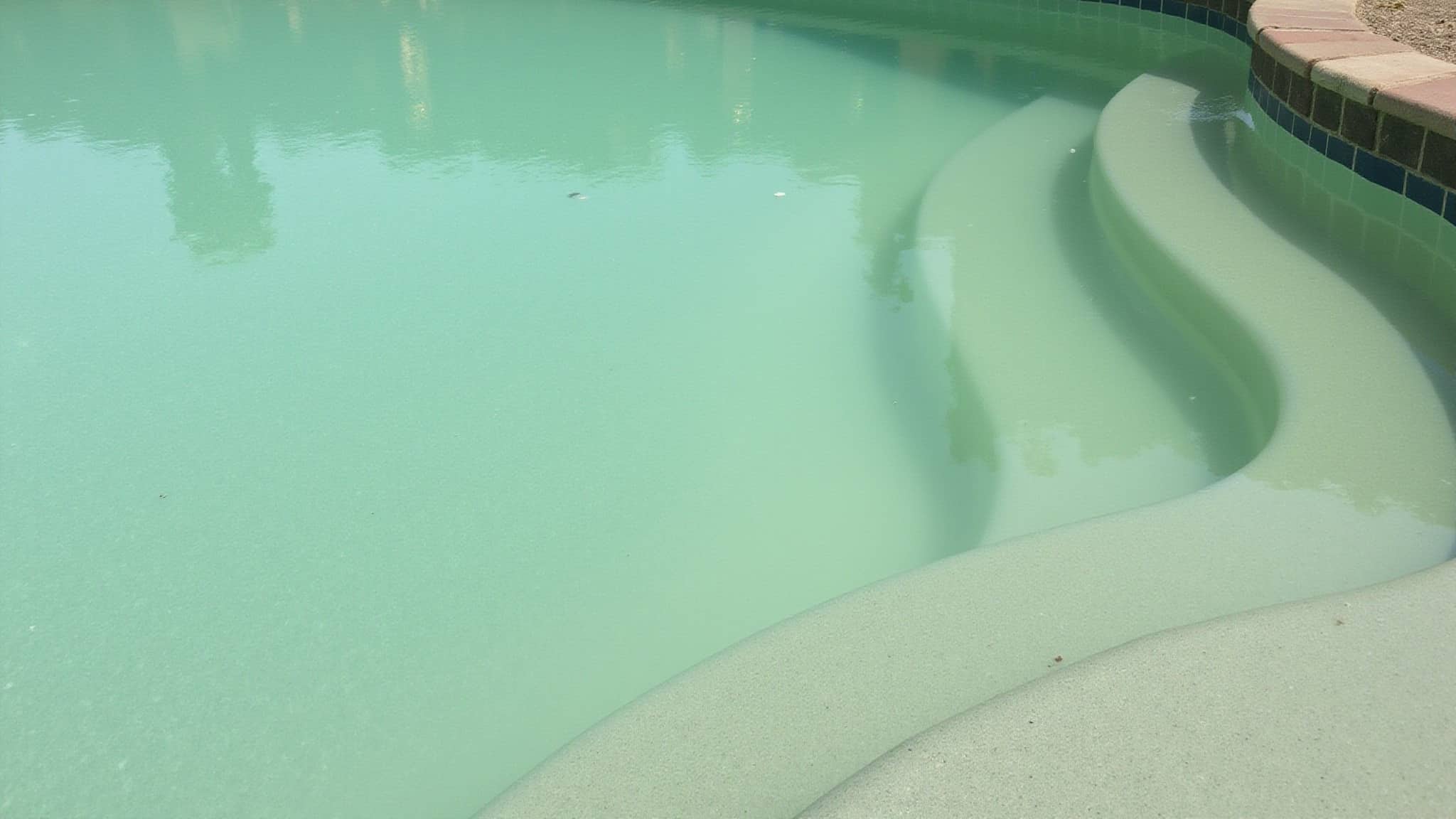
Inadequate filtration is the most common cause of cloudy pool water. When your filter media clogs, it can’t trap fine particulates, so suspended debris stays in your water and scatters light into a haze. Insufficient pump runtime compounds this, reducing passes through the filter and creating dead spots where contaminants accumulate. Chemistry matters too, low free chlorine and high pH play their part. Below, you’ll find exactly how each factor drives cloudiness and how to fix it. Chlorine and cloudy pool water are closely linked, as low chlorine levels can lead to increased algae growth and cloudiness. Regular testing of chlorine levels is essential to maintain clear water.
Key Takeaways
- Inadequate filtration is the most common cause, as clogged media fails to trap fine suspended particles that scatter light.
- Insufficient pump runtime reduces filter passes, leaving debris suspended and creating dead spots where contaminants accumulate.
- Low free chlorine below 1 to 3 ppm lets bacteria and algae multiply faster than sanitation can control, clouding water.
- High pH outside the 7.2 to 7.6 range weakens chlorine effectiveness, while high calcium hardness can cause milky limescale precipitate.
- Rain and debris add particulates, dilute chlorine, and shift pH, all worsening water clarity.
What is the most common cause of cloudy pool water
The most common cause of cloudy pool water is inadequate filtration. When your filter media clogs with fine particulates, it can’t trap suspended debris, so those particles stay dispersed and scatter light, giving you that hazy appearance. Insufficient pump runtime compounds the problem: water needs multiple passes through the filter to achieve clarity. Weak circulation also leaves dead spots where contaminants accumulate untouched. Start by backwashing, cleaning, or replacing your filter media to restore flow capacity. Then run your pump and filter continuously for 24 to 48 hours, cycling the entire volume repeatedly until the water clears. If filtration checks out, you’ll want to test your chemistry next, but efficient filtration remains your first and most critical diagnostic step.
How do chemical imbalances cloud pool water
Chemical imbalances cloud pool water when sanitizer levels drop or pH shifts out of range. Low free chlorine tops the list. When levels drop below 1 to 3 ppm, bacteria and algae multiply faster than sanitation can control, leaving water hazy. High pH compounds the problem by reducing chlorine’s effectiveness, so even adequate chlorine won’t sanitize efficiently. Keep pH within 7.2 to 7.6 to maintain sanitizer performance. High total alkalinity destabilizes pH, driving fluctuations that dull clarity. Increased calcium hardness poses another threat. Combined with high pH, dissolved calcium precipitates as limescale, producing a distinctly milky appearance. To diagnose accurately, test chlorine, pH, alkalinity, and calcium hardness together. Isolating one parameter rarely reveals the full picture. Restore sanitizer levels, balance pH, then let filtration clear the suspended particles.
How does poor filtration lead to cloudy water
Poor filtration leads to cloudy water because filtration physically removes the fine particles that cloud your water, and when filtration falters, those particles stay suspended. Inadequate filtration is the most common cause of cloudy water. When your filter media clogs with debris, it can’t trap fine particulates, so they recirculate instead of getting captured. Insufficient pump runtime compounds the problem: you’re passing water through the filter too few times to clear the suspended load. Weak circulation leaves dead spots where debris and contaminants accumulate undisturbed. Start by backwashing, cleaning, or replacing your filter media to restore trapping capacity. Then run your pump and filter continuously for 24 to 48 hours, maximizing turnover so the system captures those particles and returns your water to clarity.
How do weather and debris cause cloudiness
Weather and debris cause cloudiness because rain, pollen, dirt, and other environmental debris land in your pool and introduce a suspended load that overwhelms your sanitizer and filter. Rain dilutes free chlorine and shifts your pH out of range, weakening oxidation just as organic contamination spikes. Pollen and fine debris add particulate matter that stays suspended, scattering light and producing that hazy appearance. This organic load consumes chlorine rapidly, and if levels drop below 1 to 3 ppm, you create conditions where early algae can multiply, clouding the water before it ever turns green. Heavy debris also clogs your filter media, reducing circulation and leaving contaminants in dead spots. You’ll need to test and correct pH, restore chlorine, then brush, vacuum, and filter continuously until the suspended load clears.
How do the common causes compare by fix and timing
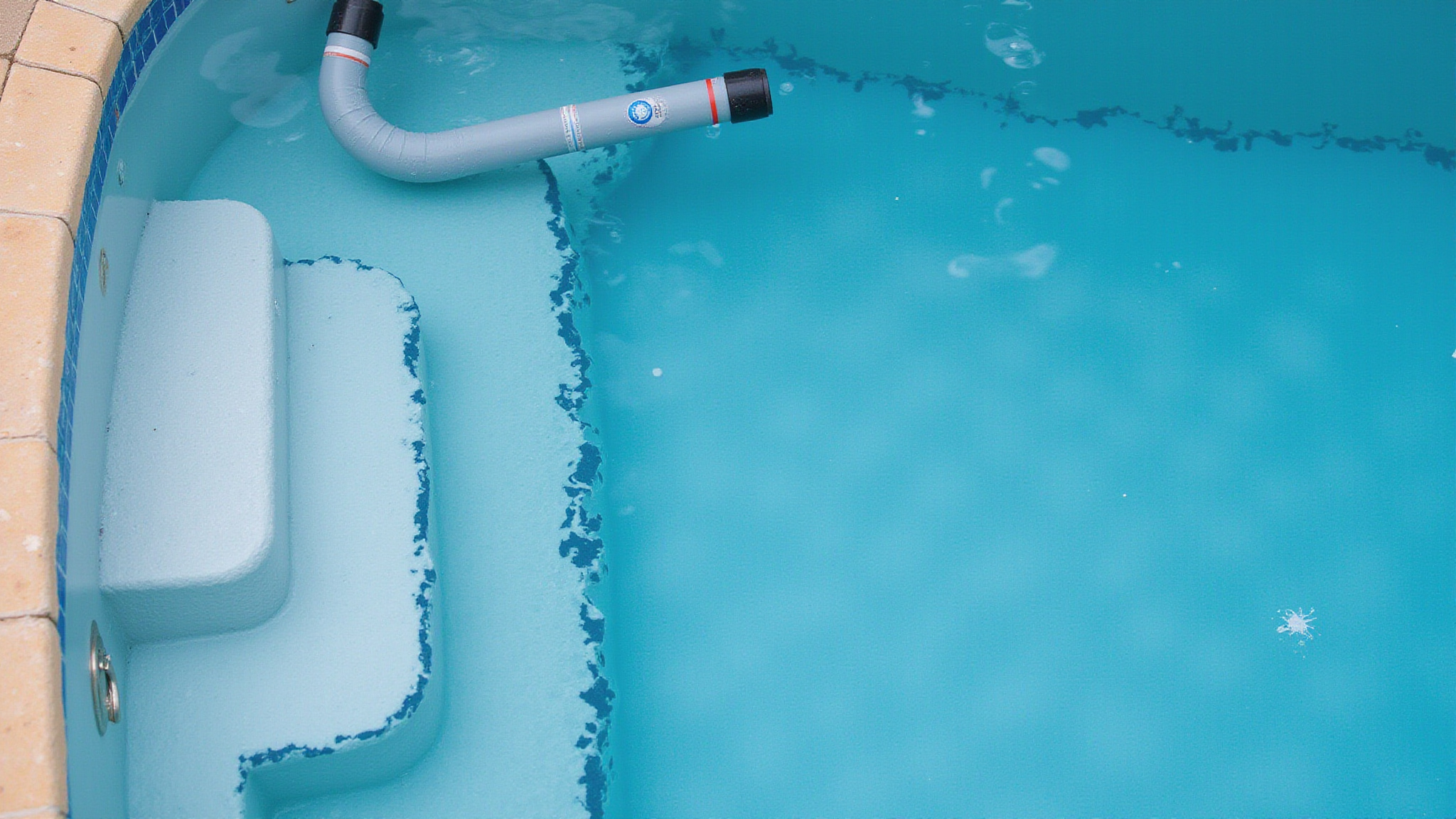
The common causes differ in both fix method and clearing time. Filtration deficits demand mechanical intervention, backwash, clean, or replace media, then run the pump 24 to 48 hours. Chemistry faults resolve faster once you restore parameters, but only after filtration removes the suspended precipitate or dead cells.
| Cause | Fix and Timing |
|---|---|
| Inadequate filtration | Clean media, run pump 24 to 48 hrs |
| Low free chlorine | Restore 1 to 3 ppm, filter; clears in 1 to 2 days |
| High pH/alkalinity | Lower pH to 7.2 to 7.6; clears within a day |
| High calcium hardness | Lower pH, dilute; slow, 2 to 3 days |
| Algae/organics | Shock, brush, vacuum, filter; 2 to 3 days |
Chemistry corrections still hinge on adequate filtration removing residual particulate before clarity returns.
How do you diagnose and clear it in your own pool
Diagnose cloudiness by testing your water first. Measure free chlorine, pH, total alkalinity, and calcium hardness before touching any chemicals. If free chlorine reads below 1 to 3 ppm, that’s your likely culprit. Shock the pool and restore sanitizer. Check pH next; keep it at 7.2 to 7.6, since high pH cripples chlorine and can precipitate limescale when calcium runs high.
After chemistry’s balanced, run your pump and filter continuously for 24 to 48 hours. Backwash, clean, or replace filter media to clear suspended particles. Brush and vacuum settled debris, especially dead algae after shocking.
If cloudiness persists past several days despite correct readings, suspect equipment, such as a leaking multi-port valve or weak circulation. Skip clarifier and flocculant unless you’ve confirmed chemistry’s dialed in, since misuse worsens suspension.
Conclusion: What Clouds Pool Water Most
More often than not, cloudy water traces back to a filter that is not running long enough or chemistry that has drifted out of balance. Both are easy to correct once you test the water and know what is off. Stay on top of those two things and cloudy water rarely gets a foothold.
Enjoy Crystal-Clear Water Every Day
Cloudy pool water can turn a relaxing backyard into a source of stress, but expert care can restore clarity fast. At Pool Doctor of the Palm Beaches in Lake Worth Beach, FL, our experienced team provides trusted Concierge Pool Maintenance with expert water care and reliable service. Call +1 (561) 586-2815 today and enjoy your pool worry-free.
Frequently Asked Questions
Is It Safe to Swim in Cloudy Pool Water?
Better to wait. Cloudiness signals unbalanced chemistry or a sanitizer that is falling behind, and it hides the bottom of the pool, which is a real safety risk. Test the water, bring it back into balance, and let it clear before anyone swims.
Can Cloudy Water Damage My Pool Pump or Filter?
Over time it can. The particles that cloud the water collect in the filter and force it to work harder, which shortens its life and strains the pump. Clearing the water and cleaning or backwashing the filter afterward keeps that extra load from causing wear.
How Often Should I Test My Pool Water?
Two to three times a week during swim season is a good rhythm, and more often after heavy rain or a pool party. Regular testing catches a chlorine dip or a pH swing before it turns into cloudy water, which is far easier than fixing a green or hazy pool later.
Does a Pool Cover Help Prevent Cloudy Water?
It helps a lot. A cover keeps out leaves, dust, pollen, and rain, all of which feed cloudiness and eat up chlorine. It also slows evaporation, so your chemistry stays steadier between tests. Using one whenever the pool sits unused cuts down on the work considerably.
Can Saltwater Pools Get Cloudy Too?
They can. A salt pool still uses chlorine, just made on site, so the same triggers apply: low sanitizer output, high pH, or a filter running short hours. A scaled-up salt cell or an off calcium level are common culprits. Test and balance a salt pool the same way you would any other.