
Yes, too much chlorine can make your pool cloudy, but chlorine’s rarely acting alone. When excess chlorine reacts with organic debris and ammonia, it forms chloramines that haze the water and irritate swimmers. You’ll also see temporary cloudiness after shocking, until filtration clears suspended contaminants. Keep free chlorine at 1 to 3 ppm and combined chlorine below 0.5 ppm. But pH drift and calcium can cloud things too. Let’s break down exactly what’s happening. Common cause of cloudy pool water is often related to imbalanced chemicals. It’s crucial to regularly test your water for pH, alkalinity, and chlorine levels to ensure clarity.
Key Takeaways
- Too much chlorine can make your pool cloudy, though rarely from chlorine alone acting directly.
- Cloudiness usually develops when excess chlorine reacts with organic debris and ammonia to form hazy chloramines.
- Temporary cloudiness often appears after shocking as oxidized contaminants stay suspended until filtration removes them.
- High chlorine frequently coincides with pH drift, which can push calcium out of solution and create milky water.
- Keep free chlorine at 1 to 3 ppm and combined chlorine below 0.5 ppm to prevent cloudiness.
Can too much chlorine make your pool cloudy
Yes, too much chlorine can make your pool cloudy, but usually not the way you’d expect. High chlorine rarely clouds water on its own. Instead, cloudy water typically develops when chlorine reacts with organic debris and ammonia to form chloramines, which haze the water and irritate swimmers. You’ll also see temporary cloudiness after shocking, as oxidized contaminants stay suspended until your filter removes them.
Keep combined chlorine below 0.5 ppm and free chlorine within 1 to 3 ppm. When you spot cloudiness alongside a high chlorine reading, don’t assume chlorine’s the sole culprit. Test your full water chemistry, pH (7.2 to 7.8), alkalinity (80 to 120 ppm), and calcium hardness, since imbalance frequently coincides with high chlorine and drives the haze you’re seeing. How long for cloudy pool water to clear is often a common concern for pool owners. Typically, visible improvements can be seen within a few days once the underlying issues are addressed.
How does excess chlorine turn water cloudy
Excess chlorine turns water cloudy by reacting with ammonia and organic debris to form chloramines, and those compounds are what actually cloud your water. But excess chlorine rarely acts alone. When you overshoot your free chlorine target, you’re often pushing pH out of the 7.2 to 7.8 range, which reduces sanitizer effectiveness and encourages haze. High pH can also drive calcium out of solution, precipitating calcium carbonate that gives your water a milky look. If you’ve added too much stabilizer alongside chlorine, you lock up your sanitizer, letting contaminants linger and suspend. So the cloudiness you see isn’t just concentration, it’s the interaction of chloramines, pH, calcium hardness, and stabilizer levels. Test the full chemistry, confirm each parameter against standard ranges, and correct the imbalance rather than adding more chlorine.
What are the signs of too much chlorine in a pool
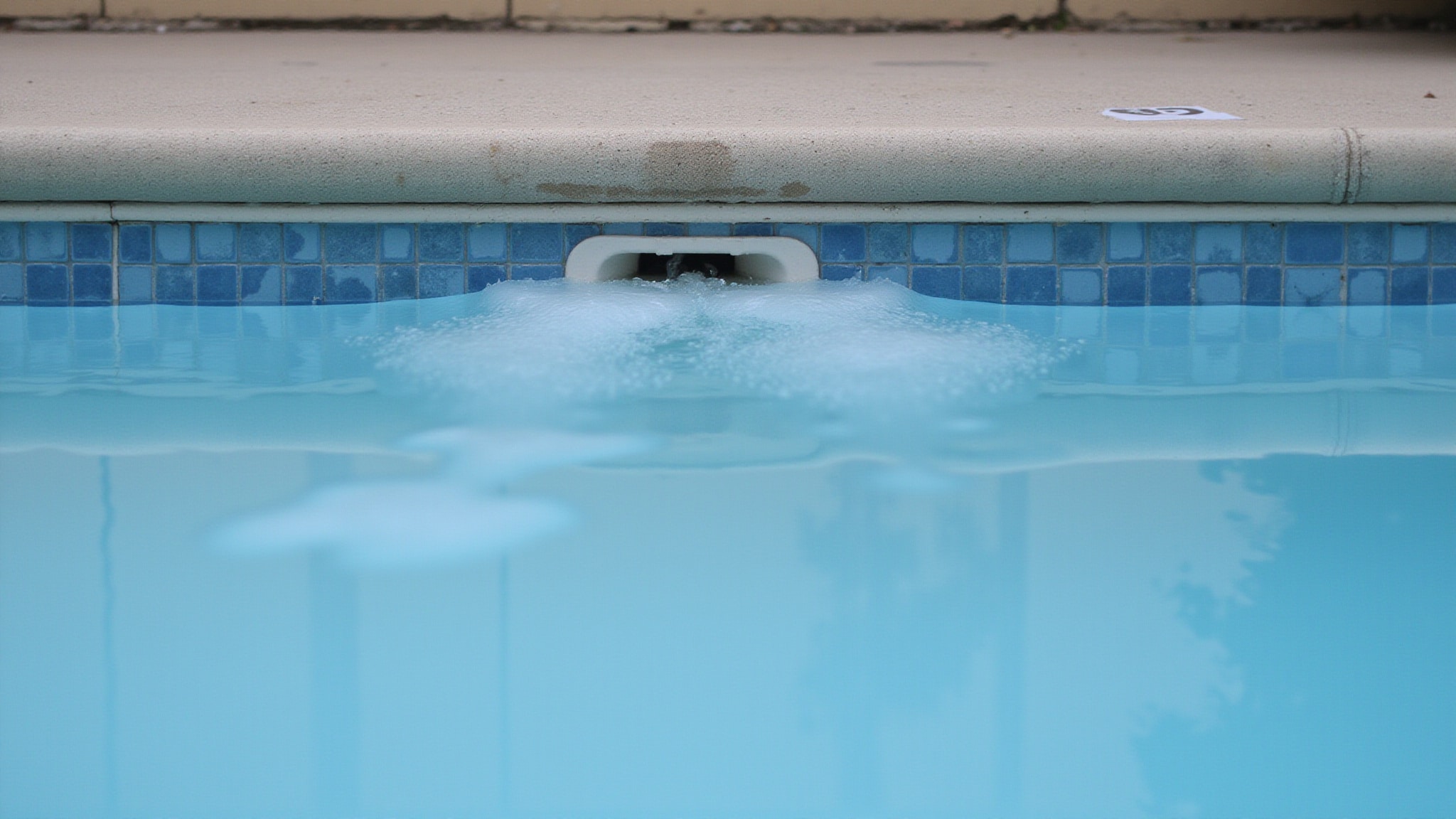
The signs of too much chlorine in a pool include measurable test readings, physical symptoms, and changes in the water’s appearance. The fastest confirmation comes from testing, but your senses and the water’s appearance also flag the problem. Watch for readings and symptoms that push past standard operating ranges.
- Free chlorine above 3 ppm on your test kit, signaling you’ve exceeded the recommended sanitation target.
- Combined chlorine over 0.5 ppm, indicating chloramines that produce haze and a sharp, irritating odor.
- Swimmer irritation, stinging eyes, dry skin, and burning sinuses after you enter the water.
- A faint haze or opaque cast, especially right after shocking, as suspended oxidized particles linger.
Confirm these signs with a full water-chemistry test before adjusting anything.
How do you test for high chlorine levels
You test the water to confirm high chlorine levels. Grab a reliable test kit or test strips, but for high readings, prioritize a DPD drop-count kit or a photometer, since strips often max out and read inaccurately above 5 ppm.
Measure free chlorine and combined chlorine separately. Your free chlorine target sits at 1 to 3 ppm; anything well above that signals over-chlorination. Combined chlorine above 0.5 ppm points to chloramines.
Don’t stop there. Test pH (7.2 to 7.8), alkalinity (80 to 120 ppm), and calcium hardness in the same sitting, because cloudiness rarely traces back to chlorine alone.
If your kit reads “high” without a number, dilute the sample with distilled water and retest to get an accurate figure.
How do the methods to lower chlorine compare
The four methods to lower chlorine compare on speed and control: waiting it out, sunlight exposure, chemical neutralizers, and partial draining. Each method trades speed for control, so match your choice to how far above range you’re sitting.
| Method | Speed | Best Use Case |
|---|---|---|
| Waiting it out | Slow | Slightly above 3 ppm |
| Sunlight exposure | Moderate | Mild overcorrection, uncovered pool |
| Chemical neutralizers | Fast | Urgent, well above range |
| Partial drain and refill | Fast | Excessively above levels |
If you’re only marginally high, stop adding chlorine and let levels drift down naturally. Open the cover so UV breaks it down faster. For rapid correction, dose a neutralizer carefully, then retest. Reserve draining for extreme readings, since it wastes water.
How do you keep levels balanced going forward
Keep levels balanced going forward by building a routine around testing, targeted ranges, and reliable filtration rather than reactive corrections. Correcting a high reading fixes today’s problem, but keeping levels balanced prevents tomorrow’s cloudiness. Consistent maintenance keeps chlorine working and clarity intact.
Fix a reading and you solve today; balance your levels and you prevent tomorrow’s cloudiness.
- Test regularly. Check free chlorine, combined chlorine, pH, alkalinity, and calcium hardness at least twice weekly, and more often during heavy use or hot weather.
- Hold your targets. Keep free chlorine at 1 to 3 ppm, pH at 7.2 to 7.8, alkalinity at 80 to 120 ppm, and combined chlorine below 0.5 ppm.
- Run filtration adequately. Circulate long enough daily to turn over the water and remove suspended particles.
- Clean consistently. Brush, skim, vacuum, and service your filter to reduce sanitizer demand before it spikes chlorine.
Conclusion: Chlorine and Cloudy Water
Too much chlorine really can cloud a pool, usually by throwing off the pH or by reacting with other chemicals you added at the same time. The fix is patience more than product: stop adding chlorine, let the level fall, keep the filter running, and the water clears on its own.
Call Today and Get Hassle-Free Pool Care
From chlorine imbalances to cloudy water fixes, expert pool care makes every day a swimming day. At Pool Doctor of the Palm Beaches in West Palm Beach, FL, our skilled team delivers dependable Concierge Pool Maintenance built around consistent water quality. Call +1 (561) 586-2815 today and let us handle the work.
Frequently Asked Questions
Is It Safe to Swim in a Cloudy Pool?
Hold off until it clears, especially if the cloudiness came from over-chlorinating. Swimming in very high chlorine can irritate skin and eyes, and the low visibility is a safety concern on its own. Wait for the level to drop back into the normal range and the water to clear before getting in.
How Long Does Cloudy Pool Water Take to Clear?
When high chlorine is the cause, most pools clear within one to three days once you stop adding it and run the filter. Sunlight and normal use burn off the excess, and the filter removes whatever particles formed. Running the pump longer each day speeds things up more than any additive.
Can a Pool Clarifier Fix Cloudiness Caused by Chlorine?
A clarifier can help by clumping fine particles so the filter catches them, but it does not lower the chlorine itself. If the real issue is an overdose, the clarifier only treats the symptom. Let the chlorine come down first, then use a clarifier if some haze still lingers.
Does Rain Affect Chlorine Levels and Pool Clarity?
Yes. Rain dilutes chlorine and drags in contaminants, which is why a pool often looks dull after a storm. Test the water once the weather clears and adjust the chlorine back to normal. That mix of low sanitizer and fresh debris is a common reason pools cloud up out of nowhere.
Will Shocking the Pool Make Cloudiness Worse Before Better?
It often does for a short while. A shock treatment oxidizes contaminants, and those broken-down particles can briefly haze the water before the filter clears them out. Give it eight to twenty-four hours of filtering and the pool usually comes back clearer than before.