
A salt water pool makes its own chlorine, so you don’t dose tablets manually. Your pump circulates water through a salt cell, where low-voltage current drives electrolysis of dissolved salt (NaCl). That reaction generates chlorine-based sanitizer, including hypochlorous acid, plus hydrogen gas as a byproduct. You’ll maintain salinity around 2,700 to 4,500 ppm and keep circulation steady for effective sanitizing. It’s still chlorine, just self-generated. Understanding the equipment and trade-offs helps you decide what’s next.
Key Takeaways
- Pool-grade salt dissolves in the water at a low concentration, typically 2,700 to 4,500 ppm.
- The pump circulates water through a salt cell, where charged metal plates drive electrolysis of dissolved salt.
- Electrolysis splits sodium chloride into chlorine-based sanitizer, including hypochlorous acid, producing hydrogen gas as a byproduct.
- After sanitizing, the chlorine cycles back into salt, repeating the process continuously with proper circulation.
- Unlike traditional pools, saltwater systems generate chlorine on-site, reducing manual dosing but still requiring water balancing and periodic cell cleaning.
How does a salt water pool work
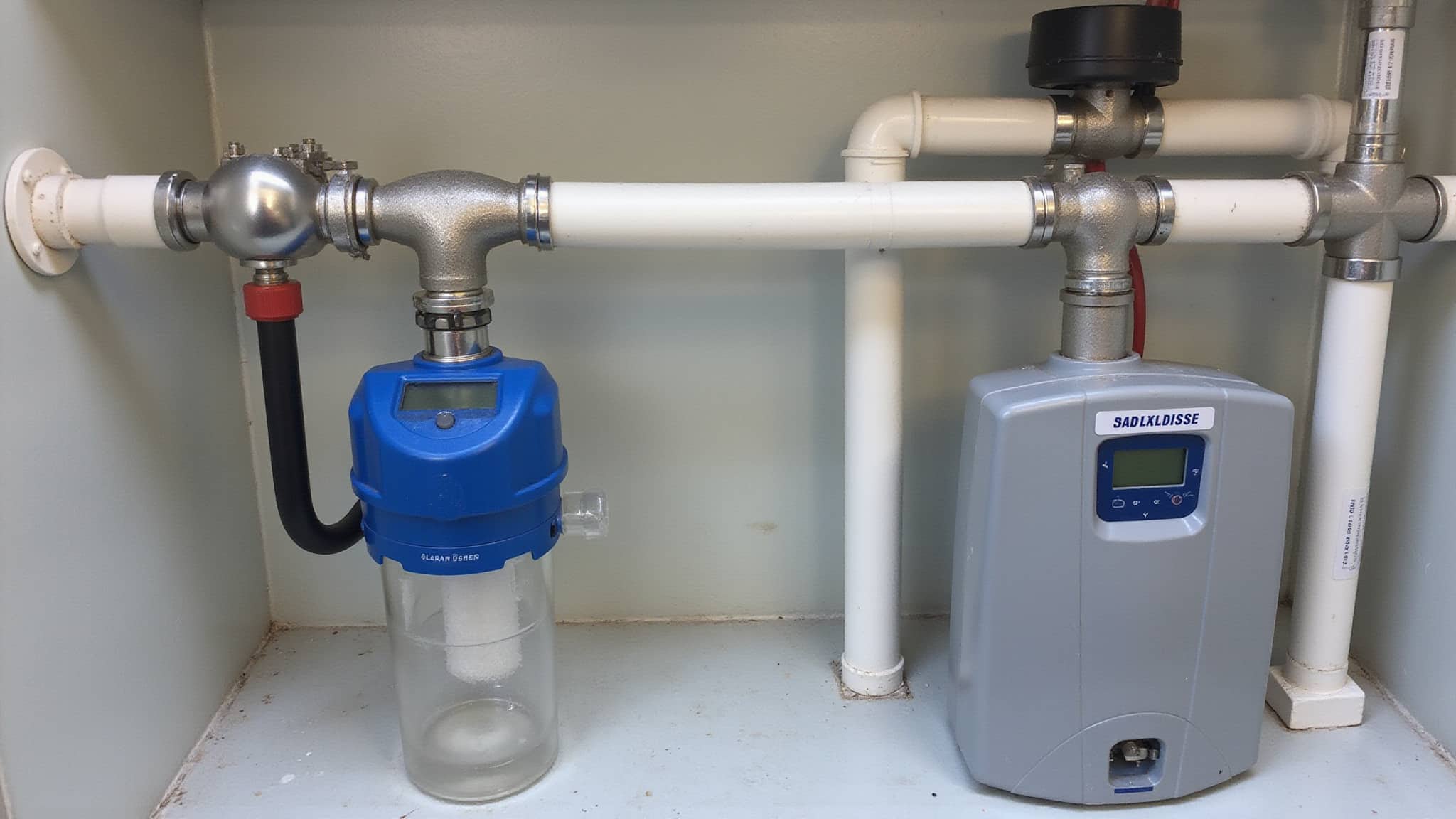
A salt water pool sanitizes itself by generating chlorine from dissolved salt. You dissolve pool-grade salt into the water at a low concentration, then your pump pushes that water through a salt cell. Inside the cell, charged metal plates drive electrolysis, splitting sodium chloride (NaCl) into chlorine-based sanitizer. Your chlorine generator produces hypochlorous acid, the same disinfectant found in conventional pools, along with hydrogen gas as a byproduct.
This chlorine kills bacteria and algae while oxidizing dirt, organic debris, and chloramines. After it’s done sanitizing, the chlorine reverts back into salt and cycles through the cell again. The process runs continuously, so you’re generating chlorine on-site instead of dosing manually. Remember, a salt water pool isn’t chlorine-free. It’s a chlorine pool with onboard generation.
What is a salt water pool and how does it differ
A salt water pool is a chlorine pool that generates its own chlorine on-site using a salt chlorine generator, differing from a conventional pool only in how that chlorine gets delivered to the water. Instead of dosing manually with tablets or liquid chlorine, you generate chlorine on-site using a salt chlorine generator. You dissolve pool-grade salt into the water at a low salinity, typically 2,700 to 4,500 ppm, and the pump circulates that water through a salt cell. There, electrolysis splits sodium chloride into hypochlorous acid, the same chlorine form that disinfects standard pools.
Don’t mistake this for an ocean-water system. Your pool isn’t chlorine-free; it’s a chlorine pool with an onboard generator. You still balance alkalinity and other parameters, and you still depend on proper circulation and pump run time for safe sanitation.
How does the salt chlorine generator produce sanitizer
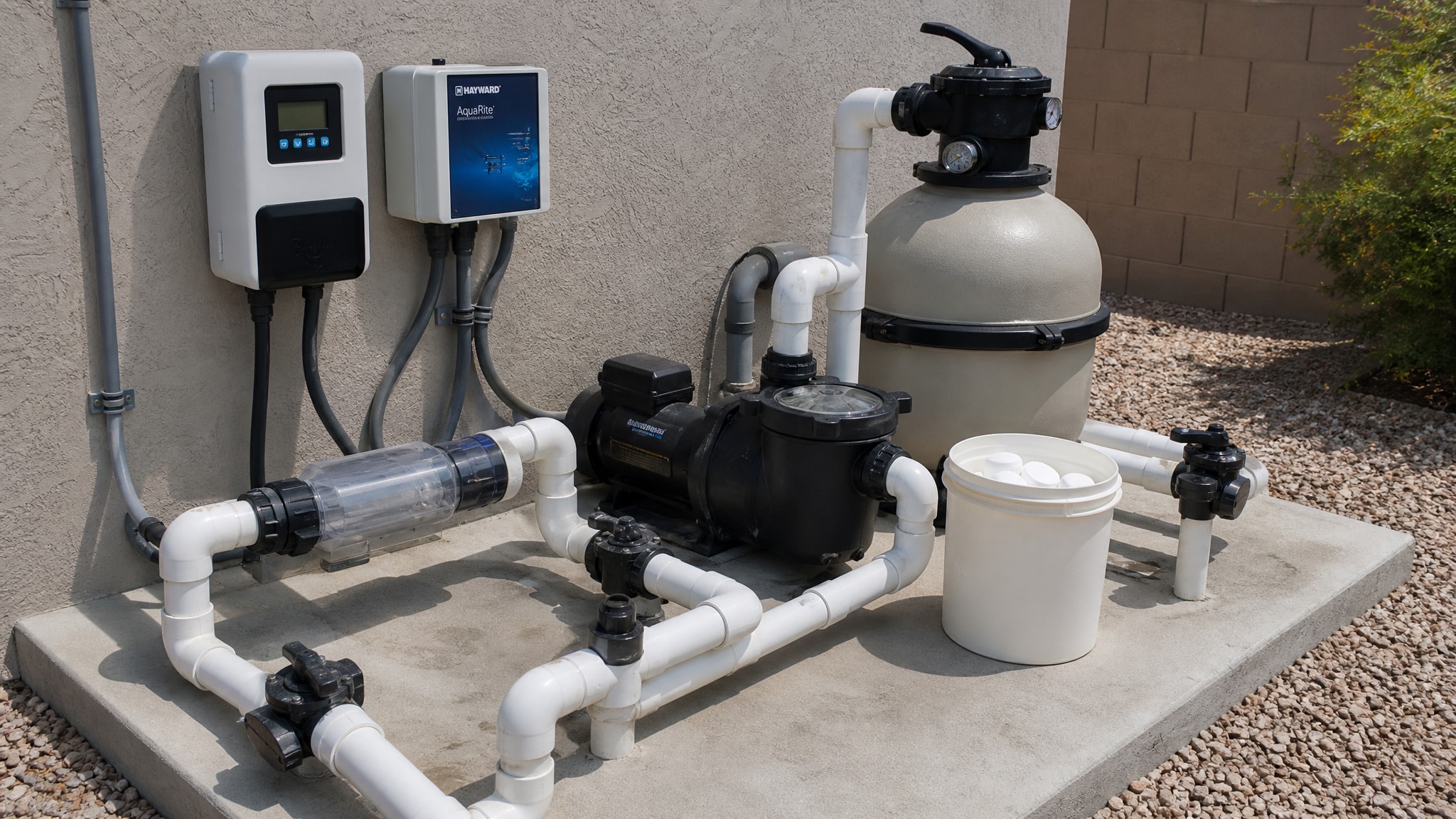
The salt chlorine generator produces sanitizer through electrolysis, driven by a low-voltage current running across metal plates inside the salt cell. As your pump pushes water through the cell, the charged titanium or coated plates split dissolved sodium chloride (NaCl) into chlorine-based components. This reaction creates hypochlorous acid, the same active sanitizer you’d get in a conventional chlorine pool. The process also generates chlorine gas or chlorine compounds that dissolve into the water, plus hydrogen gas as a byproduct, which is why proper circulation and ventilation matter. Once formed, the sanitizer travels back into your pool through the circulation system, where it kills bacteria and oxidizes contaminants. After it works, the chlorine reverts to salt, and the cycle repeats continuously as water keeps flowing.
What equipment does the system need
Your saltwater system needs a few core components working together to generate and distribute chlorine safely.
A saltwater pool relies on a few key components working in harmony to safely generate and distribute chlorine.
- Salt chlorine generator (salt cell): This is the heart of the system, containing titanium or coated metal plates that support electrolysis.
- Control/power unit: This device sends low-voltage electrical current to the cell, letting you regulate output.
- Pool pump: This moves water through the cell so chlorine gets generated while water circulates.
- Circulation system: This returns the generated sanitizer to your pool, distributing it evenly.
Each part depends on proper pump run time and steady flow. Without adequate circulation, your cell can’t produce or deliver chlorine effectively.
How does it compare to a traditional chlorine pool
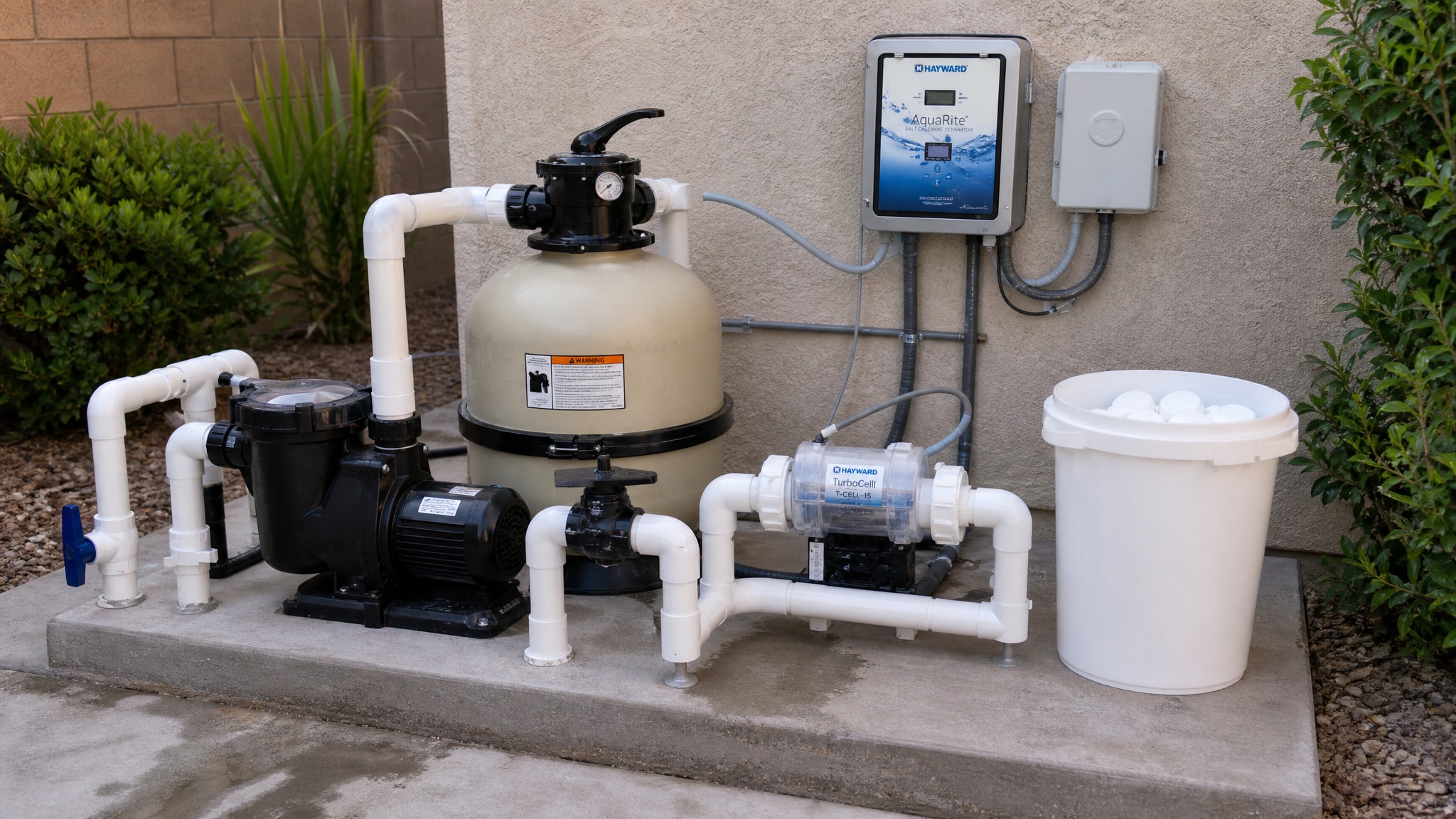
A saltwater pool differs from a traditional chlorine pool in how the chlorine is produced, not in the sanitizing agent itself. Both rely on chlorine, specifically hypochlorous acid, to kill bacteria and algae. The key difference is how you get that chlorine. A saltwater pool generates it on-site through electrolysis, while a traditional pool requires manual dosing with tablets or liquid chlorine.
| Traditional Chlorine Pool | Saltwater Pool |
|---|---|
| Manual chlorine dosing | On-site chlorine generation |
| Tablets or liquid chlorine | Dissolved salt as raw material |
| Frequent chemical handling | Reduced chlorine handling |
| No salt cell | Salt cell requires cleaning |
| Standard water balancing | Standard water balancing |
Don’t assume a saltwater pool is chlorine-free. You still balance alkalinity, maintain circulation, and manage chlorine output carefully for safe, effective sanitation. Salt water pool conversion can provide a more enjoyable swimming experience. Many pool owners find that converting to a saltwater system reduces the harshness of traditional chlorine.
What are the pros and cons of this setup
A saltwater pool offers on-site chlorine generation but still requires core water chemistry management and hardware upkeep. Weigh these factors before committing:
- Reduced handling: You skip manual dosing with tablets or liquid chlorine, generating hypochlorous acid on-site instead.
- Ongoing maintenance: You must clean the salt cell periodically, about every three months, to preserve electrolysis efficiency.
- Chemistry demands: You still balance alkalinity and standard parameters; saltwater systems aren’t chlorine-free or maintenance-free.
- System dependency: You rely on proper pump run time and circulation to move water through the cell for effective sanitization.
Understand that you’re operating a chlorine pool with an onboard generator, not an ocean-water-style alternative.
How do you decide if it is right for you
A saltwater system is right for you if you can match its operating demands against your maintenance capacity and expectations. You’ll still manage chlorine-based sanitation, so don’t expect a chemical-free pool. Confirm you can maintain salt levels within your generator’s target range, commonly 2,700 to 4,500 ppm, and rebalance after rain, splash-out, or refills dilute the water. You’ll need to clean the salt cell periodically, roughly every three months, and monitor titanium plate condition to preserve electrolysis performance. Verify your pump delivers adequate run time, since chlorine generation depends on continuous circulation. If you’re comfortable balancing alkalinity and standard parameters while reducing manual chlorine handling, this setup suits you. If you want zero chlorine maintenance, it won’t meet that expectation.
Conclusion: Running a Salt Water Pool
A salt water pool still relies on chlorine, but it makes that chlorine on site from dissolved salt instead of asking you to add it by hand. Keep the salt level in the range your generator wants, rinse the cell a few times a season, and check the water like you would any pool. Do that and the system mostly takes care of itself.
Enjoy Effortless Saltwater Pool Care
Saltwater pools deliver a smoother swim experience, but only when the chemistry is maintained properly. At Pool Doctor of the Palm Beaches in Boca Raton, FL, our experienced team provides trusted Concierge Pool Maintenance with expert saltwater care and reliable service. Call +1 (561) 586-2815 today and enjoy your pool worry-free.
Frequently Asked Questions
How Often Should I Clean the Salt Cell?
Most cells only need attention every three to four months, and many will go longer if your water stays balanced. Pull the cell and look for white crusty buildup on the plates. If you see it, soak the cell in a diluted muriatic acid mix or a store-bought cell cleaner until the scale dissolves, then rinse it well before putting it back.
What Salt Level Should My Pool Maintain?
Most residential generators run best between 2,700 and 3,400 parts per million, though the exact target is printed on the unit. Salt gets used up very slowly, so once the pool is at the right level you are mostly topping it off after heavy rain or a big water change. Test with a salt strip or meter before adding more.
Can Rain or Refilling Affect My Pool’s Salt Concentration?
Yes. Heavy rain and topping off with fresh water both dilute the salt and can drop the reading enough that the generator complains. After a storm or a big refill, test the salt and add a bag or two if the number came down. Splash-out and backwashing pull salt out over time as well.
Is Hydrogen Gas From Electrolysis Dangerous?
In an open outdoor pool the small amount of hydrogen produced dissipates into the air and poses no real risk. The concern only comes up with an indoor or fully covered pool that has no ventilation, where gas could collect. Keeping the area open and the pump running normally is all that is needed.
What Type of Salt Should I Add to the Pool?
Use pure sodium chloride meant for pools or water softeners, ideally 99 percent purity or higher. Skip rock salt with additives, iodized table salt, or anything with anti-caking agents, since the extra minerals can stain the pool or gum up the cell. Pour it in front of the return jets and brush it around to help it dissolve.