
To convert your pool, install a salt chlorine generator that makes chlorine from salt. First, balance your water: pH 7.2 to 7.6, alkalinity 80 to 120 ppm, calcium hardness 200 to 400 ppm, and cyanuric acid 30 to 50 ppm. Mount the controller near the equipment pad, and install the cell after the filter and heater. Add pool-grade salt evenly, then test salinity to reach 3,000 to 3,200 ppm before starting. Keep going, and you’ll master every critical step.
Key Takeaways
- Install a salt chlorine generator, mounting the controller near the equipment pad and the salt cell after the filter and heater.
- Balance water chemistry first: pH 7.2 to 7.6, alkalinity 80 to 120 ppm, calcium hardness 200 to 400 ppm, and cyanuric acid 30 to 50 ppm.
- Measure pool volume accurately to size the generator correctly and calculate salt dosage, using roughly 50 lb per 2,000 gallons.
- Spread salt evenly across the pool surface and brush to dissolve, keeping the system off until salinity reaches the target range.
- Test salinity to about 3,000 to 3,200 ppm before starting, then maintain 2,700 to 3,400 ppm while running the pump 8 to 12 hours daily.
How do you convert a pool to salt water
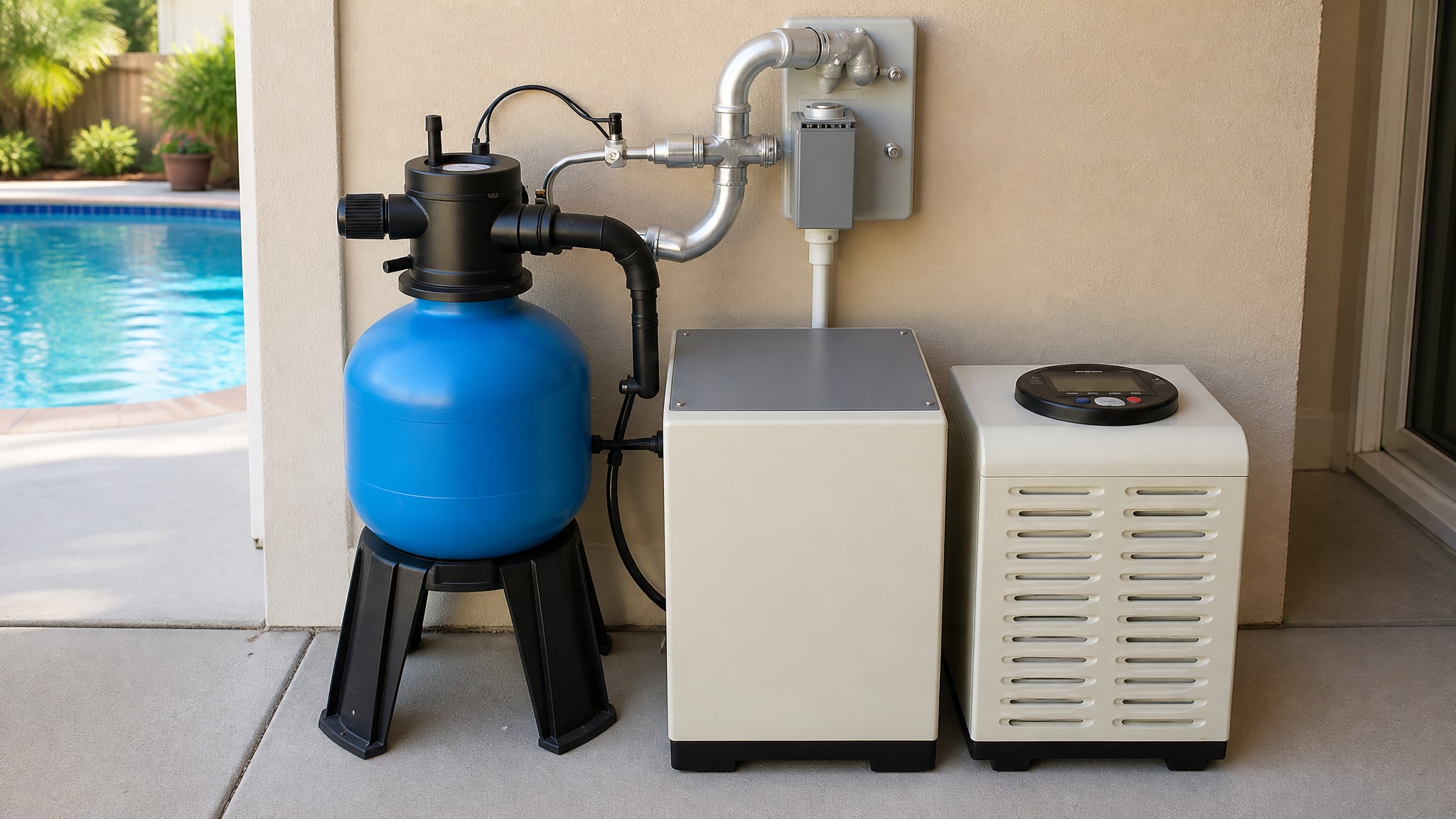
Converting a pool to salt water follows a fixed sequence: you install a salt chlorine generator, balance the water chemistry, add pool-grade salt, and start the system once salinity hits the target range. Start by measuring your pool’s volume, since salt dosage depends on exact gallons. You won’t need to drain the pool for most conversions. Mount the chlorinator controller near the equipment pad, and install the salt cell after the filter and heater. It must be the last component before water returns. Verify proper flow direction and wire the controller per the manufacturer’s manual. Keep the salt system off until salinity reaches target. Balance pH to 7.2 to 7.6, alkalinity to 80 to 120 ppm, and calcium hardness to 200 to 400 ppm before adding any salt.
Is your pool a good candidate for the switch
Almost any pool qualifies as a good candidate for the switch, since most conversions don’t require draining. Start by confirming a few technical basics. First, measure your water volume in gallons or liters, because salt dosage depends on that figure. Next, evaluate your equipment pad and plumbing: you’ll need room to mount the chlorinator controller and install the salt cell as the last component, after the filter and heater, before water returns to the pool. Verify proper flow direction at that point. Then check your water chemistry, since balanced water reduces startup problems and improves chlorine generation. If your pool was recently plastered, wait 30 to 60 days before adding salt. Meet these conditions, and you’re a strong candidate.
What equipment do you need to convert to salt water
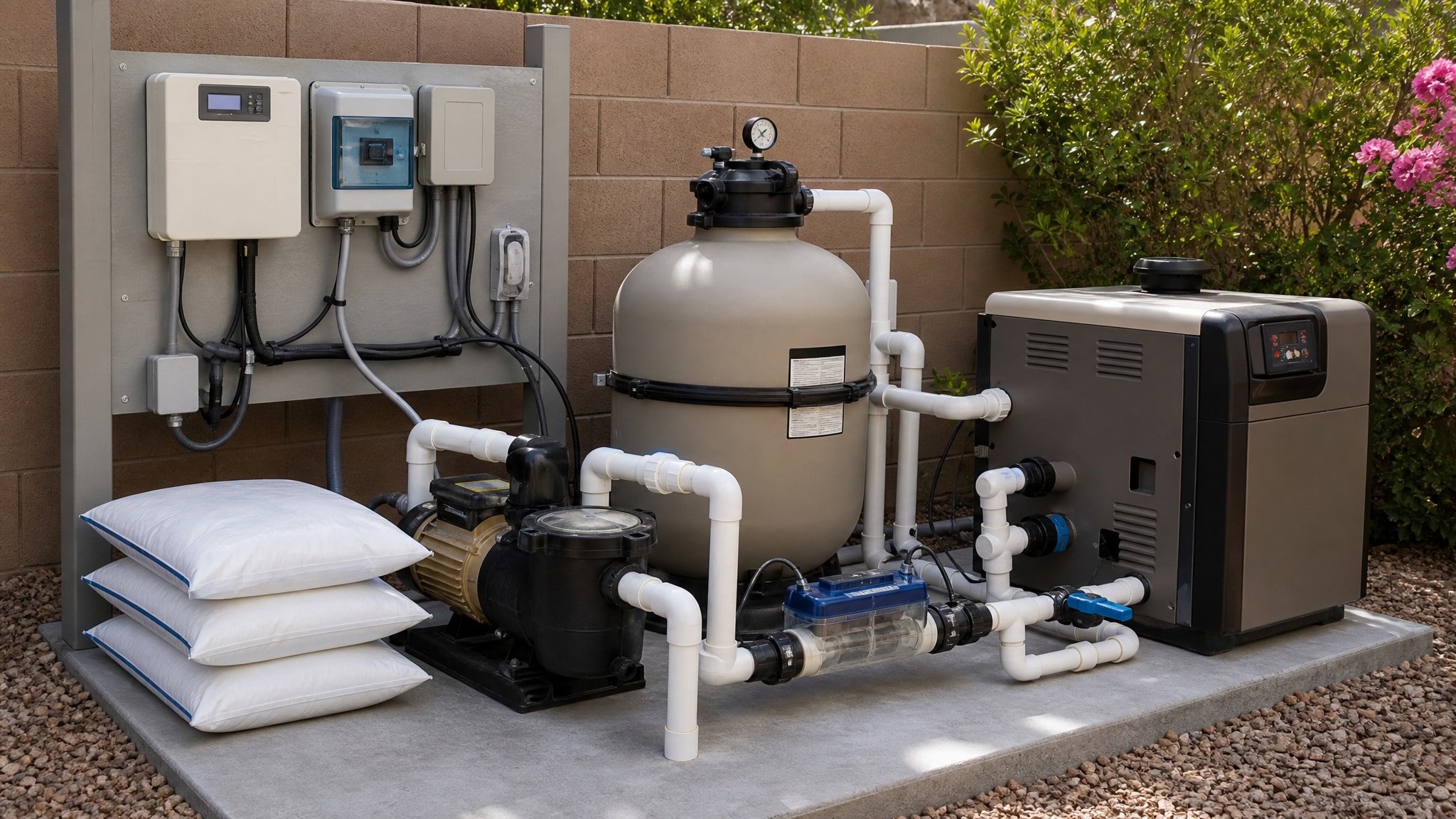
To convert to salt water, you’ll need a salt chlorine generator, which includes both a salt cell and controller. Before purchasing, measure your pool’s water volume in gallons or liters, since salt dosage and generator sizing depend on it. Size the generator for your pool; some guidance recommends rating it above your actual pool size for better performance and longevity.
Plumbing placement matters. Install the salt cell as the last component, positioned after the filter and heater, before water returns to the pool. Verify proper flow direction during installation. Mount the chlorinator controller near the equipment pad and wire it according to the manufacturer’s manual. Proper maintenance is essential for salt water pool care. Regularly check the salt levels and ensure that the cell is clean and free from debris.
Most conversions don’t require draining your pool, which simplifies the process considerably.
How do you install the generator and add salt step by step
Balance your water chemistry to reduce start-up problems and improve chlorine generation. Confirm pH sits at 7.2 to 7.6, total alkalinity at 80 to 120 ppm, calcium hardness at 200 to 400 ppm, and cyanuric acid at 30 to 50 ppm.
Mount the controller near the equipment pad and wire it per the manufacturer’s manual. Install the cell after the filter and heater, verifying correct flow direction. Keep the system off until salinity reaches target.
Position the controller by the equipment pad, install the cell after the filter and heater, and confirm proper flow direction.
Turn on circulation, then spread pool-grade salt evenly across the surface, never dump it in one spot. Brush the salt to speed dissolution. Allow 24 to 48 hours for full integration.
Test salinity before starting the generator, aiming for about 3,000 to 3,200 ppm. Begin around 50% output, then adjust based on chlorine readings.
How much does converting cost
Converting costs depend on three main factors: your pool’s size, the salt chlorine generator you select, and how much salt you’ll need to hit target salinity. Size your generator above your actual pool volume for reliable output and longer cell life. Salt dosage scales with gallons, so measure your water volume before purchasing. Use the estimates below to plan. Salt water vs chlorine pool cost can vary significantly based on maintenance requirements and chemical balances.
| Cost Component | Basis | Typical Range |
|---|---|---|
| Salt chlorine generator | Rated pool size | Mid to high |
| Pool-grade salt | ~50 lb / 2,000 gal | Low per bag |
| Startup chemicals | Balancing pre-conversion | Low |
Verify manufacturer sizing before buying, since an undersized cell strains under demand and fails early. Confirm salinity targets to avoid over-purchasing salt and correcting overshoot.
How do you maintain the pool afterward
Maintain the pool by testing chlorine frequently and adjusting generator output from your starting point around 50% based on readings during the first week. Keep salinity within the operating range, roughly 2,700 to 3,400 ppm depending on your system, and check it periodically. Maintain pH at 7.2 to 7.6, total alkalinity at 80 to 120 ppm, calcium hardness at 200 to 400 ppm, and cyanuric acid at your target level. Run the pump 8 to 12 hours daily during swim season to circulate salt and support chlorine production. Inspect the cell regularly for scale buildup and clean it per the manufacturer’s instructions. Continue normal maintenance, including routine chemistry checks and equipment monitoring, to prevent start-up problems and extend cell life.
Conclusion: Converting Your Pool to Salt Water
Converting a pool to salt water is a popular upgrade that trades frequent chlorine dosing for gentler, more automated sanitizing. The process is straightforward: add a salt chlorine generator, add the right amount of salt, and balance the water. Fiberglass and most other pools handle salt well with corrosion-resistant fixtures. Once set up, a salt pool is easier to maintain day to day and gives softer-feeling water that many swimmers prefer. How does a salt water pool work? The salt chlorine generator converts salt into chlorine, which effectively sanitizes the water. This process helps maintain water clarity and chemistry, making it an efficient alternative to traditional chlorine pools.
Convert Your Pool to Effortless Saltwater
Switching to saltwater brings a smoother swim experience and lower long-term maintenance. At Pool Doctor of the Palm Beaches in Delray Beach, FL, our experienced team provides trusted Concierge Pool Maintenance with expert conversion and ongoing saltwater care. Call +1 (561) 586-2815 today and enjoy your pool worry-free.
Frequently Asked Questions
Can I Still Swim in the Pool During Conversion?
Once the salt is added and dissolved and the water is balanced, you can usually swim, though it is best to wait until the salt is fully mixed and the generator is producing a normal chlorine level. Your installer will advise when it is ready. Testing the water first confirms it is safe and comfortable.
Will Salt Water Damage My Pool Deck or Surrounding Landscaping?
Salt is mildly corrosive and, in high amounts, can affect some deck materials or plants that get frequent splash or runoff. In practice, with normal use and good drainage, problems are minor. Rinsing off splashed areas and directing runoff away from delicate plants keeps the deck and landscaping in good shape.
Does Salt Water Feel Different or Taste Salty When Swimming?
Salt water pools have a much lower salt level than the ocean, so the water feels soft and silky rather than salty, and most people barely notice a taste. Many prefer how it feels on the skin. It is a gentle, pleasant experience, not like swimming in the sea.
How Long Does a Salt Cell Typically Last Before Replacement?
Salt cells generally last around three to seven years, depending on the brand, run time, and maintenance. Keeping the cell clear of scale and running the system correctly extends its life. When chlorine output drops, the cell is usually the part to replace rather than the whole system.
Can Salt Water Pools Be Used in Cold Winter Climates?
Yes. Salt pools work in cold climates, but the generator slows or stops producing chlorine in cold water, so it does little over winter. Owners simply winterize the pool and cell like any other. In spring, the system resumes once the water warms back up.