
Neither keeps your pool cleaner on its own, since both treat only water passing through the unit. Ozone injects O₃ to oxidize organics, chloramines, and germs, breaking down oils and sunscreen for clearer water. UV disrupts microbial DNA for strong pathogen control, but leaves dissolved contaminants unchanged. Ozone delivers broader oxidation; UV offers simpler installation. Either way, you’ll still need a chlorine residual. The details below help you choose the right fit.
Key Takeaways
- Ozone chemically oxidizes organics, body oils, sunscreen residue, and chloramines, keeping bulk water clearer and less “stale” than UV.
- UV disrupts microbial DNA for strong pathogen control but leaves dissolved contaminants and oxidation byproducts largely unchanged.
- For overall water cleanliness, ozone wins through broader oxidation; UV excels at targeted microbial inactivation.
- Both treat only water passing through the unit, leaving no residual, so chlorine or bromine remains mandatory.
- UV costs less with simpler installation and maintenance, while ozone costs more but delivers wider contaminant removal.
Ozone vs UV pool sanitizer
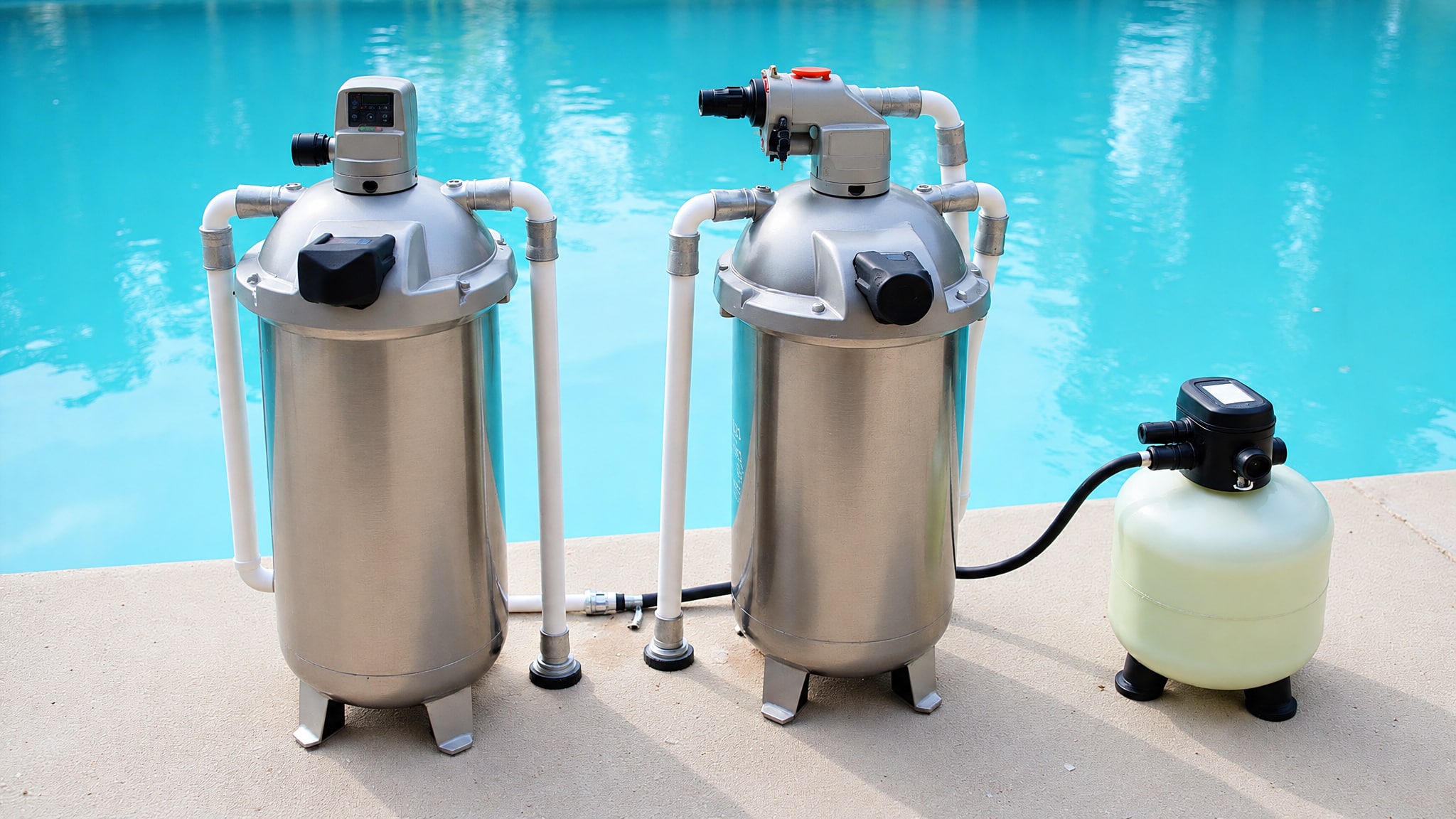
Ozone and UV pool sanitizers are two secondary systems that treat only the water passing through them, not the bulk pool itself. An ozone sanitizer injects O₃ into the circulation line, chemically oxidizing organics, chloramines, and microorganisms before the water returns. A UV sanitizer passes water through a chamber where ultraviolet light disrupts microbial DNA, preventing reproduction. Ozone acts as a chemical oxidizer. UV works as a physical disinfection method. Neither leaves a residual in the pool, so you still need a chlorine residual to maintain safe water throughout. Performance for both depends on circulation rate and contact time, since only the water flowing through each unit gets treated. Choose based on oxidation needs versus straightforward supplemental disinfection.
How does an ozone pool sanitizer work
An ozone pool sanitizer generates O₃ gas and injects it directly into the circulation line, where it reacts with contaminants before the water returns to the pool. As treated water passes through, ozone works as a chemical oxidizer, breaking down body oils, sunscreen residue, and chloramines while inactivating germs. This oxidation reduces chlorine demand and helps deliver clearer, less “stale” water.
You’ll generate ozone through either UV lamps or corona discharge, with corona discharge typically producing higher output. Most systems require a contact tank to maximize reaction time, since performance depends on circulation rate and contact within the chamber.
Keep in mind you’ll need proper design and ventilation to manage off-gas hazards, and a chlorine or bromine residual remains mandatory in the pool.
How does a UV pool sanitizer work
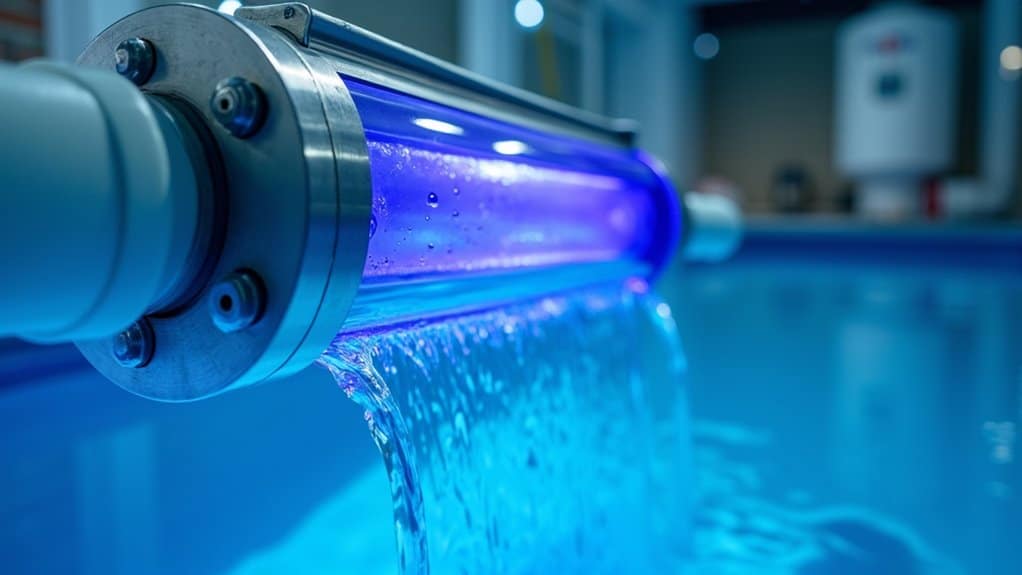
A UV pool sanitizer works through physical disinfection rather than ozone’s chemical oxidation. As your pool water passes through a treatment chamber, ultraviolet light damages microbial DNA, preventing the organisms from reproducing. This inactivates pathogens effectively within the chamber, but it doesn’t oxidize dissolved contaminants the way ozone does. You’ll get strong microbial control and some chloramine reduction, though dissolved organics and oxidation byproducts remain largely untouched.
Keep in mind that UV only treats water flowing through the chamber, so your circulation rate and contact time directly affect performance. Because UV leaves no residual in the bulk water, you’ll still need a chlorine or bromine residual to meet safety standards. UV lamps require periodic replacement to maintain effective output.
How do ozone and UV pool sanitizers compare on cost and performance
UV costs less to install and run, while ozone costs more but delivers broader oxidation. UV wins on installation simplicity and lower energy draw, while ozone delivers broader oxidation at higher cost and complexity. You’ll weigh footprint, maintenance, and treatment scope before committing.
| Factor | UV | Ozone |
|---|---|---|
| Installation | Simpler, cheaper | Larger footprint, contact tank |
| Energy use | Low to moderate | Moderate to high |
| Oxidation | Limited to microbes | Strong; destroys organics, chloramines |
| Maintenance | Lamp/chamber replacement | Injectors, generator, gas handling |
If your priority is straightforward microbial inactivation with easy retrofitting, UV performs reliably at lower expense. If you’re targeting maximum clarity, chloramine reduction, and oxidation of oils and sunscreen, ozone justifies its cost. Remember, neither replaces the required chlorine or bromine residual.
Which sanitizer is more effective against contaminants
Ozone is more effective against a broader range of contaminants, while UV is more effective for targeted pathogen inactivation. Effectiveness against contaminants involves two distinct actions: oxidation and disinfection. Ozone acts as a chemical oxidizer, breaking down dissolved organics, while UV works as a physical disinfection method, disrupting microbial DNA. Each targets different problems in your water.
- Oxidation: Ozone breaks down body oils, sunscreen residue, and chloramines, reducing cloudiness and irritation more effectively than UV.
- Microbial inactivation: UV disrupts microbial DNA in the treatment chamber, preventing reproduction with high efficacy.
- Chloramine reduction: Both reduce chloramines, but ozone’s broader oxidation gives it wider action on byproducts.
- Dissolved contaminants: Ozone removes dissolved organics UV leaves behind.
For broad contaminant control, ozone leads. For targeted pathogen inactivation, UV performs strongly within its chamber.
How do you choose between an ozone and UV pool sanitizer
Choose ozone if you want maximum oxidation, and choose UV if you want simpler installation and microbial inactivation, since neither system replaces chlorine. Ozone breaks down body oils, sunscreen residue, and chloramines for visibly clearer water, but plan for a larger footprint, a contact tank, gas-handling components, and proper ventilation to manage off-gas hazards. UV fits existing equipment more easily, uses less energy, and creates no off-gas concerns.
Factor in maintenance too: UV requires lamp replacement and chamber cleaning, while ozone demands injector, generator, and gas-handling upkeep. For public installations, verify that either system still meets the minimum free chlorine residual your local regulations require, regardless of secondary sanitizer selection.
Conclusion
Choosing between an ozone or UV pool sanitizer comes down to what you’re trying to clean up: ozone oxidizes the oils, sunscreen, and chloramines that cloud water and sting eyes, while UV targets the microbes that slip past a thin chlorine residual. Neither leaves protection behind in the water, so both sit alongside chlorine rather than replacing it. If clarity and that fresh, non-stale feel matter most, ozone leads; if simple, low-maintenance disinfection is the goal, UV is the easier add. Match the system to your water’s actual problem, and keep the chlorine residual doing its job underneath.
Getting the Water Clean Without the Guesswork
A secondary sanitizer only helps if the chlorine residual and chemistry underneath it are dialed in, and that’s the part most owners would rather not babysit. If you want consistently clear, balanced water without chasing it yourself, Pool Doctor of the Palm Beaches handles routine cleaning and water chemistry and keeps your existing equipment running right. Homeowners around Wellington can get a water assessment or call (561) 586-2815.
Frequently Asked Questions
Can I Use Both Ozone and UV Systems Together?
Yes, you can run both systems together. Hybrid ozone-UV setups are marketed for stronger overall treatment, combining ozone’s oxidation of organics and chloramines with UV’s microbial DNA disruption. You’ll get broader contaminant control this way, but you’ll still need a residual chemical sanitizer, chlorine or bromine, in the bulk water. Remember, both only treat water passing through the chamber, so proper circulation and gas-handling design remain essential for safe, effective operation.
How Long Do Ozone and UV Systems Typically Last?
You’ll replace UV lamps periodically to maintain effective output, since their disinfection performance drops as the lamp ages, and you’ll service the chamber to keep it working properly. Ozone systems don’t rely on a single wear component; instead, you’ll maintain injectors, generators, and gas-handling parts, with performance depending on ozone output and water flow. Keep both systems’ components serviced on schedule, and you’ll preserve consistent secondary sanitizing throughout their operating life.
Are Ozone or UV Sanitizers Safe for Saltwater Pools?
Yes, you can safely run either ozone or UV systems on saltwater pools. Both function as secondary sanitizers that treat only the water passing through them, so they don’t interfere with your salt chlorine generator. You’ll still need a chlorine residual, which your salt cell produces, since neither system leaves residual protection in the bulk water. Just ensure proper ozone off-gas ventilation, as UV won’t create that safety concern.
Do Ozone or UV Systems Affect Pool pH Levels?
Neither system directly drives significant pH shifts the way chemical sanitizers can. UV’s a physical process, so it won’t alter your water chemistry. Ozone acts as an oxidizer within the circulation line, but it doesn’t leave a residual to affect bulk pH. You’ll still see pH movement from your primary chlorine or bromine residual, aeration, and bather load, so you should keep monitoring and adjusting pH per standard operational parameters.
Can UV or Ozone Systems Reduce Eye and Skin Irritation?
Yes, both can reduce eye and skin irritation, mainly by cutting chloramines, the compounds responsible for that harsh sting and odor. You’ll get stronger relief from ozone, since it oxidizes chloramines plus body oils and sunscreen residues that irritate skin. UV destroys chloramines effectively too, but it won’t oxidize dissolved organics as broadly. Remember, you’ll still need a chlorine residual, so you can’t eliminate irritation-causing chemistry entirely through either system.