
Building a pool with a high water table means you’ll control groundwater from the first drilling test through final fill. Start by drilling to about 3 meters and letting the level stabilize to confirm the table. Then you’ll dewater with a submersible pump in a sump pit, excavating from the deep end. Hydrostatic pressure threatens your shell, so you’ll add underdrains, adjust design, and hire proven expertise. The details below show you how.
Key Takeaways
- Drill a test hole to about 10 feet and let the level stabilize to confirm the high water table before excavating.
- Dewater by excavating from the deep end and running a submersible pump from a sump pit throughout construction.
- Keep pumps running until the pool is filled, since interior water counterbalances hydrostatic pressure and prevents buoyant lifting.
- Install permanent drainage, such as gravel underdrains with 1.5-inch PVC or French drains, to redirect groundwater long-term.
- Consider raising the pool elevation, choosing a shallower design, or increasing shell thickness to resist buoyant forces.
How do you build a pool with a high water table
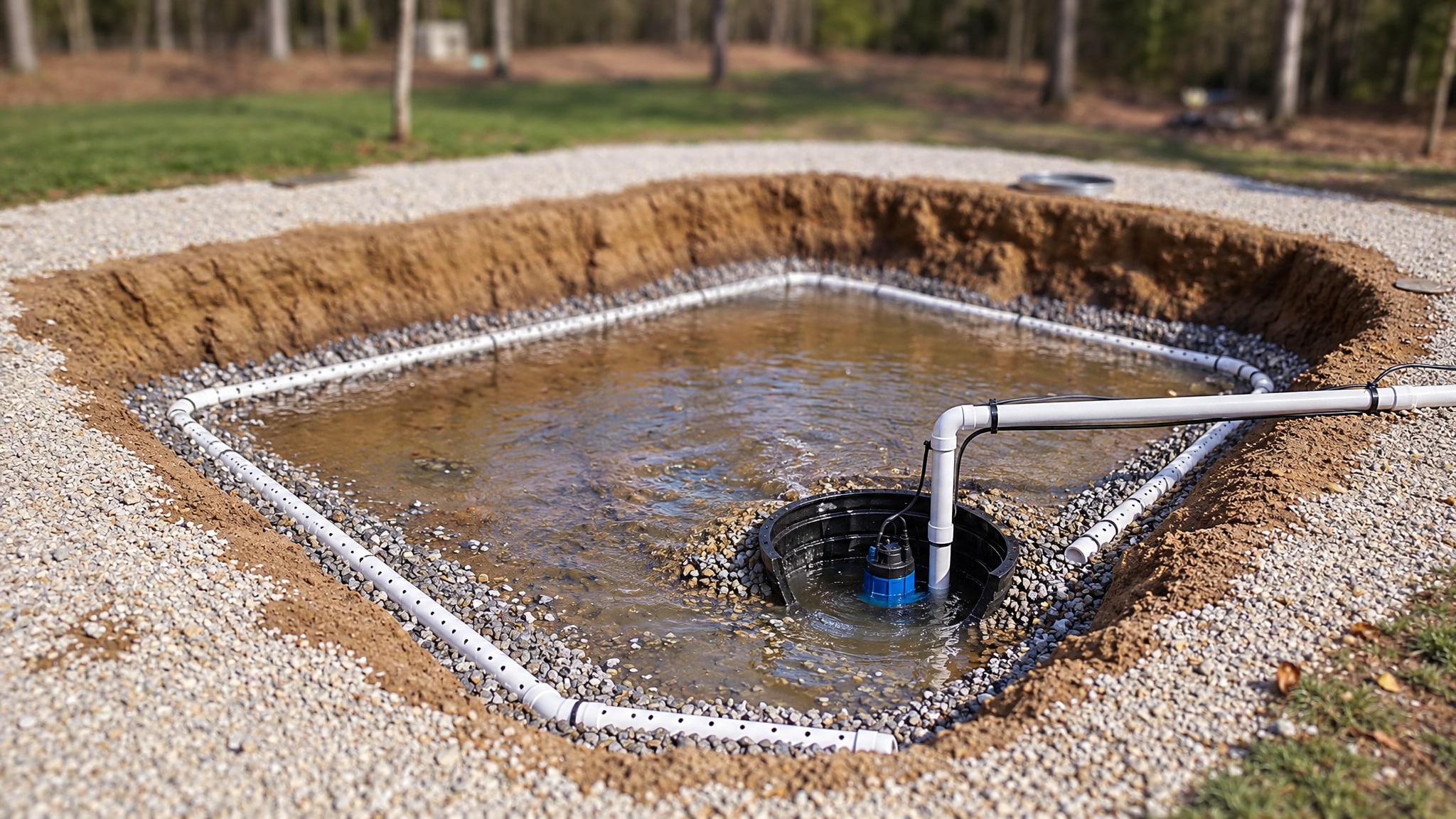
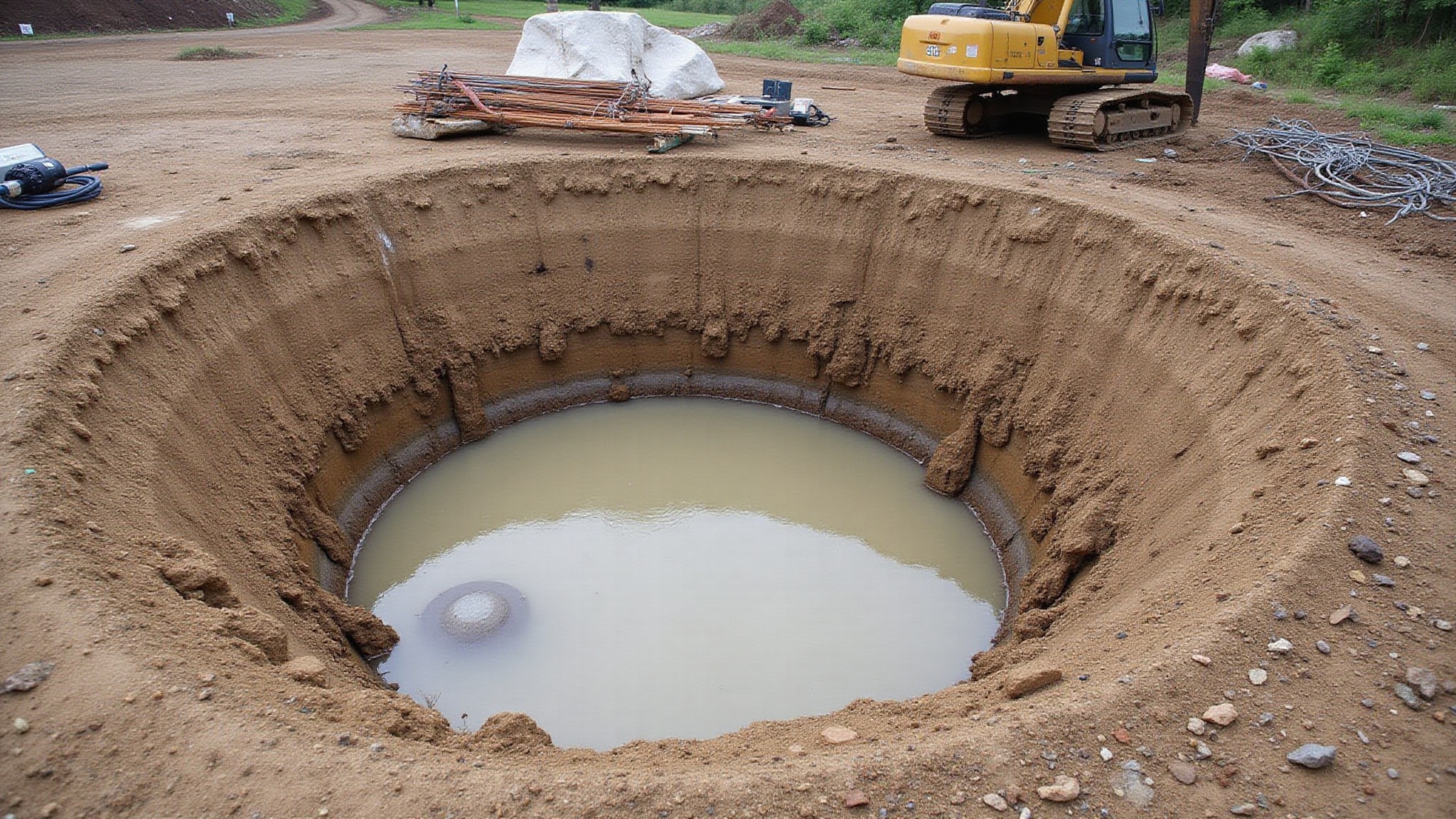
Building a pool with a high water table starts with site testing, drilling to roughly 10 feet and letting the level stabilize to confirm the high water table. Then you plan dewatering: excavate from the deep end so water flows to the lowest point, and run a submersible or self-priming pump from a sump pit. You install gravel and an underdrain of 1.5-inch PVC to move water away from the shell. You manage hydrostatic pressure by keeping pumps running until the pool’s filled, since interior water counterbalances outside force. You may raise the elevation, thicken the shell, or add perimeter drains. Finally, you review local code and engineering input to confirm your design’s structural and drainage safety.
What challenges does a high water table create for pool construction
A high water table creates challenges at nearly every stage of construction because groundwater sits close to the surface. Water constantly seeps into your excavation, undermining stability and complicating every measurement you take. Saturated soil weakens support beneath the pool base and raises the buoyant forces acting on the shell. After you drain the pool, outside pressure can exceed the shell’s internal weight, creating real structural risk.
You’ll face three primary challenges:
- Excavation flooding that requires continuous dewatering to keep the dig workable.
- Hydrostatic pressure pushing against walls and floors, threatening the shell’s integrity.
- Flotation and shifting as saturated soil lifts or displaces the structure.
Each problem demands careful drainage planning, added structural mass, and precise groundwater control throughout the project.
How does a high water table affect pool type and design choices
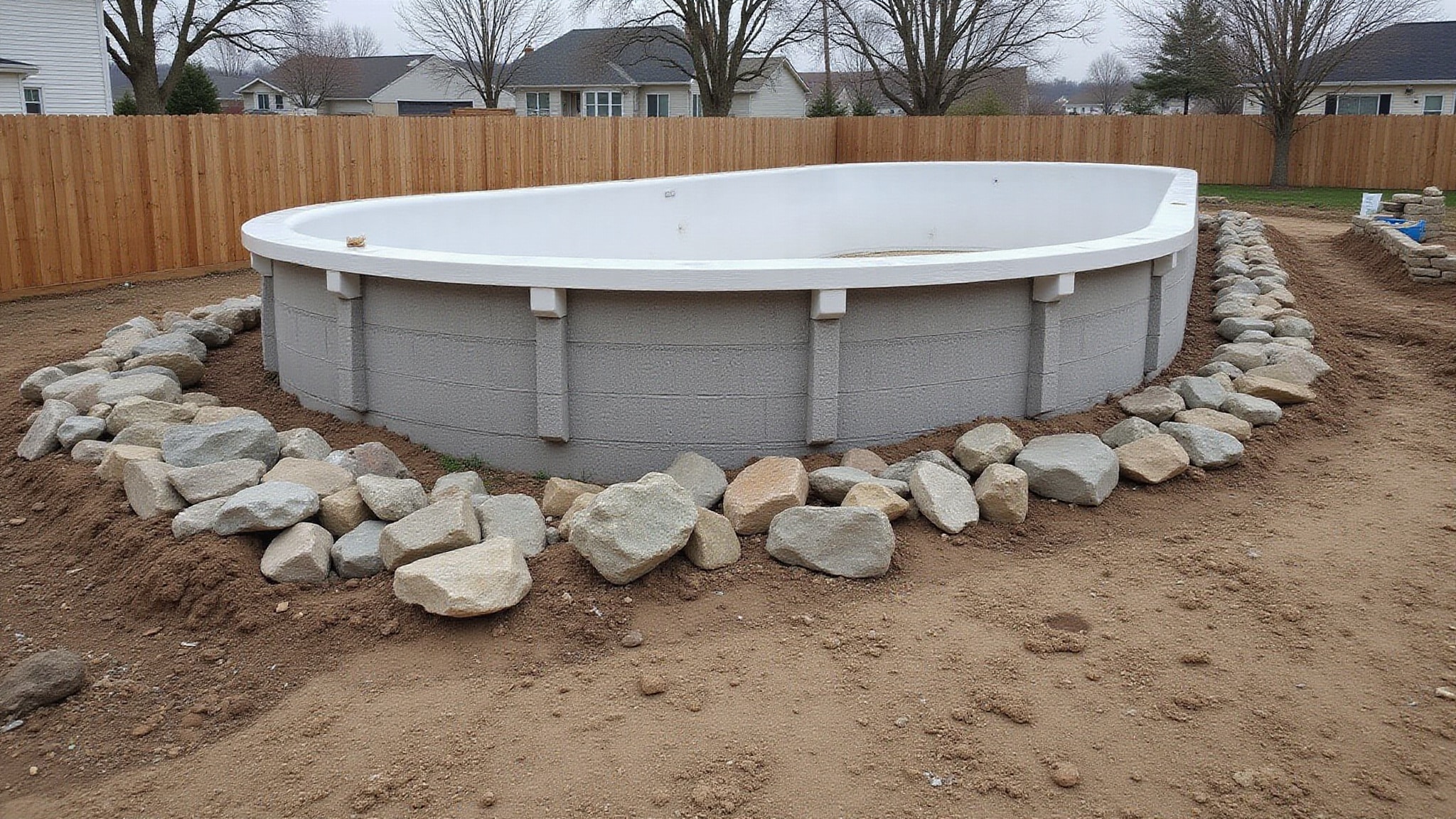
A high water table affects pool type and design choices by driving every decision toward one goal: reducing the difference between your pool shell and the surrounding groundwater. Raising the pool elevation directly lowers hydrostatic pressure exposure, so you’ll often add fill to lift the entire yard or pool area higher above the water table. When your original depth would sit too close to groundwater, you can choose a shallower design instead. Adjusting interior slopes lets the finished shape work within groundwater constraints while keeping more stone support beneath the shell. If fully in-ground construction proves too risky, elevated or partially elevated designs become practical alternatives. You’ll also specify a heavier shell, thicker walls, and added structural mass to resist buoyant forces in saturated, problematic soils.
Why does hydrostatic pressure matter with a high water table
Hydrostatic pressure matters with a high water table because groundwater pushes against the outside of your pool’s shell, and that force can damage the structure. Hydrostatic pressure is the force water exerts on your pool’s walls and floor when it isn’t moving. When groundwater sits high, it pushes against the outside of your shell, and that pressure builds as saturation increases.
High groundwater pushes against your pool’s shell from the outside, and that pressure can damage the structure.
The real risk shows up in three situations:
- Draining the pool while groundwater stays high, letting outside pressure exceed the shell’s internal weight.
- Saturated soil around the shell increasing lifting or shifting forces during and after construction.
- Empty or underfilled shells losing the counterbalance that pool water normally provides.
You keep groundwater controlled until you fill the pool, so the interior water offsets that outside pressure and protects the structure.
How do drainage and dewatering methods compare for a high water table
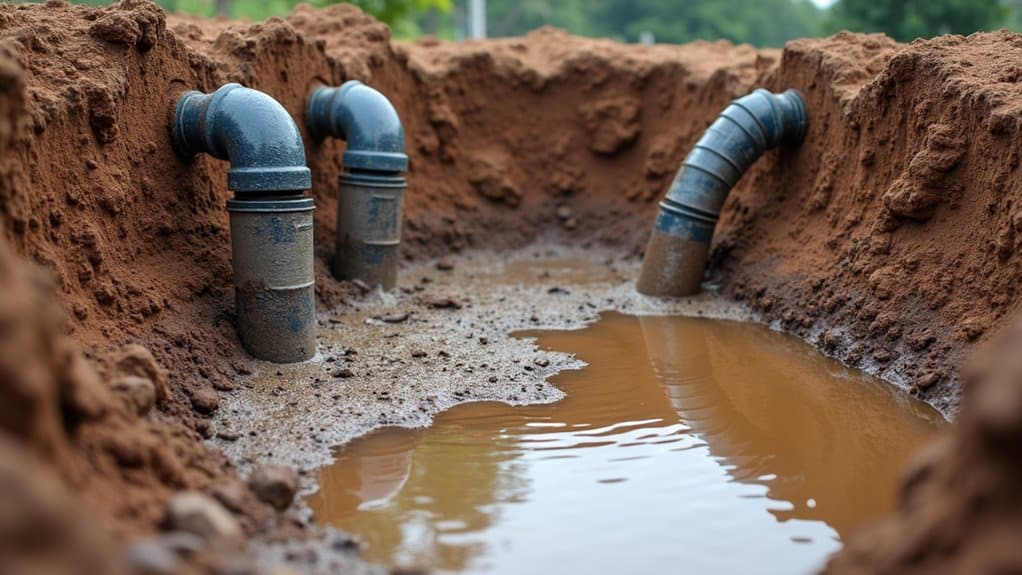
Dewatering and drainage tackle different problems for a high water table, so you need both rather than picking one. Dewatering actively removes water during the dig, keeping the excavation workable. Drainage passively redirects groundwater long-term, reducing pressure on the finished shell. You start excavation from the deep end, letting water collect where you can pump it out.
| Method | Function | When It Works |
|---|---|---|
| Sump pit + pump | Active removal | During excavation |
| Underdrain (PVC in stone) | Passive redirection | Ongoing |
| Perimeter/French drain | Diverts groundwater | Long-term |
| Gravel base layer | Reduces base pressure | Construction + after |
You’ll run pumps until the shell’s filled, letting interior water offset outside pressure. Then permanent drainage takes over, handling seasonal rises that active pumping can’t address indefinitely without redundant systems.
How do you choose the right contractor for a high water table pool
Choose a contractor who understands hydrostatic pressure, dewatering sequencing, and drainage design, not just standard installation. You need a builder with proven groundwater-specific experience. Evaluate that experience before signing anything.
Don’t hire a standard installer for groundwater work, demand proven expertise in hydrostatic pressure, dewatering, and drainage before you sign.
Ask these questions to gauge competence:
- How do you test and monitor groundwater depth and seasonal fluctuation before excavation?
- What dewatering and underdrain systems do you install, and do you include redundant pumps with alarms?
- Can you show completed high-water-table projects and confirm engineering and code review?
Verify they coordinate with engineers on shell mass, elevation adjustments, and drainage discharge. Request references from similar sites. A contractor who quantifies risks and documents their approach will protect your investment far better than the lowest bidder.
Conclusion
Building a new pool where the water table sits high is less about the pool and more about managing the water around it, from the first test hole through the final fill. The shell only stays put because something counters the groundwater pushing in: interior water once it’s filled, and dewatering, underdrains, and added structural mass before that. Skip the groundwater planning and you risk a shell that bows or floats; plan for it properly and a high water table becomes a solved problem rather than a dealbreaker. The one decision that carries the most weight is the builder, pick one who works these conditions routinely.
A Wet Lot Isn’t a Dealbreaker
High groundwater only sinks a project when the builder treats it as an afterthought instead of planning the dewatering, drainage, and shell design around it from the start. Pool Doctor of the Palm Beaches builds new pools on exactly these conditions, engineering the groundwater control into the job for lots around West Palm Beach. If your yard sits low or floods, contact us to talk through the build, or call (561) 586-2815.
Frequently Asked Questions
How Much Does a High Water Table Increase Pool Construction Costs?
A high water table raises the cost of a build, though the exact amount depends entirely on how wet the lot is and what it takes to manage it. You’re paying for extra stone, fill dirt, and drainage hardware, for dewatering equipment like sump pits and pumps, and for the added labor and engineering that groundwater work demands. Elevation changes, a heavier shell, and backup pumps with alarms add more where the site calls for them. The only accurate figure comes from a builder assessing your specific lot and water table.
Can I Install a Pool Myself With High Groundwater?
You can attempt it, but you’re taking on significant technical risk. You’ll need to manage dewatering with a sump pit and pump, install underdrains and gravel drainage paths, and control hydrostatic pressure until you’ve filled the shell. You should get engineering input and code review, since flotation forces, drainage discharge, and excavation safety demand precision. If you can’t handle continuous pumping and structural design, you’re better off hiring professionals.
How Long Does Dewatering Typically Take During Construction?
You’ll typically run dewatering from the start of excavation until you’ve filled the pool shell. There’s no fixed duration, it depends on your groundwater level, soil saturation, and build pace. You’ll keep pumps running continuously so the dig stays workable and outside pressure doesn’t threaten the shell. Once you fill the pool, the interior water counterbalances groundwater pressure, so you can stop pumping. Expect to maintain it throughout construction.
Does Homeowners Insurance Cover High Water Table Pool Damage?
Insurance coverage for groundwater-related pool damage varies widely by policy, and many exclude damage tied to design or drainage shortcomings, so it’s not something to count on. The more reliable protection is building the pool right in the first place: proper elevation, dewatering, underdrains, and backup sump systems that keep groundwater from ever reaching the point of damage. Review your policy terms with your insurer, and confirm any structural or drainage requirements with local code officials before you build.
How Often Should I Inspect Drainage Systems After Installation?
You should inspect your drainage systems on a recurring schedule and after every significant weather event. Check your perimeter drains, French drains, and sump systems following heavy rain or during seasonal groundwater rise, since high water tables can reappear and reload pressure against the shell. Verify that pumps cycle correctly, alarms function, and stone drainage paths stay clear. Don’t skip backup pump testing, redundant systems only protect you when they’re actually working.