
Yes, you can put an above-ground pool on concrete safely at home. Your slab must be at least 4 inches thick, reinforced with rebar or mesh, and fully cured for a minimum of 7 days. Verify levelness across the entire footprint to prevent stress points. Inspect for cracks, chips, and sharp edges, then clean off grit. Always add a rated liner pad, never let the liner touch concrete directly. There’s more you’ll want to know below. The above ground pool deck build is essential to ensure a stable and safe structure for your pool. It should be constructed using durable materials that can withstand outdoor conditions.
Key Takeaways
- Yes, you can safely place an above-ground pool on concrete if the slab is level, smooth, and structurally sound.
- Ensure the slab is at least 4 inches thick, reinforced with rebar or mesh, and fully cured for 7+ days.
- Inspect for cracks, chips, and sharp edges, then clean thoroughly to remove grit that could abrade the liner.
- Always use a protective barrier like a pool pad or foam mat, since direct liner-to-concrete contact is unacceptable.
- Verify levelness and drainage, assemble per manufacturer instructions, and fill slowly while checking alignment and liner position.
Can you put an above ground pool on concrete
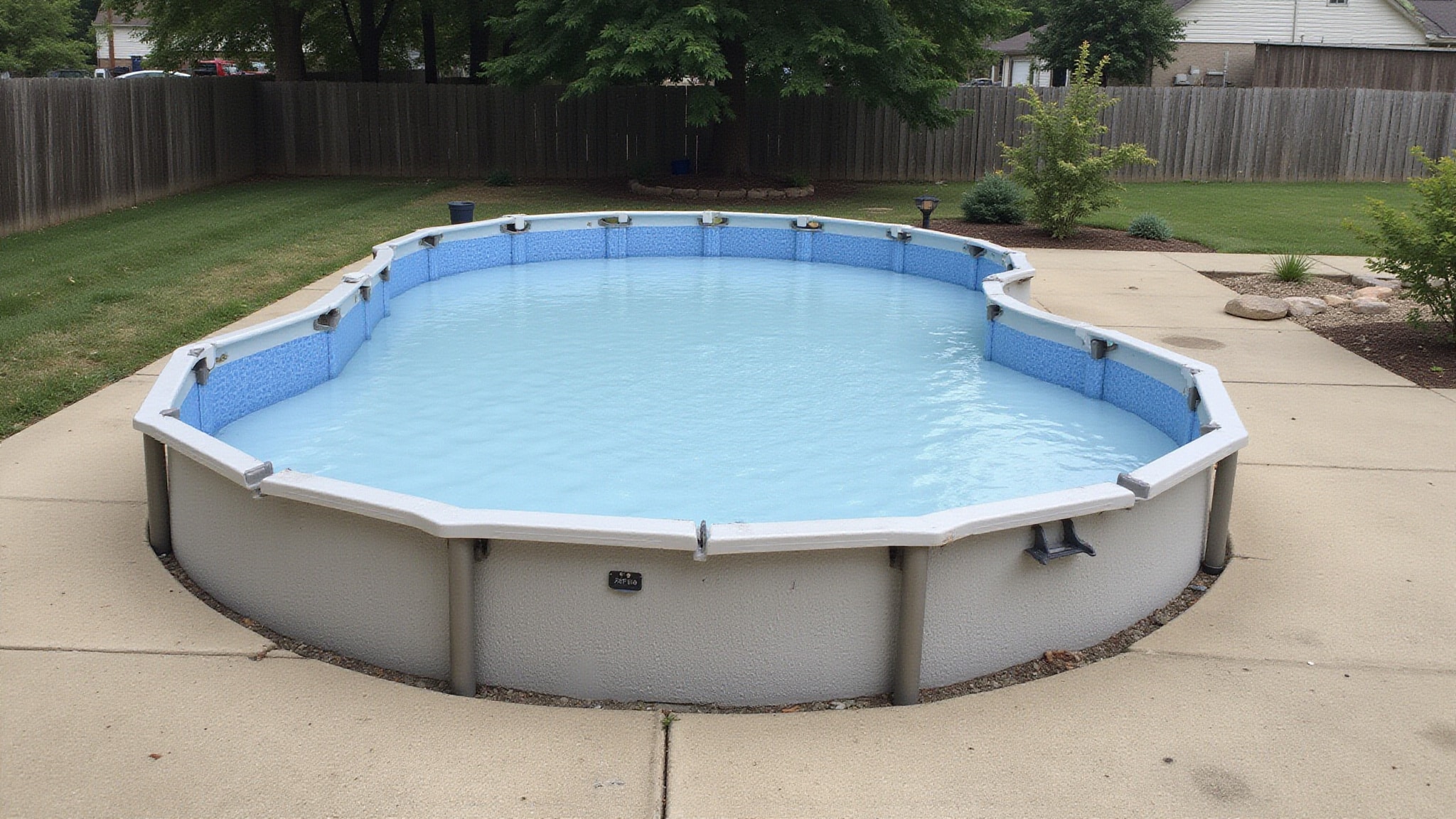
Yes, you can put an above-ground pool on concrete, provided the slab is level, smooth, and strong enough to support the filled pool’s weight. Check the concrete slab for cracks, chips, and sharp edges that could damage the liner. Verify levelness across the entire footprint, since uneven surfaces create stress points in the frame and liner as water loads increase. Your slab should measure at least 4 inches thick, ideally reinforced with rebar or mesh, and extend roughly 1 foot beyond the pool on all sides. Lay down a pool pad or foam mat to protect the liner from abrasion and grit. Confirm the slab’s fully cured, and plan drainage so splash and rainwater move away from the base.
What are the risks of setting one on concrete
Setting a pool on concrete introduces specific risks you’ll need to manage. Poor leveling tops the list: uneven slabs create stress points in the frame and liner, and those points worsen as water loads increase. Drainage is another concern, since concrete sheds water unevenly and doesn’t absorb it like soil. Standing water around the base can accelerate corrosion on steel parts and connectors, and trapped moisture creates long-term maintenance problems. Inadequate support poses the most serious threat: a slab thinner than 4 inches, or one that’s cracked or unreinforced, may fail under a filled pool’s concentrated load. Sharp edges, grit, and debris also risk abrading the liner, causing wear and leaks. Address each factor before you fill.
How do you prep the concrete base first
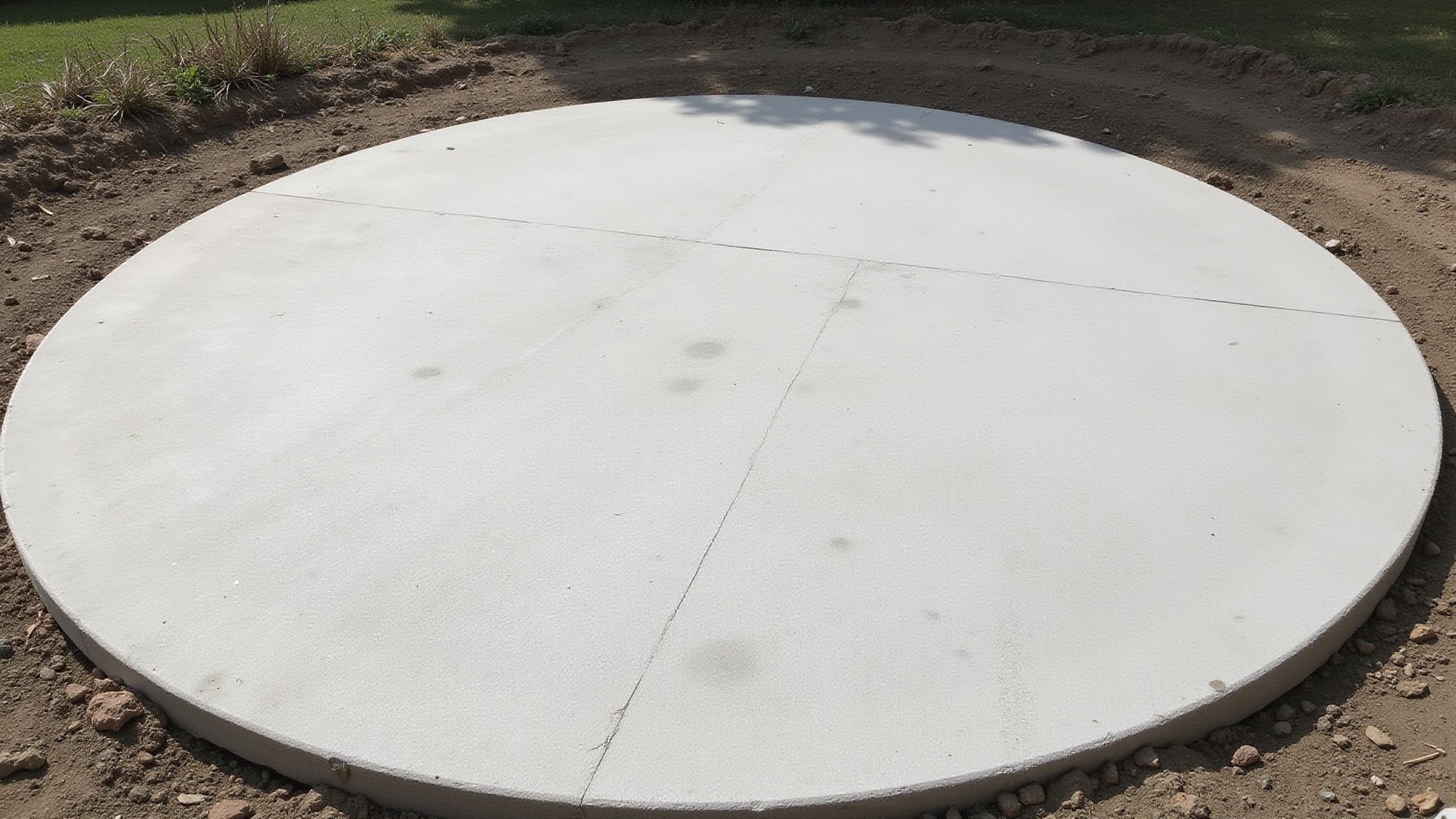
Inspect the slab for cracks, chips, and sharp edges, because any defect that compromises the surface or the concrete’s structural integrity has to be addressed before the pool goes on. Confirm the slab’s at least 4 inches thick, reinforced with rebar or mesh, and fully cured. Wait at least 7 days, longer if possible. Check that it’s level, since uneven concrete creates stress points in the frame and liner as water loads the base. Measure any drainage slope; too much interferes with stability. Clean the slab thoroughly so grit won’t rub against the liner. Then lay a pool pad, foam mat, or liner guard across the full footprint without gaps, creases, or overlap. If the slab’s condition or thickness is uncertain, get a professional assessment.
What padding or barrier protects the liner
A pool pad, foam mat, urethane pad, or a Gorilla/Armor Shield-type liner guard rated for hard surfaces protects the liner. Concrete’s roughness and embedded grit rub against the liner, causing abrasion, wear, and eventual leaks that soil rarely produces, which is why concrete demands a barrier when soil doesn’t. Cover the full pool footprint without gaps, creases, or overlap, since any distortion in the base creates stress points as the pool fills. You can also add a cove around the inside perimeter for added support and shape retention. Make sure you’ve cleaned the slab thoroughly first, because trapped grit will grind against the padding and liner. Direct liner-to-concrete contact isn’t acceptable. The barrier is your primary defense against premature failure and costly liner replacement.
How do the base options compare for safety
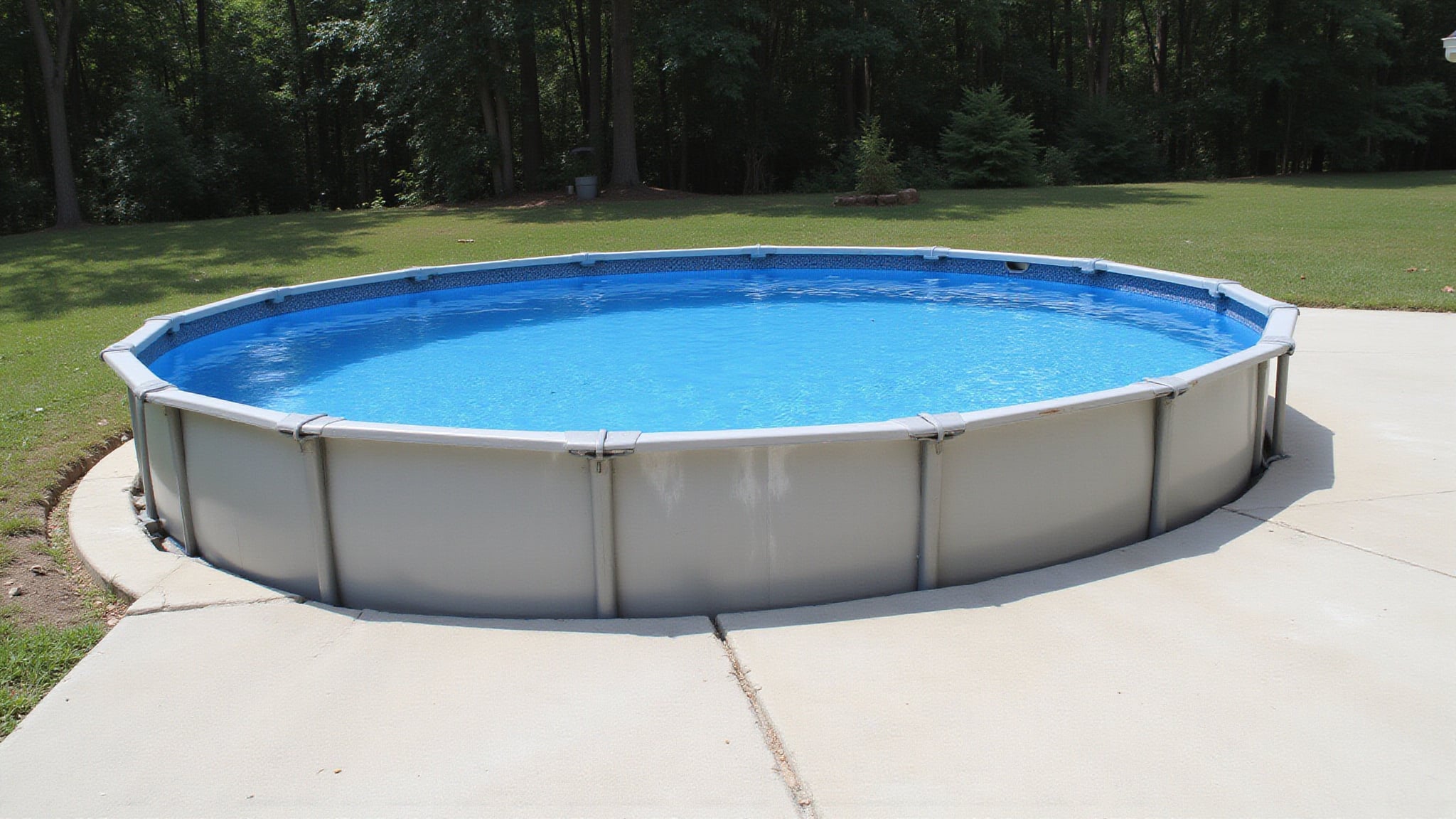
No base option is universally safest, because concrete, soil, and prefabricated pads each handle load, drainage, and liner contact differently and can’t be treated as interchangeable. Concrete gives you strong structural support and a level surface, but it drains poorly and can abrade the liner without padding. Soil drains better and cushions the liner naturally, yet it settles unevenly and can create stress points as the pool fills. If you encounter issues with the structural integrity of your pool, learning how to fix a pool pipe leak under concrete can be essential.
| Base | Primary Safety Concern |
|---|---|
| Concrete | Liner abrasion, poor drainage |
| Soil | Settling, uneven leveling |
| Prefab pad | Gaps, footprint coverage |
Prefabricated pads offer consistent cushioning, but you must confirm full footprint coverage without creases. When you compare options, weigh load capacity, drainage path, and liner protection together rather than choosing on convenience alone. Selecting the best pool deck resurfacing material is crucial for long-term durability and aesthetics. Consider options that provide slip resistance and weather resistance to ensure safety and longevity.
How do you set it up on concrete safely
To set up safely on concrete, follow a sequence of checks you can’t skip. First, confirm the slab’s fully cured, wait at least 7 days, longer if possible. Clean it thoroughly, removing grit, debris, and any sharp edges that could abrade the liner. Verify the surface is flat and level, and check that any drainage slope won’t compromise stability. Lay a pool pad, foam mat, or liner guard across the full footprint without gaps, creases, or overlap. Assemble the frame, walls, and supports strictly per the manufacturer’s instructions. Begin filling slowly, checking levelness, wall alignment, and liner position as water rises. Once filled, inspect the liner, frame, and surrounding drainage for leaks, stress points, and pooling water before use.
Conclusion: Setting an Above Ground Pool on Concrete Safely
You can place an above ground pool on concrete, and done right it makes a stable, level, and clean base. The keys are a smooth, level slab, a protective barrier like a pad or foam between the liner and concrete, and attention to drainage so water does not collect underneath. Checking local rules and using proper padding protects both the pool and the surface. With the right prep, a concrete base gives an above ground pool a solid, long-lasting foundation.
Create the Perfect Pool Deck for Your Backyard
The right pool deck material and installation elevate every part of your outdoor experience. At Pool Doctor of the Palm Beaches in Palm Beach Gardens, FL, our experienced team provides trusted Pool Deck and Coping Materials with expert installation and premium options. Call +1 (561) 586-2815 today and design a stunning pool deck.
Frequently Asked Questions
How Long Does an Above Ground Pool Last on Concrete?
A quality above ground pool can last around 10 to 15 years or more, and a level concrete base can actually help it last by keeping the structure stable and even. Using a protective pad between the liner and concrete prevents wear. Good setup and regular maintenance are what get the most years out of the pool.
Do I Need a Permit to Install One?
Often, yes. Many areas require a permit for an above ground pool, especially regarding fencing, barriers, and electrical for the pump. Requirements vary by location. Check with your local building department before installing, since permitting also covers safety features that protect your family and keep you compliant.
Can I Put an Above Ground Pool Indoors on Concrete?
It is possible, but it takes planning for drainage, ventilation, humidity, and the floor’s load capacity, since a full pool is very heavy. Moisture control is a real concern indoors. Because of the structural and moisture issues, an indoor installation should be evaluated by professionals to make sure the space can handle it safely.
Will My Homeowner’s Insurance Cover a Concrete-Based Pool?
Many homeowners policies cover pools to some degree, including liability, but coverage and requirements vary, and insurers often ask about safety barriers. Adding a pool can affect your premium. Tell your insurer about the pool, confirm what is covered, and consider extra liability coverage to keep your protection accurate.
How Much Does Professional Concrete Pool Installation Typically Cost?
Costs vary with the slab size, site prep, and whether you need a new concrete pad poured, which adds to the total. Pouring a proper base is the main expense beyond the pool itself. A contractor can quote the slab and installation for your yard, and a solid base is worth the investment for stability and longevity.