
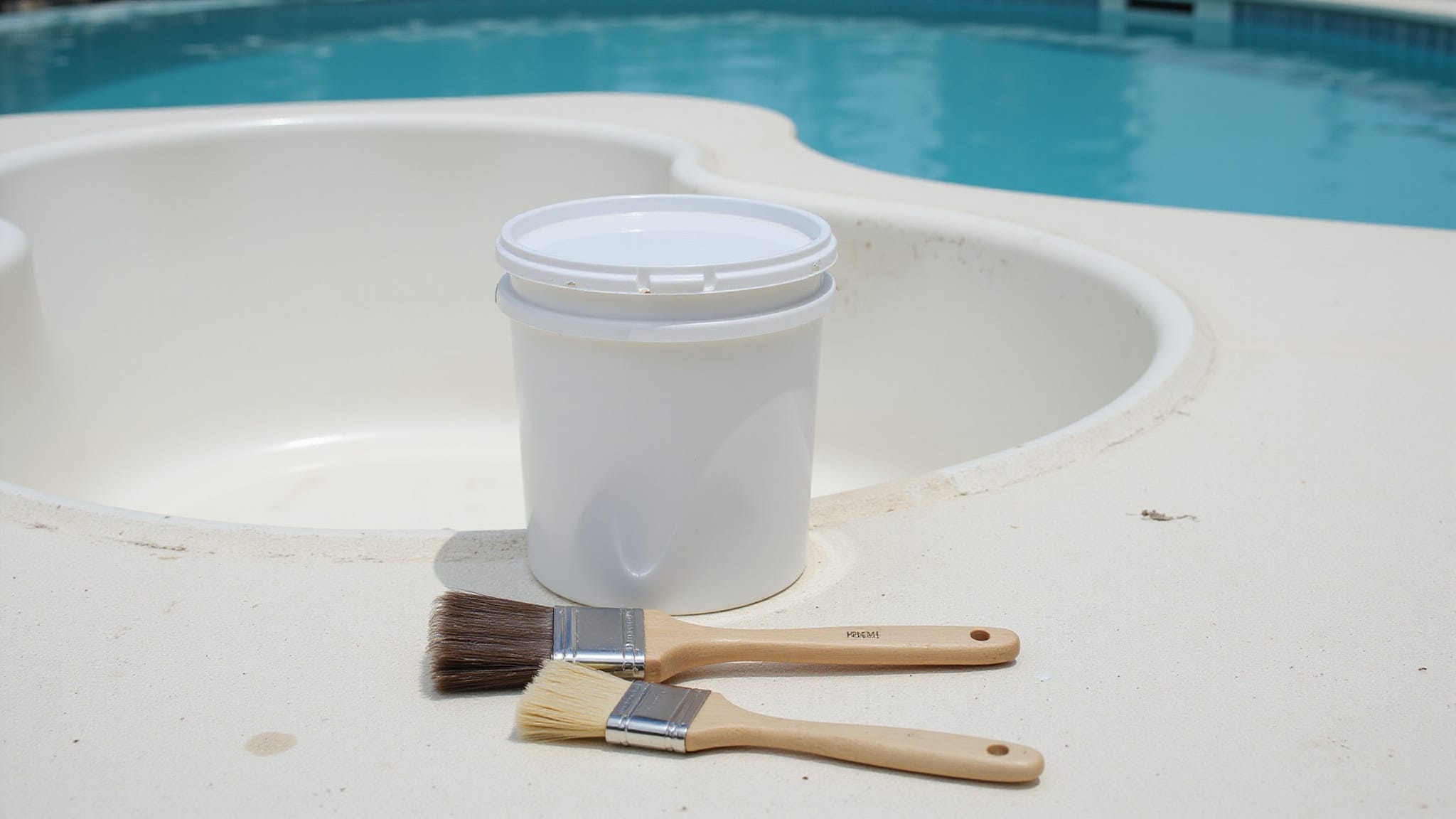
For maximum all-around performance, you should pick polyurea. It delivers 100% waterproofing, UV stability, chemical resistance, and slip resistance, plus a 20 to 25+ year lifespan that often yields the lowest cost per year. But “best” isn’t universal, it depends on your priorities for safety, traction, comfort, temperature, maintenance, budget, and appearance. If kids or seniors use your deck, safety-first options shift the math. Keep going to see how the top contenders stack up.
Key Takeaways
- Polyurea delivers the best all-around performance, offering 100% waterproofing, UV stability, chemical resistance, slip resistance, and a 20 to 25+ year lifespan.
- “Best” depends on your priorities, including safety, traction, comfort, temperature, maintenance, budget, and appearance.
- Prioritize safety with ASTM-compliant slip resistance, and choose spray textures or rubber to keep surfaces cooler for bare feet.
- Match durability to budget: acrylic lasts 5 to 10 years, concrete overlays 10 to 15, pavers 15 to 25, and polyurea 20 to 25+.
- Consider cost-per-year, since premium polyurea often produces the lowest annual cost compared to frequent acrylic reapplication.
What is the best pool deck resurfacing material
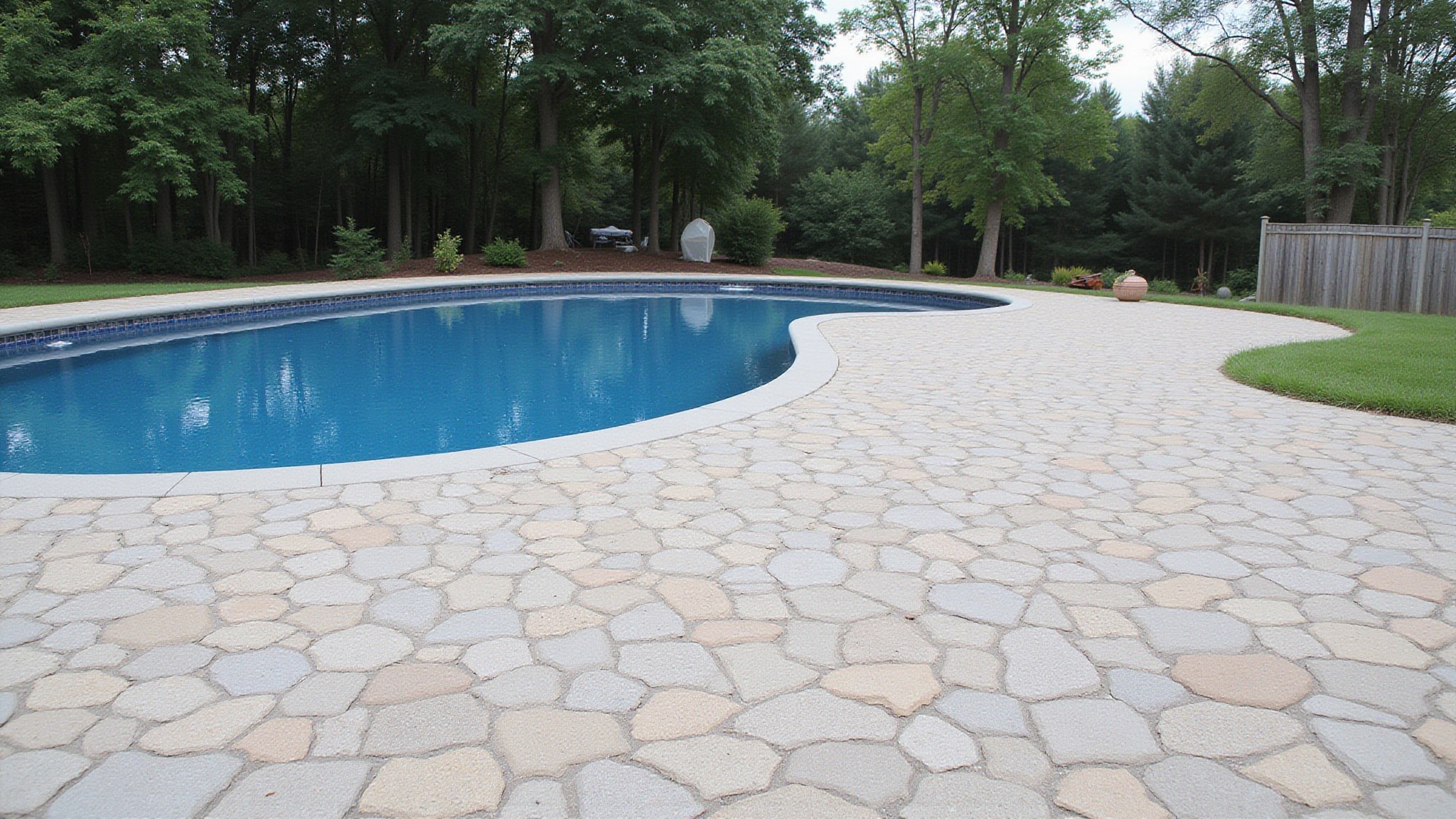
The best pool deck resurfacing material is polyurea for maximum all-around performance, delivering 100% waterproofing, UV stability, chemical and slip resistance, plus a 20 to 25+ year lifespan. Which material earns the “best” label depends entirely on what you’re prioritizing for your deck. Need superior traction and softer footing for kids or seniors? Poured-in-place rubber wins on comfort and impact absorption. When budget matters most and your deck’s structurally sound, an acrylic coating refreshes the surface at $5, $10 per sq. ft. For a decorative, stone-like appearance, a stamped concrete overlay runs $8, $20 per sq. ft. If heat’s your concern, spray texture coatings stay cooler underfoot while adding slip resistance. Rank your priorities, safety, temperature, maintenance, budget, and appearance, then match the material’s texture and performance to what your deck actually demands.
What should you look for in one
Look for measurable performance criteria that let you evaluate each system before committing. Start with slip resistance, verifying ASTM-compliant ratings since wet decks collect sunscreen, dirt, and mildew that increase hazard potential. Check surface temperature next, because bare feet make heat retention critical. Spray textures and rubber stay cooler than harder finishes. Assess durability against realistic lifespans: acrylic coating runs 5 to 10 years, concrete overlays 10 to 15, pavers 15 to 25, and polyurea 20 to 25+. Confirm waterproofing, UV stability, and chemical resistance. Weigh maintenance burden, since deck paint may need annual reapplication while advanced coating systems reduce upkeep. Finally, match cost to condition. Acrylic suits sound decks, while pavers and polyurea justify their higher price through longevity.
How do concrete overlays and stamped finishes perform
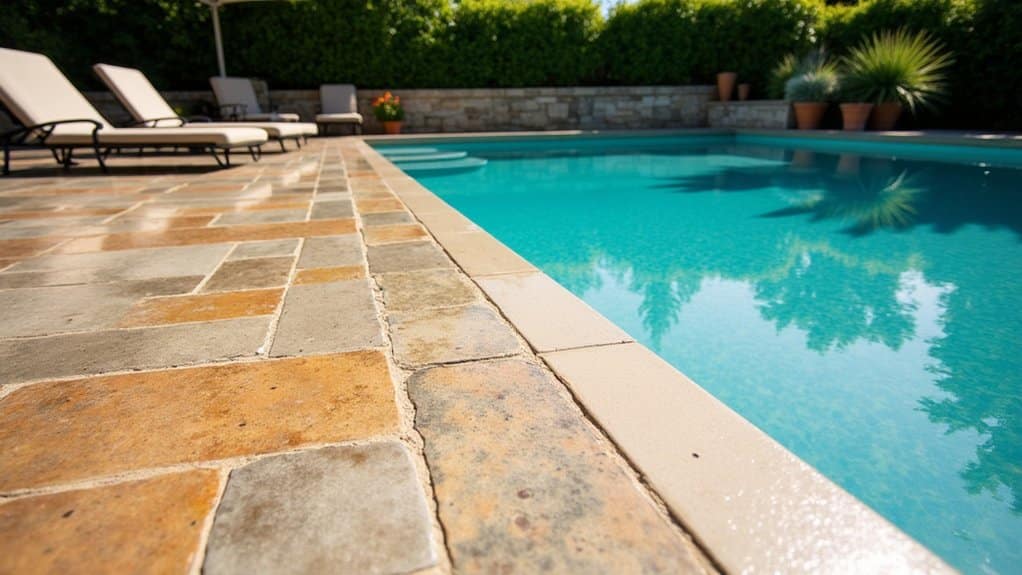
Concrete overlays deliver solid mid-range performance, running $3, $10 per square foot with a typical lifespan of 10 to 15 years. You get an economical resurfacing option that refreshes structurally sound decks without full replacement. Before installation, you’ll need to clean the surface, repair cracks, apply a bonding agent, and remove incompatible sealers to ensure proper adhesion. An above ground pool on concrete can enhance your outdoor space significantly. It provides a stable base that reduces shifting and settling, making it a reliable choice for aquatic fun.
Stamped concrete pushes costs higher, reaching $8, $20 per square foot, and can hit $18, $20 or more with decorative upgrades. You choose stamped finishes when you want a decorative, stone-like appearance. These harder decorative surfaces retain more heat and offer less comfort underfoot than spray textures or poured rubber. If appearance drives your decision, stamped concrete works, but prioritize safety, temperature, and comfort first.
How do pavers and stone options hold up
Pavers and stone options hold up better than any other resurfacing category, delivering the longest service life at 15 to 25 years. That lifespan outperforms acrylic overlays, spray coatings, and concrete overlays, making pavers a strong long-term investment despite higher upfront costs.
Pavers deliver 15 to 25 years of service life, outlasting every other resurfacing option and justifying their higher upfront cost.
You’ll need to evaluate your existing deck’s condition, checking for spalling, pooling water, and substrate integrity. Pavers require a stable, properly prepared base to prevent shifting and uneven settling over time. Building an above ground pool deck can enhance your outdoor space significantly. It is essential to choose durable materials that can withstand various weather conditions.
Factor slip resistance into your decision, since wet decks collect sunscreen, dirt, and mildew that increase hazard potential. Individual paver units also let you replace damaged sections rather than resurfacing the entire deck.
Balance this durability against surface temperature and comfort, since harder stone finishes retain more heat underfoot than softer alternatives.
How do the top materials compare on cost and durability
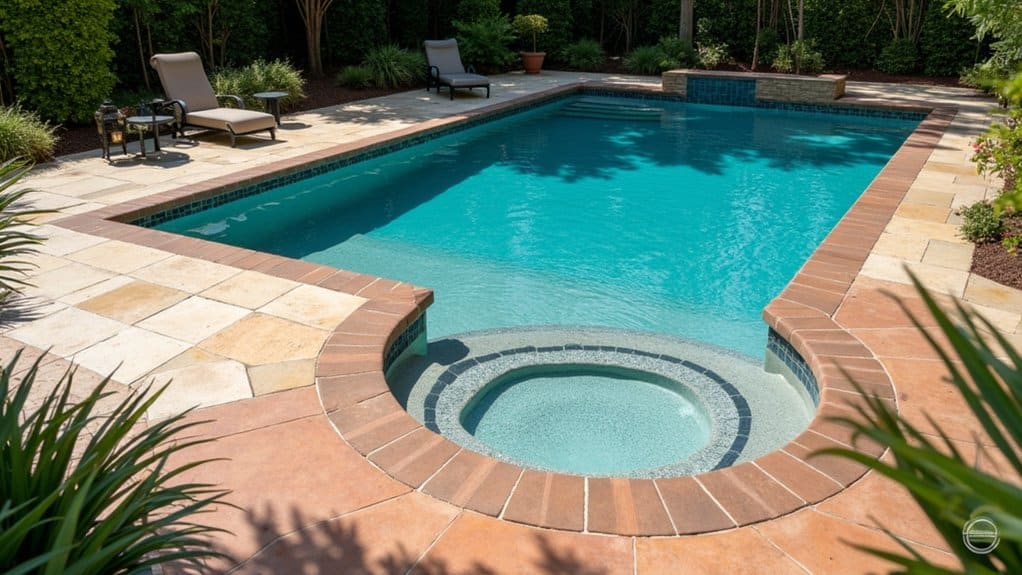
The top resurfacing materials compare inversely on cost and durability, with cheaper options lasting fewer years and premium ones lasting longest. Acrylic coatings run cheapest at $5 to $10 per sq. ft. but last only 5 to 10 years, making them a short-term refresh. Stamped concrete overlays hit $8 to $20 per sq. ft. with a 10 to 15 year lifespan. Polyurea sits at the premium end but returns 20 to 25+ years of waterproof, UV-stable performance.
| Material | Cost (per sq. ft.) | Lifespan |
|---|---|---|
| Acrylic Coating | $5, $10 | 5 to 10 years |
| Concrete Overlay | $8, $20 | 10 to 15 years |
| Polyurea | Premium | 20 to 25+ years |
When you divide cost by expected years, polyurea’s higher upfront price often delivers the lowest annual cost, while acrylic demands repeated reapplication that erodes its budget advantage.
How do you choose the right one for your deck
Choose the right material by working through a fixed sequence. Start with safety: if kids or seniors use the deck, prioritize slip resistance and impact absorption, which points to poured-in-place rubber. Next, weigh surface temperature. Spray textures and rubber stay cooler underfoot than hard decorative finishes. Then factor comfort for frequent barefoot use. After that, assess your maintenance tolerance; deck paint needs annual reapplication, while polyurea minimizes upkeep across 20 to 25+ years. Another important consideration is the gap between your above ground pool and deck. Above ground pool and deck gap filling can help prevent pests and debris from entering the pool area.
Check structural condition. If your slab shows cracking, spalling, or pooling water, repair it before choosing. Acrylic only works on sound decks. Finally, consider appearance. Want a stone-like look? Stamped concrete delivers it, but keep aesthetics last, not first.
Conclusion: Choosing the Right Pool Deck Resurfacing Material
The best pool deck resurfacing material balances looks, durability, comfort underfoot, and slip resistance for your climate and budget. Options like textured concrete overlays, pavers, cool-deck coatings, and stone each have their strengths, so the right pick depends on how you use the space and the style you want. A quality resurfacing refreshes the whole poolside and protects the deck for years. Weighing the choices, ideally with a professional’s input, leads to a surface you will enjoy for a long time.
Create the Perfect Pool Deck for Your Backyard
The right pool deck material and installation elevate every part of your outdoor experience. At Pool Doctor of the Palm Beaches in Palm Beach Gardens, FL, our experienced team provides trusted Pool Deck and Coping Materials with expert installation and premium options. Call +1 (561) 586-2815 today and design a stunning pool deck.
Frequently Asked Questions
How Long Does Pool Deck Resurfacing Take to Complete and Cure?
Most resurfacing projects take a few days to complete, depending on the deck’s size and the material, followed by curing time before full use. Coatings and overlays often need several days to cure, and weather can affect the schedule. Your contractor can give a realistic timeline and tell you when the deck is ready for foot traffic and furniture.
Can I Resurface My Pool Deck Myself, or Hire a Professional?
Small coating projects are within reach for a confident DIYer, but proper surface prep, mixing, and application are what make resurfacing last, and mistakes can be costly to redo. For overlays, pavers, or a large deck, a professional ensures an even, durable finish. For the best long-term result, professional installation is usually worth it.
What Time of Year Is Best for Resurfacing a Pool Deck?
Mild, dry weather is ideal, since many coatings and overlays cure best in moderate temperatures without rain. Spring and fall are popular in many areas, while very hot, cold, or wet conditions can affect the finish. Your contractor can advise on the best window for your climate and the material you choose.
Can Resurfacing Be Applied Over an Existing Pool Deck Coating?
Often, yes, if the existing surface is sound and properly prepared, since many overlays and coatings are designed to go over existing decks. A failing, peeling, or badly cracked surface may need repair or removal first. A professional can assess the current deck and confirm whether it is a good base for resurfacing.
Does Resurfacing Require Draining the Pool Beforehand?
Usually not. Resurfacing the deck is separate from the pool water, so the pool typically stays full, though the crew will protect the edge and coping during the work. Some edge or coping repairs may call for lowering the water a bit. Your contractor will let you know if any water adjustment is needed for your project.